
On-demand Webinar
Month: February 2024
5 Key Principles of Effective Data Modeling for AI

Artificial intelligence (AI) uses information to make important choices in different industries. Just like a tall building needs a strong plan and base, successful AI requires good data models. While traditional business intelligence and reporting use cases allow some margin of error, hallucinating AI in customer experiences can be costly for a brand. So how do we create these models for complex algorithms and systems? Organizing, storing, and accessing data is important for AI. It affects how well AI programs and apps work. Incorporating AI into data modeling relies on fundamental techniques and principles that enhance the synergy between data and AI models.
These five key principles will show us how. Data modeling for AI involves making a structured framework that helps AI systems efficiently process, analyze, and understand data to make smart decisions:

The 5 Fundamentals
- Data Cleansing and Validation: Provide data accuracy and consistency by addressing errors, missing values, and inconsistencies. Techniques like outlier detection and imputation help make sure your data is reliable and ready for analysis.
- Feature Engineering: Craft the right features – the building blocks of your model – by selecting the most relevant and informative ones. Techniques like correlation analysis and feature importance scores guide this crucial step.
- Data Transformation: Prepare your data for analysis by handling scaling issues and addressing skewed distributions. Techniques like normalization and min-max scaling ensure all features contribute equally to model training. Striim’s intuitive platform streamlines data transformation processes, saving you time and resources.
- Model Explainability: Build models that not only give you an answer but also explain how they arrived at it. Techniques like LIME and SHAP shed light on the decision-making process, fostering trust and ethical considerations.
- Scalability and Performance Optimization: Design your model to handle growing datasets and evolving needs. Consider distributed computing frameworks and cloud solutions for efficient processing and future-proofing your AI project.
One excellent source for delving deeper into data modeling is the podcast episode by Joe Reis and Ben Rogojan. Data Modeling With Joe Reis – Understanding What Data Modeling Is And Where It’s Going
Key Principles in Action
- Data Quality: According to a study by Deloitte, following good ways to clean and check data can save money and make information more accurate. This, in turn, leads to enhanced model performance, unlocking the true potential of your AI investments. Additionally, addressing data biases and inconsistencies guarantees ethical considerations are embedded within your AI development process.
- Feature Selection: One advantage of concentrating on important features is that it enhances model efficiency. By using feature engineering tools, you can improve efficiency and accuracy by cutting unnecessary noise. Additionally, having fewer features results in better interpretability, making your AI models more transparent and reliable.
- Normalization: A research paper published by the University of Utrecht explains how normalization improves model convergence, leading to faster and more stable model training. This ultimately translates to reduced bias, as normalization prevents features with larger scales from dominating the learning process.
- Model Interpretability: Building trust with users is crucial for AI adoption. A survey by PwC found that 73% of respondents would be less likely to trust an AI system if they couldn’t understand how it makes decisions. Using methods like LIME and SHAP can help you create trust and transparency in your AI development, promoting ethical thinking and responsible AI practices.
- Scalability: As your AI ambitions grow, your data models need to keep pace. A scalable and flexible architecture provides your models can handle growing data volumes and adapt to evolving needs. This, combined with cloud-based and distributed technologies, future-proofs your AI project, guaranteeing it remains effective and efficient even as your data landscape expands.
Business Value

By following these principles and employing the capabilities, you tap into the full potential of AI efforts and achieve:
- Improved decision-making: Gain deeper insights from data-driven predictions, leading to informed business decisions that drive growth and competitive advantage across various domains.
- Enhanced operational efficiency: Use reliable AI models to save time and work more efficiently. These models can handle tasks, make procedures easier, and improve resource allocation. This frees up human resources to focus on more important activities.
- Increased customer satisfaction: Deliver personalized experiences and tailored offerings based on accurate AI-powered predictions, fostering deeper customer engagement and loyalty.
- Reduced risks and improved compliance: Promote ethical AI development and address potential biases by implementing responsible data modeling techniques, protecting your organization’s reputation, and following changing regulatory standards.
Striim: Your Partner in Effective Data Modeling
Striim’s platform provides the means for integrating and analyzing data in real-time, greatly improving the data modeling process when applying AI. Here are four instances where Striim’s solution can aid in the successful incorporation of AI in data modeling:
- Real-Time Data Integration and Streaming: Striim enables the ongoing collection of data from a diverse range of origins, such as databases, logs, message queues, and cloud platforms. This feature guarantees that the data used for AI modeling remains current, a critical element for applications that rely on real-time analytics or decision-making. By supplying fresh data, AI models can make more precise forecasts and choices based on the most recent information, improving their dependability and efficiency.
- Data Preprocessing and Transformation: Before creating models, data needs to be prepared by cleaning, transforming, or combining it. Striim provides real-time data processing to take care of these tasks as data flows into the system. This makes the modeling process faster and enhances model accuracy by providing that high-quality, properly formatted data is used in AI models.
- Scalability and Efficiency: AI and machine learning models need a scalable infrastructure for efficient data processing and analysis. Striim’s platform can handle large volumes of data in real-time, providing efficient and effective data modeling as data grows.
- Enhanced Decision Making with Real-Time Analytics: Striim’s real-time analytics can inform decision-making with immediate insights and AI integration for adjusting strategies, optimizing operations, and predicting future trends. This allows for a dynamic and responsive approach to data modeling with continuous updates and improvements based on real-time data and analytics.
With Striim’s real-time data integration, processing, and analysis capabilities, we’re basically giving AI a shot of espresso – making it faster, stronger, and more accurate than ever before. Say goodbye to slow and clunky data modeling, and hello to a sleek, efficient, and scalable AI-driven solution.
Ready to unlock the power of AI with effective data modeling?
Get a free demo of Striim today and experience the difference for yourself!
Crafting Intuitive AI Experiences for Everyday Life with Abi Aryan

Embark on a captivating voyage into the intricacies of AI with Abi Aryan, the financial wizard turned tech trailblazer, who unveils the transformative power of machine learning in our latest episode. Witness the metamorphosis of data pipelines and video classification as Abi elucidates her groundbreaking research at UCLA and her influential work within the entertainment industry. Her commitment to social impact and democratizing AI is palpable as she offers a glimpse into her mission of miniaturizing large language models to fit into the palm of your hand, ensuring the future of tech is not only responsive but delightfully anticipatory.
As we unravel the complexities of operationalizing Large Language Models, Abi’s insights illuminate the shifting landscape of product experiences, where AI is not just a component but the orchestrator. She expertly navigates the technical finesse required to tailor AI for IoT devices, merging the realms of luxury and practicality for the ultimate smart living experience. Tune in to discover how Abi’s pioneering work is crafting a future where technology doesn’t just blend into our lives; it enhances them with an intuitive touch, anticipating our every need with intelligence and grace. What’s New In Data is a data thought leadership series hosted by John Kutay who leads data and products at Striim.
What’s New In Data hosts industry practitioners to discuss latest trends, common patterns for real world data patterns, and analytics success stories.
Optimize and Personalize Travel Experiences with Real-Time, Intelligent Integration

The aviation industry is currently undergoing a technological transformation due to increased demands of the customer in the digital and AI age. This transformative wave is redefining operational paradigms and passenger experiences alike. The airline industry has witnessed significant advancements by implementing AI and data integration, making it a leading example for other companies to follow.
Overcoming Integration Challenges
Adopting a data-driven culture is pivotal for airlines aiming to leverage technology for operational and service excellence. This shift towards data-centric decision-making and operations is fundamental for enhancing safety, efficiency, and passenger satisfaction. Airlines face a slew of challenges including:
- Legacy Systems Slowing Down Innovation: Old systems that are no longer useful make it hard to use new and improved technology. This slows down progress and makes it difficult to work efficiently.
- Siloed Data: The problem is that data is spread out in different places, which makes it hard to see the big picture and make good decisions. This also makes it tough to improve how things are done.
- Disruptions During Technology Upgrades: There is a chance of problems and delays when introducing new technology into an airline’s current system.
Predictive Analytics: A Leap Towards Proactive Maintenance

Advances in predictive analytics have transformed maintenance strategies, moving away from reactive practices and towards proactive and predictive ones. As a result, there is a notable enhancement in operational reliability and safety.
- Anticipating Maintenance Needs: Artificial intelligence can use data from plane sensors to detect problems and prevent them. Airlines can save money and make travel better for passengers with predictive analytics. This can also help them schedule maintenance more efficiently, reducing delays and making better use of resources.
- Enhancing Safety: Mckinsey states that airlines can improve safety by planning ahead and taking care of maintenance needs before they become a problem. This makes sure that planes are always in good condition for every flight.
- Cost Efficiency: Using predictive analytics for maintenance not only improves safety but also provides significant cost savings by avoiding costly, unplanned repairs and minimizing flight delays or cancellations.
Personalizing the Skies: A New Era of Passenger Experience
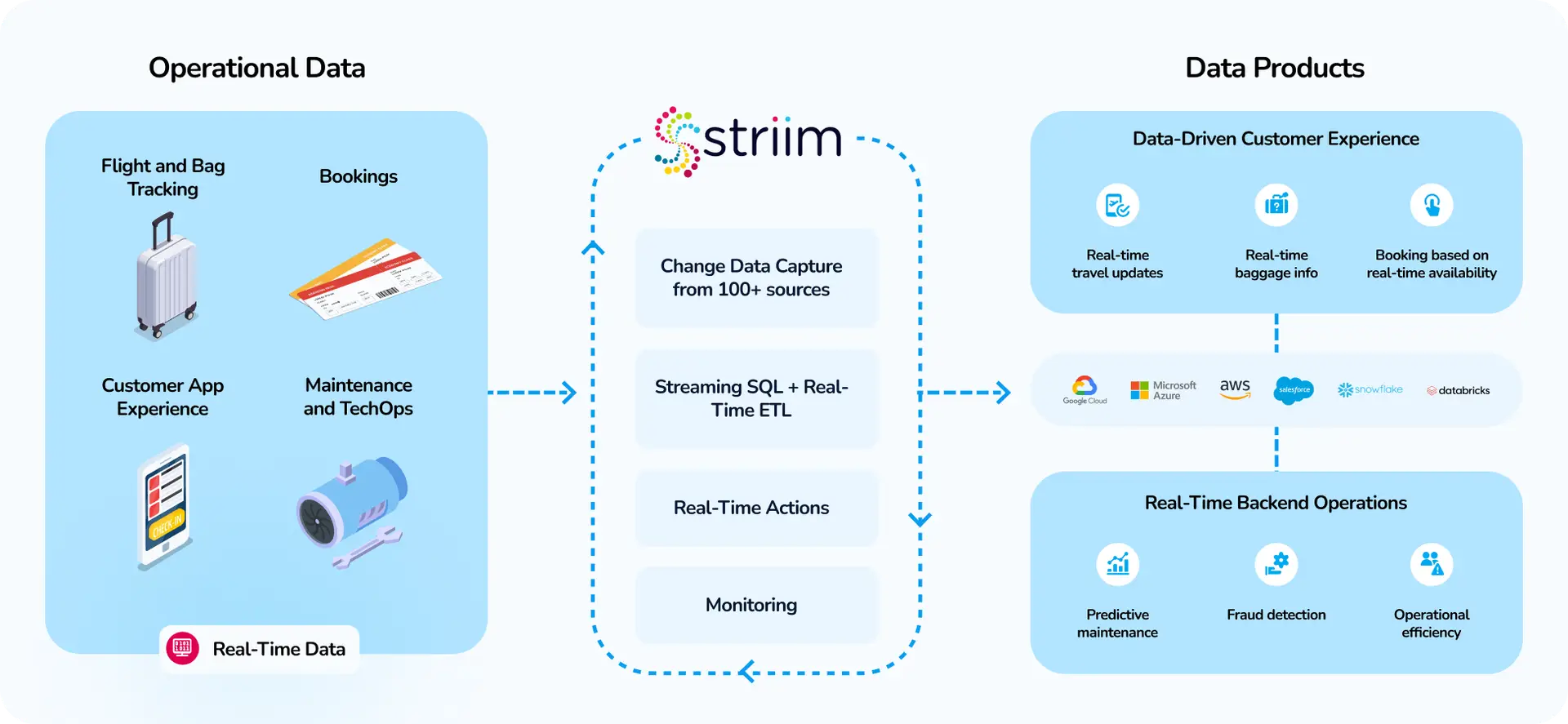
Nowadays, travelers expect personalized experiences that cater to their individual preferences in the world of technology. Thanks to real-time data and AI, airlines can not only meet but also exceed these expectations, transforming the flying journey into a customized adventure such as:
- Tailored Travel Offers: Analyzing individual passenger data to offer customized travel options, from booking preferences to loyalty rewards, enhancing the value proposition for each passenger.
- In-Flight Personalization: Personalizing the in-flight experience with entertainment, meal choices, and comfort settings based on passenger preferences, guaranteeing a pleasant and memorable journey.
- Enhanced Customer Service: Using real-time insights to proactively address passenger needs and resolve issues promptly, significantly improving customer satisfaction and loyalty.
Steering Towards Sustainability
As environmental sustainability becomes a pressing global concern, the aviation industry is leveraging technology to reduce its environmental footprint and contribute to a greener planet.
- Optimized Flight Paths: AI analytics optimize flights, cutting fuel use and emissions. Airlines save money and offer lower prices, while also adopting eco-friendly practices like biofuels, reducing plastic, and recycling. This shows the industry’s dedication to sustainable operations and meets customers’ desire for environmentally-friendly travel. Technology and sustainability improve the overall customer experience.
- Improved Operational Efficiency: Achieving more efficient operations through real-time data analysis, leading to reduced waste and lower carbon emissions.
- Sustainable Practices: Implementing innovative solutions and practices that promote environmental sustainability, from reducing single-use plastics onboard to investing in sustainable aviation fuels.
Business Value of Digital Transformation in Aviation
The digital transformation journey in aviation, spearheaded by initiatives like those of American Airlines, brings forth significant business value:
- Reduced Operational Costs: By optimizing flight operations and maintenance schedules, airlines can significantly lower their operational costs.
- Increased Revenue Opportunities: Data analytics allows for customized services and focused promotions, creating opportunities for increased revenue through improved customer engagement and loyalty initiatives.
- Risk Mitigation: Real-time data analytics and predictive maintenance models help in proactively identifying and mitigating risks, thereby reducing the likelihood of costly disruptions.
- Competitive Advantage: Airlines that embrace digital transformation can differentiate themselves in a competitive market, offering superior customer experiences and operational efficiency.
How American Airlines streamlines operations with Striim

American Airlines’ proactive integration of Striim and its comprehensive digital transformation strategy serves as a beacon for the aviation industry, demonstrating the tangible benefits of embracing technological innovation.
- Operational Excellence: Showcasing how real-time data integration can streamline operations, enhance safety, and reduce costs, setting a new standard for operational excellence.
- Customer Satisfaction: Illustrating the profound impact of personalized services on passenger satisfaction, reinforcing the importance of customer-centric strategies in the digital age.
The aviation sector is applying technology to enhance the experience of air travel. American Airlines stands out as a prime example, employing Striim, real-time data analysis, and AI. This will result in more streamlined, personalized, and eco-friendly air travel.
The industry is leveraging data to make informed choices, proactively maintaining aircraft to prevent problems, offering unique passenger experiences, and prioritizing environmental impact. Other airlines can gain valuable insights from American Airlines’ effective implementation of digital transformation. These advancements will increase safety, satisfaction, and sustainability in air travel. Schedule a demonstration with Striim to propel your organization to the next level.
The Power of Data Mesh, Data Fabric, and Striim

Organizations struggle with managing vast amounts of complex data. Traditional methods often fall short, leading to data silos and security vulnerabilities. Innovations like Data Mesh and Data Fabric have emerged as solutions, offering new ways to manage data effectively and derive actionable insights. Central to unlocking the potential of these frameworks is Striim, a platform that facilitates real-time data integration, analytics, and event processing, providing businesses can fully leverage their data.
Overview of Data Mesh
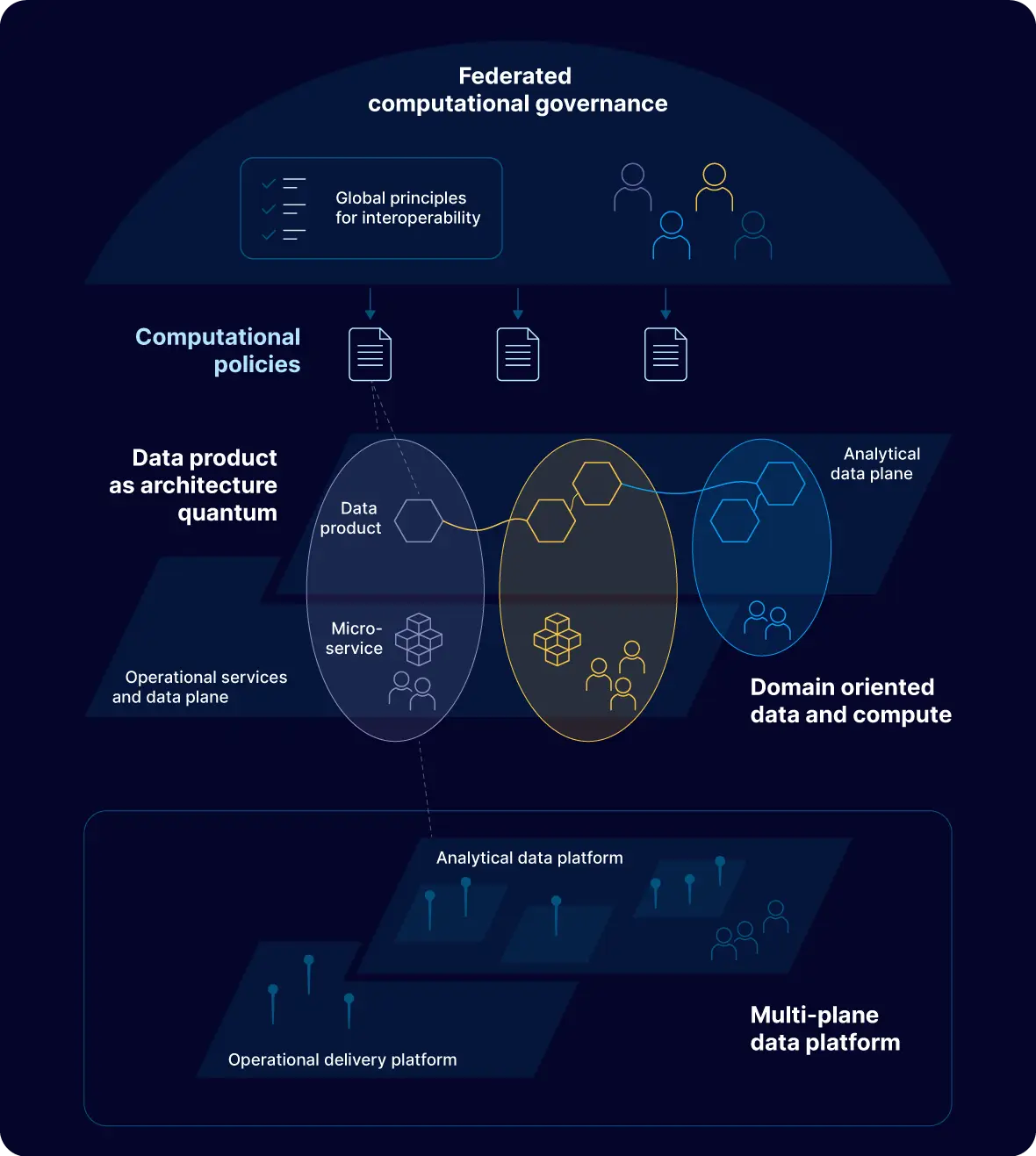
Data Mesh is a decentralized architectural approach designed to address large-scale data management issues by promoting domain-oriented data ownership and self-serve data infrastructure. This approach emphasizes the distribution of data governance and architectural responsibilities across different domains within an organization, treating data as a product.
Business Value:
- Enhanced Agility and Innovation: By empowering domain teams with the autonomy to manage their data, organizations can foster a more agile and innovative environment
- Improved Data Quality and Accessibility: Thinking of data as a product helps to make sure that it is of good quality and easy to use. This makes it more valuable and easy to access for everyone in the organization.
- Scalability: Supports scalable data management practices that can grow with the organization without creating bottlenecks or silos.
Overview of Data Fabric

Data Fabric offers a more integrated and cohesive approach to managing data across disparate sources and environments. Data Fabric uses advanced technology, such as AI and machine learning, to automatically find, manage, and combine data. This gives organizations a single view of all their data.
Business Value:
- Operational Efficiency: Automates data integration and management tasks, significantly reducing manual efforts and streamlining operations.
- Real-time Insights: Facilitates real-time data processing and analytics, enabling organizations to make faster, more informed decisions.
- Enhanced Data Security and Governance: Implements robust data governance and security measures across all data sources, providing data integrity and compliance.
Data Mesh vs. Data Fabric
While Data Mesh and Data Fabric both aim to enhance data management, they differ significantly in their approach and focus.
- Approach: Data Mesh decentralizes data management, giving individual domains or teams control and responsibility for their data. In contrast, Data Fabric uses a centralized approach to provide a unified and comprehensive view of data across the organization.
- Technology vs. Organizational Change: Data Fabric is more technology-centric, leveraging tools and platforms to integrate data. Data Mesh, however, focuses on organizational change, promoting a shift in how data responsibilities are distributed
- API Integration: Data Mesh relies on API-driven integration, requiring developers to write code for data access.
Data Fabric, conversely, favors a low-code/no-code approach, making data integration accessible without extensive coding. The difference between Data Fabric and Data Mesh lies in their respective approaches to data management. Data Fabric and Data Mesh have different focuses. Data Fabric uses automation and integrated technologies to make things easier. On the other hand, Data Mesh empowers teams and promotes data ownership and specialized governance.
When to Use Data Mesh vs. Data Fabric
Data Mesh May Be the Best Option If You:
- Value Domain Autonomy: Your company has specific groups or teams that can handle their information. This encourages a decentralized way of coming up with new ideas and making decisions.
- Seek to Foster Innovation: Your goal is to help teams be more creative and try new things with their data. You want them to be able to easily adjust to changes and take advantage of new opportunities.
- Require Scalability: Your data architecture needs to scale flexibly with your organization, accommodating new domains, data products, and evolving business models without overhaul.
Data Fabric May Be the Best Option if You:
- Need Unified Data Access: You prioritize having a holistic view of your organization’s data to drive comprehensive analysis and informed decision-making across the enterprise.
- Prefer Automated Data Management: Your aim is to make it easier to put together, organize, and protect information from different places and in different ways. You want to avoid doing things by hand and making mistakes.
- Focus on Real-time Insights: Your organization relies on real-time data processing and analytics to drive operations, strategic decisions, and competitive advantage.
Striim’s Role in Supporting Data Mesh and Data Fabric
Striim emerges as a vital thread that seamlessly connects the patterns of Data Mesh and Data Fabric. As companies navigate data management, Striim helps them improve Data Mesh and Data Fabric. This provides a smooth data flow, no matter what architectural approach they use.
- For Data Mesh: Striim facilitates real-time data integration and streaming analytics required for domain-driven architectures. It enables individual domains to access, process, and analyze their data in real-time, supporting the autonomy and agility that Data Mesh promotes. This allows for a more responsive and dynamic approach to data management, where insights can be generated and acted upon quickly.
- For Data Fabric: In a Data Fabric architecture, Striim acts as the backbone for real-time data integration across diverse sources. Striim is an efficient and effective tool for managing large amounts of data by automating its movement and processing. This guarantees that the data view remains current and actionable at all times. It’s a necessary tool for organizations that use the Data Fabric method. It helps them use their combined data to improve operations and gain important insights.
Choosing the Right Path
Deciding between Data Mesh and Data Fabric depends on your organization’s specific needs, culture, and goals for data management. Each approach offers distinct advantages that can help organizations navigate the complexities of modern data ecosystems. You can choose between Data Mesh and Data Fabric to improve your data management. Striim is important for both options as it helps make them successful. Striim’s technology allows organizations to easily integrate and analyze data in real-time. This helps with scalability, security, and getting valuable insights quickly.
Ready to mesh well with your data or weave a stronger fabric? Striim is here to thread the needle between Data Mesh and Data Fabric, providing you don’t get tied up in knots. Let’s untangle your data dilemmas together. Connect with us, and let’s stitch the perfect data management solution for your organization
Unraveling a Complex World of AI Application Development and Risk Management with Mehmet Ozan Kabak
Embark on a transformative journey into the heart of AI infrastructure with Ozan Kabak, a beacon of knowledge in the realms of AI and machine learning. Our enlightening dialogue traverses the landscape of ‘AI native’ applications, where Ozan’s insights bridge the gap between academic theory and industry practice. Through anecdotes from his Stanford days to tales of data infrastructure dilemmas, Ozan demystifies the often-overlooked development hurdles such as model monitoring and the balance between training and inference. This episode promises to illuminate the intricate dance behind the scenes of deploying AI solutions, sparing not a detail on the developer’s labor and the pivotal moments that shape the backbone of AI applications.
Gain an edge as we unpack the strategic foresight necessary for wielding AI in business; a cautious approach underscored by the significance of a robust data framework and the lurking risks of customer-facing AI systems. Ozan’s expertise shines as we introduce Apache Arrow, the open-source project championing data format interoperability, heralding a new era of standardization and best practices. Be prepared to peer into the crystal ball of AI’s future with us, where efficiency reigns supreme, and the compute landscape is primed for an overhaul. We grapple with the immense potential and existential considerations of large language models, examining how today’s marvels could become tomorrow’s masters. Tune in for a session packed with insights that will redefine your perspective on AI’s current and future roles.
How to Build an AI-Driven Data Strategy: Powering Modern Organizations to Succeed in the AI Era

Transforming Data Architecture through Data Mesh and Striim

There is a large amount of complex data that traditional data systems are not equipped to handle. However, the development of Data Mesh and the advanced capabilities of Striim represent a significant change towards a smarter and more flexible approach to organizing data. This addresses the challenges presented by modern data networks and offers many benefits for companies in various industries.
What is Data Mesh?
Data Mesh is a modern approach to managing data that is more streamlined and straightforward compared to traditional methods. It centers on placing data as the core focus and dividing it into distinct domains. This enables organizations to evaluate information faster and with greater efficiency, ultimately improving their effectiveness and decision-making capabilities. Industry experts, including Gartner, highlight the potential advantages of this approach while acknowledging the key challenges it presents. Data Mesh plays a vital role in managing data effectively and is a valuable asset for organizations looking to improve agility, intelligence, and success in their operations in today’s constantly evolving environment.

Historically, data management involves separating operational data, which is used for day-to-day business operations, and analytical data, which is applied for decision-making based on past patterns. For instance, analytical data may uncover customer preferences or seasonal product trends, helping teams in strategic planning. This data is commonly gathered through an ETL process and stored in a central location, such as a data lake. Data Mesh presents a fresh viewpoint by connecting operational and analytical data in a decentralized structure. Rather than storing all data in a single location, it distributes it across multiple areas, challenging the conventional centralized storage model and promoting a more adaptable and effective approach to data analysis and management.
The 4 Key Pillars of Data Mesh
- Domain-oriented Decentralized Data Ownership: Allows teams to take control of their data, promoting flexibility and providing responsibility.
- Data as a Product: Elevates data to product status, meticulously maintained to meet consumer and business needs.
- Self-serve Data Infrastructure: Allows all members of the organization to access and use data easily, removing any technical obstacles.
- Federated Computational Governance: Applies data governance where data is stored, balancing standards with domain-specific needs.

Striim’s Role in Data Mesh Implementation and Business Value Creation
Striim stands at the forefront of enabling Data Mesh architectures, providing automated data mapping, cloud-native functionalities, and comprehensive real-time analytics. It facilitates event-driven architectures and APIs, ensuring a fluid exchange of data across systems. By doing this, organizations can take complete advantage of their data landscape, resulting in substantial benefits for their business in various important aspects.
- Accelerated Decision-Making and Innovation
By applying Striim’s real-time data integration and streaming analytics, Data Mesh removes barriers and encourages using data as an asset. This allows companies to quickly adapt to market shifts and customer demands, fostering a mindset of swift decision-making and ongoing creativity. As a result, this flexibility provides a competitive advantage and opens up new growth opportunities. - Enhanced Data Quality and Governance
By using Striim, data domains can take ownership of their data, leading to better quality, significance, and reliability. Striim’s platform supports businesses in better managing their data and guaranteeing compliance with regulations. It also reduces risks and guarantees compliance. - Operational Efficiency and Cost Reduction
Using Data Mesh with Striim makes work easier and saves money by improving how data is managed, stored, and processed. It also allows experts to access data directly, making work faster and more productive. Explore further the benefits of good data management in this article by McKinsey. - Scalability and Flexibility
Striim’s cloud tools and Data Mesh make it simple for businesses to manage big data and adjust to changing data needs. This helps them be ready for future opportunities. Striim also uses cloud technology to help companies expand their data systems, promoting growth and variety. - Improved Customer Experiences
Incorporating Striim into a Data Mesh system allows organizations to customize customer engagements using up-to-date information. This ability to personalize offerings and experiences improves customer contentment and retention, boosting profits and setting them apart from competitors.
Optimizing Business Value with Data Mesh and Striim
To fully harness the business potential of Data Mesh with the help of Striim, organizations should:
- Define Clear Business Objectives: Make sure that Data Mesh is aligned with the company’s goals, whether it is to understand customers, make operations more efficient, or encourage creativity.
- Empower Domain-specific Teams: Empower teams by providing them with the independence and tools to oversee their data as an asset, cultivating a mindset of accountability and high standards.
- Fully Leverage Striim’s Capabilities: Utilize Striim’s advanced analytics, automated data mapping, and cloud-native features to optimize data operations and drive business outcomes.
- Cultivate a Culture of Collaboration: Encourage teamwork and communication between different departments to make the best use of the company’s knowledge and resources. This will help achieve important goals by using data effectively.
Striim’s Data Mesh and AI technology is a new way to handle data that is flexible, smart, and can grow with your needs. It solves the problems of complicated data systems and helps businesses succeed in a world driven by data. This approach can turn data challenges into advantages, helping companies grow, work more efficiently, and stand out in their industry.
Want to see how Striim’s Data Mesh and AI can benefit your organization? Try Striim Cloud for free for 14 days!
Transforming Data Productivity with Automated Workflows and AI with Chris White
Embark on an intellectual odyssey with Chris White, CTO at Prefect, as he recounts his metamorphosis from a mathematician steeped in the abstract world of optimization theory to a data science maestro and software development virtuoso. Discover how Chris’s mathematical prowess translates into creative and practical solutions for data workflows, and how this synergy is revolutionizing the tech landscape. Our conversation peels back the layers of data science, revealing the indispensable role of automated workflows in bolstering productivity and bringing clarity to the complexities that data teams navigate daily.
Feel the pulse of innovation as we delve into the essence of Prefect, the workflow management system that addresses the shortcomings of existing tools and aligns with the intuitions of Python developers. Chris lays bare the intricacies of integrating event-driven constructs that enhance processing efficiency, and how Prefect tailors to the needs of both budding engineers and seasoned code wizards. Looking ahead, we glimpse the potential of managed compute offerings and AI integrations that promise to transform mundane workflows into robust workflow applications, setting a new standard for configuration management and collaborative coding.
Accelerating Plane Turnaround Times through Real Time Data

Every second on the tarmac counts. The ability to swiftly turn around planes not only determines an airline’s efficiency but also impacts passenger satisfaction and operational profitability. This blog delves into the transformative role real-time data analytics plays in streamlining ground operations, reducing delays, and boosting overall efficiency in the aviation industry.
The Need for Speed in Aviation Turnarounds
Plane turnaround time – when an aircraft lands to when it takes off again – is a critical metric in aviation. It involves numerous ground operations, including passenger disembarkation, luggage handling, refueling, cleaning, and boarding. Any delay in these processes can cause a ripple effect, leading to flight delays, increased costs, and customer dissatisfaction.
Integrating Real-Time Data for Smarter Operations
Enter real-time data analytics, a game-changer for optimizing plane turnaround times. By integrating technologies like IoT sensors, GPS tracking, and advanced data platforms like Striim, airlines, and ground crews can get instant insights into every aspect of the turnaround process. For instance, by using advanced data analytics, a leading airline reduced its average turnaround time by 15%, significantly boosting its on-time performance and operational efficiency. This data-driven approach allows for:
- Predictive Maintenance: Real-time data helps predict maintenance needs, ensuring that issues are addressed proactively, and reducing unexpected delays.
- Efficient Resource Allocation: Live tracking of resources enables optimal allocation of ground staff and equipment, reducing idle time and speeding up processes.
- Enhanced Communication: Instant data flow improves coordination among pilots, ground staff, and control centers, leading to a more synchronized operation.
The Ripple Effect of Reduced Turnaround Times
The impact of efficient turnarounds goes beyond just timely departures. It translates into:
- Improved Passenger Experience: Faster turnarounds mean less waiting time for passengers, leading to higher satisfaction and loyalty.
- Cost Savings: Quicker turnarounds lead to more efficient use of resources and reduced operational costs.
- Environmental Benefits: Shorter time on the ground means reduced fuel consumption and carbon emissions, contributing to more sustainable operations.
Real-Time Data and Aviation Success in the Real World
Striim customer, American Airlines, is on a mission to care for people on their life journey. Serving over 5,800 flights a day to over 350 plus destinations across 60-plus countries requires massive amounts of data streaming in real time to support flight operations.
TechOps team members use their skills and expertise to ensure planes, team members, and customers depart and arrive safely and reliably every time on every flight. You may see them at your local airports wearing vests and using iPads to work with ground crew. They track aircraft telemetry across the globe, deploy crews for spot maintenance, and route aircraft to the world’s largest maintenance facility in Tulsa, Oklahoma.
Today with the combined power of Microsoft Azure, Databricks, and Striim, American Airlines TechOps has completed the vision of digital transformation and was able to cut over to production at a global scale within 12 weeks.

Watch the video to learn how streaming operational data in real time helps American Airlines keep track of thousands of moving parts and ensure planes, team members, and customers depart and arrive safely and reliably, every time on every flight.
American Airlines’ Transformation Powered by Striim
American Airlines, leveraging Striim’s real-time data integration, has dramatically enhanced its flight operations across over 5,800 daily flights. This transformative journey, facilitated by Striim in partnership with Microsoft Azure, MongoDB, and Databricks, enabled the airline to establish a seamless, real-time operational data hub.
This strategic move allowed American Airlines to monitor and manage flight operations globally, ensuring every flight departs and arrives safely and reliably. The integration of Striim’s technology played a crucial role in streamlining processes, from tracking aircraft telemetry to deploying spot maintenance crews efficiently.
Completed in just 12 weeks, this digital transformation underscores Striim’s capability to handle massive data streams in real-time, driving operational efficiency and enhancing passenger experiences. It’s a testament to how Striim’s innovative data solutions can power major industry players towards a future of accelerated and data-driven decision-making.
Elevate Your Airline’s Performance with Striim’s Real-Time Data Integration Solutions
The aviation industry stands at the cusp of a new era, one where real-time data analytics plays a pivotal role in reshaping operations. By embracing these technologies, airlines can improve their bottom line and enhance the travel experience for millions of passengers. The sky’s the limit when it comes to the potential of real-time data in transforming aviation.
Explore how Striim’s real-time data integration solutions can elevate your airline’s operational efficiency and passenger satisfaction. Try it for free to learn more about our aviation-specific solutions and take the first step towards a more efficient, customer-centric future in aviation.