The Rise of Streaming Data Platforms: Embrace the Future Now: A Webinar By Striim and GigaOm

At Striim, we’re excited to partner with GigaOm to present an exclusive webinar that promises to shed light on a game-changing topic in the world of data: “The Rise of Streaming Data Platforms: Embrace the Future Now.” This event took place on September 12, 2024 at 12:00 PM EDT. You can watch it on-demand here. 

Real-time data processing has evolved from a competitive advantage to a necessity. Advanced streaming data platforms are now essential for businesses aiming to enhance agility and responsiveness. These platforms enable quicker, more informed decision-making, a critical capability in today’s complex business environment.

This webinar delves into why streaming data platforms represent the next significant advancement in Big Data solutions. Tune in and discover how these technologies can transform your approach to data and drive your business forward.

What You Can Expect: 

In this dynamic session, we’ll dive into:

  • Next-Generation Big Data: Learn about the cutting-edge advancements in streaming data platforms and why they are at the forefront of the Big Data revolution.
  • Expert Insights: Hear from GigaOm analysts as they evaluate various platforms, focusing on edge deployment, data quality, temporal features, machine learning (ML), and SQL utility.
  • Real-World Applications: Discover real-world success stories and practical use cases that highlight the transformative potential of real-time data.

Join Us for to Dive Deeper into the Rise of Streaming Data Platforms 

Don’t miss out on this opportunity to gain valuable insights into the future of data processing. Watch now on-demand to learn more

Striim Deemed ‘Leader’ and ‘Fast Mover’ by GigaOm Radar Report for Streaming Data Platforms

Have you heard the news? We’re thrilled to share that Striim has been recognized as a Leader and Fast Mover in the GigaOm Radar Report for Streaming Data Platforms. This accolade highlights our commitment to providing cutting-edge, high-performing solutions that meet the evolving needs of our customers.

In its 2024 report, GigaOm evaluated the rapidly changing streaming data landscape and outlined the key capabilities (table stakes, key features, and emerging features) and nonfunctional requirements (business criteria) that set leading streaming data platforms apart. Striim’s recognition is a testament to our comprehensive feature set and innovative approach to delivering value to our customers.

Why Striim Stands Out

As detailed in the GigaOm Radar Report, Striim’s unified data integration and streaming service platform excels due to its distributed, in-memory architecture that extensively utilizes SQL for essential operations such as transforming, filtering, enriching, and aggregating data. Additionally, the platform’s support for the Tungsten query language (TQL) extends SQL functionality with advanced windowing capabilities and integration options through Java.

One of our platform’s key strengths is its versatile windowing functions, which include batch-based, time-based, session-based, and hybrid windows. This flexibility enables organizations to tailor data processing to their specific needs. Furthermore, our support for pattern matching and ad hoc queries further enhances the platform’s adaptability.

More Than a Data Streaming Platform 

Beyond streaming data, Striim delivers on data ingestion through Change Data Capture (CDC), ELT, ETL, and snapshots. Our distributed messaging and queuing capabilities, which can be persisted in Kafka, facilitate seamless data flow between publishers and subscribers. This is crucial for real-time data delivery and notifications, supported by integration with services like Azure Event Hubs and Google Pub/Sub.

Striim’s robust AI features, including built-in classification, regression functions, and ML-based anomaly detection, are particularly noteworthy. Our ability to generate vector embeddings and deploy lightweight agents on edge devices showcases our dedication to advanced data processing and security, with options for data masking and encryption.

Constantly Innovating

Our machine learning capabilities and support for emerging features have positioned Striim in the Innovation half of the GigaOm Radar, underscoring our role as a dedicated solution for streaming data. This recognition reaffirms our status as a Leader and Fast Mover, committed to driving the streaming data platform market forward.

The GigaOm Radar report provides a comprehensive overview of key players in the streaming data platform market, helping decision-makers evaluate solutions and make informed investment decisions. We’re honored by GigaOm’s recognition and look forward to continuing our journey of innovation and excellence in the streaming data space.

Ready to dive deeper into why Striim was given this recognition? Check out the complete GigaOm Radar Report now for a detailed analysis and insights into the streaming data platform market, and dive deeper into how Striim stands out.

Change Data Capture as the Backbone of RAG AI-Driven System Resilience Strategies

Ensuring system resilience is critical for maintaining a competitive edge in today’s data-driven world. As businesses rely on real-time data to fuel decision-making, it’s essential that their systems can withstand disruptions and maintain functionality. Change Data Capture (CDC) is a key player, particularly in AI-driven systems where real-time data integration and adaptive responses are crucial.

In this post, we’ll explore how CDC boosts system resilience in AI-driven environments by enabling Retrieval-Augmented Generation (RAG) models. We’ll focus on how CDC enhances real-time data integration, anomaly detection, and adaptive response mechanisms, making it a cornerstone of RAG AI-driven resilience strategies.

Change Data Capture: Context

CDC is a technology that monitors and records alterations to a system’s database in real-time. Continuous data updates are beneficial for several reasons. First, updates can occur without disrupting the system’s operations. This continuous monitoring allows updates to be detected and processed instantly, minimizing the time lag between when a change occurs and when it is available for analysis. (Want to learn more about why minimizing latency is crucial? Check out this blog.) As a result, data is consistently up-to-date, enabling timely decision-making and immediate insight generation.

In the context of AI systems, real-time data processing is essential for maintaining a steady flow of accurate, relevant data needed for training and updating models. This constant data stream enables AI models to quickly adapt to new information, enhancing their accuracy and effectiveness. As a result, your team Wegains access to more precise predictions, rapid anomaly detection, and adaptive responses.

Where Does RAG Come Into Play?

RAG is an advanced AI framework that combines retrieval-based and generation-based approaches to enhance response accuracy and relevance. Here’s how it works. 

  • It uses real-time data processing to boost AI capabilities by retrieving the most relevant information from external databases or documents and then generating contextually appropriate responses based on this information. 
  • The hybrid approach leverages the strengths of both retrieval and generation, ensuring that the AI system provides precise and informed answers.
  • By integrating real-time data captured through CDC, RAG systems can generate more accurate and contextually relevant responses. 
  • This integration ensures that AI outputs are both current and precise, enhancing the overall value and reliability of the system.

RAG is an advanced AI framework that combines retrieval-based and generation-based approaches to enhance response accuracy and relevance.

CDC’s Role in RAG AI-Driven System Resilience

CDC also plays a pivotal role in enhancing the resilience of RAG AI-driven systems. Since CDC ensures the most current data is available for retrieval and use in generating responses, RAG systems can access and utilize the data without delay. This is crucial to ensure AI-generated content is relevant and accurate.

CDC’s Role in RAG AI-Driven System Resilience

System Reliability 

CDC also contributes to system resilience by reducing downtime and enabling rapid recovery from disruptions. With continuous data synchronization, any changes are promptly replicated across systems, preventing data loss. This ensures that the RAG system remains operational even during system failures or maintenance periods. The seamless integration of data means that the AI system can rapidly bounce back from interruptions, maintaining high levels of service availability and reliability.

Consistency and Scalability 

CDC supports the consistency and scalability of RAG systems. By providing a reliable mechanism for data updates, CDC ensures that all components of the AI system can access consistent data. This uniformity is critical for generating coherent, accurate responses, as inconsistencies in data can lead to errors and decreased system performance. As RAG systems scale and incorporate more data sources, CDC facilitates the efficient management of data changes, maintaining the resilience and robustness of the AI-driven system. Through these capabilities, CDC not only enhances the immediate performance of RAG systems but also strengthens their long-term reliability and scalability.

Boost Anomaly Detection 

Moreover, real-time data integration supports proactive anomaly detection. When AI systems are fed with the most current data, they can more effectively identify deviations from the norm and alert stakeholders to potential issues before they escalate. This proactive approach not only enhances operational efficiency but also mitigates risks, further contributing to the resilience of the system.

Increase Contextually Relevant Insights 

RAG enhances this process by leveraging real-time data to provide more accurate and contextually relevant insights. By integrating real-time data captured through CDC, RAG models can retrieve the latest information and generate informed responses. This capability ensures that any detected anomalies are addressed with the most up-to-date data, allowing for swift and precise corrective actions. In this way, RAG plays a crucial role in enhancing the system’s resilience by ensuring that responses to potential issues are both timely and well-informed.

Adaptive Response Mechanisms: Ensuring Continuity and Reliability

Adaptive response mechanisms are essential for maintaining continuity and reliability in AI-driven systems. CDC empowers these mechanisms by providing a steady stream of up-to-date data that RAG models can use to adjust their outputs in real-time. This dynamic adaptability is particularly valuable in scenarios where conditions can change rapidly, such as in cybersecurity, healthcare, and supply chain management.

For example, in cybersecurity, adaptive response mechanisms can leverage real-time data to identify and respond to threats as they emerge, preventing breaches and minimizing damage. Similarly, in healthcare, real-time patient data can enable AI-driven systems to adjust treatment plans on the fly, improving patient outcomes. CDC ensures that these adaptive responses are based on the latest and most accurate data, enhancing the system’s ability to maintain functionality and resilience under varying conditions.

Strengthening AI System Resilience with CDC and RAG

In today’s competitive landscape, the resilience of AI-driven systems is paramount. CDC is a critical component in building this resilience, particularly in the context of RAG models.

Book a demo today to learn more about how Striim utilizes CDC to ensure your organization has constant access to real-time data.

Optimizing Hospital Operations with Machine Learning in Healthcare: A Data-Driven Approach

Real-time data and machine learning are revolutionizing how hospitals operate and deliver care. By adopting a data-driven approach to hospital optimization, healthcare professionals’ jobs become more efficient, allowing them to focus more on what truly matters: Patient health. Not to mention, hospital operation optimization reduces costs. 

Here’s everything you need to know about how hospitals can leverage advancements of machine learning in healthcare to streamline operations and modernize existing systems. 

What is Machine Learning in Healthcare?

Machine learning (ML) in healthcare is the transformative use of advanced algorithms and models to analyze and interpret massive amounts of data. Here’s how it works.

The ML process begins with the collection of data from various sources. This includes electronic health records (EHRs), hospital management systems, wearable devices, and IoT sensors. The collected data encompasses everything from patient demographics to admission and discharge records, staffing schedules, equipment usage logs, supply chain information, and real-time vital signs. (You can also leverage real-time data for the purpose of predictive analytics to improve patient outcomes. If you want to learn more about that, check out the blog.) 

Once this data is collected, it will undergo preprocessing, which involves cleaning to rectify inaccuracies, normalizing to ensure uniformity, and feature engineering to extract and select relevant features for the ML algorithms.

With ML, comprehensiveness is important — which is why, to provide a comprehensive dataset, real-time data streams are integrated with historical data. This occurs through Extract, Transform, Load (ETL) processes, when information from a myriad of sources is brought together into a unified data warehouse.

Next, your team will select the right ML algorithms based on the specific problem you are looking to address. Common algorithms include supervised learning models like regression and classification for predictive analytics, unsupervised learning models like clustering for grouping similar data points, and reinforcement learning algorithms that learn optimal actions through trial and error.

Finally is training and evaluation. During training, your ML algorithms learn patterns and relationships within your data to make predictions or decisions. With evaluation, you’ll assess the performance of the models against predefined metrics to ensure they meet accuracy and reliability criteria. 

Machine Learning in Healthcare

What are the Benefits of Machine Learning in Healthcare for Hospital Operations Optimization? 

There are a myriad of benefits associated with leveraging machine learning in healthcare for hospital operations optimization. Here are some of the most critical. 

  • Predictive Analytics Empowers Resource Management: Machine learning models leverage historical and real-time data to predict patient admission rates, emergency room demand, and resource utilization trends. Thanks to this, hospitals are able to optimize staffing levels, bed allocations, and inventory management. This improves operational efficiency and reduces costs.
  • Automate Administrative Tasks: Machine learning can streamline administrative tasks such as billing, patient data entry, and scheduling with the help of automation. This reduces the burden of administrative work on healthcare teams, which allows them to focus on patient care. For example, ML algorithms can automate the scheduling of appointments and surgeries. 
  • Streamline Supply Chain Management: ML models can accurately predict future supply needs with the help of historical usage patterns and real-time inventory levels data. This reduces the risk of stockouts and overstocking, leading to more efficient use of resources and cost savings.
  • Improved Patient Flow and Room/Bed Management: ML can also help manage patient flow by predicting peak times for discharges and admissions. This enables hospitals to effectively allocate beds and reduce the amount of time patients must wait. Additionally, ML models may assist in optimizing discharge processes, ensuring timely bed availability for incoming patients. By smoothing patient flow, hospitals can enhance overall capacity utilization and improve the patient experience.

What are the Benefits of Machine Learning in Healthcare for Hospital Operations Optimization?

How does Real-Time Data Enable Successful ML for Hospital Operations Optimization? 

If you’re wondering what the difference between successful and unsuccessful ML is, it’s the utilization of real-time data. Without access to the latest information, ML algorithms are inaccurate and ineffective at best.

Real-time data, facilitated by stream processing platforms like Striim alongside AI-ready cloud data warehouses like Snowflake, ensures that ML models operate on the most current information available. This enables hospitals to make informed decisions rapidly, optimize operations dynamically, and maintain accurate predictions.

Leverage Real-Time Data to Power ML and More Efficient Hospital Operations 

If you’re ready to simplify hospital operations with the assistance of machine learning, discover how Striim can help fill the gaps with real-time data. Get a demo today to see how Striim can bring your machine learning efforts to the next level.

Real-Time Patient Monitoring: Leveraging Inference Models for Immediate Care

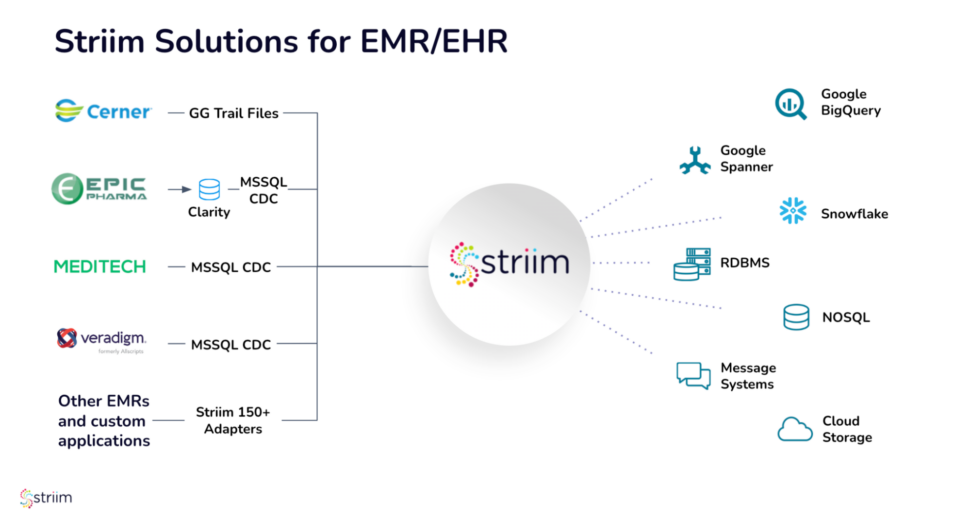
Striim Solutions for EMR/EHR

In healthcare, there’s no such thing as being too attentive to a patient’s needs — and real-time patient monitoring is here to prove it. Emerging technology and the utilization of real-time data enable medical professionals to monitor a patient’s prognosis quickly and with minimal interruption. The best part is that it enables prompt intervention, allowing medical professionals to take a proactive rather than reactive approach to healthcare. This can make a significant difference in a patient’s outcome.

Today, we’ll walk you through everything you need to know regarding real-time patient monitoring, how inference models play a part, and how immediate care solutions are enabled by both of these.

Understanding Real-Time Patient Monitoring

Real-time patient monitoring involves the utilization of advanced medical devices that enable continuous observation and analysis of a patient’s health data. It differs from patient monitoring of the past by providing immediate care solutions the moment an anomaly is detected.

With real-time patient monitoring, doctors gain access to continuous, instantaneous data. Traditionally, healthcare professionals needed to rely on intermittent readings taken during periodic check-ups, which delayed the detection of critical changes in a patient’s condition.

In contrast, real-time monitoring utilizes advanced technologies like wearable sensors and telemetry systems to provide immediate insights, enabling healthcare providers to respond swiftly to any abnormalities detected.

Another benefit of leveraging real-time patient monitoring is that it reduces hospital readmissions and improves overall patient management. By leveraging real-time data, healthcare providers can make informed decisions more rapidly than ever before.

The Role of Inference Models in Healthcare

To fully comprehend the role inference models play in healthcare, it’s critical to first understand what they are.

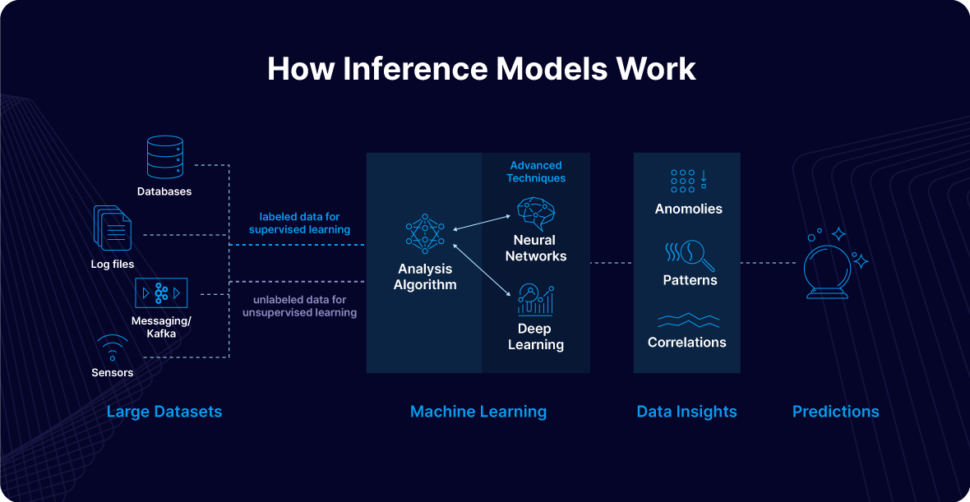
An inference model is a form of machine learning model that leverages algorithms to analyze data. From there, it can make predictions or decisions based on that information. In the healthcare industry specifically, these models process real-time patient data to detect patterns, predict potential health issues, and suggest immediate care solutions to healthcare providers.

How Inference Models Work 

Inference models work by applying algorithms to analyze large datasets, deriving meaningful insights that inform decision-making. Typically built using machine learning techniques, these models are trained on historical data to recognize new patterns and correlations. Once trained, they can effectively apply this knowledge to analyze new and incoming data. 

Inference models, crucial for real-time patient monitoring, utilize advanced techniques such as neural networks and deep learning. For more context, check out our AI and machine learning solutions page

For real-time patient monitoring, inference models utilize both supervised and unsupervised learning approaches. Supervised learning involves training the model with labeled data, where known outcomes help establish relationships between input data (for instance, a patient’s heart rate, blood pressure) and expected outputs (the likelihood of a heart attack, for example). On the other hand, unsupervised learning enables models to identify patterns and anomalies in unlabeled data, which is critical for detecting unexpected health issues.

Advanced inference models incorporate techniques such as neural networks and deep learning to enhance predictive capabilities significantly. Beyond initial training, these models continuously update their algorithms through online learning as new data arrives. This process guarantees that models stay adaptive and maintain their efficiency. 

How Inference Models Work

What’s an Example of Inference Models in Healthcare?

Imagine you’re a healthcare professional treating a patient with a heart condition. Naturally, you want to mitigate any problems before they arise — so you leverage devices that continuously monitor your patient’s heart rhythm and rate.

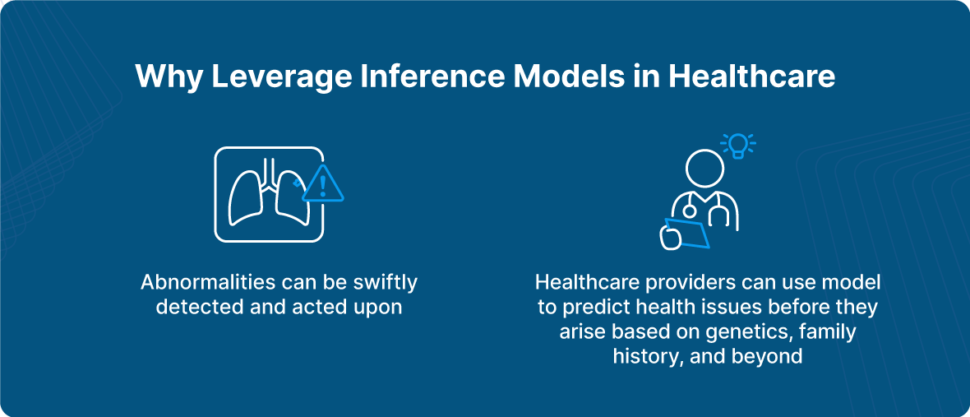
These systems typically integrate inference models. These models can analyze the data and predict issues before they arise. Moreover, you can integrate inference models that analyze real-time data alongside historical health information, including genetic predispositions to heart conditions. For instance, if a patient has a family history of heart disease, the monitoring system can adjust its algorithms to be more vigilant, detecting subtle patterns and anomalies that might indicate early signs of potential issues.

The primary purpose of using inference models in healthcare is to predict problems before they arise, making healthcare more efficient.

Why Leverage Inference Models in Healthcare

How Does Real-Time Data Enable the Successful Utilization of Inference Models?

Without real-time data, inference models wouldn’t be as effective. This is because real-time data offers a continuous stream of up-to-date information, which is crucial for making timely, accurate predictions. Without fresh data, inference models cannot detect patterns and anomalies that indicate a patient may experience a health episode soon.

Thanks to real-time data, inference models can process information the moment it is generated, allowing for timely analysis and immediate care solutions. Continuous data flow ensures that inference models are working with the most up-to-date, comprehensive data, increasing the reliability and accuracy of their predictions.

There’s also the aspect of adaptability. With new data continuously fed to your inference model, it can learn and adjust its algorithms in real-time. This ongoing process means that models stay accurate even as patient conditions shift or new health trends emerge.

Real-Time Patient Monitoring Fuels Immediate Care Solutions

In a world without inference models, healthcare systems would not be able to proactively address concerns and take action to mitigate potential problems before they manifest. By leveraging real-time data, healthcare systems can ensure that their inference models remain effective tools for predicting and managing patient health, ultimately leading to better and more personalized care.

Ready to take the next step to get your data where it needs to be? Book a demo today to learn how Striim can help you make data integration and streaming as seamless as possible.

Enhancing Airline Customer Journeys with AI and Real-Time Data

The difference between a seamless customer journey and a frustrating one hinges on the effective use of real-time data powering AI systems. Customers find few things more frustrating than encountering disruptions during their travels. Delays and perceived indifference can sour their experience with your airline. The good news is, you have the tools to prevent these issues.

The most modern and efficient approach to delivering a superior customer experience is through the strategic use of real-time data and AI. This technology ensures that your airline consistently prioritizes safety, convenience, efficiency, and customer satisfaction. Here’s how. 

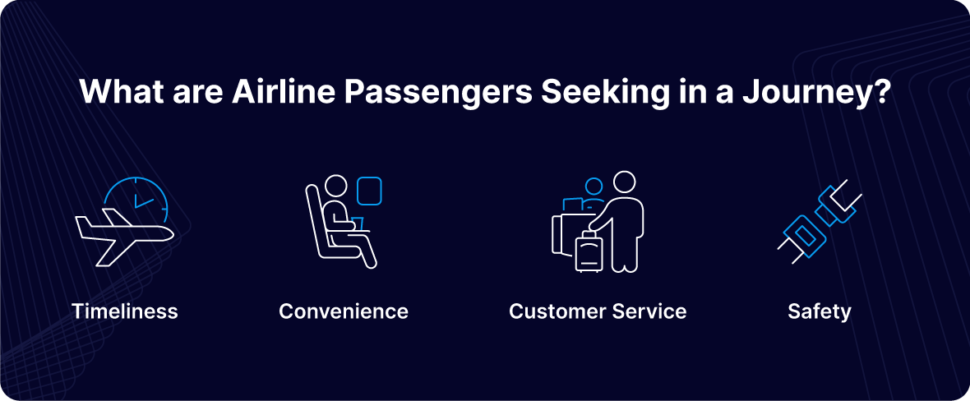
What are Airline Customers Seeking in a Journey?

The first step towards delivering an exceptional journey is to understand what customers seek. So what is it? 

Timeliness: Customers dislike disruptions — and therefore, delays. By leveraging a real-time data integration and streaming platform like Striim, your team can monitor flight operations in real time. This allows you to optimize flight schedules and promptly address issues, ensuring customers reach their destinations on schedule.

Convenience: Convenience is a hallmark of a seamless journey. Using a data integration platform that provides your airline with insights to streamline processes enables more efficient check-ins, faster boarding, and stress-free connections. This positions your airline as the best option for hassle-free travel.

Customer Service: Excellent customer service significantly contributes to customer satisfaction. Customers expect helpful, friendly interactions with team members at every touchpoint. A data integration and streaming solution equips your staff with real-time information about customers’ preferences and needs, guaranteeing a cohesive and personalized experience throughout the journey.

Safety: Customers need to feel they are traveling in a safe, well-maintained aircraft. Predictive maintenance, powered by data integration and streaming, plays a crucial role in ensuring safety. Your team can utilize predictive analytics to gain insights into when equipment is likely to fail, enabling proactive maintenance and mitigating the risk of unexpected issues.

By prioritizing these key areas—timeliness, convenience, customer service, and safety—your airline will deliver a satisfying experience.

What are Airline Customers Seeking in a Journey?

Why Use AI + Real-Time Data for Seamless Customer Experiences?

According to the Bureau of Transportation Statistics, the primary cause of flight delays is the late arrival of the previous aircraft. This underscores the critical need for timely operations in the airline industry. Artificial intelligence systems, fueled by real-time data, can help. 

Moreover, AI and real-time data not only empower airlines to maintain timeliness but also provide the essential information needed for a cohesive and delightful customer experience, ensuring customers arrive at their destinations on time and safely. Let’s dive deeper into how this occurs. 

How do AI and Real-Time Data Create Excellent Customer Journeys?

Real-time data and AI collaborate to elevate the customer journey by providing airlines with up-to-the-second insights, essential for creating seamless customer experiences.

These instantaneous insights are driven by real-time data streaming and integration, a stark departure from batch processing. While batch processing offers insights just once a day, often leading to outdated information, stream processing continually gathers, processes, and analyzes data in real time, ensuring minimal latency.

The way that it works is that Striim connects directly to diverse data sources across the airline ecosystem, such as flight schedules, booking systems, and operational data. It continuously processes these streams in real time, extracting and transforming data on-the-fly to ensure it’s immediately available for AI analysis.

This seamless integration empowered by Striim enables AI systems to receive up-to-the-second insights, allowing airlines to make informed decisions swiftly. For instance, AI algorithms can predict flight delays, optimize crew assignments, or personalize customer services based on current data. By avoiding batch processing delays and leveraging continuous data streams, Striim empowers airlines to deliver superior customer experiences through agile and data-driven operations.

Here’s what that looks like in practice — and how it contributes to a more convenient, seamless experience. 

Predictive Maintenance to Enhance Safety 

AI systems harness real-time data to provide personalized and proactive solutions. By deploying machine learning algorithms, airlines can sift through vast data volumes, identifying patterns and foreseeing potential issues like mechanical failures or delays. 

For example, predictive maintenance algorithms scrutinize data from aircraft sensors, detecting anomalies and forecasting when components might fail, enabling preemptive maintenance actions. This not only helps airlines prevent delays but also ensures customer safety by averting the use of aircraft needing urgent maintenance.

Dynamic Scheduling to Streamline Operations 

Dynamic scheduling, facilitated by AI and real-time data analysis, revolutionizes airline operations by continuously optimizing flight schedules based on current conditions. AI algorithms ingest and analyze real-time data streams from various sources such as flight operations systems, weather forecasts, and air traffic control. These algorithms utilize machine learning models to identify patterns and trends, allowing airlines to predict potential disruptions like weather events or congested airspaces.

By processing this data in real time, AI can dynamically adjust flight schedules to minimize delays and enhance operational efficiency. Consider this: If adverse weather conditions are detected along a planned route, AI algorithms can recommend alternative flight paths or schedule adjustments to avoid delays. This proactive approach not only improves on-time performance but also optimizes fuel consumption and reduces operational costs.

Personalized Customer Services to Boost Customer Experience

Investing in customer service is never a mistake — and AI systems fueled by real-time data enable you to effectively do so. AI-driven recommendation systems leverage real-time customer data to offer personalized services, including tailored seat and meal preferences. AI-powered chatbots deliver immediate customer support, while natural language processing (NLP) algorithms analyze customer inquiries promptly and effectively. The integration of these AI technologies into your airline’s operations ensures a seamless, responsive, and safe travel experience for all customers.

As a result, customers enjoy a seamless and convenient journey that fosters positive perceptions of your airline. Leveraging Striim’s real-time data integration and streaming capabilities allows your airline to consistently deliver timely, personalized services that enhance customer satisfaction. This technological edge ensures that every interaction is optimized with the latest insights, reinforcing a reputation for customer-centricity in the highly competitive airline industry.

American Airlines Uses Real-Time Data to Supercharge Customer Journeys

Want to see Striim’s impact in action? Consider how American Airlines has harnessed Striim’s real-time data capabilities to significantly enhance operational efficiency and customer satisfaction. 

With a vast operational scope encompassing over 5,800 daily flights to more than 350 destinations worldwide, American Airlines relies on continuous data streaming to manage flight operations seamlessly.

Striim plays a pivotal role in enabling American Airlines’ TechOps team to monitor aircraft telemetry in real time and make data-driven decisions. By integrating Striim with Microsoft Azure and Databricks, American Airlines has streamlined their data processing pipeline, allowing for rapid ingestion, processing, and analysis of operational data. This capability empowers TechOps to proactively manage flight schedules, respond swiftly to maintenance needs, and optimize resource allocation across their global network.

Through the seamless integration of Striim, American Airlines has achieved operational excellence, ensuring flights depart and arrive punctually while maintaining high standards of safety and reliability. This real-time data processing capability not only supports day-to-day operations but also enhances the overall customer experience by minimizing delays and disruptions.

Additionally, Striim’s partnership with Wizz Air is transforming operations through real-time data. This collaboration has significantly expedited Wizz Air’s data modernization initiative by migrating their data to Microsoft Azure, enabling real-time analytics within Azure Synapse.

As a result, Wizz Air can harness insights that streamline operations and enhance the customer experience. This includes providing real-time flight status updates for accurate information to passengers and proactive rebooking assistance in case of unavoidable cancellations.

Utilize Real-Time Data to Empower AI Systems that Enhance Seamless Journeys 

By putting real-time data to work to empower AI systems that enable your airline to offer a seamless customer experience, you’ll see the difference that data can make. Give Striim a try today with a free trial to see for yourself how real-time data can uplevel your organization.

Secrets Management Simplified: Insights from Doppler’s Brian Vallelunga

Imagine losing your most important digital keys and leaving your entire kingdom vulnerable to attacks. In this episode, we promise to equip you with the knowledge to prevent such disasters. Join us as we sit down with Brian Vallelunga, the CEO and founder of Doppler, to unravel the critical importance of secrets management in software development. Brian shares his deep expertise on what secrets are—those crucial digital keys that unlock access to sensitive data—and illustrates through a personal story the severe consequences of failing to protect them. Discover how data breaches can wreak havoc, leading to brand reputation damage, customer churn, legal battles, and even personal distress.

But it’s not all doom and gloom. Brian introduces us to Doppler, a game-changing tool that simplifies the tedious process of secrets management, making it an integral part of the modern development workflow. Learn how Doppler empowers developers to secure sensitive data efficiently, eliminating common headaches like managing environment files and manual secret updates. We also delve into practical implementation timelines, showing that effective secrets management is achievable for companies of all sizes with the right tools. Brian provides actionable advice for engineering teams on securing secrets within applications and highlights valuable resources for further learning. Tune in to safeguard your company’s digital assets and fortify your secrets management strategy.

Follow Brian on:
doppler.com
– X (Twitter) – @vallelungabrian

What’s New In Data is a data thought leadership series hosted by John Kutay who leads data and products at Striim. What’s New In Data hosts industry practitioners to discuss latest trends, common patterns for real world data patterns, and analytics success stories.

Declarative, Fully Managed Data Streaming Pipelines

Data pipelines can be tricky business —failed jobs, re-syncs, out-of-memory errors, complex jar dependencies, making them not only messy but often disastrously unreliable. Data teams want to innovate and do awesome things for their company, but they get pulled back into firefighting and negotiating technical debt.

The Power of Declarative Streaming Pipelines

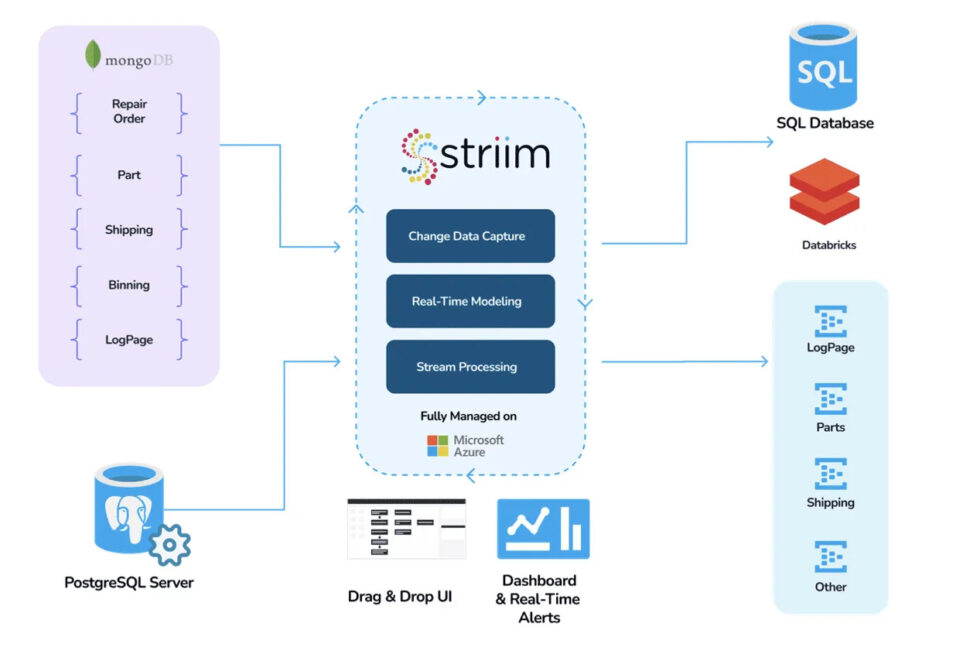
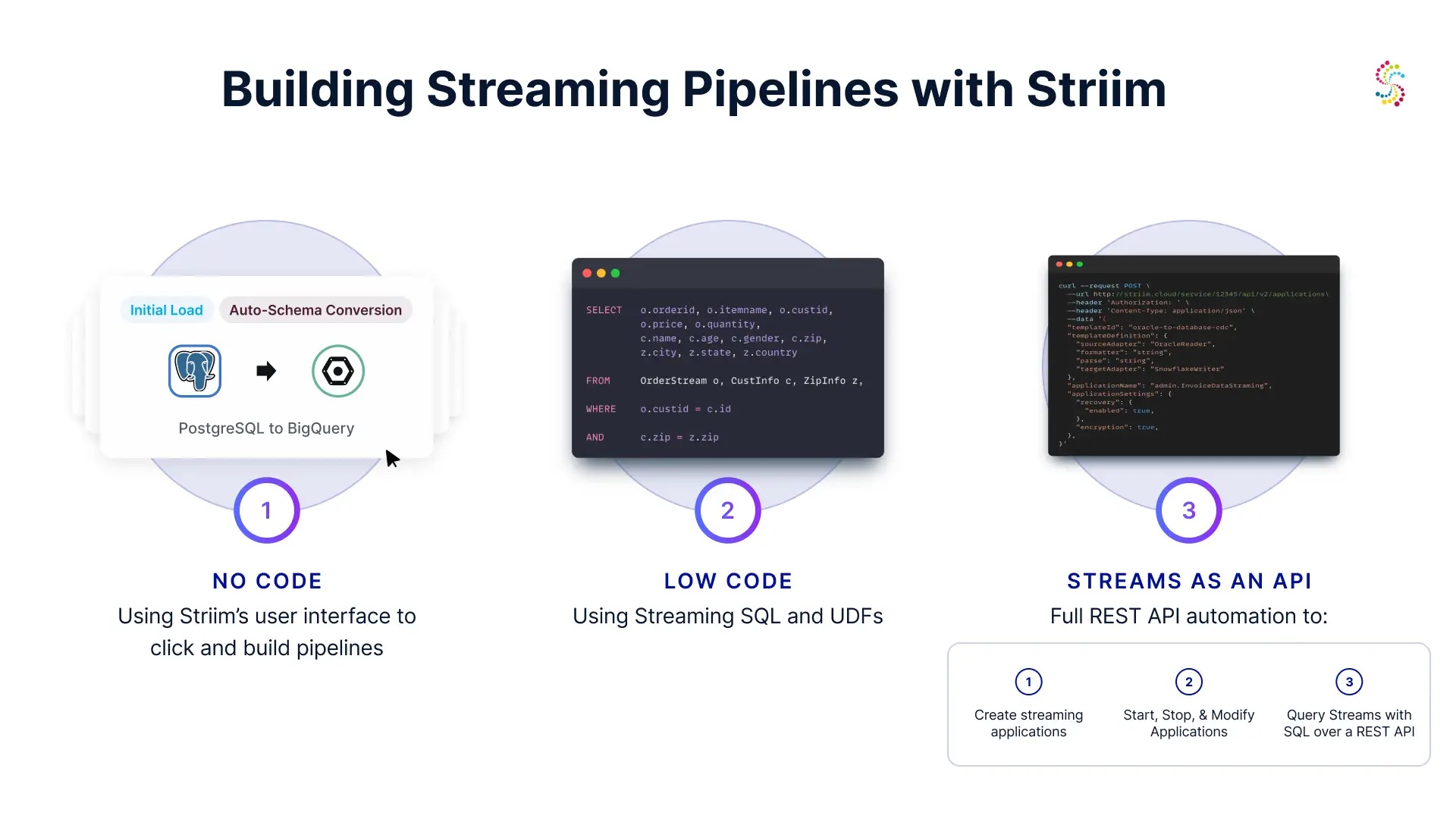
Declarative pipelines allow developers to specify what they want to achieve in concise, expressive code. This approach simplifies the creation, management, and maintenance of data pipelines. With Striim, users can leverage SQL-based configurations to define source connectors, target endpoints, and processing logic, making the entire process intuitive and accessible, all while delivering highly consistent, real-time data applied as merges and append-only change-records.

How Striim pipelines work

Striim pipelines streamline the process of data integration and real-time analytics. A pipeline starts with defining a source, which could be a database, log, or other data stream. Striim supports advanced recovery semantics such as A1P (At Least Once Processing) or E1P (Exactly Once Processing) to ensure data reliability.

You can see the full list of connectors stream supports here. →

The data flows into an output stream, which can be configured to reside in-memory for low-latency operations or be Kafka-based for distributed processing. Continuous queries on these materialized streams allow real-time insights and actions. Windowing functions enable efficient data aggregation over specific timeframes. As the data is processed, it is materialized into downstream targets such as databases or data lakes. Striim ensures data accuracy by performing merges with updates and deletes, maintaining a true and consistent view of the data across all targets.

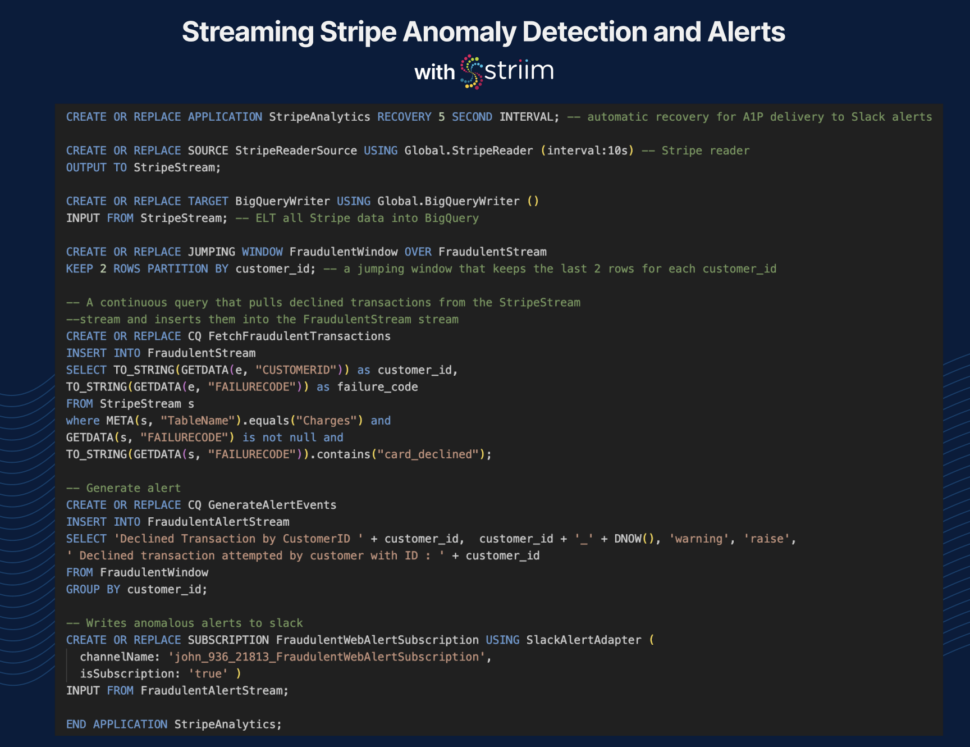
Here we’ll look at an application that reads data from Stripe, replicates data to BigQuery in real-time, then while the data is in flight, detect declined transactions and send slack alerts in real-time.

Striim’s Stripe Analytics Pipeline

Let’s dive into a practical example showcasing the power and simplicity of Striim’s streaming pipelines. The following is a Stripe analytics application that reads data from Stripe, processes it for fraudulent transactions, and generates alerts.

Application Setup

The first step is to create an application that manages the data streaming process. The `StripeAnalytics` application is designed to handle Stripe data, process fraudulent transactions, and generate alerts.

This statement initializes the `StripeAnalytics` application with an automatic recovery interval of 5 seconds, ensuring resilience and reliability. You can see we define ‘Recovery 5 second interval’. This handles the checkpointing for at least once or exactly once deliver from source to target with transactional support.

Reading from Stripe

Next, we define the source to read data from Stripe. The `StripeReaderSource` reads data at 10-second intervals and outputs it to a stream called `StripeStream`. The ‘automated’ mode denotes that schemas will be propagated to downstream targets (data warehouses, databases), an initial load of historical data will load, before starting the live CDC.


Striim streams are in-memory by default, but can be backed up to our managed Kafka or to your external Confluent Kafka cluster.

Writing to BigQuery

The processed data is then written to BigQuery for storage and analysis. The `BigQueryWriter` takes data from the `StripeStream` and loads it into BigQuery, automatically creating the necessary schemas.


Fraud Detection

To detect fraudulent transactions, we use a jumping window to keep the last two rows for each `customer_id`. This window is defined over a stream called `FraudulentStream`.


A continuous query (`FetchFraudulentTransactions`) is then created to pull declined transactions from the `StripeStream` and insert them into the `FraudulentStream`.


Generating Alerts

To notify the relevant parties about fraudulent transactions, we generate alert events. The `GenerateAlertEvents` query groups the declined transactions by `customer_id` and inserts them into the `FraudulentAlertStream`.


Sending Alerts to Slack

Finally, we create a subscription to send these alerts to a Slack channel. The `FraudulentWebAlertSubscription` uses the `SlackAlertAdapter` to deliver alerts to the specified channel.


Completing the Application

We conclude the application definition with the `END APPLICATION` statement.


Striim’s declarative approach offers several benefits:

  1. Simplicity: SQL-based streaming pipelines make it easy to define rich processing logic.
  2. Scalability: Striim handles large volumes of data efficiently by scaling up and horizontally as a fully managed service, ensuring real-time processing and delivery.
  3. Flexibility: The ability to integrate with various data sources and targets provides unparalleled flexibility.
  4. Reliability: Built-in recovery mechanisms ensure data integrity and continuous operation.
  5. Consistency: Striim delivers consistent data across all targets, maintaining accuracy through precise merges, updates, and deletes.
  6. Portability: Striim can be deployed in our fully managed service, or run in your own cloud a multi-node cluster containerized with kubernetes.

Monitoring and Reliability

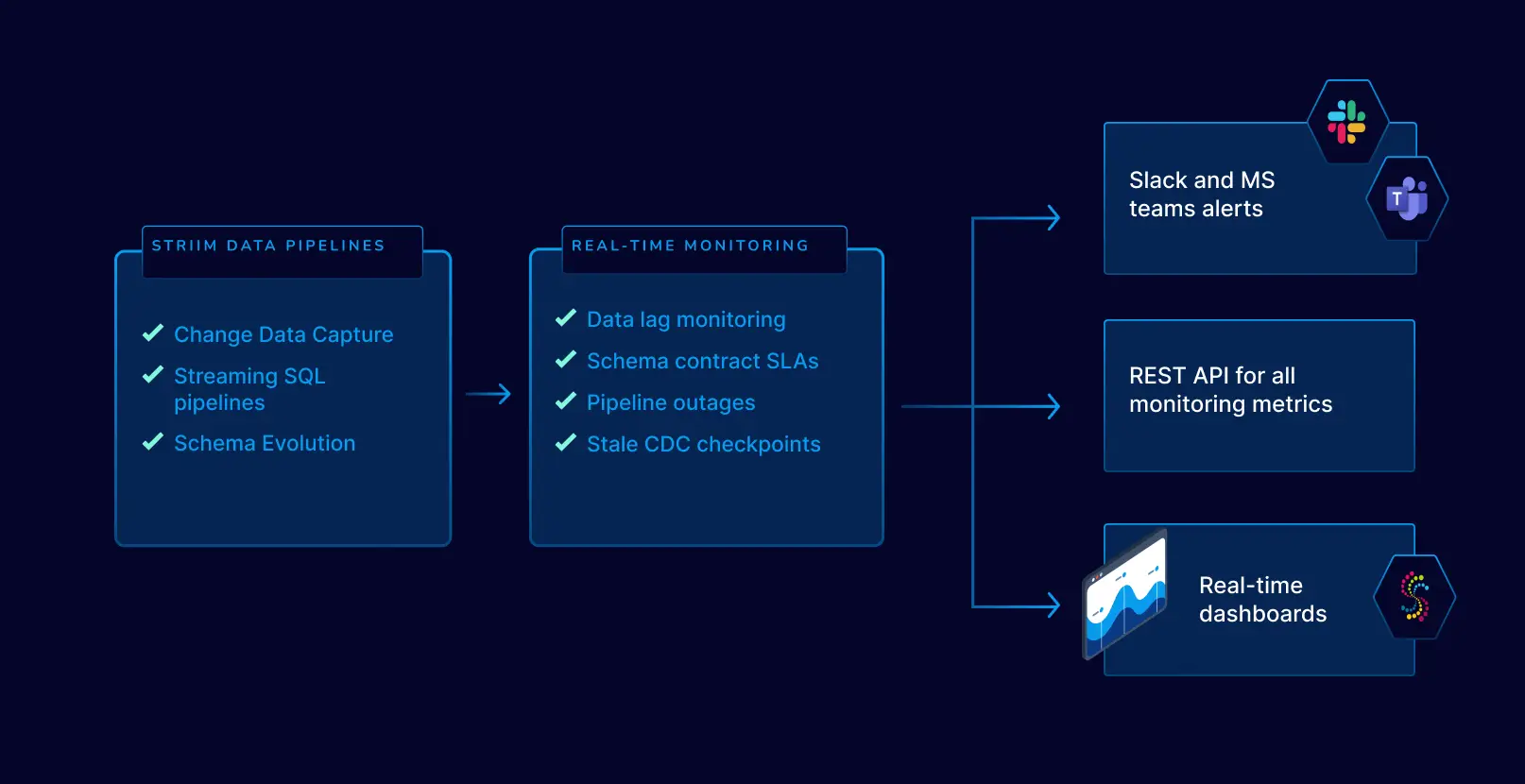
Are your reports stale? Is data missing or inconsistent? Striim allows you to drill down into these metrics and gives you out-of-the-box slack alerts so your pipelines are always running on autopilot.

Conclusion

Striim’s declarative, fully managed data streaming pipelines empower your data team to harness the power of real-time data. By simplifying the process of creating and managing data pipelines, Striim enables organizations to focus on deriving insights and driving value from their data. The Stripe analytics application is a prime example of how Striim can streamline data processing, replication and alerting on anomalies, making it an invaluable tool for modern data-driven enterprises. You can try Striim for free. No credit card, no sales call, just 14 days of fast data striiming.

Integrating Striim with Snowflake for Fraud Detection

Fraud is on the rise in the financial sector, with the Federal Trade Commission reporting a staggering $10 billion in losses for 2023 alone. This marks a 14% increase from 2022, underscoring the escalating threat of fraudulent activity within the industry. This increase can largely be attributed to the increased usage of instant transaction technologies and mobile payments. A growing reliance on instantly settled payments has upended how fraud impacts financial industries — but leveraging data more effectively can help detect and prevent fraudulent activities more effectively. Currently, many financial institutions are struggling with the diverse and widespread nature of data, sourced from numerous platforms and services. Effective fraud detection requires seamless integration and real-time analysis of this data. That’s where Striim and Snowflake step in.  In this post, we’ll explore how integrating Striim with Snowflake can enhance your fraud detection capabilities, providing financial institutions the tools necessary to combat fraud in real time.

How Can Striim and Snowflake Help?

To better understand how integrating Striim and Snowflake can help, it’s helpful to first learn about each platform’s disparate capabilities. Striim is a next-generation Cloud Data Integration platform that specializes in real-time data replication and Change Data Capture (CDC). It enables seamless data integration from hundreds of sources, including popular databases including Oracle, SQLServer, and PostgreSQL (to name a few). Striim’s capabilities extend beyond CDC, offering hundreds of automated adapters for file-based data (logs, XML, CSV), IoT data (OPCUA, MQTT), and applications like Salesforce and SAP. Its SQL-based stream processing engine allows for easy data enrichment and normalization before writing to destinations like Snowflake. Because of this, Striim is a powerful product for financial institutions to leverage to empower effective fraud detection. Snowflake is a scalable data warehousing platform designed to support real-time analytics. It allows organizations to store and analyze large volumes of data efficiently, making it an excellent solution for institutions looking to increase fraud detection capabilities. Snowflake’s architecture separates compute and storage, enabling independent scaling of each and optimizing costs.

What are Challenges Financial Institutions Face with Fraud Detection?

Financial institutions face several challenges with fraud detection. Here are some of the most pressing obstacles that Striim and Snowflake can collaboratively address.
Data Volume
Processing large volumes of transactions in real time is a significant challenge. Financial institutions process millions of transactions daily, each requiring analysis for potential fraud.
Siloed Data Sources
The data required for fraud detection originates from diverse sources, including transaction logs, customer profiles, and external threat intelligence. Integrating and analyzing these siloed data sources is necessary for effective fraud prevention and seamless response if detected.
Response Time
Real-time detection and response to fraud are crucial for minimizing losses and protecting customers. Delayed detection can lead to significant financial and reputational damage.
Sensitive Data
Incorporating data from disparate sources often involves handling sensitive personally identifiable information (PII). Striim facilitates the integration of necessary data while ensuring PII remains secure at its source. Through in-memory processing, Striim enables analysis of only essential information, maintaining the integrity and security of sensitive data.

How Integrating Striim with Snowflake Helps

As financial institutions strive to protect customer assets and uphold trust, the integration of advanced technologies like Striim and Snowflake emerges as a pivotal strategy. Here’s how.
Real-Time Data Ingestion
Striim seamlessly ingests data from various sources and streams it directly into Snowflake in real time. This continuous data flow guarantees that the most up-to-date, accurate information is always available for immediate analysis.
Data Transformation and Enrichment
Striim enhances data quality by transforming and enriching it before it reaches Snowflake, ensuring high-quality data for analysis. This includes managing diverse data formats, performing necessary transformations, and enriching the data with additional context.
Real-Time Analytics
Snowflake’s robust capabilities for real-time analysis on the streamed data empower proactive fraud detection. Financial institutions can leverage Snowflake’s powerful query engine to analyze large datasets rapidly, ensuring effective fraud detection.

Use Case: Fraud Detection in the Financial Banking Sector

Picture this: Your financial institution needs to integrate data from various sources, including:

  • Transaction logs stored in Oracle databases that are housed in 10 different data centers across the United States
  • Customer profiles stored in a centralized Oracle database
  • Third party real-time payment systems

However, these data sources are siloed, making it challenging to achieve comprehensive, real-time fraud detection and analysis.

This is where Striim and Snowflake can help. Striim facilitates real-time data integration from disparate data sources, while transforming and enriching data rapidly. Striim specializes in pulling data from large, fragmented datasets, which may be divided by department, location, or storage type.

While streaming data from these different sources, Striim can handle in-memory transformations using SQL or Java, allowing for custom logic to manage any necessary data transformations. Because these transformations occur in memory, there is minimal overhead in replicating your data into Snowflake. Striim can leverage both the Snowpipe Streaming API and the Snowpipe API, depending on the best use case for the source dataset.

Once the datasets are synchronized within Snowflake, you have two sources of truth: The original and target datasets. This setup enables the development of real-time fraud detection processes by leveraging continuously updated data in Snowflake. Snowflake offers extensive capabilities post-upload, including Snowpark ML and integrations with industry-leading data providers for customer transaction and risk data. As a result, your team enjoys enhanced fraud detection capabilities.

Integrating Striim with Snowflake for Fraud Detection

Integrate Striim and Snowflake for Enhanced Fraud Detection

Detecting fraud and understanding how it occurred is important — but unless fraud can be stopped in real time, it will continue to surge. Integrating Striim with Snowflake provides financial institutions with a comprehensive solution for real-time fraud detection, enabling seamless data ingestion, transformation, and immediate analysis.

By leveraging the capabilities of Striim and Snowflake, financial institutions can protect their assets and maintain customer trust through effective, real-time fraud detection. Explore how Striim and Snowflake integrate today with a demo.

Predictive Analytics in Logistics: Forecasting Demand and Managing Risks

The utilization of predictive analytics has revolutionized nearly every industry, but perhaps none have experienced its transformative impact quite as profoundly as logistics. In an era marked by rapid technological advancements and ever-increasing customer expectations, the ability to accurately predict demand and efficiently mitigate risks can make or break logistics operations. Predictive analytics offers a powerful solution.

By leveraging predictive analytics, logistics companies can optimize supply chain processes, enhance customer satisfaction, and achieve significant cost savings. From forecasting demand to managing operational risks, predictive analytics provides invaluable insights that empower organizations to make data-driven decisions in real-time.

What are Predictive Analytics in Logistics?

Predictive analytics in logistics involves utilizing statistical algorithms and machine learning techniques to analyze historical data. By identifying patterns within this data, it becomes possible to make accurate predictions about various aspects of the business, including future demand, supply chain disruptions, and operational efficiencies.

In the logistics industry, the power of predictive analytics lies in its ability to enable companies to adopt a proactive rather than reactive approach to strategizing. This allows for:

  • Optimized resource allocation
  • Improved overall efficiency
  • Enhanced customer satisfaction
  • Effective risk mitigation

How do Predictive Analytics Work?

The success of your predictive analytics tools hinges upon the quality and comprehensiveness of your data.

Because predictive analytics leverages historical data and applies advanced statistical modeling, data mining techniques, and machine learning (ML) algorithms to identify patterns and predict future outcomes, data quality should be your priority.

To ensure your team leverages the most current data, data streaming is essential. Batch processing, while capable of handling large data volumes at scheduled intervals, lacks the immediacy needed for real-time decision-making. In contrast, data streaming offers continuous, real-time integration and analysis, ensuring predictive models always use the latest information. This makes it the superior option for timely and impactful insights — making it ideal for predictive analytics.

Here’s the process.

  • Data Collection and Integration: Data is gathered from various sources, including sensor and IoT data, transportation management systems, transactional systems, and external data sources such as economic indicators or traffic data. Accurate predictions require seamless data integration, ensuring timeliness, completeness, and consistency.
  • Data Preprocessing: Data is cleaned and transformed into a suitable format for analysis. Cleaning involves removing duplicates, handling missing values, and correcting errors. Data transformation includes normalizing data, encoding categorical variables, and aggregating data at the appropriate granularity. Feature engineering involves creating new variables (features) that can improve the predictive power of the models.

How do Predictive Analytics Work? 

The next phase is model development. Predictive models are developed using various techniques, including regression analysis, time series analysis, and machine learning algorithms such as decision trees, neural networks, and clustering. From there, the models learn from historical data to identify patterns.

In the logistics industry, common predictive models might include demand forecasting models, which predict future product demand based on historical sales data and external factors like seasonal trends, and risk management models, which identify potential supply chain disruptions by analyzing historical incidents and external risk indicators.

From there, the models are validated using a subset of data to ensure they’re capable of accurately predicting outcomes on unseen data. After, models are deployed into production environments where they can process real-time data streams. Continuous monitoring and maintenance are essential to ensure the models remain accurate over time.

As new data becomes available, models may need to be retrained to adapt to changing patterns. This process, referred to as continuous or incremental learning, enables models to adapt to changing patterns, trends, and anomalies in real time.

Lastly, predictive models generate forecasts and risk assessments that business leaders use to inform decision-making processes. Demand predictions enable proactive inventory management, reducing stockouts and overstock situations. Risk predictions allow for preemptive actions to mitigate potential supply chain disruptions.

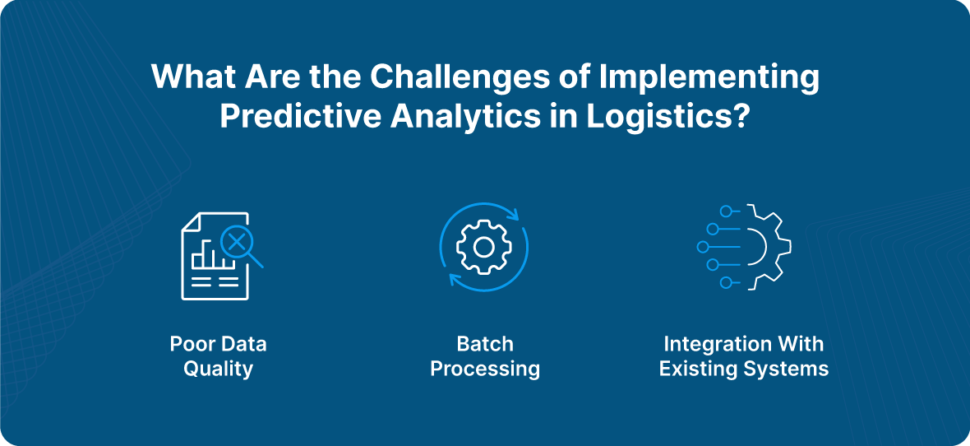
What are the Challenges of Implementing Predictive Analytics in Logistics?

While leveraging predictive analytics offers numerous benefits, it is not without its challenges. Here are some hurdles that logistics companies may encounter in their efforts to implement predictive analytics effectively:
What are the Challenges of Implementing Predictive Analytics in Logistics? 

Poor Data Quality

One significant obstacle logistics teams need to overcome in their journey to effectively implement predictive analytics is related to poor data quality. Specifically:

  • Incomplete Data: Missing or incomplete data can lead to inaccurate predictions and insights.
  • Inconsistent Data: Inconsistent data formats and standards can complicate data integration and analysis.
  • Dirty Data: Data with errors, duplicates, or irrelevant information can skew predictive models.
  • Lack of Historical Data: Insufficient historical data can limit the ability to identify patterns and make accurate predictions.

Batch Processing

Another common issue logistics companies encounter is related to outdated data. To address this challenge effectively, transitioning from batch processing to stream processing is crucial. Stream processing ensures better data quality, making it more suitable for predictive analytics utilization.

  • Latency: Batch processing involves processing data at scheduled intervals, which can delay decision-making and reduce the timeliness of insights.
  • Data Staleness: Information processed in batches can become outdated quickly, impacting the accuracy of predictive models.
  • Scalability Issues: Handling large volumes of data in batches can be resource-intensive and challenging to scale effectively.
  • Integration Complexity: Integrating batch-processed data with real-time systems can be complex and require significant effort.

Integration with Existing Systems

In the realm of logistics, the seamless integration of predictive analytics poses a significant challenge for companies already entrenched in existing systems. Balancing innovation with operational continuity is key to leveraging predictive insights effectively.

  • Compatibility: Ensuring compatibility between predictive analytics tools and existing IT infrastructure can be challenging.
  • Data Silos: Breaking down data silos to enable seamless data flow across different systems and departments is essential but often difficult.
  • Real-time Data Integration: Achieving real-time data integration from various sources, such as IoT devices and transportation management systems, requires advanced technology and processes.

How to Use Predictive Analytics in Logistics
How to Use Predictive Analytics in Logistics

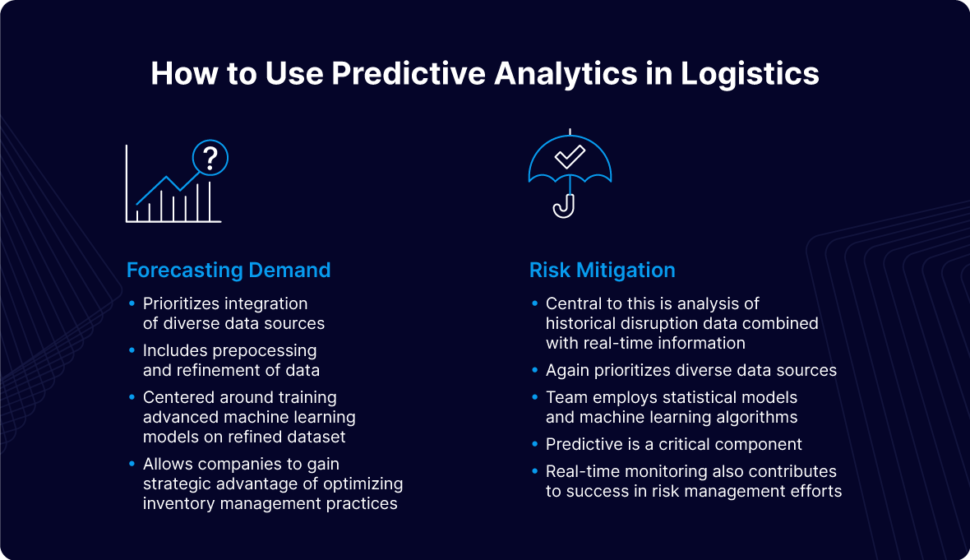
So, how do you use predictive analytics in the logistics industry? There are two main use cases that can uplevel your company’s success.

Forecasting Demand

Accurate demand forecasting is crucial for maintaining optimal inventory levels and ensuring timely deliveries. At its core, predictive analytics in logistics involves the comprehensive collection and integration of diverse data sources. These encompass historical sales data, current market trends, pertinent economic indicators, and even real-time weather forecasts.

Once this information is gathered, it undergoes meticulous preprocessing and refinement through sophisticated feature engineering techniques. This step is pivotal in ensuring data consistency and relevance, essential for the accuracy of subsequent predictive models.

The heart of the process lies in training advanced machine learning models on this refined dataset. These models are designed to extrapolate from historical patterns and current contextual factors, predicting future demand with increasing precision over time.

By generating precise demand forecasts, logistics companies gain the strategic advantage of optimizing their inventory management processes. This optimization not only reduces costs associated with overstocking or stockouts but also enhances overall operational efficiency. Additionally, improved inventory management translates directly into better customer service levels, as companies can meet demand more reliably and consistently.

By leveraging predictive analytics for demand forecasting, logistics enterprises are empowered to navigate market dynamics proactively. This capability not only supports agile decision-making but also fosters a competitive edge in an increasingly complex global marketplace.

Risk Mitigation

Risk mitigation through predictive analytics plays a pivotal role in ensuring your logistics company can make proactive decisions that safeguard your organizational resilience and operational continuity.

Central to this process is the comprehensive analysis of historical disruption data combined with real-time information sourced from GPS tracking, weather reports, and live news feeds. By integrating these diverse data sources, logistics companies can assess the likelihood and potential impact of various risks such as natural disasters, geopolitical events, supplier delays, or transportation bottlenecks.

To effectively prioritize these risks, your team will employ statistical models and machine learning algorithms. These tools analyze patterns within the data and proactively identify critical vulnerabilities within the supply chain. These insights empower decision-makers to allocate resources proactively, strengthening preparedness and response capabilities.

Predictive maintenance also represents a crucial component of risk mitigation strategies in logistics organizations. By leveraging IoT sensors and predictive models, companies can forecast equipment failures before they occur. This proactive approach enables scheduled maintenance interventions, thereby minimizing unplanned downtime and optimizing operational efficiency.

Real-time monitoring systems further enhance risk management efforts by continuously tracking potential disruptions. These systems are designed to detect anomalies and trigger alerts in response to emerging threats. Early warnings enable logistics teams to implement dynamic rerouting strategies, adjusting transportation routes or supplier networks swiftly to circumvent potential disruptions.

Ultimately, the proactive application of predictive analytics in risk mitigation ensures a resilient supply chain ecosystem. By preemptively addressing potential disruptions and maintaining service levels despite uncertainties, logistics companies can enhance customer satisfaction, reduce operational costs, and sustain competitive advantage in a volatile global market landscape.

Take UPS, for instance. The surge in package theft due to more online shopping overwhelmed traditional security measures and data management systems, which showcased significant operational vulnerabilities. The lack of real-time data processing hindered UPS Capital’s risk management, affecting operational efficiency, consumer trust, and financial performance, underscoring the need for a sophisticated solution. That’s where Striim came into play.

UPS Capital integrated Striim’s real-time data streaming with Google BigQuery’s analytics to enhance delivery security through immediate data ingestion and real-time risk assessments. This integration allowed advanced analytics and machine learning to predict delivery risks and optimize logistics strategies. The DeliveryDefense™ Address Confidence system then used this data to assign confidence scores to delivery locations, improving predictive accuracy and managing delivery risks more efficiently than ever before.
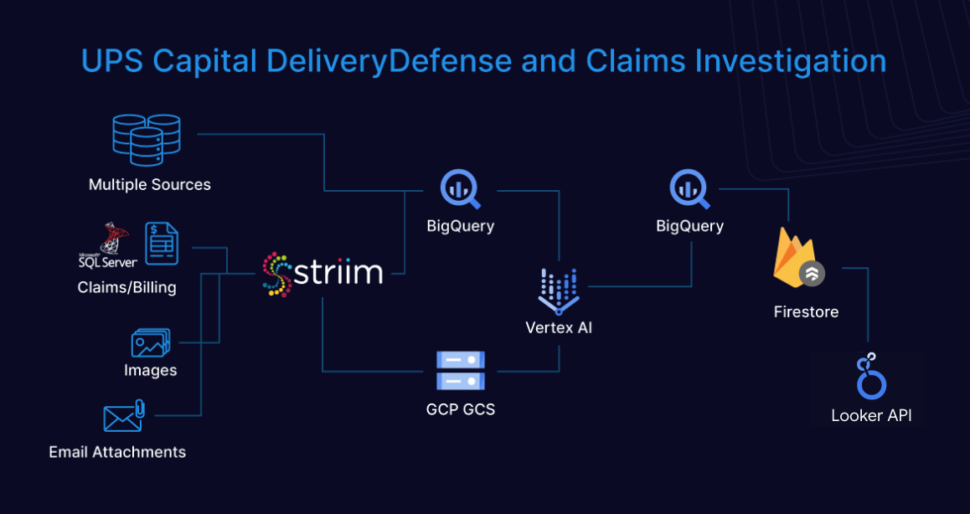
UPS Capital integrated Striim’s real-time data streaming with Google BigQuery’s analytics to enhance delivery security through immediate data ingestion and real-time risk assessments

Leverage Striim to Garner Real-Time, High-Quality Data

If you’re ready to tap into the power of predictive analytics, it’s time to leverage Striim to garner real-time, high-quality data that will fuel informed decision-making and drive operational excellence in your logistics operations. Book a demo with us today to see for yourself the difference Striim can make for your team.

Back to top