Live from Google Next: Innovation & AI Revolution in Data Streaming

Unlock the secrets of AI’s transformative power with latest episode live from Google Next, where UPS’s story takes center stage. Joined by AI trailblazers like Bruno Aziza of CapitalG and Pinaki Mitra from UPS, we delve into how UPS is tackling package theft and reshaping package delivery. This isn’t just another discussion; it’s a firsthand look at how AI and data analytics converge to solve real-world challenges, improving security and efficiency in the e-commerce landscape.

Ever wonder how AI can streamline your business operations? Our panelists, including Sanjeev Mohan of Sanjmo and Alok Pareek from Striim, reveal the nuts and bolts of integrating AI into supply chain processes and the pivotal role of data lifecycle management. From enhancing address validation to offering insights for small and medium enterprises, we uncover the practical benefits of AI and the importance of a meticulous approach to data management. Get ready to be inspired by the parallels drawn between packet delivery and data event observability, and the critical steps for aligning AI with your business strategy.

We wrap up by exploring the broad implications of generative AI across industries, with case studies that will alter your perspective on AI’s potential. Whether it’s summarizing legal documents or mining data for pharmaceutical insights, the versatility of AI is showcased in its full glory.

We extend our heartfelt thanks to our live audience and listeners, encouraging you to engage with the innovative ideas shared at Google Cloud Next and reminding you of the importance of robust data foundations in harnessing AI’s full potential.

Join us for a conversation that promises not just to inform but to transform the way you view the intersection of AI and business.

“UPS AI Battle Porch Pirates.” ABC News, Good Morning America. Accessed April 10th, 2024. https://abcnews.go.com/GMA/News/video….

What’s New In Data is a data thought leadership series hosted by John Kutay who leads data and products at Striim. What’s New In Data hosts industry practitioners to discuss latest trends, common patterns for real world data patterns, and analytics success stories.

How Generative AI is Transforming Customer Experiences in Real Time

The ability to quickly understand and respond to customer demands is critical for staying ahead of the competition. Generative AI (GenAI) is quickly reshaping customer experiences across various sectors. It enables businesses to engage with their clients in real time, providing an unprecedented level of personalization and responsiveness. This innovative approach not only boosts customer satisfaction but also cultivates loyalty and encourages sustained interaction.

The Rise of GenAI in Customer Experiences

GenAI represents a leap in how businesses can leverage artificial intelligence (AI) to glean insights from vast amounts of data instantly. Unlike traditional models, GenAI integrates deep learning and real-time data processing, allowing for dynamic customer interactions that are both contextual and highly personalized. This capability transforms how companies engage with their customers, turning every interaction into an opportunity to understand and react in the moment. 

At its core, GenAI involves the use of sophisticated AI models that can process and analyze data in real time, predicting customer needs and preferences. These models are capable of understanding nuances in customer behavior, thanks to their ability to learn from a broad array of data sources, including transactional data, customer feedback, and real-time user interactions.

The Complexities of Implementing GenAI for Enhanced Customer Experiences

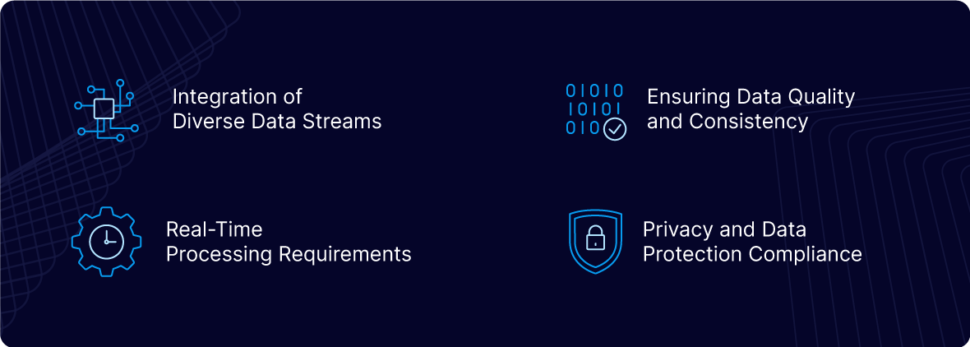
When customers look to implement GenAI to enhance their experiences, they face several complex challenges. Integrating diverse data streams from sources like CRM systems, social media, and IoT devices into a cohesive view is both time-consuming and technically demanding. Ensuring data quality and consistency is critical, as poor data can lead to inaccurate insights and ineffective applications, ultimately compromising the customer experience. The need for real-time processing adds another layer of complexity, requiring robust infrastructure that can handle large volumes of data with minimal latency. Moreover, as GenAI applications often use personal data, maintaining privacy and adhering to stringent data protection regulations such as GDPR or CCPA is essential.

Real-Time Personalized Experiences at Scale

One of the standout features of Generative AI (GenAI) is its capability to personalize interactions with customers on a large scale. Businesses are now equipped to customize their offerings in real-time, adjusting dynamically to meet the individual preferences and needs of each customer. From recommending products tailored to a customer’s browsing history to providing personalized discounts at the point of sale, GenAI ensures that these interactions are both fluid and immediate.

In customer support, GenAI significantly elevates service quality. AI-powered chatbots and virtual assistants are capable of managing inquiries and resolving issues efficiently. With each interaction, these tools learn and refine their responses, becoming increasingly adept at providing relevant and useful information. This improvement in response times not only enhances operational efficiency but also boosts customer satisfaction by offering tailored support.


Made w/ Dalle-3

Furthermore, GenAI is transforming the e-commerce landscape by optimizing the shopping experience. It does this through personalized product suggestions generated from a real-time analysis of user behavior and preferences. This level of personalization not only enriches the customer’s shopping journey but also increases conversion rates and fosters greater customer loyalty.

Implementation Considerations

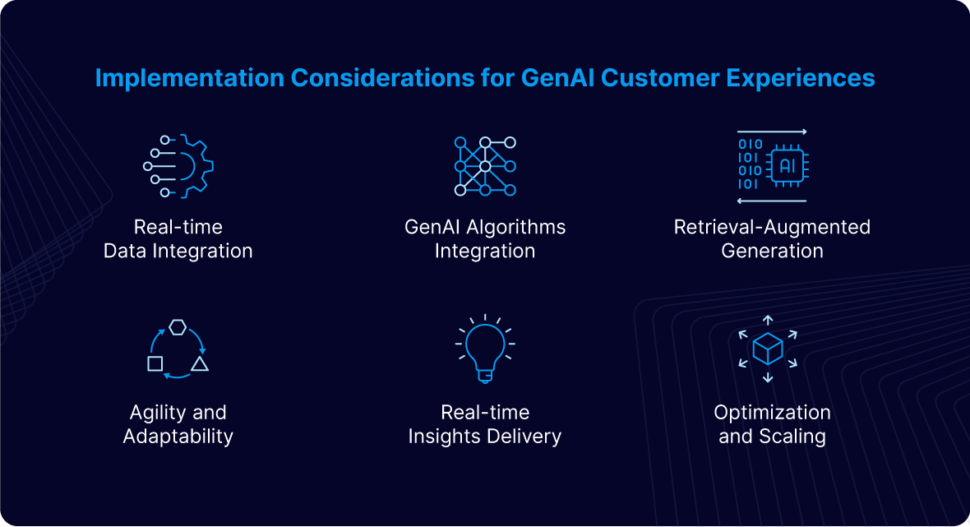
Deploying real-time GenAI requires careful consideration of several factors to ensure successful integration and operation. Here’s how Striim’s platform facilitates these considerations:

  • Real-time Data Integration: Striim’s platform leverages a distributed, in-memory streaming architecture to ingest and process data in real time from a variety of sources such as transactional databases, CRM systems, website clickstreams, and social media feeds. The architecture utilizes low-latency messaging systems like Apache Kafka or MQTT for efficient data transportation and employs parallel processing techniques to manage high data volumes effectively.
  • GenAI Algorithms Integration: Striim integrates a comprehensive suite of advanced GenAI algorithms directly into its streaming data pipeline. These include various machine learning models (such as supervised, unsupervised, and reinforcement learning), natural language processing (NLP), sentiment analysis, and predictive analytics. The platform supports seamless deployment and execution of these algorithms on streaming data, enabling real-time analysis and insights generation.
  • Retrieval-Augmented Generation: Striim’s platform employs RAG for infusing more context into the decision-making capabilities of GenAI systems. This involves integrating real-time data retrieval with AI-driven generation processes, allowing the system to pull relevant historical data or contextual information as it generates responses or recommendations. This enhances the accuracy and relevance of real-time interactions, further personalizing customer experiences and improving satisfaction.
  • Agility and Adaptability: The architecture of Striim is crafted for high agility and adaptability, allowing organizations to swiftly iterate and deploy GenAI models in response to evolving business needs or shifts in customer behaviors. Features like model versioning, A/B testing, and dynamic retraining of models based on incoming data ensure that GenAI capabilities continuously adapt and remain effective.
  • Real-time Insights Delivery: Striim enables the delivery of real-time insights derived from GenAI algorithms to various customer touchpoints, such as web applications, mobile apps, call center systems, and marketing automation platforms. Integration with downstream systems is facilitated through APIs, message queues, or streaming data connectors, guaranteeing that personalized interactions and recommendations reach customers promptly.
  • Optimization and Scaling: Designed with scalability and performance in mind, Striim’s platform is adept at handling increasing data volumes and computational demands as GenAI initiatives expand. The platform can automatically scale out to utilize additional compute resources, including multi-core CPUs, GPUs, or cloud-based instances, ensuring low latency and high throughput even under growing workloads.

Measuring Success

The success of real-time GenAI initiatives can be gauged through several key performance indicators (KPIs):

  1. Customer Satisfaction and Experience Scores: Measurement through surveys, feedback forms, or Net Promoter Score (NPS) after interactions handled by GenAI systems. An increase in these scores can indicate a positive impact on customer experiences.
  2. Response Time: Tracking the speed at which customer inquiries are addressed when using GenAI tools such as chatbots or virtual assistants. Shorter response times are typically associated with higher customer satisfaction levels.
  3. Engagement Metrics: Analysis of engagement levels, such as interaction rates, session duration, and frequency of use, to understand how customers are interacting with AI-driven features.
  4. Conversion Rates: The effectiveness of personalized recommendations or promotions in converting interactions into sales. An increase in conversion rates can signify successful tailoring of offers and content.
  5. Error Rate: The frequency of errors or the accuracy of GenAI responses. A decrease in error rates over time demonstrates improvement in AI performance and reliability.
  6. Operational Efficiency: Reduction in operational costs and time savings resulting from automating customer interactions and processes.
  7. Retention Rates: The impact of personalized experiences on customer loyalty, observed through repeat interactions or increased retention over time.
  8. Upsell/Cross-Sell Success Rates: The effectiveness of GenAI in increasing additional sales through relevant recommendations during customer interactions.

By monitoring these KPIs, businesses can gain valuable insights into the effectiveness of their real-time GenAI implementations and identify areas for improvement to enhance customer experiences further.

Transforming Data into Dynamic Customer Engagements in Real Time

Striim leverages real-time data to enhance GenAI-driven customer experiences, providing a direct route to impactful, personalized interactions. As data is generated, Striim enables immediate analysis, allowing businesses to adapt their strategies in real-time based on current customer behaviors and preferences. This capability is crucial for businesses looking to meet individual needs efficiently and stay ahead of market demands.

Our platform supports advanced machine learning analytics, optimizing every customer touchpoint for maximum engagement and satisfaction. By ensuring that interactions are responsive and based on the latest data, Striim not only fosters loyalty but also deepens customer connections, delivering a personalized experience that truly resonates.

To see how Striim can make a real difference in your operations, sign up for a free trial today!

The Evolution of Data Science into Business Influence with Expert Lindsay Pettingill

Discover the unexpected pathways that can lead to a thriving career in data science as Lindsay Pettingill, PhD, and Director of Data Science at Replit, joins us for a riveting conversation. Lindsay’s journey—from a Fulbright scholar teaching in Germany to shaping Airbnb’s hyper-growth period—is a testament to the value of curiosity and an analytical mindset. Her insights promise to guide and inspire, whether you’re a seasoned professional or just starting out in the data world.

We get to the heart of what truly powers data science: curiosity and intuition. Lindsay advocates for a holistic approach to data, stressing the need for professionals to develop insights and propose business hypotheses. This fascinating discussion also covers how personal traits, such as proactivity shown through cold outreach, are becoming indispensable as technical tasks undergo automation. Lindsay’s experiences underscore the evolution of the data scientist’s role, from crunching numbers to being a strategic business influencer.

Finishing on a high note, our episode focuses on the delicate dance of data-driven decision-making within organizations. Lindsay reflects on her leadership experiences, particularly during the turbulent times at Airbnb, and shares her evolved perspective on leadership in product strategy. She emphasizes the need for data teams to contribute meaningfully to their organizations, beyond technical expertise, and offers insights on how to empower data professionals to make a significant business impact. Tune in to gain valuable lessons from a leader who has successfully navigated the waves of change in the data science industry.

Follow Lindsay on:

Twitter: @iam_lpettingill

Website: https://lindsaypettingill.com/

What’s New In Data is a data thought leadership series hosted by John Kutay who leads data and products at Striim. What’s New In Data hosts industry practitioners to discuss latest trends, common patterns for real world data patterns, and analytics success stories.

How Striim and GenAI Are Crafting the Future of Shopping

As retailers strive to meet the growing expectations of shoppers, they are turning to the cloud and GenAI to transform their businesses and tackle opportunities in an increasingly challenging industry. From optimizing inventory management, to increasing collaboration between employees across locations and roles, to helping build omnichannel experiences for customers, Striim is helping to create more cohesive and personalized shopping experiences.

Understanding Retail Customer Challenges

Demand for Personalized Experiences: Today’s consumers are no longer satisfied with one-size-fits-all solutions built on yesterday’s data. They want shopping experiences that are tailored to their preferences and behaviors across all channels in real time, raising the bar for retailers to create consistently personalized touchpoints.

Need for Agile Inventory Management: Retailers face the ongoing challenge of adjusting inventory promptly based on shifting market trends. Effective inventory management requires accurate, real-time analytics to prevent overstocking or understocking.

Insecure & Vulnerable Data: With the increase in digital transactions, retail companies face significant risks related to data breaches and fraud, necessitating comprehensive security measures. Advanced security protocols ensure that data remains secure, helping retailers protect against these vulnerabilities effectively.

Personalized Customer Experiences: Go Beyond Expectations

Consumers today anticipate a shopping experience that is not only seamless across multiple channels but also distinctly tailored to their preferences. Retailers’ investment in personalizing customer communications has surged from 32% in 2021 to 57% in 2023. While 92% of retailers are boosting AI investments, with 59% using it to aid store associates in product recommendations. Striim’s platform excels in delivering these experiences by leveraging real-time data to offer insights into customer behaviors and preferences. This capability allows retailers to craft interactions that are not just personalized but are anticipatory in nature, thus deepening customer engagement and fostering loyalty.

For example, by integrating insights gathered from various customer interactions, Striim enables retailers to offer personalized recommendations and promotions that resonate deeply with individual needs. This approach not only enhances the customer experience but also drives significant improvements in sales and customer retention.

Dynamic Inventory Management: Real-Time Precision

Inventory management is crucial for retail success. Striim transforms this aspect by providing ML-driven inventory monitoring, enabling real-time visibility and management of inventory levels. Retailers can now efficiently manage their stock by monitoring real-time data from point-of-sale systems, online marketplaces, and social media inputs.

This real-time capability is especially important during peak shopping seasons when demand fluctuates rapidly. Striim’s platform alerts retailers about stock levels and shifting consumer demands, allowing them to make informed decisions swiftly — whether it’s replenishing popular items or scaling back on slower-moving goods. This proactive approach prevents stock-outs and excess inventory, ensuring profitability and customer satisfaction remain high.

Proactive Fraud Detection: Bulletproof Against Risk

With the increase in digital transactions comes a heightened risk of fraud. Striim’s platform addresses this by analyzing transactional data across multiple sources in real-time, identifying suspicious patterns, and pinpointing potential anomalies. This immediate detection enables quick action, significantly reducing the potential impact of fraudulent activities.

The platform’s capability to trigger instant alerts ensures that retail personnel can address risks promptly, protecting not just the financial aspects of the business but also securing customer trust and compliance with data protection regulations.

Macy’s Success Story: A Blueprint for Retail Reinvention

As retailers like Macy’s strive to enhance their digital and mobile experiences, they are increasingly leveraging cloud technologies. Macy’s, in collaboration with Google and Striim, has embarked on an ambitious project to transform its retail operations. This partnership focuses on improving site stability, optimizing store technology, and refining fulfillment and logistics operations. It also aims to integrate front-line and back-office processes to create a more seamless and efficient retail environment.

Neel Chinta, IT Manager at Macy’s, highlighted the impact of this collaboration: “Striim gives us a single source of truth across domains and speeds our time to market delivering a cohesive experience across different systems.” 

Through its use of Striim’s platform, Macy’s has been able to not only improve its operational efficiencies but also deliver a more personalized shopping experience to its customers. The real-time data provided by Striim allows Macy’s to anticipate customer needs more accurately and respond more swiftly, ensuring that customer satisfaction and loyalty continue to grow.

Enhancing Retail Operations: From Inventory Management to Fraud Prevention

Striim’s real time data for GenAI redefines retail by providing continuous data integration, ML-driven analytics, and security. Our platform delivers insights for dynamic inventory control, personalized customer experiences, and fraud detection, helping companies gain a competitive edge in the fast-paced retail industry.

Sign up for a free trial today!


Parcel Protection: Inside UPS Capital’s Defensive Strategy with Striim & Google

Amidst the pandemic-fueled surge in online shopping, porch piracy emerged as a prevalent concern, with over one in 10 adults falling victim to package theft within the previous year, according to a 2021 Consumer Reports survey. This modern-day menace, epitomized by the term “porch pirate,” underscores the vulnerability of unattended packages to opportunistic thieves. UPS Capital recognizes the challenges faced by its customers in securing their package delivery ecosystem and is harnessing digital capabilities and data access to redefine traditional approaches, ensuring improved customer experiences and combating shipping loss.

About UPS Capital

UPS Capital, a subsidiary of UPS, specializes in providing financial and insurance solutions tailored to businesses engaged in shipping and logistics. Established in 1999, it offers risk management services including cargo insurance and trade credit insurance, along with trade finance solutions such as supply chain finance and export financing. UPS Capital provides customs brokerage services to navigate import/export processes, supply chain optimization tools like supply chain analytics and inventory management, and technology solutions like the UPS Capital Merchant Services platform and UPS Capital Cargo Finance platform. These offerings collectively support businesses in mitigating risks, optimizing operations, and facilitating smoother transactions within the global trade and logistics landscape.

Challenges

The surge in online shopping has led to an unprecedented rise in package deliveries and, correspondingly, package theft. This upsurge has dramatically outpaced traditional security measures, exposing significant operational vulnerabilities within UPS Capital. The sheer volume of data generated from the increasing package deliveries overwhelmed existing data management systems, underscoring a critical need for more advanced data handling capabilities. The absence of real-time data processing capabilities hindered UPS Capital’s risk management and rapid response efforts. This deficiency affected not only operational efficiency but also eroded consumer trust and impacted the financial performance of the company. These multifaceted challenges highlighted the urgent need for a sophisticated solution capable of addressing the complexities of modern package delivery and logistics.

Solution

In response, UPS Capital integrated Striim’s real-time data streaming technology with Google BigQuery’s analytics capabilities to enhance delivery security. Striim’s platform enabled the immediate ingestion and integration of data from various sources, facilitating real-time risk assessments and proactive decision-making. This seamless data flow into Google BigQuery allowed for advanced analytics, leveraging AI and machine learning to predict potential delivery risks and optimize logistics strategies effectively. Additionally, the innovative DeliveryDefense™ Address Confidence system utilized this integrated data to assign confidence scores to each delivery location based on real-time and historical data, enhancing predictive accuracy. This system empowered businesses to proactively manage delivery

risks by rerouting packages or adjusting delivery protocols based on the calculated confidence scores, thereby streamlining operations and enhancing security.

The UPS DeliveryDefense program utilizes a sophisticated technical setup, starting with the direct upload of varied datasets into BigQuery. This platform acts as the primary structured data repository in Google Cloud. Concurrently, SQL Server data is thoroughly cleaned in Link Data, which also extracts images and email attachments from different systems, ensuring data integrity and availability. These enriched datasets are merged in BigQuery for seamless Google Cloud integration. Vertex AI then becomes pivotal, running advanced machine learning models like route anomaly detection and fraud detection for shipping transactions. Using Vertex AI’s extensive tools, these models are trained, refined, and implemented to discover insights, predict trends, and extract valuable information. Firestore, a flexible database suitable for various development environments, stores insights, confidence scores, and analytical details, all accessible via the Looker API.

Results

  • Improved Customer Experience: The integration of Striim not only secures deliveries but also optimizes routing and delivery strategies, resulting in heightened reliability. This reliability, in turn, boosts customer trust and satisfaction, as customers receive their packages safely and on time.
  • Cost-Savings: UPS achieved significant cost reductions by implementing advanced strategies to minimize losses from theft and optimize delivery routes, employing proactive risk management alongside sophisticated analytics and route optimization algorithms.
  • Advanced AI and ML Implementations: Utilizing Striim in conjunction with Google Cloud technologies like BigQuery and Vertex AI, UPS can deploy complex machine learning models. These models are crucial for detecting routing anomalies and preventing shipping fraud, thereby enhancing the security and efficiency of the delivery network.
  • Improved Data Processing and Analytical Accuracy: Striim’s implementation of AI-driven innovations, such as embedding vectors into streaming data, markedly improves the efficiency and accuracy of data processing. This technology allows UPS to perform real-time analytics, yielding quicker and more accurate decision-making in logistics.
  • Upgraded Protection Against Evolving Threats: Striim enables UPS to continuously adapt and enhance its defense models through ongoing analysis of real-time data and dynamic vector generation. This approach significantly strengthens UPS’s capabilities to mitigate evolving threats such as package theft and delivery fraud.

https://vimeo.com/954036063?share=copy

Elevating Logistics Solutions: UPS Capital’s Strategic Partnership with Striim and Google BigQuery

UPS Capital’s adoption of Striim and Google BigQuery represents a proactive and strategic approach to managing the complexities of modern logistics. Through this technological integration, UPS Capital has enhanced its ability to secure packages, optimize delivery routes, and maintain a competitive edge in the logistics industry. The initiative demonstrates how leveraging cutting-edge technology can address the challenges of modern package delivery, ensuring safety and reliability for customers globally.

Discover how Striim on Google Cloud can empower real-time intelligence for AI, just like UPS’s DeliveryDefense Address Confidence. 

Sign up for a free trial today!


View Case Study

Back to top