What’s New in Data’s Live Recording from the Salesforce Tower during Snowflake Summit
Imagine a world where real-time data processing is the norm, not the exception. In this episode, we bring you a fascinating conversation with Sanjeev Mohan, former VP at Gartner, who unpacks the seismic shifts in the data processing landscape. You’ll learn about the convergence of structured and unstructured data, driven by Generative AI, and why streaming is becoming the default method for data processing. Sanjeev highlights the significance of innovations like Iceberg, which create a common table format essential for decision-making across a variety of applications.
We then traverse the cutting-edge realm of real-time data streaming platforms, spotlighting technologies and companies such as Materialize and Apache Grid Gain. Sanjeev explains the essential design criteria for these platforms, including scalability, cost performance, and fault tolerance. He also discusses the pivotal role of Kafka and its implementations across major cloud providers. This episode is a treasure trove of insights into how platforms like Snowflake are being utilized beyond their traditional roles to act as streaming databases, redefining the boundaries of data management.
In our final segments, we accelerate into the future, examining the rapid advancements in streaming technology and its interplay with AI. Sanjeev reflects on how applications like Tesla and Uber are driving innovation and demonstrates the complexities of handling real-time data replication with tools like Snowpipe Streaming. We also explore the potential for real-time training of Large Language Models (LLMs) and the ever-evolving landscape of data management. Packed with expert analysis and future-forward thinking, this episode is your guide to understanding the groundbreaking technologies shaping the world of data.
When it comes to choosing a banking institution, customers have options. That’s why building customer relationships fueled by real-time data and personalization in banking is more critical than never. Personalized relationships are at the heart of customer loyalty and satisfaction, and in the digital age, these relationships are increasingly driven by real-time data. With the assistance of real-time data, banks are able to understand and respond to customer needs more promptly. Moreover, financial institutions are now able to create highly tailored, engaging experiences, all while building trust and connection.
Today, we’ll explore the myriad of ways that banks can leverage real-time data to enhance personalization and ultimately, create more meaningful customer relationships.
Why the Shift Towards Personalization in Banking?
The shift towards personalization isn’t confined to the banking industry but rather, as an overarching concept impacting all industries. More than half (52%) of consumers believe that as digital experiences with brands become more personalized, satisfaction improves, according to research by Segment. Personalization isn’t only beneficial from a customer perspective — it can also have a tangible impact on your business’s bottom line.
McKinsey reports that companies can generate as much as 40% more revenue due to personalization. If your bank isn’t harnessing the power of personalization, it’s losing money.
Today’s customers know that businesses have the tools available to develop personalized experiences, and expect companies to deliver on those expectations. If they’re not met, customer satisfaction and loyalty can suffer. The good news for businesses is that you don’t have to figure out personalization alone. Real-time data can help fuel successful personalization efforts that improve customer experience, drive loyalty, and result in increased satisfaction. (Want to learn more about how you can use generative AI to transform customer experiences? Check out this post.)
How can Data Play a Role in Creating Stronger Customer Relationships in Real Time?
Real-time data is the backbone of personalization in banking, and plays a critical role in creating stronger customer relationships. By utilizing real-time data, banks gain an in-depth understanding of customers’ behaviors, preferences, and needs. This enables the organization to deliver tailored, highly relevant experiences. Moreover, real-time insights gleaned from accurate, up-to-date data enables banks to make informed decisions and offer immediate responses to customer actions. This enhances the experience customers have with the bank, and builds up loyalty.
Here’s how real-time data integration and streaming make this possible.
Banks operate with a plethora of data sources, each contributing to a comprehensive understanding of their customers. Transactional data, for instance, offers detailed insights into customer spending habits, financial behaviors, and purchasing patterns. This data includes deposits, withdrawals, transfers, and payments, providing a real-time snapshot of a customer’s financial activities. Meanwhile, data from customer interactions, such as online banking sessions, mobile app usage, and in-branch visits, adds contextual information about the customer preferences’s service requirements, and engagement levels.
To effectively harness this data, banks utilize real-time data integration and streaming technologies. Real-time data integration involves the combination of data from multiple sources into a cohesive, up-to-date view. This process often employs Extract, Transform, Load (ETL) pipelines optimized for real-time processing. Data is continuously extracted from various sources, transformed into a uniform format, and loaded into a centralized repository, such as a data warehouse or a data lake.
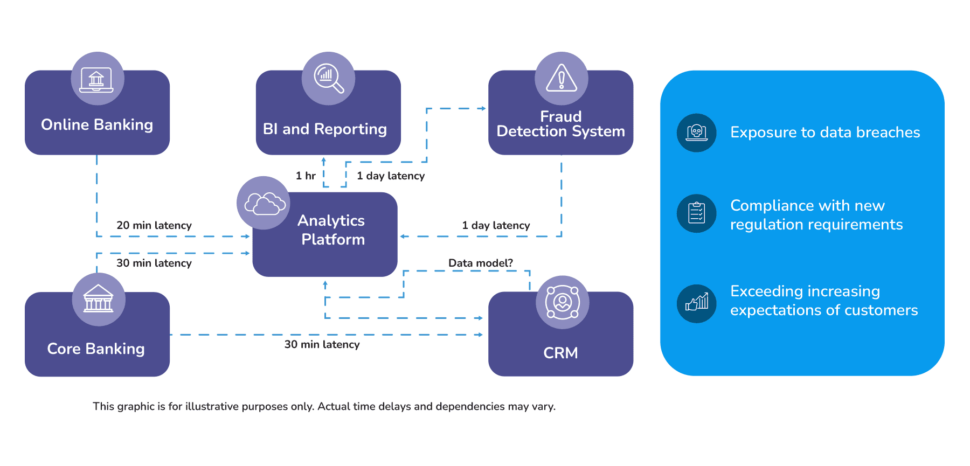
Here’s how siloed data negatively impacts operations in banking:
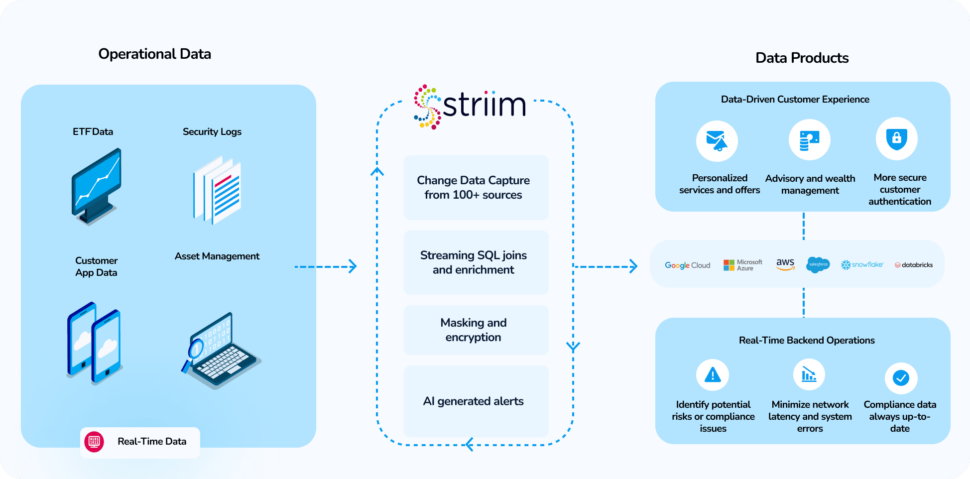
Platforms like Striim enable banks to process and analyze data as it is generated, which offers a myriad of benefits for banks from an operational and personalization perspective. For example, real-time fraud detection systems analyze transaction data in milliseconds, identifying and flagging suspicious activities as they occur. Similarly, personalized marketing engines use streaming data to offer tailored product recommendations and promotions based on the latest customer interactions and behaviors.
In the past, banking relied on batch processing and historical data. This led to delayed responses, a lack of personalized service, and frustration from the customer. In contrast, real-time data provides banks the ability to process and analyze information as it occurs. In the banking industry, immediacy makes all the difference, as it enables dynamic adjustments to customer interactions.
Ways to Leverage Real-Time Data for Personalization in Banking
There are countless ways banks can leverage real-time data to offer highly personalized experiences. Here are some of the most compelling.
Customer segmentation: By continuously analyzing customers’ real-time activities including transaction types, spending patterns, and online banking interactions, banks can categorize customers into relevant segments. Examples of these segments include high spenders, frequent travelers, or online shoppers. These segments can then be used to tailor offerings the customer may find worthwhile.
Personalized product recommendations: Banks can utilize real-time data to offer personalized product recommendations. By monitoring recent transactions and customer interactions, banks can identify specific needs and preferences at any given moment.
Customer support: By monitoring customer activities such as transaction attempts, login patterns, and navigation within their apps or websites, banks can instantly identify and address potential issues. This enables proactive support before customers request help.
Enhanced communication: Banks can also use real-time data to build highly targeted marketing campaigns and communications. To do so, analyze current customer behaviors and preferences to deliver relevant offers and messages.
Here’s a comprehensive look at how innovation with real-time data can propel financial institutions to the next level:
Take Personalization to the Next Level with Real-Time Data via Striim
Elevate your personalization initiatives to new heights with Striim. With its cutting-edge data streaming and integration capabilities, Striim ensures real-time processing with subsecond latency. Seamlessly capture data from diverse sources, streamline processing, and swiftly garner actionable insights to enable personalization efforts. Experience the difference firsthand with a free trial.
Can high-quality data be the key to unlocking the full potential of generative AI? Join us for an enlightening discussion with Nicola Askham, the Data Governance Coach, as she takes us on a journey from her early days at a large British bank to becoming a leading figure in data governance. Nicola sheds light on the current landscape of data governance, the unique challenges data teams face today, and the indispensable role it plays in the success of advanced technologies like generative AI. Through her expert lens, we examine how integrating AI governance and adhering to data privacy and security standards are not just important but essential for leveraging AI effectively.
In the second half of our conversation, Nicola shares actionable strategies to implement data governance in your organization. Discover how to identify real data problems and engage senior stakeholders by demonstrating data gaps. Learn about the power of collaborative workshops in creating conceptual data models and fostering a sense of ownership among business users. Nicola also guides us through the evolution from technical role-based access control to a holistic enterprise-wide data governance approach. Plus, hear her take on the exciting potential of generative AI to enhance data quality processes, making the dream of accessible and effective data governance a reality.
In today’s fast-paced world, staying ahead of the competition requires making decisions informed by the freshest data available — and quickly. That’s where real-time data integration comes into play. By seamlessly blending and updating information from numerous sources, businesses can guarantee their AI systems are fueled by the latest, most accurate data.
What is Real-Time Data Integration + Why is it Important?
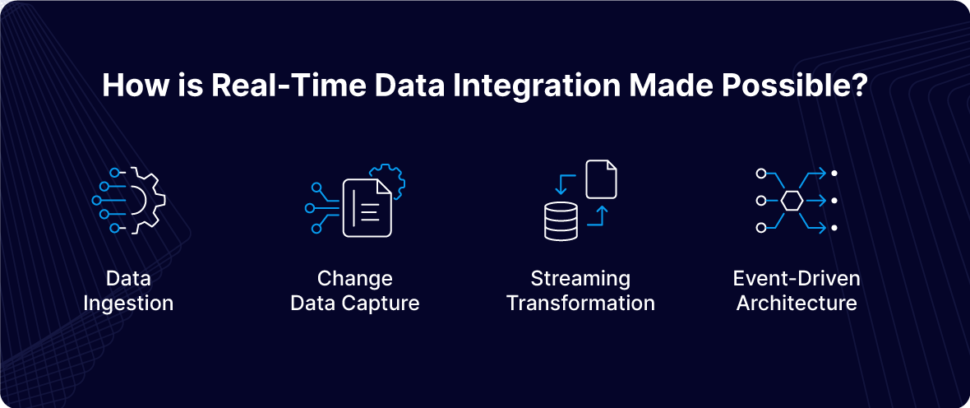
Real-time data integration includes continuous and instantaneous processes for collecting, transforming, and distributing data across systems and applications. Here’s how real-time data integration is made possible:
Data Ingestion: The process begins with the ingestion of data from various sources, including Internet of Things (IoT) devices, databases, and applications.
Change Data Capture (CDC): Products such as Striim monitor and capture database changes from transaction logs in real time, recording updates, inserts, and deletes as they occur.
Data Transformation: This step involves filtering, aggregating, enriching, and other processes to prepare data for business use.
Event-driven Architecture: Leveraging event-driven architecture allows businesses to utilize streaming to publish and subscribe to events in real time, enabling rapid insights and responses.
Why is Real-Time Data Integration Important?
Real-time data integration is crucial because it ensures decisions are based on the most current information. Traditional batch processing, with its scheduled updates, is too slow for today’s rapidly changing digital landscape. Real-time data processing fills this gap, enabling businesses to gain a competitive edge by making timely and informed decisions.
Timely information can significantly impact business outcomes, which means real-time data processing and integration is not a nice to have, but rather, that your business’s success is hinged on whether or not you’re properly leveraging real-time data integration. Moreover, prioritizing real-time data integration allows businesses to gain a competitive advantage over competitors still utilizing the archaic process of batch processing.
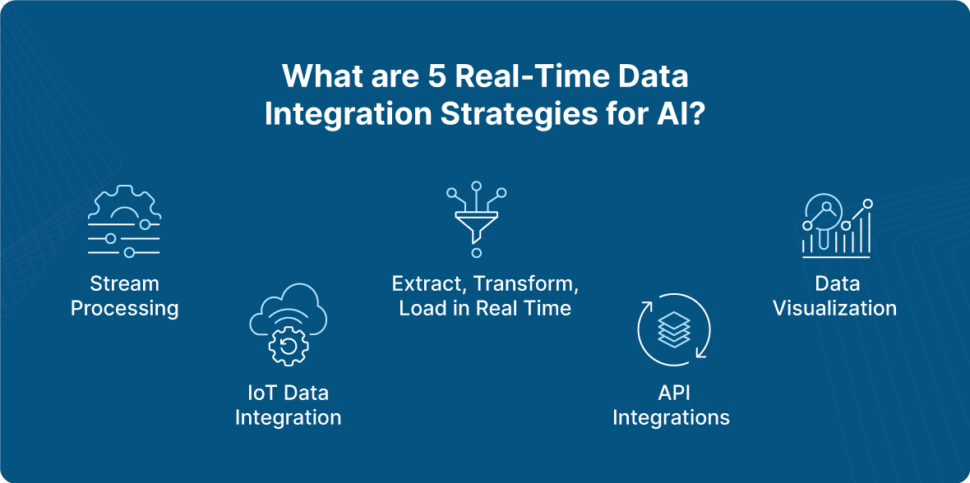
What are 5 Real-Time Data Integration Strategies for AI?
Real-time data integration enables businesses to leverage AI to its fullest capacity, making thoughtful decisions based on timely, accurate data. Here are five key strategies.
Stream Processing
Stream processing is a critical component in today’s data-driven landscape, facilitating the continuous ingestion, transformation, and analysis of data streams from diverse sources in real time. Tools like Striim empower organizations to seamlessly collect, refine, and interpret data streams, enabling informed decision-making and fueling the capabilities of artificial intelligence systems.
In the realm of AI, the significance of stream processing cannot be overstated. The efficacy of AI programs hinges upon the quality and timeliness of data, making real-time processing indispensable for organizations striving to harness the power of AI effectively.
Use Cases for Stream Processing
Though stream processing has a multitude of compelling applications, two stand out prominently: Fraud detection and real-time analytics. Stream processing is indispensable in fraud detection as it enables instantaneous monitoring of transactions, allowing financial institutions to swiftly identify anomalies and respond proactively to fraudulent activities.
Similarly, in the domain of real-time analytics, stream processing plays a pivotal role in ensuring the continuous analysis of data streams, yielding fresh insights and facilitating prompt decision-making. These up-to-the-minute insights are invaluable assets for organizations navigating dynamic market landscapes and seeking a competitive edge.
Extract, Transform, Load in Real Time
Extract, Transform, Load, or ETL, is a vital process in data management. It involves extracting data from various sources, transforming it into a suitable format, and loading it into a data warehouse or comparable storage system. Traditionally, ETL processes were batch-oriented, operating at scheduled intervals, leading to outdated data. However, with real-time ETL, data processing occurs continuously as it’s generated, ensuring that storage systems contain current data.
Real-time ETL is crucial for successful AI systems because working with the latest data ensures accuracy and relevance. Without it, AI results may be outdated and inaccurate, hindering decision-making processes.
Use Cases for ETL in Real Time
Real-time ETL finds optimal application in data lakes or warehouses, ensuring organizations have access to continuously updated data from diverse sources. This empowers them with the resources needed for business intelligence, reporting, and decision-making.
For instance, in the financial services industry, real-time ETL enables banks to update data lakes with transactional data instantaneously. This facilitates real-time fraud detection and risk analysis, enhancing security and decision-making processes.
Data Visualization
Real-time data visualization involves sophisticated techniques and tools that cater to the advanced needs of data engineers. By leveraging platforms like Striim, data engineers can create dynamic dashboards that reflect live data insights, facilitating immediate decision-making.
In the realm of machine learning model monitoring, advanced dashboards provide powerful means to evaluate and visualize the performance of models in real-time. This allows data engineers to swiftly detect and address model drifts and anomalies. Additionally, specialized tools offer advanced visualization of machine learning performance metrics, such as feature distributions and prediction quality, ensuring robust model monitoring.
Complex Event Processing (CEP) is another key area where advanced data visualization techniques are applied. Solutions that combine real-time event processing with advanced visualization capabilities offer robust frameworks for identifying patterns in streaming data. This approach is ideal for handling high-velocity data streams and supports immediate analysis and response.
Use Cases for Data Visualization
Your team can develop operational dashboards leveraging data visualization via Striim to visualize key performance indicators (KPIs) and operational metrics in real-time. Incorporate drill-down capabilities and real-time alerts to monitor system health, performance bottlenecks, and operational efficiency metrics continuously.
Moreover, you can facilitate root cause analysis with data visualization. Use anomaly detection algorithms integrated with visualizations that highlight deviations from expected patterns, enabling data experts to investigate and mitigate issues promptly.
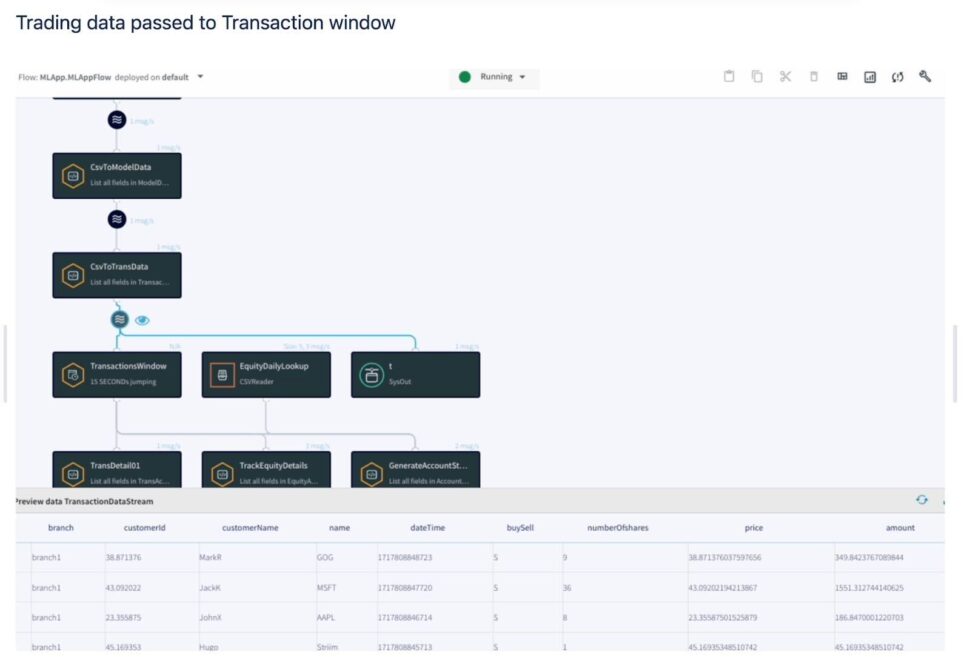
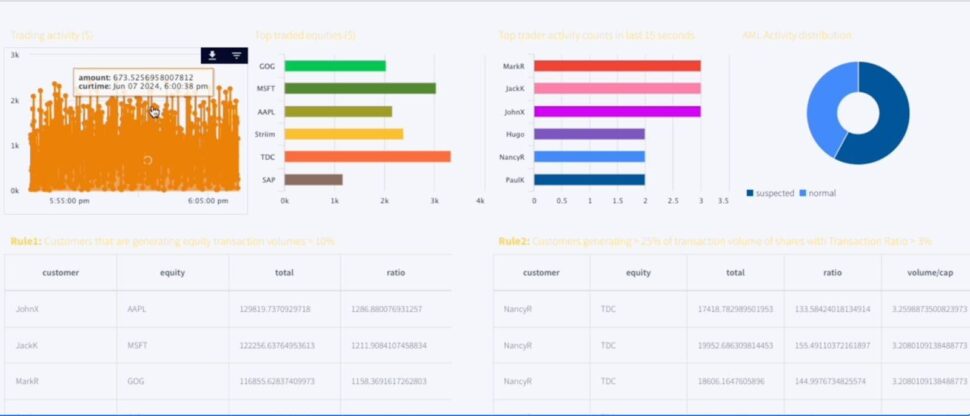
This Striim application is built to track trader activity and find fraud via AML rules and anomaly detection.
IoT Data Integration
IoT data integration involves the collection, consolidation, and analysis of data generated by IoT devices, ranging from smart gadgets to sensors, which produce vast amounts of real-time data.
This integration is indispensable for successful AI systems because IoT devices continuously provide data streams in real time. By incorporating this data into AI systems, teams ensure that their AI models have access to the latest information, crucial for decision-making applications. Additionally, IoT data integration enhances predictive capabilities, allowing AI systems to make more accurate predictions due to the extensive data available from IoT devices.
Use Cases for IoT Data Integration
The applications of IoT data integration are vast. In the healthcare industry, for example, integrating IoT data into AI enables remote patient monitoring. Wearable health monitors collect patients’ vital signs, and AI systems analyze this data to provide real-time insights into wellness, empowering healthcare providers to take proactive measures.
Another significant use case is in industrial settings. Utilizing IoT devices such as sensors in manufacturing allows organizations to monitor machinery and equipment. AI systems analyze data from these sensors to predict maintenance schedules, reducing downtime and preventing costly breakdowns.
API Integrations
In contemporary data integration strategies, API integrations play a crucial role. Application Programming Interfaces (APIs) enable disparate software systems to communicate effectively, making them invaluable for real-time data integration.
APIs provide a standardized method for accessing data from various sources, including databases, cloud applications, and more. This accessibility is essential for AI systems, which require vast amounts of data to train models and make accurate predictions. APIs facilitate the absorption of real-time data from multiple sources, ensuring that AI models are continuously updated.
Use Cases for API Integrations
API integrations offer numerous benefits for AI utilization. In a retail setting, for instance, real-time inventory management can be enhanced through API connections. Retail chains leveraging AI for decision-making and operational efficiency can use APIs to connect point of sale systems, inventory management systems, and e-commerce platforms. When a sale occurs, the API updates central inventory instantaneously, providing real-time sales and inventory data to AI systems for informed decision-making.
Another use case involves real-time data exchange and breaking down silos between systems. APIs facilitate interoperability between different systems, enabling seamless data exchange regardless of underlying technologies. This interoperability ensures that data is utilized effectively, contributing to thoroughly-trained and up-to-date AI models.
Dive into Real-Time Data Integration and Streaming with Striim
For organizations looking to elevate their data integration capabilities and maximize the potential of AI systems, Striim offers comprehensive solutions. With Striim, you can harness real-time data from its inception, enabling meaningful insights and informed decision-making. Try Striim today with a free trial and experience the transformative power of real-time data integration.
Ever wondered how to turn data into actionable insights? Join us as we sit down with Elena Dyachkova, the head of data at Bubble, who has an impressive background leading data teams at industry giants like Peloton and Spring Health. Elena walks us through her inspiring journey from economics to product analytics, shedding light on the critical role data plays in decision-making. She shares how simple analytics methods can be just as impactful as complex models, making this a must-listen for anyone looking to improve their analytical skills.
Data accuracy and reliability are paramount, especially when working with business applications like Stripe. Elena provides a deep dive into the challenges data teams face, from API changes to schema updates, and stresses the importance of proactive monitoring and observability. We discuss how to build strong heuristics and set realistic expectations with stakeholders to ensure seamless data flows. This segment is packed with practical advice for data professionals looking to navigate the complexities of modern data environments.
Continuous learning is at the heart of effective product analytics. Elena reflects on the evolution of education in this field, pointing out the gap that once existed and how diverse courses on business metrics, growth strategy, and experimentation have filled it. We explore the significance of data collection, structure, and engineer collaboration, all essential for robust product analysis. Elena also discusses the importance of maintaining a mindset geared towards iterative testing and learning, helping you avoid the dreaded analysis paralysis. Don’t miss her references to key figures and literature that have influenced her journey.
What’s New In Data is a data thought leadership series hosted by John Kutay who leads data and products at Striim. What’s New In Data hosts industry practitioners to discuss latest trends, common patterns for real world data patterns, and analytics success stories.
Defining your business goals and objectives for artificial intelligence (AI) implementation is essential to develop an effective strategy that moves your organization forward. By outlining a clear vision of how AI aligns with broader strategies, you’ll ensure that integration drives progress instead of creating obstacles.
In this post, we’ll guide you through navigating AI implementation, highlighting the importance of defining business goals and objectives as the first step. Prioritizing alignment enables you to seamlessly incorporate AI technologies that align with your organizational goals, fostering intuitive integration and maximizing impact. Then, we’ll share how to monitor and optimize your efforts to guarantee long-term success.
Table of Contents
Why Align on Strategic Vision when Defining Business Goals + Objectives for AI Implementation
The best way to ensure a streamlined implementation is by first aligning your team on a strategic vision that inserts AI, business goals, and objectives. Once created, this shared vision acts as your north star throughout the integration process, providing an invaluable reference point. By developing a comprehensive understanding of how AI advancements align with broader organizational strategies, your team maintains a unified focus on how to leverage AI efficiently.
Strategic vision and industry discernment involve pinpointing specific areas where AI can make a significant impact, taking into account industry-specific challenges and broader macroeconomic factors. It’s critical to measure your initiatives to understand the effectiveness of your initiatives. You can start here:
→ KPI: Accuracy of predictive analytics powered by AI in foreseeing market trends
→ KPI: Market share growth in regions where competitors have not implemented AI technologies
When done correctly, your team is equipped to leverage AI to its fullest potential, tailored to the unique characteristics of your industry. This strategic alignment ensures that AI initiatives enhance efficiency, improve decision-making, and drive innovation, giving your organization a competitive edge. The difference is that your organization transcends mere technological adoption and instead commits to embedding AI deeply into its operations.
Without AI, your business is making decisions based on the past rather than the future. If you don’t prioritize alignment, you risk your team viewing AI as just another challenge rather than fully realizing its transformative capabilities.
What About Stakeholders?
Alignment also creates space for your organization to consider its stakeholders — from investors to end-users. By adopting a stakeholder-centric approach when developing a strategic vision, you underscore the importance of collaboration across various organizational departments.
Prioritizing stakeholder engagement enables your team to develop AI objectives that are highly relevant and aligned with the diverse expectations and needs of all parties involved. This approach also fosters a sense of shared ownership.
By engaging and considering stakeholders at every level, your team enhances its chances of achieving broader support, acceptance, and ultimately, the successful execution of AI initiatives. This comprehensive engagement strategy ensures that AI integration is not only effective but also sustainable, driving long-term value for the organization.
To guarantee stakeholder buy-in and alignment, there are two KPIs you’ll benefit from measuring:
→ KPI: Net Promoter Score (NPS) improvement from AI-enhanced customer experiences
→ KPI: Cost savings through AI initiatives compared to predefined targets.
How to Identify Business Challenges + Set Goals in Preparation of AI Implementation
Your first step towards successful AI implementation is to identify business challenges and set goals. Here’s how.
Take inventory of internal challenges.
To kick start the process, the first step is to identify and understand the internal challenges affecting your team’s efficiency and operations. These challenges may manifest as repetitive tasks ripe for automation, unwieldy datasets hindering insights, or a lack of predictive analytics to anticipate market trends.
Fortunately, AI offers a solution, promising to streamline operations and allowing your team to regain valuable time and resources.
With the assistance of AI, organizations can automate mundane tasks, extract insights from complex datasets, and gain predictive capabilities to forecast market shifts accurately. However, before diving into AI implementation, it’s essential to conduct a comprehensive inventory of the challenges affecting your team and stakeholders. This understanding serves as the foundation upon which tailored solutions can be developed.
Consider external factors, such as the competitive landscape.
In addition to internal challenges, it’s imperative to consider external factors, particularly the competitive landscape, when identifying obstacles on the path to AI implementation. By closely examining competitors’ strategies and technological advancements, organizations gain invaluable insights into market dynamics and customer expectations. Analyzing market trends and regulatory landscapes further informs the alignment of AI strategies with evolving market needs, empowering organizations to stay ahead of the curve.
Taking a proactive approach enables businesses to anticipate competitive threats, seize emerging opportunities, and customize AI solutions to gain a sustainable competitive advantage. This holistic approach fosters a deeper understanding of the business ecosystem, facilitating informed decision-making and optimal resource allocation to maximize the impact of AI initiatives.
Create SMART goals.
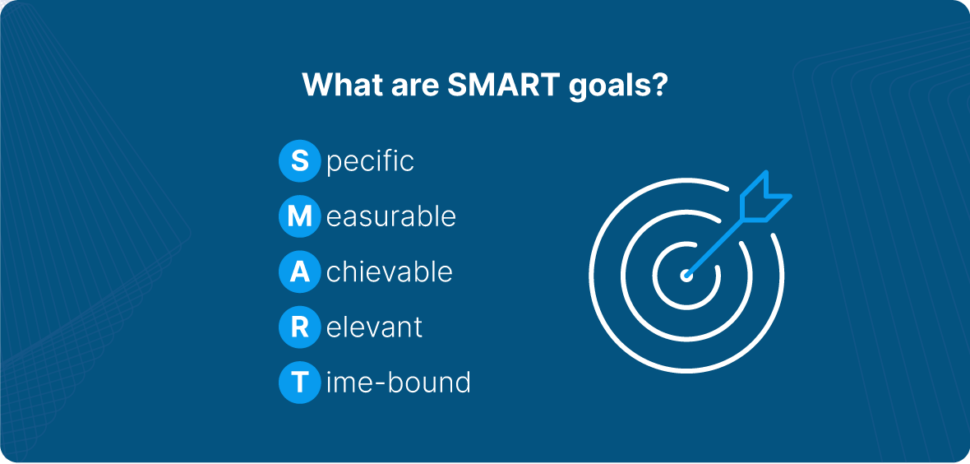
After thoroughly assessing internal challenges and external factors, the next step is to develop SMART goals—Specific, Measurable, Achievable, Relevant, and Time-bound—that guide the AI implementation journey. These goals offer direction and benchmarks to measure the efficiency of AI initiatives.
For example, a SMART goal could be to increase the average lifetime value (LTV) of customers impacted by AI-driven initiatives versus non-impacted customers by a certain percentage within a specified timeframe. By aligning these SMART goals with insights gleaned from internal assessments and external analyses, organizations can drive focused efforts towards optimizing outcomes and ensuring the success of AI implementation initiatives.
After you’ve successfully identified business challenges and objectives, there are several KPIs you should keep track of as AI implementation gets underway to gain insight into your program’s success:
→ KPI: Percentage reduction in operational costs through AI-driven automation
→ KPI: Average lifetime value (LTV) of customers impacted by AI-driven initiatives compared to non-impacted customers
The Importance of Prioritizing Adaptable + Scalable AI Systems
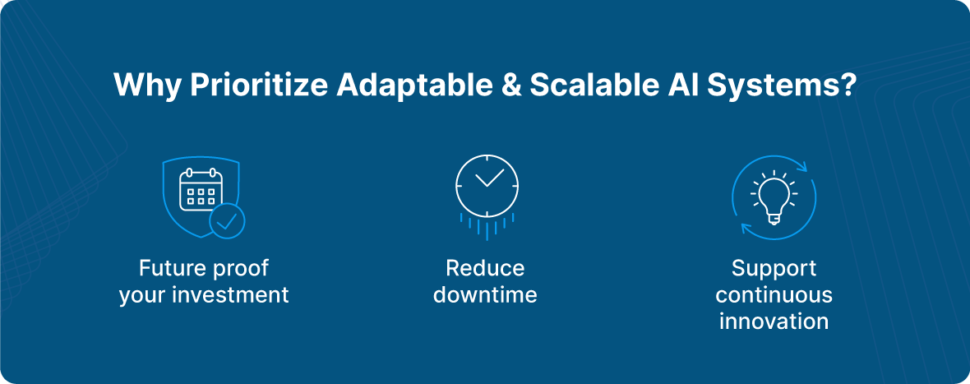
After your team has identified business goals and challenges in preparation for AI implementation, the next crucial step is to prioritize adaptable AI systems that scale in tandem with business growth. Here’s why.
Future-proof your investment: As business needs inevitably evolve over time, selecting adaptable, scalable solutions safeguards your company’s investment in AI technologies. Prioritizing adaptability ensures that your organization won’t require extensive system overhauls as it expands.
Reduce downtime: Scalable AI systems result in reduced downtime, which is an attractive buy-in for stakeholders. This approach mitigates bottlenecks and maintains operational efficiency, the overarching goal of AI implementation.
Support continuous innovation: Your organization ensures that its technology infrastructure remains agile and primed for evolution, supporting continuous innovation. This forward-looking strategy drives strategic growth, ensuring that AI initiatives deliver substantial long-term value.
The KPIs your team should track to ensure you are properly prioritizing adaptable, scalable AI systems include:
→ KPI: Downtime reduction achieved through scalable AI systems
→ KPI: Revenue impact from accelerated time to market with agile AI development and scalable deployment
Additional Considerations
It’s also crucial your business considers its risk mitigation and contingency plans in regards to AI. By thinking about data security, biases, and system failures, your team ensures that it can swiftly respond to any misfirings. Therefore, your organization develops and showcases a proactive approach to risk management to mitigate potential harm. This foresight is also attractive to key stakeholders.
To measure and prove the effectiveness of your risk mitigation and contingency plans, focus on the following KPIs:
→ KPI: Average time taken to detect and respond to critical incidents within AI-driven systems
→ KPI: Total fines and penalties avoided due to proactive risk mitigation measures leveraging AI insights
Ensure Success with Monitoring + Optimization
Ensuring success with AI implementation requires continuous monitoring and optimization. By consistently assessing the performance of AI systems against predefined goals, businesses can quickly identify areas needing improvement and make fixes in real time. This iterative process not only facilitates the fine-tuning of AI algorithms but also ensures that the organization remains on course toward achieving its overarching objectives.
If your team is implementing AI correctly, the work is never truly finished. Vigilant monitoring allows organizations to proactively address emerging issues, optimize system efficiency, and adapt quickly to changes. By evaluating performance regularly, your team can enhance AI systems continuously, maintaining alignment with strategic goals as both the organization and technology evolve. This ongoing process ensures that AI initiatives drive maximum value and stay relevant in a dynamic business environment.
Here are the KPIs your team should track in regards to monitoring and optimization:
→ KPI: Accuracy of predictive models in forecasting outcomes
→ KPI: Operational cost savings from the optimization of resource utilization within AI infrastructure
Grow with Striim
Striim plays a critical role in AI implementation by offering real-time data integration and streaming analytics, which are essential for setting and achieving business goals and objectives. By enabling the continuous flow of data from various sources into AI systems, Striim ensures that your AI algorithms have access to the most up-to-date, comprehensive, and relevant information. Get started today with a free trial and learn more about how Striim can make your data work better for you.
In today’s fast-paced financial landscape, robust security measures are not optional — they are essential. Financial services organizations face a constant onslaught of fraud attempts that threaten both their bottom line and the trust of their customers. That’s where real-time AI-powered fraud detection comes into the picture. Think of it as a game-changing solution designed to safeguard transactions and maintain customer confidence.
Harnessing the power of AI, financial services teams can rapidly identify and neutralize fraudulent activities before they cause harm. In this blog post, we’ll dig into how AI is revolutionizing fraud detection. Then, we’ll share actionable tips on how to safeguard transactions with the assistance of AI.
The Growing Threat of Financial Fraud
According to the FTC, there were 2.6 million fraud reports in 2023, marking an increase from 2022. Additionally, $10 billion was lost to fraud in 2023.
This escalating threat impacts not only consumers but also financial institutions. With the widespread adoption of digital banking and online transactions, cybercriminals have become more sophisticated, continually developing new methods to exploit vulnerabilities. Consequently, traditional security measures are no longer sufficient. Financial services institutions must enhance their protective measures, and AI has emerged as a crucial tool in meeting this need.
Why Prioritize Financial Fraud Detection
With financial fraud, real-time detection is indispensable. Leveraging technology that alerts organizations the moment fraud occurs allows teams to mitigate the impact before it escalates. This approach not only minimizes potential financial losses but also instills customer trust in the organization, preventing a tarnished reputation.
By prioritizing the safeguarding of financial transactions, your organization can effectively prevent these repercussions, maintaining both financial stability and customer confidence.
How AI is Upleveling Fraud Detection to Safeguard FinServ Transactions
Financial services organizations can leverage advanced machine learning (ML) algorithms and deep learning models to analyze vast amounts of transactional data in real time. These AI systems employ sophisticated pattern recognition techniques to immediately flag anomalies that deviate from established behavioral norms.
Furthermore, AI integrates data from multiple sources, including transaction histories, device metadata, and geolocation information, constructing comprehensive profiles for each user. This multi-faceted approach allows organizations to identify fraudulent activity with high precision and speed. Thanks to this speed, your team is able to act swiftly and decisively the moment potential activity is detected.
Better yet, AI-powered systems utilize neural networks for continuous learning and adaptation to emerging fraud tactics, which enhances predictive accuracy over time. The combination of continuous learning and real-time monitoring capabilities enables AI to swiftly flag and mitigate potential fraud, reducing both false positives and the overall impact of fraudulent transactions.
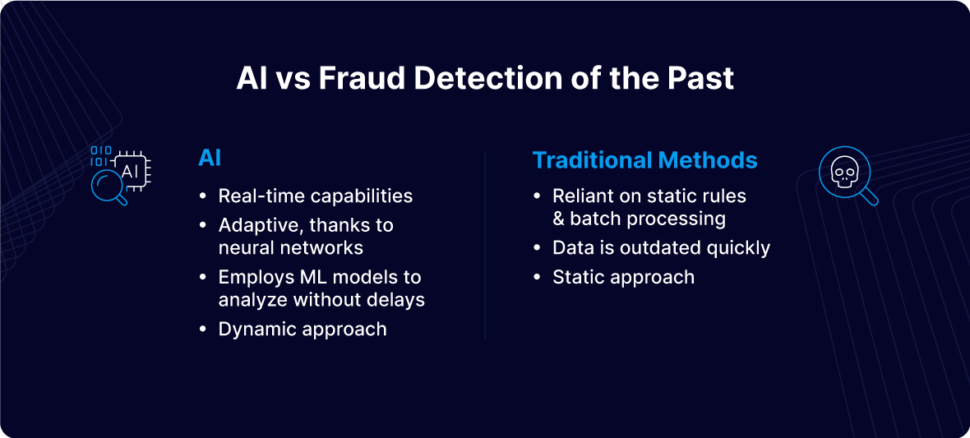
AI vs Fraud Detection of the Past
The utilization of AI in fraud detection efforts signifies a tremendous improvement over traditional techniques. This can largely be attributed to AI’s real-time capabilities and adaptive nature due to neural networks which learn. Unlike antiquated systems reliant on static rules and batch processing which rapidly becomes outdated, AI employs ML models capable of analyzing transactions with no delay. This empowers real-time analysis and, as a result, instantaneous detection of suspicious activities, empowering financial institutions to swiftly intervene and thwart fraudulent transactions.
Moreover, AI systems continuously refine their algorithms through iterative learning processes. As systems adapt to emerging fraud tactics, detection accuracy improves even as thieves’ methodology evolves. This adaptive capability is facilitated by neural networks, which enable AI to autonomously adjust detection parameters based on evolving fraud patterns.
This approach, best described as dynamic, stands in stark contrast to rigid rule-based systems, which lack the adaptability to adjust to the constantly-evolving landscape of fraudulent activities.
How to Safeguard FinServ Transactions with AI
An effective approach involves harnessing a data integration platform that not only facilitates the ingestion, processing, analysis, and visualization of data in real time but also enables seamless streaming of data from diverse sources. This capability empowers teams to extract actionable insights promptly and make swift decisions in response to suspected fraudulent activities.
That’s where Striim comes into play. It is the quintessential solution for safeguarding FinServ transactions as it stands out by seamlessly integrating predictive analytics with real-time data processing. The result is immediate, robust fraud detection capabilities. Compatible with an array of source databases, including Oracle, SQL Server, MySQL, MongoDB, and more, Striim ensures the swift ingestion of data, empowering financial institutions to monitor transactions with unparalleled precision.
At the core of Striim’s effectiveness lies its utilization of advanced machine learning models, enabling real-time analysis of transactional data streams. This empowers teams to proactively detect anomalies and suspicious patterns, enabling swift and decisive risk mitigation. Furthermore, Striim harnesses Change Data Capture (CDC) technology, a pivotal component enhancing its capabilities.
By selectively capturing and replicating changes made to source data, Striim minimizes latency and resource utilization. This offers an optimized approach that ensures efficient data processing, contributing significantly to the platform’s success in real time fraud detection.
Furthermore, Striim’s predictive analytics functionality adds another layer of security by allowing organizations to anticipate potential fraud before it materializes. This proactive intervention capability is highly valued by financial services institutions seeking to stay ahead of emerging threats and safeguard the integrity of their operations.
Take Fraud Detection to the Next Level
Thieves are getting more innovative and, consequently, your fraud detection techniques need to level up, too. Get a free trial of Striim today to discover how real-time data analytics and streaming can unlock insights that help your team preserve your customers’ trust, maintain your business’s reputation, and protect against financial losses.
Macy’s, a leading American department store chain, embarked on a transformative journey to modernize its platform, streamline operations, and enhance customer experiences. Partnering with Striim and Google Cloud, Macy’s leveraged advanced data integration and cloud technologies to overcome significant challenges and achieve remarkable results. This blog explores the challenges Macy’s encountered, how Striim provided an effective solution, and the impressive results achieved through this collaboration.
About Macy’s
Macy’s is a leading American department store chain renowned for its wide range of products, including apparel, accessories, cosmetics, home furnishings, and more. Established in 1858, Macy’s has become an iconic retail brand known for its flagship locations, annual Thanksgiving Day Parade, and commitment to providing quality products and exceptional customer service. With a strong presence both online and in physical stores, Macy’s continues to adapt to changing market trends and consumer needs, maintaining its status as a prominent player in the retail industry.
Challenges
As consumer expectations and market dynamics rapidly changed, Macy’s faced several critical challenges that highlighted the need for platform modernization:
Data Inconsistencies Across Databases: Macy’s operated with various databases, including DB2 on the mainframe and Oracle. This fragmented data environment led to inconsistencies and a lack of a unified data view, impacting decision-making and operational efficiency.
High Maintenance and Licensing Costs: The legacy mainframe systems were not only expensive to maintain but also required substantial licensing fees. These costs were eating into Macy’s profitability, necessitating a move towards more cost-effective solutions.
Speed to Market: The dispersion of data across multiple systems hindered Macy’s ability to develop and deploy applications swiftly. The time-consuming data consolidation processes delayed new initiatives, impacting Macy’s agility in responding to market trends.
Inconsistent Customer Experiences: Discrepancies in inventory data between online and in-store channels resulted in inconsistent customer experiences. Out-of-stock situations and inventory surpluses were common, especially during peak shopping periods, frustrating customers and affecting sales.
Complexity in Migrating Legacy Systems: The inability to sunset existing legacy systems added to the complexity of Macy’s operations. Transitioning to a modern cloud infrastructure was crucial to reduce dependency on outdated technologies and streamline processes.
Striim’s Solution
Striim’s comprehensive solution facilitated Macy’s migration to a modern, cloud-based infrastructure by leveraging Google Cloud Platform (GCP) services such as Cloud Spanner, Pub/Sub, and BigQuery. By replicating data from mainframe and Oracle databases to GCP, Striim created a unified data source, eliminating inconsistencies and providing a reliable foundation for decision-making and analytics. Real-time data synchronization ensured consistent customer experiences across online and in-store channels, preventing out-of-stock scenarios and enabling efficient inventory management. Striim’s architecture, featuring multiple Virtual Machines (VMs), ensured high availability and minimized downtime, enhancing disaster recovery capabilities. Additionally, the flexibility of Google Cloud allowed Macy’s to scale operations seamlessly during peak shopping periods like Black Friday and Cyber Monday, ensuring optimal performance and an exceptional user experience. By migrating data from costly mainframe systems to Google Cloud, Macy’s significantly reduced maintenance and licensing expenses, leading to substantial cost savings and improved profitability.
“Striim helped us modernize our platforms and achieve real-time visibility, syncing our inventory data to prevent out-of-stock or surplus situations during peak holidays like Black Friday and Cyber Monday.”
Neel Chinta
IT Manager at Macy’s
Results
The collaboration between Macy’s and Striim yielded remarkable results, underscoring the effectiveness of Striim’s real-time data integration platform:
Improved Operational Efficiency: Real-time data integration streamlined inventory and order management processes. This reduced the time and effort required for these tasks, allowing Macy’s to focus more on strategic initiatives and business growth.
Significant Cost Savings: The transition to Google Cloud resulted in substantial cost reductions in maintenance and licensing fees. Macy’s decreased dependence on expensive legacy systems, freeing up resources for other critical investments.
Seamless Customer Experience: Consistent and real-time data flow across all channels ensured that customers enjoyed a uniform experience. This consistency prevented out-of-stock situations and managed inventory effectively, particularly during high-demand periods.
Faster Time to Market: With a unified data source in the cloud, Macy’s accelerated application development and deployment. This agility enabled the company to quickly respond to market changes and customer needs, providing a competitive edge.
Support for Digital Transformation: The successful implementation of real-time data pipelines and cloud migration supported Macy’s broader digital transformation goals. This positioned Macy’s to better compete in the rapidly evolving retail landscape, leveraging cutting-edge technology to enhance operations and customer engagement.
“Striim gives us a single source of truth across domains and speeds up our time to marketing delivering a cohesive experience across different systems.”
Neel Chinta
IT Manager at Macy’s
Striim Powers Macy’s Digital Transformation
Macy’s journey of digital transformation, powered by Striim’s real-time data integration platform, is a testament to the impact of modernizing data infrastructure in the retail industry. By addressing critical challenges and enabling a seamless, scalable, and cost-effective solution, Striim helped Macy’s achieve significant operational improvements and cost savings.