What is Data Ingestion and Why This Technology Matters

data ingestion

  1. Introduction
  2. Types of Data Ingestion
  3. Benefits of Data Ingestion
  4. Data Ingestion Challenges
  5. Data Ingestion Tools
  6. Finding a Key Differentiator

Introduction

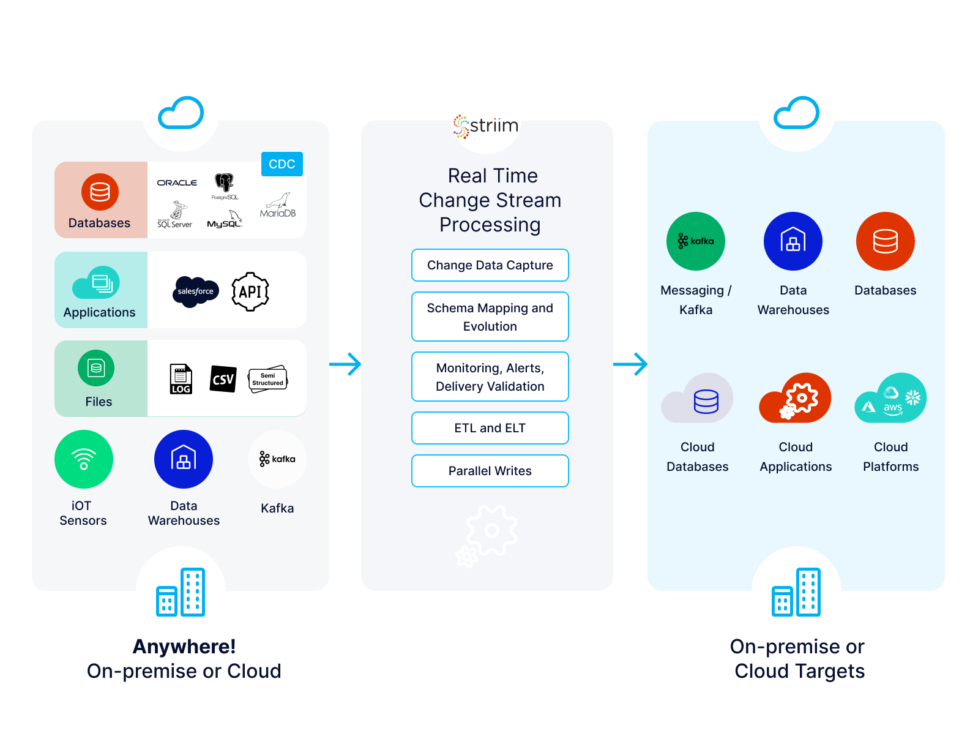
Data ingestion is the process of transporting data from one or more sources to a target site for further processing and analysis. This data can originate from a range of sources, including data lakes, IoT devices, on-premises databases, and SaaS apps, and end up in different target environments, such as cloud data warehouses or data marts.

Data ingestion is a critical technology that helps organizations make sense of an ever-increasing volume and complexity of data. To help businesses get more value out of data ingestion, we’ll dive deeper into this technology. We’ll cover types of data ingestion, how data ingestion is done, the difference between data ingestion and ETL, data ingestion tools, and more.

Types of Data Ingestion

There are three ways to carry out data ingestion, including real time, batches, or a combination of both in a setup known as lambda architecture. Companies can opt for one of these types depending on their business goals, IT infrastructure, and financial limitations.

Real-time data ingestion

Real-time data ingestion is the process of collecting and transferring data from source systems in real time using solutions such as change data capture (CDC). CDC constantly monitors transaction or redo logs and moves changed data without interfering with the database workload. Real-time ingestion is essential for time-sensitive use cases, such as stock market trading or power grid monitoring, when organizations have to rapidly react to new information. Real-time data pipelines are also vital when making rapid operational decisions and identifying and acting on new insights.

Batch-based data ingestion

Batch-based data ingestion is the process of collecting and transferring data in batches according to scheduled intervals. The ingestion layer may collect data based on simple schedules, trigger events, or any other logical ordering. Batch-based ingestion is useful when companies need to collect specific data points on a daily basis or simply don’t need data for real-time decision-making.

Lambda architecture-based data ingestion

Lambda architecture is a data ingestion setup that consists of both real-time and batch methods. The setup consists of batch, serving, and speed layers. The first two layers index data in batches, while the speed layer instantaneously indexes data that has yet to be picked up by slower batch and serving layers. This ongoing hand-off between different layers ensures that data is available for querying with low latency.

Benefits of Data Ingestion

Data ingestion technology offers various benefits, enabling teams to manage data more efficiently and gain a competitive advantage. Some of these benefits include:

  • Data is readily available: Data ingestion helps companies gather data stored across various sites and move it to a unified environment for immediate access and analysis.
  • Data is less complex: Advanced data ingestion pipelines, combined with ETL solutions, can transform various types of data into predefined formats and then deliver it to a data warehouse.
  • Teams save time and money: Data ingestion automates some of the tasks that previously had to be manually carried out by engineers, whose time can now be dedicated to other more pressing tasks.
  • Companies make better decisions: Real-time data ingestion allows businesses to quickly notice problems and opportunities and make informed decisions.
  • Teams create better apps and software tools: Engineers can use data ingestion technology to ensure that their apps and software tools move data quickly and provide users with a superior experience.

multi-cloud data integration

Data Ingestion Challenges

Setting up and maintaining data ingestion pipelines might be simpler than before, but it still involves several challenges:

  • The data ecosystem is increasingly diverse: Teams have to deal with an ever-growing number of data types and sources, making it difficult to create a future-proof data ingestion framework.
  • Legal requirements are more complex: From GDPR to HIPAA to SOC 2, data teams have to familiarize themselves with various data privacy and protection regulations to ensure they’re acting within the boundaries of the law.
  • Cyber-security challenges grow in size and scope: Data teams have to fend off frequent cyber-attacks launched by malicious actors in an attempt to intercept and steal sensitive data.

Data Ingestion Tools

Data ingestion tools are software products that gather and transfer structured, semi-structured, and unstructured data from source to target destinations. These tools automate otherwise laborious and manual ingestion processes. Data is moved along a data ingestion pipeline, which is a series of processing steps that take data from one point to another.

Data ingestion tools come with different features and capabilities. To select the tool that fits your needs, you’ll need to consider several factors and decide accordingly:

  • Format: Is data arriving as structured, semi-structured, or unstructured?
  • Frequency: Is data to be ingested and processed in real time or in batches?
  • Size: What’s the volume of data an ingestion tool has to handle?
  • Privacy: Is there any sensitive data that needs to be obfuscated or protected?

And data ingestion tools can be used in different ways. For instance, they can move millions of records into Salesforce every day. Or they can ensure that different apps exchange data on a regular basis. Ingestion tools can also bring marketing data to a business intelligence platform for further analysis.

Data ingestion vs. ETL

Data ingestion tools may appear similar in function to ETL platforms, but there are some differences. For one, data ingestion is primarily concerned with extracting data from the source and loading it into the target site. ETL, however, is a type of data ingestion process that involves not only the extraction and transfer of data but also the transformation of that data before its delivery to target destinations.

ETL platforms, such as Striim, can perform various types of transformation, such as aggregation, cleansing, splitting, and joining. The goal is to ensure that the data is delivered in a format that matches the requirements of the target location.

Finding a Key Differentiator

Data ingestion is a vital tech that helps companies extract and transfer data in an automated way. With data ingestion pipelines established, IT and other business teams can focus on extracting value from data and finding new insights. And automated data ingestion can become a key differentiator in today’s increasingly competitive marketplaces.

Schedule a demo and we’ll give you a personalized walkthrough or try Striim at production-scale for free! Small data volumes or hoping to get hands on quickly? At Striim we also offer a free developer version.

What to Look for in Data Replication Software

Reliable access to data is vital for companies to thrive in this digital age. But businesses struggle with various risk factors- like hardware failures, cyberattacks, and geographical distances-that could block access to data or corrupt valuable data assets. Left without access to data, teams may struggle to carry out day-to-day tasks and deliver on important projects.

One way to safeguard your data from those risks is using data replication solutions. This technology is indispensable for teams that want to replicate and protect their mission-critical data and use it as a source of competitive advantage.

To help businesses explore data replication, we’ll dive into this technology and explore what features you should look for in data replication software.

What is Data Replication

Data replication is the process of copying data from an on-premise or cloud server and storing it on another server or site. The result is a multitude of exact data copies residing in multiple locations.

These data replicas support teams in their disaster recovery and business continuity efforts. If data is compromised at one site (for example by a system failure or a cyberattack), teams can pull replicated data from other servers and resume their work.

Replication also allows users to access data stored on servers close to their offices, reducing network latency. For instance, users in Asia may experience a delay when accessing data stored in North America-based servers. But the latency will decrease if a replica of this data is kept on a node that’s closer to Asia.

Data replication also plays an important role in analytics and business intelligence efforts, in which data is replicated from operational databases to data warehouses.

How Data Replication Works

Data replication is the process of copying data from an on-premise or cloud server and storing it on another server or site. The result is a multitude of exact data copies residing in multiple locations.

These data replicas support teams in their disaster recovery and business continuity efforts. If data is compromised at one site (for example by a system failure or a cyberattack), teams can pull replicated data from other servers and resume their work.

Replication also allows users to access data stored on servers close to their offices, reducing network latency. For instance users in Asia may experience a delay when accessing data stored in North America-based servers. But the latency will decrease if a replica of this data is kept on a node that’s closer to Asia.

Data replication also plays an important role in analytics and business intelligence efforts, in which data is replicated from operational databases to data warehouses.

Types and Methods of Data Replication

Depending on their needs, companies can choose among several types of data replication:

  • Transactional replication: Users receive a full copy of their data sets, and updates are continuously replicated as data in the source changes.
  • Snapshot replication: A snapshot of the database is sent to replicated sites at a specific moment.
  • Merge replication: Data from multiple databases is replicated into a single database.

In tactical terms, there are several methods for replicating data, including:

  • Full-table replication: Every piece of new, updated, and existing data is copied from the source to the destination site. This method copies all data every time and requires a lot of processing power, which puts networks under heavy stress.
  • Key-based incremental replication: Only data changed since the previous update will be replicated. This approach uses less processing power but can’t replicate hard-deleted data.
  • Log-based incremental replication: Data is replicated based on information in database log files. This is an efficient method but works only with database sources that support log-based replication (such as Microsoft SQL Server, Oracle , and PostgreSQL).

What to Look for in Data Replication Software

Data replication software: key features

Data replication software should ideally contain the following features:

A large number of connectors: A replication tool should allow you to replicate data from various sources and SaaS tools to data warehouses and other targets.

Log-based capture: An ideal replication software product should capture streams of data using log-based change data capture.

Data transformation: Data replication solutions should also allow users to clean, enrich, and transform replicated data.

Built-in monitoring: Dashboards and monitoring enable you to see the state of your data flows in real-time and easily identify any bottlenecks. For mission-critical systems that have data delivery Service Level Agreements (SLAs), it’s also important to have visibility into end-to-end lag

Custom alerts: Data replication software should offer alerts that can be configured for a variety of metrics, keeping you up to date on the status and performance of your data flows.

Ease of use: A drag-and-drop interface is an ideal solution for users to quickly set up replication processes.

Data replication software vs. writing code internally

Of course, users can set up the replication process by writing code internally. But managing yet another in-house app is a major commitment of energy, staff, and money. The app also may require the team to handle error logging, refactoring code, alerting, etc. It comes as no surprise that many teams are opting for third-party data replication software.

Use Striim to replicate data in real time

There are also real-time database replication solutions such as Striim. Striim is a unified streaming and real-time data integration platform that connects over 150 sources and targets. Striim provides real-time data replication by extracting data from databases using log-based change data capture and replicating it to targets in real time.

Striim enables real time data replication
Striim is a unified real-time data integration and streaming platform that connects clouds, data, and applications. With log-based change data capture from a range of databases, Striim supports real time data replication.

Striim‘s data integration and replication capabilities support various use cases. This platform can, for instance, enable financial organizations to near instantaneously replicate transactions and new balances data to customer accounts. Inspyrus, a San Francisco-based fintech startup, uses Striim to replicate invoicing data from its private cloud operational databases to other cloud targets such as Snowflake for real-time analytics.

Striim can also be used to replicate obfuscated sensitive data to Google Cloud while original data is safely kept in an on-premises environment. Furthermore, Striim supports mission-critical use cases with data delivery and latency SLAs. Striim customer Macy’s uses Striim to streamline retail operations and provide a unified customer experience. Even at Black Friday traffic levels, Striim is able to deliver data from Macy’s on-premises data center to Google Cloud with less than 200ms latency.

Have More Time to Analyze Data

Striim for data replication
Striim replicates data from databases using high-performance log-based Change Data Capture.

Reliable access to data is of vital importance for today’s companies. But that access can often be blocked or limited, which is why data replication solutions are increasingly important. They enable teams to replicate and protect valuable data assets, and support disaster recovery efforts. And with data secured, teams can have more time and energy to analyze data and find insights that will provide a competitive edge.

Ready to see how Striim can help you simplify data integration and replication? Request a demo with one of our data replication experts, or try Striim for free.

Guide to Modernizing Data Integration and Supercharging Digital Transformation

Striim for real time data integration

Over 80% of digital transformation (DT) initiatives fail because of unreliable data integration methods and siloed data. This figure comes as no surprise because companies find it challenging to handle ever-larger volumes, sources, and types of data. As these businesses struggle to bring data to a unified environment, they’re unable to gain critical insights and make informed decisions.

Legacy data integration solutions share part of the blame. They’re poorly equipped to integrate data in a flexible and scalable way. Companies are left with no choice but to modernize their data integration processes to take advantage of data sets and drive digital transformation.

To help you navigate modernization efforts, we’ve developed a guide. Including conversations with our CTO, Steve Wilkes, the guide dives into key considerations and issues you should prioritize when taking your data integration processes to the next level.

1. Develop a data integration modernization roadmap

Creating a high-level roadmap is the first step in data integration modernization efforts. Ideally, your roadmap should follow a three-step approach.

First, assess existing integrations. Your teams should collect details about integration patterns (REST API, event-driven, P2P, etc.) as well as source and target apps. Knowing the integration architecture and security needs is vital, too.

With the initial analysis completed, define the desired integration architecture and how to deploy it. If needed, consider and plan for any enterprise-specific requirements at this stage. It’s also recommended you identify an integration platform that’s aligned with your desired data architecture.

The final step is to create a plan for executing your modernization ideas. But before launching large-scale modernization, test your plan on a smaller project. Deploying a few integrations will help you identify risks that, left unresolved, could delay your modernization program.

Steve Wilkes, our CTO, recommends starting with initiatives that provide the fastest ROI as proof points. He says “one path for initial modernizations efforts we have seen over and over again with our customers that can rapidly provide results is to migrate some key databases and the applications that use them to the cloud.”

With the roadmap ready and adjusted to your specific needs, you can move forward and focus on crucial modernization tasks.

2. Add real-time data ingestion techniques

Introduce a broader range of modern data ingestion techniques, including real-time, and avoid outdated “batch” ETL techniques that cause latency and poor performance.

Steve, says that “for modern applications, real-time user experience is the new standard. Users expect data to be fresh, and for their reports to show accurate up-to-the-second information.”

Advanced data integration platforms allow you to capture and ingest data faster. Instead of hours- or days-long waiting, data enters staging areas, file systems, and other targets in near real-time.

You can then more effectively gather and analyze data from on-premise or cloud databases, sensors, robots, vehicles, and other sources. Advanced data ingestion techniques also enable companies to rapidly react to changing operational and business circumstances.

Manufacturing robots, for instance, can inform operators of bad parts instantaneously instead of the problems becoming apparent only when production halts. Or customer data from contact centers can be written to a customer relationship management (CRM) tool in real-time. Support agents and sales teams would then have access to up-to-date information all the time.

3. Support self-service access

Ensure that data integration enhances self-service access and, by extension, allows a broader group of analysts to run data analysis and visualization queries. Self-service can take other forms, including data prep and report creation. With users doing many tasks independently, IT teams have more time to tackle complex tasks.

Modern data integration solutions support self-service access in different ways. Integration tech, for instance, can feed raw data into databases and file systems and enable users to conduct data exploration and analytics. Also, integration platforms make it easy to visualize data in a user-friendly way.

Steve says that “data integration used to be a proprietary skill that only few had adequate knowledge to execute. With modern data integration tools like Striim, all analysts have single-click access to powerful data integration capabilities.”

4. Take advantage of new data platform types

Leverage new data platform types, such as Google, Azure, and Snowflake. The change data capture (CDC) feature plays an essential role in these efforts. Change data capture allows you to continuously migrate data from on-premise and cloud-based data warehouses to new platforms.

Modern data integration solutions also provide in-flight data processing. Data is delivered in a format suitable for advanced analytics. Advanced data integration architecture allows you to integrate data from Oracle, PostgreSQL, AWS RDS, and other data warehouses or databases to Google Cloud. Or you can continuously move data from various sources to different Azure Analysis Services or Cosmos DB. Whatever your preference is, integration technologies play an important role. You can establish, run, and enrich real-time data streams to new data platform types and execute your digital transformation strategy.

“New platforms help companies innovate faster with low-code/no-code applications fully managed in the cloud,” says Steve. “Traditionally companies would have to set aside or purchase new hardware in their data centers, install thick software clients, and build software in languages like C, Java, and shell scripts. The new cloud based paradigms have truly shifted the build-vs-buy question firmly into the buy category – where buy is more of a monthly lease that a costly one time purchase.”

5. Get value from various types of data

Working with cutting-edge data integration platforms allows you to capture and get business and analytics value from multi-structured, unstructured, and non-traditional data. These platforms transform data into a consumable format that you can work with. You can also combine information you already collect in a CRM tool with external data generated from social media, sensors, emails, events, and audiovisual sources. The fact that each of these sources has its own format is no longer an obstacle to handling data.

According to Steve, “the ability to not only source a large variety of data in real-time, but to process, combine, and enrich it while it is moving enables organizations to understand information contextually and make the correct decisions, faster.”

Businesses can then gain more accurate insights. For instance, instead of merely relying on its sales data, a company can run a sentiment analysis of social media to gauge how people are responding to new products. If a negative tone appears to be dominant, the company can analyze this problem further.

6. Partner with a versatile data integration vendor

Choose a data integration vendor that supports on-premises and cloud deployment and different types of integration (real-time, batch). This vendor will provide you with much-needed flexibility. As your data requirements evolve, data may have to be stored and moved across a number of private clouds, public clouds, on-premise databases, and other environments. Modern data architecture should support integration across all of these points.

Steve says that “your data integration vendor should be a partner for the long-term. This means they need to understand and support modern approaches to integration, including how the platform is accessed and which endpoints are supported. While there is really no such thing as future proof, your vendor should definitely not be living in the past.”

Versatile data integration vendors should also offer in-flight data processing capabilities, such as denormalization, enrichment, filtering, and masking. These data transformation processes minimize the ETL workload. Also, they reduce the architecture complexity, enable full resiliency, and improve compliance with data privacy regulations.

Integration tech helps you maintain a competitive edge

Modernizing data integration processes enables you to harness the power of digital transformation. Having different types, volumes, and sources of data is no longer a challenge. Modern integration platforms bring data to a unified environment and allow your team to gain critical insights.

Organizations are advised to focus on key modernization tasks, such as adding new ingestion techniques, exploring new platform types, and supporting self-service access. And as data fuels growth in today’s economy, improving your integration tech goes a long way toward maintaining a competitive edge.

Summing this up, Steve says “your journey to modernization needs a sound roadmap, but you also need a way of getting there. A real-time data integration platform like Striim is the engine that drives digital transformation.”

Back to top