Streamline Security and Efficiency with OAuth 2.0

With the release of Striim 5.0, businesses can now experience enhanced security and ease of integration through Striim’s support for OAuth 2.0 . This simplifies the authentication processes and ensures a smoother experience for administrators while keeping security a top priority. Let’s dive into how OAuth works, how to use it, and the value that Striim adds to your business.

What Does OAuth Do?

OAuth, or Open Authorization, is a widely-used open-standard authorization method that can seamlessly connect you with different apps and services without requiring you to create a new account every time or divulge sensitive information such as passwords, thereby enhancing security and reducing friction. OAuth uses access tokens to prove your identity to another service, and should this other service suffer a breach, your original credentials on the first service will remain safe. The access tokens also contain the data sharing rules between the services that can reduce the risk of unauthorized data access.

How Do You Use It?

Setting up OAuth is simple and can be done directly within Striim’s user interface. Striim has introduced a new feature called Connection Profiles that securely stores the information about the connections to an external service.  Whether you’re configuring it through the adapter itself or managing all your connections from the “Manage Striim” > “Connection Profiles” screen, the process is seamless. The introduction of a “Sign In Using OAuth” button makes it easier than ever to authenticate once and then authorize Striim to use your connection profiles across different adapters.

Want to dive deeper? Check out the doc and explore more.

How Does Striim Add Value?

Striim’s OAuth streamlines user configuration with minimal overhead. Once the Connection Profile is set up, Striim connects you to the external service and ensures that you remain connected by regularly reauthenticating to the external service in accordance with their rules.  You can use the Connection Profiles across multiple adapters to connect to the same external service, smooth and secure communication with endpoints with minimum overhead. The use of OAuth in Connection Profiles simplifies the authentication and authorization process process, saving time and reducing the complexity typically involved with maintaining OAuth credentials.

Transform Your Business with OAuth – Try It Today!

OAuth in Striim 5.0 is designed to enhance security, reduce manual intervention, and make OAuth configuration easier than ever. 

Ready to power your business with real-time data? Try Striim today with a free trial or book a demo to see it in action.

Start Your Free Trial | Schedule a Demo


Senstive Data Detection and Data Masking Enhances Data Security in Striim Applications

Protecting sensitive information is critical for organizations to maintain trust and comply with regulations. Striim’s Sentinel AI Agent and Sherlock AI Agent provide robust solutions for detecting and safeguarding sensitive data within real-time data streams and pipelines. This blog post will explore what these tools do, how they are used, and how Striim adds value to data protection efforts.

What do the features do? 

Sherlock AI and Sentinel AI utilize large language models (LLMs) for real-time sensitive data management. Sherlock AI is an on-demand discovery feature that helps users proactively identify sensitive data across their environment. Sentinel AI, powered by Striim AI, Vertex AI, or OpenAI, provides real-time detection and protection by monitoring data streams for sensitive information such as emails, Social Security Numbers (SSNs), and other personally identifiable information (PII). Once detected, Sentinel can automatically apply specified protection measures, such as masking or encryption, based on predefined criteria. Striim’s Sentinel AI, detects each event with PII information and tags the record to apply one or more protection options while the data is moving in real-time through the data pipeline.

Sherlock, on the other hand, is designed for data discovery. It samples source data from configured sources and uses Striim’s AI capabilities to detect sensitive data within the sampled dataset. This discovery process is conducted by the Striim server, ensuring there is no impact on the source database server. Sherlock AI allows organizations to pre-identify sensitive data and design desensitization processing with in their Striim pipeline with a variety of real-time streaming processing techniques or with Striim’s Sentinel AI

How do you use them? 

Using Sentinel and Sherlock is straightforward and integrated within the Striim Flow Designer. Sentinel operates by detecting sensitive data through data identifiers—like emails and SSNs—using the power of Striim AI. It then applies necessary protections, such as masking or encryption, to safeguard this information. Alternatively, Sentinel can directly mask or encrypt user-specified fields, offering flexibility in how sensitive data is protected.

Sherlock complements Sentinel by performing data discovery tasks. It runs jobs using Striim’s AI, OpenAI, or Vertex AI, to sample source data to detect for sensitive data identification and produce a report for end-user design decisions with Striim Application development. The results are reported back, allowing teams to take appropriate actions to protect data. Both Sentinel and Sherlock work seamlessly within Striim’s ecosystem, providing an automated solution for sensitive data protection that reduces manual effort and the risk of exposure.

Want to dive deeper? Check out the doc and explore more.

How does Striim add value? 

Striim’s Sentinel and Sherlock agents provide significant value by automating the detection and protection of sensitive data, enhancing data security measures, and ensuring compliance with industry regulations. These tools help organizations maintain the integrity of their data by minimizing the risk of data breaches and simplifying the complex process of managing sensitive data protection across data pipelines. By leveraging AI, Sentinel and Sherlock automate the process of identifying and securing sensitive information, enabling real-time monitoring and response to potential security threats. Incorporating these advanced security measures into your Striim applications ensures that sensitive data remains protected and compliant with today’s industry standards.

Ready to power your business with real-time data? Try Striim today with a free trial or book a demo to see it in action.

Start Your Free Trial | Schedule a Demo

Striim 5.0 Release: Enhancing Data Processing with Striim’s Vector Embeddings Generator

Extracting meaningful insights from vast amounts of data is crucial for businesses to remain competitive. One powerful tool that has emerged in recent years is vector embeddings. These compact numerical representations of data not only facilitate enhanced data analysis but also improve search capabilities and machine learning tasks. Striim has harnessed the power of vector embeddings to provide its customers with a robust tool for transforming raw data into meaningful insights in real-time.

What does the Vector Embeddings Generator Feature Do?

Striim’s vector embedding generator offers a streamlined way to create and manage these embeddings directly within the platform. The Embedding Generator supports SQL transformations, enabling users to tailor the data columns for embedding generation, thus enhancing the relevance and accuracy of the embeddings produced. Striim supports a range of popular embeddings models, including those from OpenAI and VertexAI, ensuring users can choose the model that best fits their needs. The generated embeddings can then be written directly to databases that support vector storage, making it easy for customers to integrate these embeddings into their existing analytics workflows.

How do you use it?

Using Striim’s Vector Embedding Generator is straightforward, thanks to two main methods available to users:

  1. Using the Striim UI: From the Striim AI link on the Striim UI, customers can perform CRUD operations (Create, Read, Update, Delete) on the embedding generator. This makes it easy to manage and configure the embedding models.
  2. Using the Striim Console: For users who prefer scripting, they can use regular SQL commands to create or replace the embedding generator object directly, providing flexibility and control over their data pipelines.

Want to dive deeper? Check out the doc and explore more.

How Does Striim Add Value?

Striim’s vector embedding generator is a significant asset for businesses looking to enhance their real-time data processing capabilities. By embedding vectors directly within the Striim platform, customers can generate meaningful insights without needing additional tools or adding complexity to their workflows. This streamlined approach not only reduces costs but also minimizes administrative overhead, making it an ideal solution for organizations seeking efficiency and simplicity in their data integration processes.

Case Study: Enhancing Business Value with Striim’s Vector Embeddings – UPS Capital

UPS Capital is a prime example of how Striim’s vector embeddings can add value to businesses. By integrating Striim’s real-time data streaming technology with Google BigQuery’s analytics capabilities, UPS Capital improved their data processing and analytical capabilities significantly. Striim enabled UPS to ingest data from various sources immediately, facilitating real-time risk assessments and proactive decision-making. The data seamlessly flowed into Google BigQuery, where advanced analytics and machine learning were used to predict delivery risks and optimize logistics strategies. The innovative DeliveryDefense™ Address Confidence system, powered by Striim, leveraged these embeddings to assign confidence scores to delivery locations, thus improving predictive accuracy and allowing businesses to manage delivery risks effectively. This use case highlights the transformative power of Striim’s vector embeddings in enhancing data efficiency and real-time analytical capabilities.

Transform Your Business with Striim’s Vector Embeddings – Try It Today!

Striim’s vector embeddings generator is a game-changer for businesses looking to enhance their data processing and analytical capabilities in real time. By integrating this powerful tool into your data workflows, you can streamline operations, improve predictive accuracy, and drive better decision-making.

Ready to power your business with real-time data? Try Striim today with a free trial or book a demo to see it in action.

Start Your Free Trial | Schedule a Demo

Striim 5.0 Release: Streamlining Schema Creation with Striim’s Integrated Schema Feature

Migrating schemas within a data pipeline has traditionally been a complex and time-consuming task for many users. However, Striim’s latest 5.0 release introduces an integrated schema creation feature that simplifies this process significantly, making it more accessible and efficient. This feature is integrated into the configuration process of many adapters, providing users with an automated and streamlined approach to schema management.

What Does Integrated Schema Creation Do?

The integrated schema creation feature in Striim enables users to automatically create schemas on their target endpoints directly through the Striim configuration panel. This capability is particularly beneficial for users who manage complex data pipelines, allowing them to initiate the schema creation step of migration with minimal effort, seamlessly from source to target. By setting the CreateSchema flag to True in the configuration, users can initiate this feature.

How Do You Use It?

To use the integrated schema creation feature, follow these steps:

  1. Configuration to Enable Schema Creation:
    • Source – Database Reader: Set the CreateSchema option to True.
    • Target Adapter: Set the CDDLAction to Process.

  1. This configuration enables the source adapter to resolve the interested tables and objects, fetching their structure. It then publishes schema creation events to the stream for all the objects involved. Once schema events are published, data events sequentially follow for the objects, ensuring that data is synchronized with the newly created schema.

Want to dive deeper? Check out the doc and explore more.

How Does Striim Add Value?

Striim’s integrated schema creation feature is a game-changer for anyone managing complex data pipelines. Before Striim’s 5.0 release, users had to perform schema creation through standalone utilities or wizards, which often involve multiple steps and external processes. The integrated schema creation feature eliminates the need for these separate tools and additional manual steps. By simplifying the user experience, reducing complex steps and skills by fully automating the process of table creation on target endpoints, Striim reduces implementation time and thus faster returns on the investments. This feature highlights Striim’s simplicity of providing robust, user-friendly solutions that enhance productivity and efficiency in data management. Whether you’re handling a small database or a large-scale data environment, Striim’s integrated schema creation is a powerful tool for streamlining your data operations.

Take Your Data Operations to the Next Level with Striim 5.0

Ready to power your business with real-time data? Try Striim today with a free trial or book a demo to see it in action.

Start Your Free Trial | Schedule a Demo

Striim 5.0 Release: Introducing Fast Snapshot Loads to Accelerate Your Data Movement

As part of Striim’s 5.0 release, Fast Snapshot Loads is designed to elevate how organizations manage data loading for analytics. With this new feature, Striim makes it easier to create, manage, and accelerate the loading of database table snapshots. Fast Snapshot Loads harnesses declarative property syntax to intelligently distribute and parallelize table movement —significantly reducing load times and making large-scale data integration timely and more efficient.

What does Fast Snapshot Load achieve?

Fast Snapshot Loads optimizes the process of creating and managing database table snapshots, intelligently scheduling and distributing table loading  across parallel executions. This significantly boosts  throughput performance for initial data loads and reduces the time required to make data available for analytics.

How Do You Use Fast Snapshot Loads?

Activating Fast Snapshot Loads is simple and integrates seamlessly within Striim’s intuitive platform. Just specify the parallelism counts in the property fields of the Striim Database Reader and Data Warehouse Writer adapters. Striim then automatically manages the table distribution and scheduling execution to maximize performance on the Striim server.

Want to dive deeper? Check out the doc and explore more.

How Does Striim Add Value?

Fast Snapshot Loads brings several powerful benefits to users, designed to streamline data loading and boost productivity:

  • Enhanced Performance: Achieve up to 60% faster load times with Parallel adapter settings, optimizing initial data loads for faster insights.
  • No-Code Solution: Minimize setup complexity by reducing the need for custom coding, making it easier to configure and deploy than prior Striim versions.
  • Accelerated Time-to-Value: Reduce the time spent on design and development, allowing teams to build high-performance initial load solutions quickly.
  • Automated Distribution: Striim handles distribution and scheduling of tables automatically, removing the need for manual setup by data engineers.

Experience the Power of Striim 5.0

Fast Snapshot Loads is ideal for data analytics use cases and supports Striim’s key data warehouse adapters, including Google BigQuery, Snowflake, Microsoft Fabric, and Databricks. Discover how Fast Snapshot Loads can transform your data performance—contact us today for a demo or to connect with a Striim expert! 

Beyond Legacy Detection: How AI-Driven Data Governance Surpasses Traditional Methods

Have you ever wondered how the biggest brands in the world falter when it comes to data security? Consider how AT&T, trusted by millions, experienced a breach that exposed 73 million records—sensitive details like Social Security numbers, account info, and even passwords. Then there’s Ticketmaster, where over 560 million records were compromised, triggering a cascade of issues including an antitrust lawsuit from the Justice Department.

That’s not all: a single vulnerability in MOVEit led to 49 million records being compromised—impacting government agencies, financial institutions, and healthcare organizations alike, with damages soaring into the billions. And Dell? Their breach transformed personal customer data into a commodity traded on dark web forums.

These incidents serve as a stark reminder that legacy data governance systems, built for a bygone era, are struggling to fend off modern cyber threats. They react too slowly, too rigidly, and can’t keep pace with the dynamic, sophisticated attacks occurring today, leaving hackable data exposed. That’s where AI-powered data governance comes into play. 

In this blog post, we’re going to unpack the critical differences between legacy systems and AI-driven approaches, demonstrating why when it comes to hackable data, AI-driven data governance is the only way to go.

Why Proactivity Matters with Data Governance 

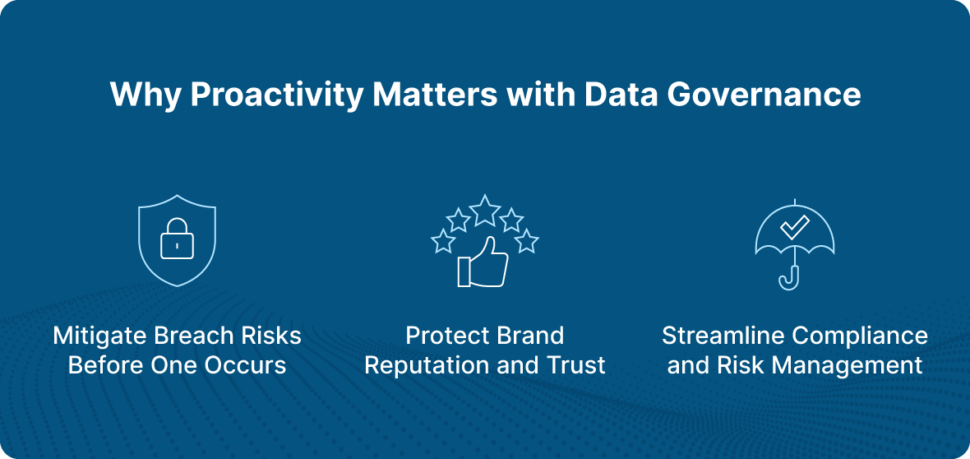
When it comes to data governance, being proactive can mean the difference between keeping sensitive data secure or exposing it to the world. Cybercriminals target businesses that fail to act in advance. Proactivity enables businesses to: 

Mitigate Breach Risks Before One Occurs

Every moment that hackable data remains unprotected, the risk of a breach increases. Legacy systems leave critical gaps between data creation and risk detection—gaps that cybercriminals can and do exploit. By contrast, Striim’s AI-powered data governance detects and classifies sensitive data in motion before it reaches storage. Additionally, Striim can encrypt, mask, or redact sensitive data all in real time, effectively preventing exposure.

Protect Brand Reputation and Trust

A data breach is more than just a technical failure—it can inflict irreparable harm on your brand reputation. Trust, once lost, is incredibly difficult to regain. Consumers expect their data to be handled with care, and any lapse in security can lead to significant financial and reputational damage. By implementing AI-powered governance, companies can demonstrate a commitment to real-time security, bolstering consumer trust and positioning themselves as leaders in data protection.

Streamline Compliance and Risk Management

Regulatory compliance isn’t just about avoiding fines—it’s about safeguarding trust. Legacy systems often struggle to meet evolving standards due to their reactive nature. In contrast, AI-driven solutions deliver continuous oversight, empowering organizations to adapt swiftly to regulatory changes and uphold rigorous risk management practices. 

Striim’s platform serves as an ally on your path toward compliance, equipping your team with the tools needed to navigate an ever-evolving regulatory landscape.
The Future of Data Governance: Embracing the AI Revolution

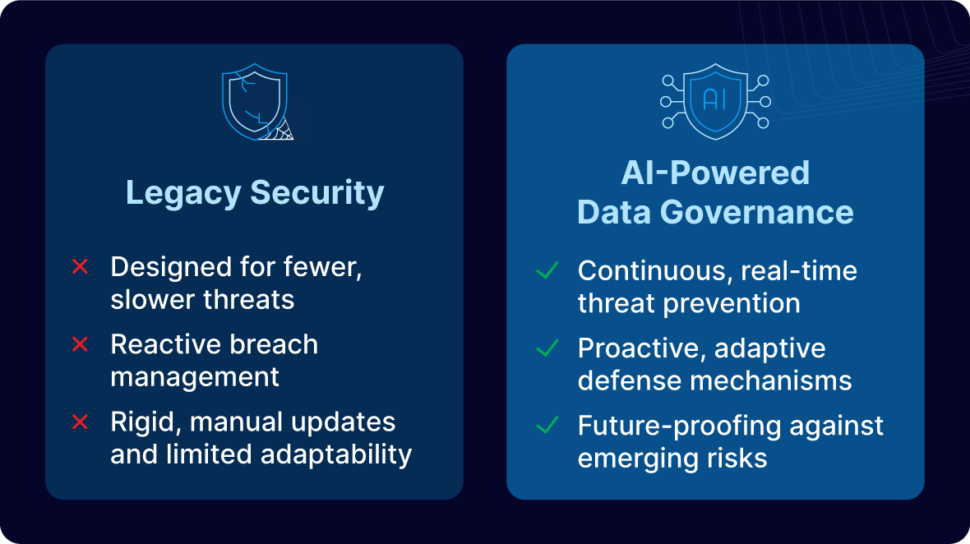
The digital world is growing more complex every day, and so are the threats targeting hackable data. Legacy systems were designed for a different era—one with fewer threats and slower attack speeds. Today’s cyber threats are sophisticated, dynamic, and relentless. AI-powered data governance offers the agility and foresight necessary to stay ahead of these evolving risks, continuously learning and adapting to new attack vectors.

The move from legacy to AI-driven data governance represents more than just a technological upgrade; it’s a fundamental shift in how we protect our digital assets. Instead of reacting to breaches after they occur, AI-powered systems are designed to prevent them from happening in the first place. This shift not only enhances security but also supports a more robust, resilient infrastructure capable of withstanding the pressures of a digital-first world.

As data volumes explode and regulatory environments become stricter, the need for proactive data governance becomes ever more critical. Embracing an AI-powered approach is not just about addressing current challenges—it’s about future-proofing your organization against threats that have yet to emerge. By investing in continuous, real-time protection, businesses can secure their data, work towards compliance, and ultimately, preserve the trust of their customers.
Reimagine Data Governance with Sentinel and Sherlock: Striim’s AI Agents 

Striim 5.0 introduces Sentinel and Sherlock, which redefine real-time data governance by seamlessly integrating advanced AI capabilities into your data pipelines. These intelligent agents ensure robust security without sacrificing system performance.

Sherlock AI: Proactive Source-Level Protection

  • Early Identification: Detects sensitive data at the point of origin, even within third-party or SaaS-managed databases, before it enters your pipeline.
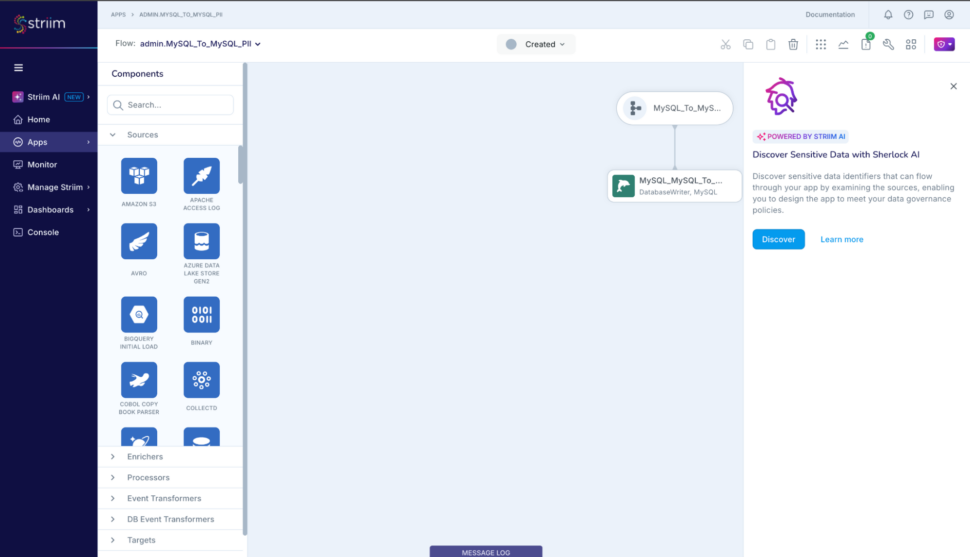
  • Preemptive Risk Elimination: Finds and flags sensitive information before it’s in motion, reducing exposure risks from the outset.
  • Holistic Coverage: Operates flawlessly across SaaS, cloud, and external systems, providing complete visibility into your data environment.
  • Efficient Scanning: Uses lightweight processes that avoid impacting database performance.
  • Automated Categorization: Instantly classifies financial, healthcare, and personal identity information, delivering real-time insights into data security.
  • Quality Oversight: Monitors data integrity continuously, alerting teams when sensitive data appears where it shouldn’t.

Sentinel AI: Dynamic In-Motion Defense

  • Real-Time Protection: Monitors and secures sensitive data as it traverses your systems, ensuring constant vigilance.
  • Precision Detection: Identifies personally identifiable information (PII) anywhere within a record—even if it’s incorrectly labeled—surpassing the limitations of traditional rule-based methods.
  • Exposure Mitigation: Blocks unauthorized data transfers when moving information from internal systems to external analytics or sharing platforms.
  • Compliance Coverage: Supports over 25 sensitive data types across multiple regions—including the USA, Canada, the UK, and India—to meet diverse regulatory needs.
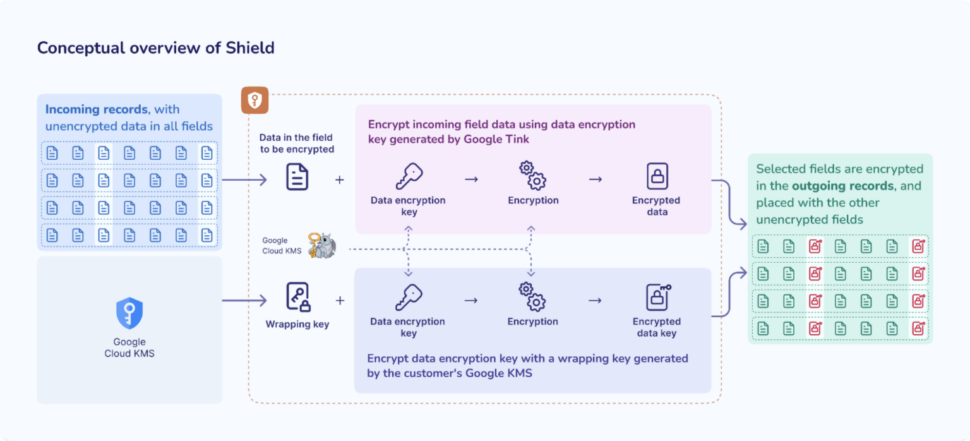
  • Automated Response: Implements policy-driven actions such as encryption and various forms of masking (partial, full, regex-based) without manual intervention.
  • Seamless Integration: Offers a plug-and-play user experience that allows for swift integration into existing data pipelines.
  • Regulatory Alignment: Assists organizations in navigating compliance requirements such as GDPR, CCPA, HIPAA, and beyond.

Sentinel and Sherlock’s Unified Approach to Data Governance

The process kicks off with Sherlock AI, which scans both structured and unstructured data across SQL, NoSQL, SaaS, and cloud databases. It pinpoints and classifies sensitive financial, health, and identity-related data—helping to preempt issues before they occur.

Once the data is on the move, Sentinel AI steps in. Using sophisticated pattern recognition and natural language processing, it validates data in real time, catching errors traditional systems might miss. Based on predefined business rules, Sentinel automatically encrypts, masks, or blocks data transfers, ensuring that regulated information remains secure as it shifts between systems.

With continuous, real-time dashboards, Sentinel offers live reporting on data exposure, security interventions, and compliance status. It logs each event with AI-enhanced metadata for effective tracking and auditing, while its adaptive design accommodates evolving data sources through schema evolution.

This integrated, AI-driven framework not only keeps your organization audit-ready but also ensures full transparency into data protection measures. Furthermore, Sentinel’s compatibility with enterprise security tools like SIEM, DLP, Datadog, and Snowflake Security reinforces a comprehensive and unified security strategy.

Ready to take your data governance efforts to the next level? Try Striim today with a free trial or book a demo to see it in action.


Start Your Free Trial | Schedule a Demo


Back to top