Change Data Capture as the Backbone of RAG AI-Driven System Resilience Strategies

Ensuring system resilience is critical for maintaining a competitive edge in today’s data-driven world. As businesses rely on real-time data to fuel decision-making, it’s essential that their systems can withstand disruptions and maintain functionality. Change Data Capture (CDC) is a key player, particularly in AI-driven systems where real-time data integration and adaptive responses are crucial.

In this post, we’ll explore how CDC boosts system resilience in AI-driven environments by enabling Retrieval-Augmented Generation (RAG) models. We’ll focus on how CDC enhances real-time data integration, anomaly detection, and adaptive response mechanisms, making it a cornerstone of RAG AI-driven resilience strategies.

Change Data Capture: Context

CDC is a technology that monitors and records alterations to a system’s database in real-time. Continuous data updates are beneficial for several reasons. First, updates can occur without disrupting the system’s operations. This continuous monitoring allows updates to be detected and processed instantly, minimizing the time lag between when a change occurs and when it is available for analysis. (Want to learn more about why minimizing latency is crucial? Check out this blog.) As a result, data is consistently up-to-date, enabling timely decision-making and immediate insight generation.

In the context of AI systems, real-time data processing is essential for maintaining a steady flow of accurate, relevant data needed for training and updating models. This constant data stream enables AI models to quickly adapt to new information, enhancing their accuracy and effectiveness. As a result, your team Wegains access to more precise predictions, rapid anomaly detection, and adaptive responses.

Where Does RAG Come Into Play?

RAG is an advanced AI framework that combines retrieval-based and generation-based approaches to enhance response accuracy and relevance. Here’s how it works. 

  • It uses real-time data processing to boost AI capabilities by retrieving the most relevant information from external databases or documents and then generating contextually appropriate responses based on this information. 
  • The hybrid approach leverages the strengths of both retrieval and generation, ensuring that the AI system provides precise and informed answers.
  • By integrating real-time data captured through CDC, RAG systems can generate more accurate and contextually relevant responses. 
  • This integration ensures that AI outputs are both current and precise, enhancing the overall value and reliability of the system.

RAG is an advanced AI framework that combines retrieval-based and generation-based approaches to enhance response accuracy and relevance.

CDC’s Role in RAG AI-Driven System Resilience

CDC also plays a pivotal role in enhancing the resilience of RAG AI-driven systems. Since CDC ensures the most current data is available for retrieval and use in generating responses, RAG systems can access and utilize the data without delay. This is crucial to ensure AI-generated content is relevant and accurate.

CDC’s Role in RAG AI-Driven System Resilience

System Reliability 

CDC also contributes to system resilience by reducing downtime and enabling rapid recovery from disruptions. With continuous data synchronization, any changes are promptly replicated across systems, preventing data loss. This ensures that the RAG system remains operational even during system failures or maintenance periods. The seamless integration of data means that the AI system can rapidly bounce back from interruptions, maintaining high levels of service availability and reliability.

Consistency and Scalability 

CDC supports the consistency and scalability of RAG systems. By providing a reliable mechanism for data updates, CDC ensures that all components of the AI system can access consistent data. This uniformity is critical for generating coherent, accurate responses, as inconsistencies in data can lead to errors and decreased system performance. As RAG systems scale and incorporate more data sources, CDC facilitates the efficient management of data changes, maintaining the resilience and robustness of the AI-driven system. Through these capabilities, CDC not only enhances the immediate performance of RAG systems but also strengthens their long-term reliability and scalability.

Boost Anomaly Detection 

Moreover, real-time data integration supports proactive anomaly detection. When AI systems are fed with the most current data, they can more effectively identify deviations from the norm and alert stakeholders to potential issues before they escalate. This proactive approach not only enhances operational efficiency but also mitigates risks, further contributing to the resilience of the system.

Increase Contextually Relevant Insights 

RAG enhances this process by leveraging real-time data to provide more accurate and contextually relevant insights. By integrating real-time data captured through CDC, RAG models can retrieve the latest information and generate informed responses. This capability ensures that any detected anomalies are addressed with the most up-to-date data, allowing for swift and precise corrective actions. In this way, RAG plays a crucial role in enhancing the system’s resilience by ensuring that responses to potential issues are both timely and well-informed.

Adaptive Response Mechanisms: Ensuring Continuity and Reliability

Adaptive response mechanisms are essential for maintaining continuity and reliability in AI-driven systems. CDC empowers these mechanisms by providing a steady stream of up-to-date data that RAG models can use to adjust their outputs in real-time. This dynamic adaptability is particularly valuable in scenarios where conditions can change rapidly, such as in cybersecurity, healthcare, and supply chain management.

For example, in cybersecurity, adaptive response mechanisms can leverage real-time data to identify and respond to threats as they emerge, preventing breaches and minimizing damage. Similarly, in healthcare, real-time patient data can enable AI-driven systems to adjust treatment plans on the fly, improving patient outcomes. CDC ensures that these adaptive responses are based on the latest and most accurate data, enhancing the system’s ability to maintain functionality and resilience under varying conditions.

Strengthening AI System Resilience with CDC and RAG

In today’s competitive landscape, the resilience of AI-driven systems is paramount. CDC is a critical component in building this resilience, particularly in the context of RAG models.

Book a demo today to learn more about how Striim utilizes CDC to ensure your organization has constant access to real-time data.

Optimizing Hospital Operations with Machine Learning in Healthcare: A Data-Driven Approach

Real-time data and machine learning are revolutionizing how hospitals operate and deliver care. By adopting a data-driven approach to hospital optimization, healthcare professionals’ jobs become more efficient, allowing them to focus more on what truly matters: Patient health. Not to mention, hospital operation optimization reduces costs. 

Here’s everything you need to know about how hospitals can leverage advancements of machine learning in healthcare to streamline operations and modernize existing systems. 

What is Machine Learning in Healthcare?

Machine learning (ML) in healthcare is the transformative use of advanced algorithms and models to analyze and interpret massive amounts of data. Here’s how it works.

The ML process begins with the collection of data from various sources. This includes electronic health records (EHRs), hospital management systems, wearable devices, and IoT sensors. The collected data encompasses everything from patient demographics to admission and discharge records, staffing schedules, equipment usage logs, supply chain information, and real-time vital signs. (You can also leverage real-time data for the purpose of predictive analytics to improve patient outcomes. If you want to learn more about that, check out the blog.) 

Once this data is collected, it will undergo preprocessing, which involves cleaning to rectify inaccuracies, normalizing to ensure uniformity, and feature engineering to extract and select relevant features for the ML algorithms.

With ML, comprehensiveness is important — which is why, to provide a comprehensive dataset, real-time data streams are integrated with historical data. This occurs through Extract, Transform, Load (ETL) processes, when information from a myriad of sources is brought together into a unified data warehouse.

Next, your team will select the right ML algorithms based on the specific problem you are looking to address. Common algorithms include supervised learning models like regression and classification for predictive analytics, unsupervised learning models like clustering for grouping similar data points, and reinforcement learning algorithms that learn optimal actions through trial and error.

Finally is training and evaluation. During training, your ML algorithms learn patterns and relationships within your data to make predictions or decisions. With evaluation, you’ll assess the performance of the models against predefined metrics to ensure they meet accuracy and reliability criteria. 

Machine Learning in Healthcare

What are the Benefits of Machine Learning in Healthcare for Hospital Operations Optimization? 

There are a myriad of benefits associated with leveraging machine learning in healthcare for hospital operations optimization. Here are some of the most critical. 

  • Predictive Analytics Empowers Resource Management: Machine learning models leverage historical and real-time data to predict patient admission rates, emergency room demand, and resource utilization trends. Thanks to this, hospitals are able to optimize staffing levels, bed allocations, and inventory management. This improves operational efficiency and reduces costs.
  • Automate Administrative Tasks: Machine learning can streamline administrative tasks such as billing, patient data entry, and scheduling with the help of automation. This reduces the burden of administrative work on healthcare teams, which allows them to focus on patient care. For example, ML algorithms can automate the scheduling of appointments and surgeries. 
  • Streamline Supply Chain Management: ML models can accurately predict future supply needs with the help of historical usage patterns and real-time inventory levels data. This reduces the risk of stockouts and overstocking, leading to more efficient use of resources and cost savings.
  • Improved Patient Flow and Room/Bed Management: ML can also help manage patient flow by predicting peak times for discharges and admissions. This enables hospitals to effectively allocate beds and reduce the amount of time patients must wait. Additionally, ML models may assist in optimizing discharge processes, ensuring timely bed availability for incoming patients. By smoothing patient flow, hospitals can enhance overall capacity utilization and improve the patient experience.

What are the Benefits of Machine Learning in Healthcare for Hospital Operations Optimization?

How does Real-Time Data Enable Successful ML for Hospital Operations Optimization? 

If you’re wondering what the difference between successful and unsuccessful ML is, it’s the utilization of real-time data. Without access to the latest information, ML algorithms are inaccurate and ineffective at best.

Real-time data, facilitated by stream processing platforms like Striim alongside AI-ready cloud data warehouses like Snowflake, ensures that ML models operate on the most current information available. This enables hospitals to make informed decisions rapidly, optimize operations dynamically, and maintain accurate predictions.

Leverage Real-Time Data to Power ML and More Efficient Hospital Operations 

If you’re ready to simplify hospital operations with the assistance of machine learning, discover how Striim can help fill the gaps with real-time data. Get a demo today to see how Striim can bring your machine learning efforts to the next level.

Enhancing Airline Customer Journeys with AI and Real-Time Data

The difference between a seamless customer journey and a frustrating one hinges on the effective use of real-time data powering AI systems. Customers find few things more frustrating than encountering disruptions during their travels. Delays and perceived indifference can sour their experience with your airline. The good news is, you have the tools to prevent these issues.

The most modern and efficient approach to delivering a superior customer experience is through the strategic use of real-time data and AI. This technology ensures that your airline consistently prioritizes safety, convenience, efficiency, and customer satisfaction. Here’s how. 

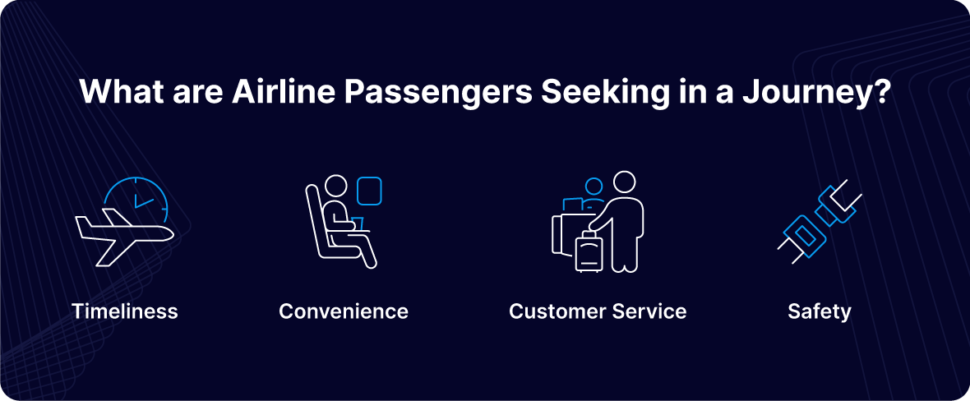
What are Airline Customers Seeking in a Journey?

The first step towards delivering an exceptional journey is to understand what customers seek. So what is it? 

Timeliness: Customers dislike disruptions — and therefore, delays. By leveraging a real-time data integration and streaming platform like Striim, your team can monitor flight operations in real time. This allows you to optimize flight schedules and promptly address issues, ensuring customers reach their destinations on schedule.

Convenience: Convenience is a hallmark of a seamless journey. Using a data integration platform that provides your airline with insights to streamline processes enables more efficient check-ins, faster boarding, and stress-free connections. This positions your airline as the best option for hassle-free travel.

Customer Service: Excellent customer service significantly contributes to customer satisfaction. Customers expect helpful, friendly interactions with team members at every touchpoint. A data integration and streaming solution equips your staff with real-time information about customers’ preferences and needs, guaranteeing a cohesive and personalized experience throughout the journey.

Safety: Customers need to feel they are traveling in a safe, well-maintained aircraft. Predictive maintenance, powered by data integration and streaming, plays a crucial role in ensuring safety. Your team can utilize predictive analytics to gain insights into when equipment is likely to fail, enabling proactive maintenance and mitigating the risk of unexpected issues.

By prioritizing these key areas—timeliness, convenience, customer service, and safety—your airline will deliver a satisfying experience.

What are Airline Customers Seeking in a Journey?

Why Use AI + Real-Time Data for Seamless Customer Experiences?

According to the Bureau of Transportation Statistics, the primary cause of flight delays is the late arrival of the previous aircraft. This underscores the critical need for timely operations in the airline industry. Artificial intelligence systems, fueled by real-time data, can help. 

Moreover, AI and real-time data not only empower airlines to maintain timeliness but also provide the essential information needed for a cohesive and delightful customer experience, ensuring customers arrive at their destinations on time and safely. Let’s dive deeper into how this occurs. 

How do AI and Real-Time Data Create Excellent Customer Journeys?

Real-time data and AI collaborate to elevate the customer journey by providing airlines with up-to-the-second insights, essential for creating seamless customer experiences.

These instantaneous insights are driven by real-time data streaming and integration, a stark departure from batch processing. While batch processing offers insights just once a day, often leading to outdated information, stream processing continually gathers, processes, and analyzes data in real time, ensuring minimal latency.

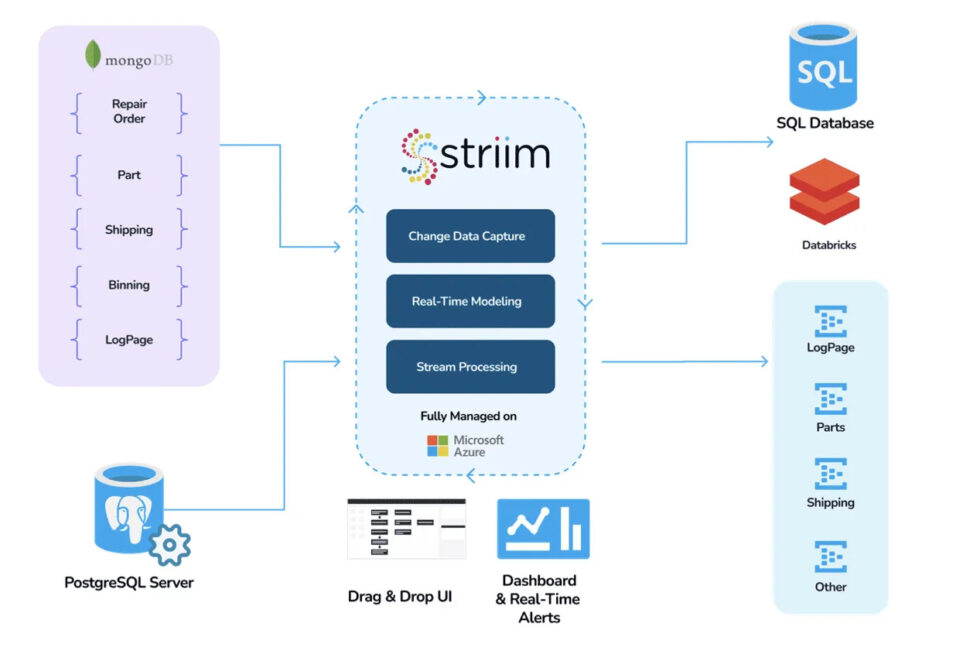
The way that it works is that Striim connects directly to diverse data sources across the airline ecosystem, such as flight schedules, booking systems, and operational data. It continuously processes these streams in real time, extracting and transforming data on-the-fly to ensure it’s immediately available for AI analysis.

This seamless integration empowered by Striim enables AI systems to receive up-to-the-second insights, allowing airlines to make informed decisions swiftly. For instance, AI algorithms can predict flight delays, optimize crew assignments, or personalize customer services based on current data. By avoiding batch processing delays and leveraging continuous data streams, Striim empowers airlines to deliver superior customer experiences through agile and data-driven operations.

Here’s what that looks like in practice — and how it contributes to a more convenient, seamless experience. 

Predictive Maintenance to Enhance Safety 

AI systems harness real-time data to provide personalized and proactive solutions. By deploying machine learning algorithms, airlines can sift through vast data volumes, identifying patterns and foreseeing potential issues like mechanical failures or delays. 

For example, predictive maintenance algorithms scrutinize data from aircraft sensors, detecting anomalies and forecasting when components might fail, enabling preemptive maintenance actions. This not only helps airlines prevent delays but also ensures customer safety by averting the use of aircraft needing urgent maintenance.

Dynamic Scheduling to Streamline Operations 

Dynamic scheduling, facilitated by AI and real-time data analysis, revolutionizes airline operations by continuously optimizing flight schedules based on current conditions. AI algorithms ingest and analyze real-time data streams from various sources such as flight operations systems, weather forecasts, and air traffic control. These algorithms utilize machine learning models to identify patterns and trends, allowing airlines to predict potential disruptions like weather events or congested airspaces.

By processing this data in real time, AI can dynamically adjust flight schedules to minimize delays and enhance operational efficiency. Consider this: If adverse weather conditions are detected along a planned route, AI algorithms can recommend alternative flight paths or schedule adjustments to avoid delays. This proactive approach not only improves on-time performance but also optimizes fuel consumption and reduces operational costs.

Personalized Customer Services to Boost Customer Experience

Investing in customer service is never a mistake — and AI systems fueled by real-time data enable you to effectively do so. AI-driven recommendation systems leverage real-time customer data to offer personalized services, including tailored seat and meal preferences. AI-powered chatbots deliver immediate customer support, while natural language processing (NLP) algorithms analyze customer inquiries promptly and effectively. The integration of these AI technologies into your airline’s operations ensures a seamless, responsive, and safe travel experience for all customers.

As a result, customers enjoy a seamless and convenient journey that fosters positive perceptions of your airline. Leveraging Striim’s real-time data integration and streaming capabilities allows your airline to consistently deliver timely, personalized services that enhance customer satisfaction. This technological edge ensures that every interaction is optimized with the latest insights, reinforcing a reputation for customer-centricity in the highly competitive airline industry.

American Airlines Uses Real-Time Data to Supercharge Customer Journeys

Want to see Striim’s impact in action? Consider how American Airlines has harnessed Striim’s real-time data capabilities to significantly enhance operational efficiency and customer satisfaction. 

With a vast operational scope encompassing over 5,800 daily flights to more than 350 destinations worldwide, American Airlines relies on continuous data streaming to manage flight operations seamlessly.

Striim plays a pivotal role in enabling American Airlines’ TechOps team to monitor aircraft telemetry in real time and make data-driven decisions. By integrating Striim with Microsoft Azure and Databricks, American Airlines has streamlined their data processing pipeline, allowing for rapid ingestion, processing, and analysis of operational data. This capability empowers TechOps to proactively manage flight schedules, respond swiftly to maintenance needs, and optimize resource allocation across their global network.

Through the seamless integration of Striim, American Airlines has achieved operational excellence, ensuring flights depart and arrive punctually while maintaining high standards of safety and reliability. This real-time data processing capability not only supports day-to-day operations but also enhances the overall customer experience by minimizing delays and disruptions.

Additionally, Striim’s partnership with Wizz Air is transforming operations through real-time data. This collaboration has significantly expedited Wizz Air’s data modernization initiative by migrating their data to Microsoft Azure, enabling real-time analytics within Azure Synapse.

As a result, Wizz Air can harness insights that streamline operations and enhance the customer experience. This includes providing real-time flight status updates for accurate information to passengers and proactive rebooking assistance in case of unavoidable cancellations.

Utilize Real-Time Data to Empower AI Systems that Enhance Seamless Journeys 

By putting real-time data to work to empower AI systems that enable your airline to offer a seamless customer experience, you’ll see the difference that data can make. Give Striim a try today with a free trial to see for yourself how real-time data can uplevel your organization.

Navigating Data Governance Challenges in the Age of AI with Nicola Askham

Can high-quality data be the key to unlocking the full potential of generative AI? Join us for an enlightening discussion with Nicola Askham, the Data Governance Coach, as she takes us on a journey from her early days at a large British bank to becoming a leading figure in data governance. Nicola sheds light on the current landscape of data governance, the unique challenges data teams face today, and the indispensable role it plays in the success of advanced technologies like generative AI. Through her expert lens, we examine how integrating AI governance and adhering to data privacy and security standards are not just important but essential for leveraging AI effectively.

In the second half of our conversation, Nicola shares actionable strategies to implement data governance in your organization. Discover how to identify real data problems and engage senior stakeholders by demonstrating data gaps. Learn about the power of collaborative workshops in creating conceptual data models and fostering a sense of ownership among business users. Nicola also guides us through the evolution from technical role-based access control to a holistic enterprise-wide data governance approach. Plus, hear her take on the exciting potential of generative AI to enhance data quality processes, making the dream of accessible and effective data governance a reality.

Follow Nicola at:

– Data Governance Coach website: https://www.nicolaaskham.com/

– LinkedIn:   / nicolaaskham  

– The Data Governance Podcast: https://www.nicolaaskham.com/podcast

UPS is using AI to battle porch pirates with DeliveryDefense™ Striim for Vector Embeddings

Learn how UPS is using AI to battle porch pirates. Pinaki Mitra, VP of Data Science and Machine Learning at UPS Capital

“UPS AI Battle Porch Pirates.” ABC News, Good Morning America. Accessed April 10th, 2024. https://abcnews.go.com/GMA/News/video….

Navigating AI Implementation: The Importance of Defining Business Goals and Objectives

Defining your business goals and objectives for artificial intelligence (AI) implementation is essential to develop an effective strategy that moves your organization forward. By outlining a clear vision of how AI aligns with broader strategies, you’ll ensure that integration drives progress instead of creating obstacles. 

In this post, we’ll guide you through navigating AI implementation, highlighting the importance of defining business goals and objectives as the first step. Prioritizing alignment enables you to seamlessly incorporate AI technologies that align with your organizational goals, fostering intuitive integration and maximizing impact. Then, we’ll share how to monitor and optimize your efforts to guarantee long-term success. 

Table of Contents


Why Align on Strategic Vision when Defining Business Goals + Objectives for AI Implementation

The best way to ensure a streamlined implementation is by first aligning your team on a strategic vision that inserts AI, business goals, and objectives. Once created, this shared vision acts as your north star throughout the integration process, providing an invaluable reference point. By developing a comprehensive understanding of how AI advancements align with broader organizational strategies, your team maintains a unified focus on how to leverage AI efficiently.

Strategic vision and industry discernment involve pinpointing specific areas where AI can make a significant impact, taking into account industry-specific challenges and broader macroeconomic factors. It’s critical to measure your initiatives to understand the effectiveness of your initiatives. You can start here:

→ KPI: Accuracy of predictive analytics powered by AI in foreseeing market trends

→ KPI: Market share growth in regions where competitors have not implemented AI technologies

When done correctly, your team is equipped to leverage AI to its fullest potential, tailored to the unique characteristics of your industry. This strategic alignment ensures that AI initiatives enhance efficiency, improve decision-making, and drive innovation, giving your organization a competitive edge. The difference is that your organization transcends mere technological adoption and instead commits to embedding AI deeply into its operations.

Without AI, your business is making decisions based on the past rather than the future. If you don’t prioritize alignment, you risk your team viewing AI as just another challenge rather than fully realizing its transformative capabilities.

What About Stakeholders?

Alignment also creates space for your organization to consider its stakeholders — from investors to end-users. By adopting a stakeholder-centric approach when developing a strategic vision, you underscore the importance of collaboration across various organizational departments.

Prioritizing stakeholder engagement enables your team to develop AI objectives that are highly relevant and aligned with the diverse expectations and needs of all parties involved. This approach also fosters a sense of shared ownership.

By engaging and considering stakeholders at every level, your team enhances its chances of achieving broader support, acceptance, and ultimately, the successful execution of AI initiatives. This comprehensive engagement strategy ensures that AI integration is not only effective but also sustainable, driving long-term value for the organization.

To guarantee stakeholder buy-in and alignment, there are two KPIs you’ll benefit from measuring:

→ KPI: Net Promoter Score (NPS) improvement from AI-enhanced customer experiences 

→ KPI: Cost savings through AI initiatives compared to predefined targets.

How to Identify Business Challenges + Set Goals in Preparation of AI Implementation

Your first step towards successful AI implementation is to identify business challenges and set goals. Here’s how.

Take inventory of internal challenges.

To kick start the process, the first step is to identify and understand the internal challenges affecting your team’s efficiency and operations. These challenges may manifest as repetitive tasks ripe for automation, unwieldy datasets hindering insights, or a lack of predictive analytics to anticipate market trends.

Fortunately, AI offers a solution, promising to streamline operations and allowing your team to regain valuable time and resources.

With the assistance of AI, organizations can automate mundane tasks, extract insights from complex datasets, and gain predictive capabilities to forecast market shifts accurately. However, before diving into AI implementation, it’s essential to conduct a comprehensive inventory of the challenges affecting your team and stakeholders. This understanding serves as the foundation upon which tailored solutions can be developed.

Consider external factors, such as the competitive landscape.

In addition to internal challenges, it’s imperative to consider external factors, particularly the competitive landscape, when identifying obstacles on the path to AI implementation. By closely examining competitors’ strategies and technological advancements, organizations gain invaluable insights into market dynamics and customer expectations. Analyzing market trends and regulatory landscapes further informs the alignment of AI strategies with evolving market needs, empowering organizations to stay ahead of the curve.

Taking a proactive approach enables businesses to anticipate competitive threats, seize emerging opportunities, and customize AI solutions to gain a sustainable competitive advantage. This holistic approach fosters a deeper understanding of the business ecosystem, facilitating informed decision-making and optimal resource allocation to maximize the impact of AI initiatives.

Create SMART goals.

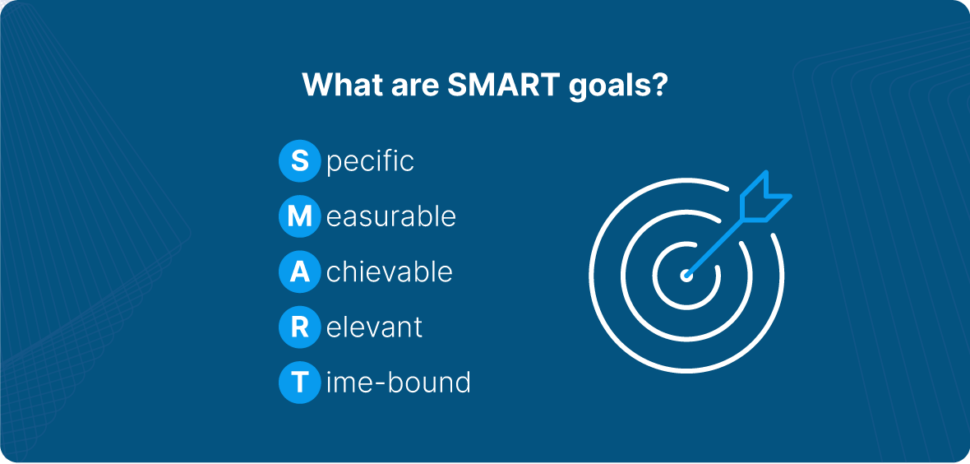
After thoroughly assessing internal challenges and external factors, the next step is to develop SMART goals—Specific, Measurable, Achievable, Relevant, and Time-bound—that guide the AI implementation journey. These goals offer direction and benchmarks to measure the efficiency of AI initiatives.

For example, a SMART goal could be to increase the average lifetime value (LTV) of customers impacted by AI-driven initiatives versus non-impacted customers by a certain percentage within a specified timeframe. By aligning these SMART goals with insights gleaned from internal assessments and external analyses, organizations can drive focused efforts towards optimizing outcomes and ensuring the success of AI implementation initiatives.

After you’ve successfully identified business challenges and objectives, there are several KPIs you should keep track of as AI implementation gets underway to gain insight into your program’s success:

→ KPI: Percentage reduction in operational costs through AI-driven automation 

→ KPI: Average lifetime value (LTV) of customers impacted by AI-driven initiatives compared to non-impacted customers

The Importance of Prioritizing Adaptable + Scalable AI Systems

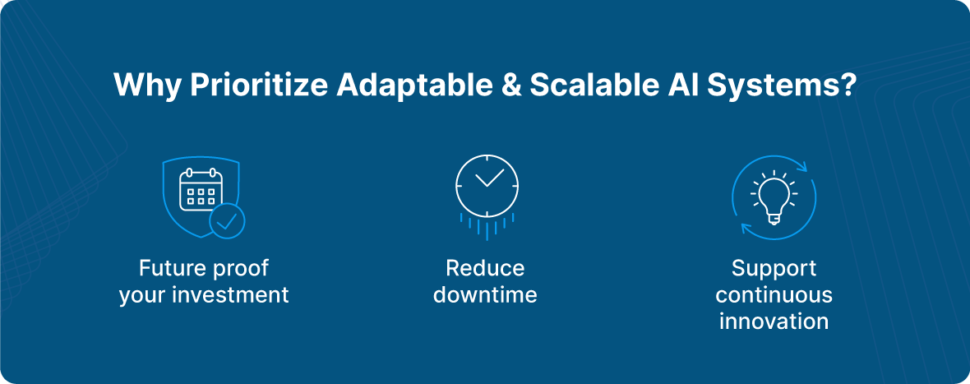
After your team has identified business goals and challenges in preparation for AI implementation, the next crucial step is to prioritize adaptable AI systems that scale in tandem with business growth. Here’s why.

  • Future-proof your investment: As business needs inevitably evolve over time, selecting adaptable, scalable solutions safeguards your company’s investment in AI technologies. Prioritizing adaptability ensures that your organization won’t require extensive system overhauls as it expands.
  • Reduce downtime: Scalable AI systems result in reduced downtime, which is an attractive buy-in for stakeholders. This approach mitigates bottlenecks and maintains operational efficiency, the overarching goal of AI implementation.
  • Support continuous innovation: Your organization ensures that its technology infrastructure remains agile and primed for evolution, supporting continuous innovation. This forward-looking strategy drives strategic growth, ensuring that AI initiatives deliver substantial long-term value.

The KPIs your team should track to ensure you are properly prioritizing adaptable, scalable AI systems include:

→ KPI: Downtime reduction achieved through scalable AI systems 

→ KPI: Revenue impact from accelerated time to market with agile AI development and scalable deployment

Additional Considerations

It’s also crucial your business considers its risk mitigation and contingency plans in regards to AI. By thinking about data security,  biases, and system failures, your team ensures that it can swiftly respond to any misfirings. Therefore, your organization develops and showcases a proactive approach to risk management to mitigate potential harm. This foresight is also attractive to key stakeholders.

To measure and prove the effectiveness of your risk mitigation and contingency plans, focus on the following KPIs:

→ KPI: Average time taken to detect and respond to critical incidents within AI-driven systems

→ KPI: Total fines and penalties avoided due to proactive risk mitigation measures leveraging AI insights

Ensure Success with Monitoring + Optimization

Ensuring success with AI implementation requires continuous monitoring and optimization. By consistently assessing the performance of AI systems against predefined goals, businesses can quickly identify areas needing improvement and make fixes in real time. This iterative process not only facilitates the fine-tuning of AI algorithms but also ensures that the organization remains on course toward achieving its overarching objectives.

If your team is implementing AI correctly, the work is never truly finished. Vigilant monitoring allows organizations to proactively address emerging issues, optimize system efficiency, and adapt quickly to changes. By evaluating performance regularly, your team can enhance AI systems continuously, maintaining alignment with strategic goals as both the organization and technology evolve. This ongoing process ensures that AI initiatives drive maximum value and stay relevant in a dynamic business environment.

Here are the KPIs your team should track in regards to monitoring and optimization:

→ KPI: Accuracy of predictive models in forecasting outcomes

→ KPI: Operational cost savings from the optimization of resource utilization within AI infrastructure

Grow with Striim

Striim plays a critical role in AI implementation by offering real-time data integration and streaming analytics, which are essential for setting and achieving business goals and objectives. By enabling the continuous flow of data from various sources into AI systems, Striim ensures that your AI algorithms have access to the most up-to-date, comprehensive, and relevant information. Get started today with a free trial and learn more about how Striim can make your data work better for you.

Real-Time AI-Powered Fraud Detection: Safeguarding FinServ Transactions

In today’s fast-paced financial landscape, robust security measures are not optional — they are essential. Financial services organizations face a constant onslaught of fraud attempts that threaten both their bottom line and the trust of their customers. That’s where real-time AI-powered fraud detection comes into the picture. Think of it as a game-changing solution designed to safeguard transactions and maintain customer confidence.

Harnessing the power of AI, financial services teams can rapidly identify and neutralize fraudulent activities before they cause harm. In this blog post, we’ll dig into how AI is revolutionizing fraud detection. Then, we’ll share actionable tips on how to safeguard transactions with the assistance of AI. 

The Growing Threat of Financial Fraud 

According to the FTC, there were 2.6 million fraud reports in 2023, marking an increase from 2022. Additionally, $10 billion was lost to fraud in 2023.

This escalating threat impacts not only consumers but also financial institutions. With the widespread adoption of digital banking and online transactions, cybercriminals have become more sophisticated, continually developing new methods to exploit vulnerabilities. Consequently, traditional security measures are no longer sufficient. Financial services institutions must enhance their protective measures, and AI has emerged as a crucial tool in meeting this need.

Why Prioritize Financial Fraud Detection 

With financial fraud, real-time detection is indispensable. Leveraging technology that alerts organizations the moment fraud occurs allows teams to mitigate the impact before it escalates. This approach not only minimizes potential financial losses but also instills customer trust in the organization, preventing a tarnished reputation.

By prioritizing the safeguarding of financial transactions, your organization can effectively prevent these repercussions, maintaining both financial stability and customer confidence.

How AI is Upleveling Fraud Detection to Safeguard FinServ Transactions

Financial services organizations can leverage advanced machine learning (ML) algorithms and deep learning models to analyze vast amounts of transactional data in real time. These AI systems employ sophisticated pattern recognition techniques to immediately flag anomalies that deviate from established behavioral norms. 

Furthermore, AI integrates data from multiple sources, including transaction histories, device metadata, and geolocation information, constructing comprehensive profiles for each user. This multi-faceted approach allows organizations to identify fraudulent activity with high precision and speed. Thanks to this speed, your team is able to act swiftly and decisively the moment potential activity is detected. 

Better yet, AI-powered systems utilize neural networks for continuous learning and adaptation to emerging fraud tactics, which enhances predictive accuracy over time. The combination of continuous learning and real-time monitoring capabilities enables AI to swiftly flag and mitigate potential fraud, reducing both false positives and the overall impact of fraudulent transactions.

AI vs Fraud Detection of the Past 

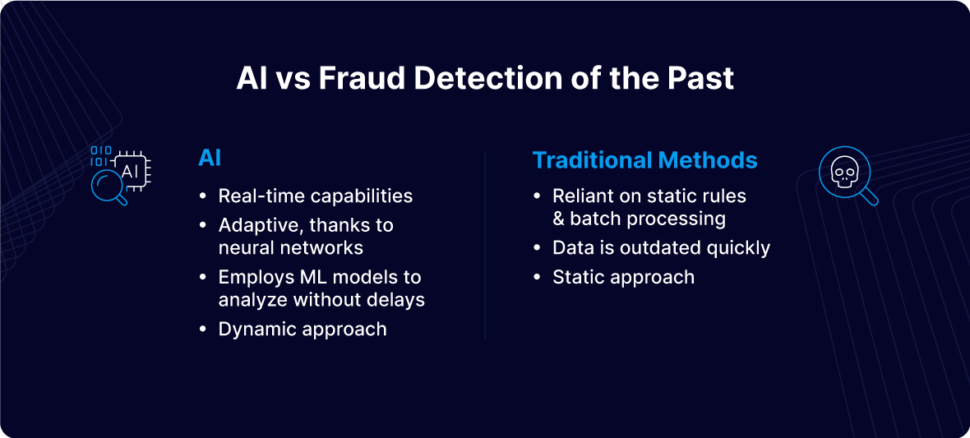
The utilization of AI in fraud detection efforts signifies a tremendous improvement over traditional techniques. This can largely be attributed to AI’s real-time capabilities and adaptive nature due to neural networks which learn. Unlike antiquated systems reliant on static rules and batch processing which rapidly becomes outdated, AI employs ML models capable of analyzing transactions with no delay. This empowers real-time analysis and, as a result, instantaneous detection of suspicious activities, empowering financial institutions to swiftly intervene and thwart fraudulent transactions. 

Moreover, AI systems continuously refine their algorithms through iterative learning processes. As systems adapt to emerging fraud tactics, detection accuracy improves even as thieves’ methodology evolves. This adaptive capability is facilitated by neural networks, which enable AI to autonomously adjust detection parameters based on evolving fraud patterns. 

This approach, best described as dynamic, stands in stark contrast to rigid rule-based systems, which lack the adaptability to adjust to the constantly-evolving landscape of fraudulent activities.

How to Safeguard FinServ Transactions with AI

An effective approach involves harnessing a data integration platform that not only facilitates the ingestion, processing, analysis, and visualization of data in real time but also enables seamless streaming of data from diverse sources. This capability empowers teams to extract actionable insights promptly and make swift decisions in response to suspected fraudulent activities.

That’s where Striim comes into play. It is the quintessential solution for safeguarding FinServ transactions as it stands out by seamlessly integrating predictive analytics with real-time data processing. The result is immediate, robust fraud detection capabilities. Compatible with an array of source databases, including Oracle, SQL Server, MySQL, MongoDB, and more, Striim ensures the swift ingestion of data, empowering financial institutions to monitor transactions with unparalleled precision.

At the core of Striim’s effectiveness lies its utilization of advanced machine learning models, enabling real-time analysis of transactional data streams. This empowers teams to proactively detect anomalies and suspicious patterns, enabling swift and decisive risk mitigation. Furthermore, Striim harnesses Change Data Capture (CDC) technology, a pivotal component enhancing its capabilities. 

By selectively capturing and replicating changes made to source data, Striim minimizes latency and resource utilization. This offers an optimized approach that ensures efficient data processing, contributing significantly to the platform’s success in real time fraud detection.

Furthermore, Striim’s predictive analytics functionality adds another layer of security by allowing organizations to anticipate potential fraud before it materializes. This proactive intervention capability is highly valued by financial services institutions seeking to stay ahead of emerging threats and safeguard the integrity of their operations. 

Take Fraud Detection to the Next Level 

Thieves are getting more innovative and, consequently, your fraud detection techniques need to level up, too. Get a free trial of Striim today to discover how real-time data analytics and streaming can unlock insights that help your team preserve your customers’ trust, maintain your business’s reputation, and protect against financial losses.

How Generative AI is Transforming Customer Experiences in Real Time

The ability to quickly understand and respond to customer demands is critical for staying ahead of the competition. Generative AI (GenAI) is quickly reshaping customer experiences across various sectors. It enables businesses to engage with their clients in real time, providing an unprecedented level of personalization and responsiveness. This innovative approach not only boosts customer satisfaction but also cultivates loyalty and encourages sustained interaction.

The Rise of GenAI in Customer Experiences

GenAI represents a leap in how businesses can leverage artificial intelligence (AI) to glean insights from vast amounts of data instantly. Unlike traditional models, GenAI integrates deep learning and real-time data processing, allowing for dynamic customer interactions that are both contextual and highly personalized. This capability transforms how companies engage with their customers, turning every interaction into an opportunity to understand and react in the moment. 

At its core, GenAI involves the use of sophisticated AI models that can process and analyze data in real time, predicting customer needs and preferences. These models are capable of understanding nuances in customer behavior, thanks to their ability to learn from a broad array of data sources, including transactional data, customer feedback, and real-time user interactions.

The Complexities of Implementing GenAI for Enhanced Customer Experiences

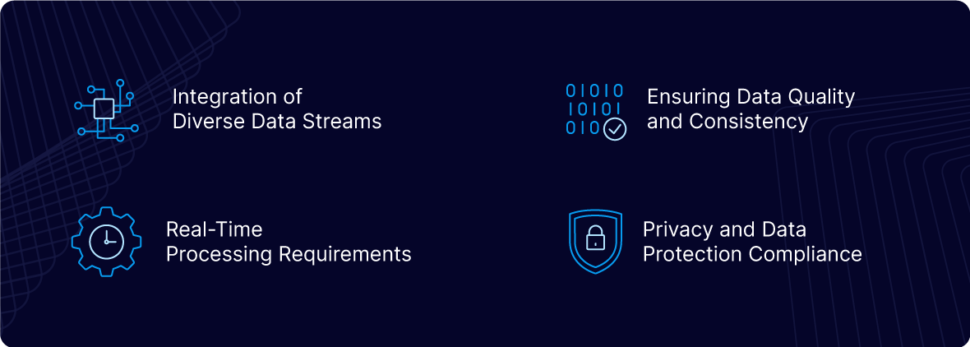
When customers look to implement GenAI to enhance their experiences, they face several complex challenges. Integrating diverse data streams from sources like CRM systems, social media, and IoT devices into a cohesive view is both time-consuming and technically demanding. Ensuring data quality and consistency is critical, as poor data can lead to inaccurate insights and ineffective applications, ultimately compromising the customer experience. The need for real-time processing adds another layer of complexity, requiring robust infrastructure that can handle large volumes of data with minimal latency. Moreover, as GenAI applications often use personal data, maintaining privacy and adhering to stringent data protection regulations such as GDPR or CCPA is essential.

Real-Time Personalized Experiences at Scale

One of the standout features of Generative AI (GenAI) is its capability to personalize interactions with customers on a large scale. Businesses are now equipped to customize their offerings in real-time, adjusting dynamically to meet the individual preferences and needs of each customer. From recommending products tailored to a customer’s browsing history to providing personalized discounts at the point of sale, GenAI ensures that these interactions are both fluid and immediate.

In customer support, GenAI significantly elevates service quality. AI-powered chatbots and virtual assistants are capable of managing inquiries and resolving issues efficiently. With each interaction, these tools learn and refine their responses, becoming increasingly adept at providing relevant and useful information. This improvement in response times not only enhances operational efficiency but also boosts customer satisfaction by offering tailored support.


Made w/ Dalle-3

Furthermore, GenAI is transforming the e-commerce landscape by optimizing the shopping experience. It does this through personalized product suggestions generated from a real-time analysis of user behavior and preferences. This level of personalization not only enriches the customer’s shopping journey but also increases conversion rates and fosters greater customer loyalty.

Implementation Considerations

Deploying real-time GenAI requires careful consideration of several factors to ensure successful integration and operation. Here’s how Striim’s platform facilitates these considerations:

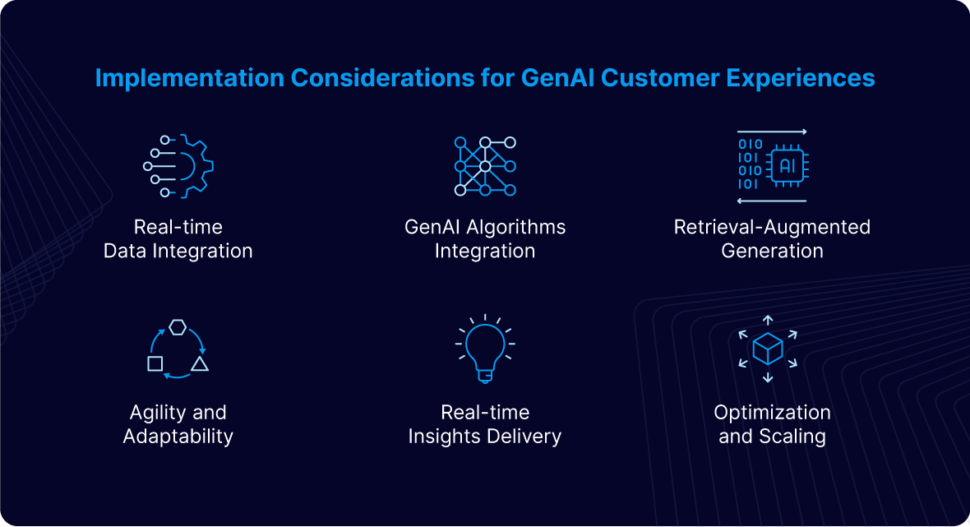
  • Real-time Data Integration: Striim’s platform leverages a distributed, in-memory streaming architecture to ingest and process data in real time from a variety of sources such as transactional databases, CRM systems, website clickstreams, and social media feeds. The architecture utilizes low-latency messaging systems like Apache Kafka or MQTT for efficient data transportation and employs parallel processing techniques to manage high data volumes effectively.
  • GenAI Algorithms Integration: Striim integrates a comprehensive suite of advanced GenAI algorithms directly into its streaming data pipeline. These include various machine learning models (such as supervised, unsupervised, and reinforcement learning), natural language processing (NLP), sentiment analysis, and predictive analytics. The platform supports seamless deployment and execution of these algorithms on streaming data, enabling real-time analysis and insights generation.
  • Retrieval-Augmented Generation: Striim’s platform employs RAG for infusing more context into the decision-making capabilities of GenAI systems. This involves integrating real-time data retrieval with AI-driven generation processes, allowing the system to pull relevant historical data or contextual information as it generates responses or recommendations. This enhances the accuracy and relevance of real-time interactions, further personalizing customer experiences and improving satisfaction.
  • Agility and Adaptability: The architecture of Striim is crafted for high agility and adaptability, allowing organizations to swiftly iterate and deploy GenAI models in response to evolving business needs or shifts in customer behaviors. Features like model versioning, A/B testing, and dynamic retraining of models based on incoming data ensure that GenAI capabilities continuously adapt and remain effective.
  • Real-time Insights Delivery: Striim enables the delivery of real-time insights derived from GenAI algorithms to various customer touchpoints, such as web applications, mobile apps, call center systems, and marketing automation platforms. Integration with downstream systems is facilitated through APIs, message queues, or streaming data connectors, guaranteeing that personalized interactions and recommendations reach customers promptly.
  • Optimization and Scaling: Designed with scalability and performance in mind, Striim’s platform is adept at handling increasing data volumes and computational demands as GenAI initiatives expand. The platform can automatically scale out to utilize additional compute resources, including multi-core CPUs, GPUs, or cloud-based instances, ensuring low latency and high throughput even under growing workloads.

Measuring Success

The success of real-time GenAI initiatives can be gauged through several key performance indicators (KPIs):

  1. Customer Satisfaction and Experience Scores: Measurement through surveys, feedback forms, or Net Promoter Score (NPS) after interactions handled by GenAI systems. An increase in these scores can indicate a positive impact on customer experiences.
  2. Response Time: Tracking the speed at which customer inquiries are addressed when using GenAI tools such as chatbots or virtual assistants. Shorter response times are typically associated with higher customer satisfaction levels.
  3. Engagement Metrics: Analysis of engagement levels, such as interaction rates, session duration, and frequency of use, to understand how customers are interacting with AI-driven features.
  4. Conversion Rates: The effectiveness of personalized recommendations or promotions in converting interactions into sales. An increase in conversion rates can signify successful tailoring of offers and content.
  5. Error Rate: The frequency of errors or the accuracy of GenAI responses. A decrease in error rates over time demonstrates improvement in AI performance and reliability.
  6. Operational Efficiency: Reduction in operational costs and time savings resulting from automating customer interactions and processes.
  7. Retention Rates: The impact of personalized experiences on customer loyalty, observed through repeat interactions or increased retention over time.
  8. Upsell/Cross-Sell Success Rates: The effectiveness of GenAI in increasing additional sales through relevant recommendations during customer interactions.

By monitoring these KPIs, businesses can gain valuable insights into the effectiveness of their real-time GenAI implementations and identify areas for improvement to enhance customer experiences further.

Transforming Data into Dynamic Customer Engagements in Real Time

Striim leverages real-time data to enhance GenAI-driven customer experiences, providing a direct route to impactful, personalized interactions. As data is generated, Striim enables immediate analysis, allowing businesses to adapt their strategies in real-time based on current customer behaviors and preferences. This capability is crucial for businesses looking to meet individual needs efficiently and stay ahead of market demands.

Our platform supports advanced machine learning analytics, optimizing every customer touchpoint for maximum engagement and satisfaction. By ensuring that interactions are responsive and based on the latest data, Striim not only fosters loyalty but also deepens customer connections, delivering a personalized experience that truly resonates.

To see how Striim can make a real difference in your operations, sign up for a free trial today!

How Striim and GenAI Are Crafting the Future of Shopping

As retailers strive to meet the growing expectations of shoppers, they are turning to the cloud and GenAI to transform their businesses and tackle opportunities in an increasingly challenging industry. From optimizing inventory management, to increasing collaboration between employees across locations and roles, to helping build omnichannel experiences for customers, Striim is helping to create more cohesive and personalized shopping experiences.

Understanding Retail Customer Challenges

Demand for Personalized Experiences: Today’s consumers are no longer satisfied with one-size-fits-all solutions built on yesterday’s data. They want shopping experiences that are tailored to their preferences and behaviors across all channels in real time, raising the bar for retailers to create consistently personalized touchpoints.

Need for Agile Inventory Management: Retailers face the ongoing challenge of adjusting inventory promptly based on shifting market trends. Effective inventory management requires accurate, real-time analytics to prevent overstocking or understocking.

Insecure & Vulnerable Data: With the increase in digital transactions, retail companies face significant risks related to data breaches and fraud, necessitating comprehensive security measures. Advanced security protocols ensure that data remains secure, helping retailers protect against these vulnerabilities effectively.

Personalized Customer Experiences: Go Beyond Expectations

Consumers today anticipate a shopping experience that is not only seamless across multiple channels but also distinctly tailored to their preferences. Retailers’ investment in personalizing customer communications has surged from 32% in 2021 to 57% in 2023. While 92% of retailers are boosting AI investments, with 59% using it to aid store associates in product recommendations. Striim’s platform excels in delivering these experiences by leveraging real-time data to offer insights into customer behaviors and preferences. This capability allows retailers to craft interactions that are not just personalized but are anticipatory in nature, thus deepening customer engagement and fostering loyalty.

For example, by integrating insights gathered from various customer interactions, Striim enables retailers to offer personalized recommendations and promotions that resonate deeply with individual needs. This approach not only enhances the customer experience but also drives significant improvements in sales and customer retention.

Dynamic Inventory Management: Real-Time Precision

Inventory management is crucial for retail success. Striim transforms this aspect by providing ML-driven inventory monitoring, enabling real-time visibility and management of inventory levels. Retailers can now efficiently manage their stock by monitoring real-time data from point-of-sale systems, online marketplaces, and social media inputs.

This real-time capability is especially important during peak shopping seasons when demand fluctuates rapidly. Striim’s platform alerts retailers about stock levels and shifting consumer demands, allowing them to make informed decisions swiftly — whether it’s replenishing popular items or scaling back on slower-moving goods. This proactive approach prevents stock-outs and excess inventory, ensuring profitability and customer satisfaction remain high.

Proactive Fraud Detection: Bulletproof Against Risk

With the increase in digital transactions comes a heightened risk of fraud. Striim’s platform addresses this by analyzing transactional data across multiple sources in real-time, identifying suspicious patterns, and pinpointing potential anomalies. This immediate detection enables quick action, significantly reducing the potential impact of fraudulent activities.

The platform’s capability to trigger instant alerts ensures that retail personnel can address risks promptly, protecting not just the financial aspects of the business but also securing customer trust and compliance with data protection regulations.

Macy’s Success Story: A Blueprint for Retail Reinvention

As retailers like Macy’s strive to enhance their digital and mobile experiences, they are increasingly leveraging cloud technologies. Macy’s, in collaboration with Google and Striim, has embarked on an ambitious project to transform its retail operations. This partnership focuses on improving site stability, optimizing store technology, and refining fulfillment and logistics operations. It also aims to integrate front-line and back-office processes to create a more seamless and efficient retail environment.

Neel Chinta, IT Manager at Macy’s, highlighted the impact of this collaboration: “Striim gives us a single source of truth across domains and speeds our time to market delivering a cohesive experience across different systems.” 

Through its use of Striim’s platform, Macy’s has been able to not only improve its operational efficiencies but also deliver a more personalized shopping experience to its customers. The real-time data provided by Striim allows Macy’s to anticipate customer needs more accurately and respond more swiftly, ensuring that customer satisfaction and loyalty continue to grow.

Enhancing Retail Operations: From Inventory Management to Fraud Prevention

Striim’s real time data for GenAI redefines retail by providing continuous data integration, ML-driven analytics, and security. Our platform delivers insights for dynamic inventory control, personalized customer experiences, and fraud detection, helping companies gain a competitive edge in the fast-paced retail industry.

Sign up for a free trial today!


Back to top