Striim’s Multi-Node Deployments: Ensuring Scalability, High Availability, and Disaster Recovery

In today’s enterprise landscape, ensuring high availability, scalability, and disaster recovery is paramount for businesses relying on continuous data flow and analytics. Striim, a leading platform for real-time data integration and streaming analytics, offers multi-node deployments that significantly enhance redundancy while delivering enterprise-grade capabilities for mission-critical workloads. This blog explores how Striim’s multi-node architecture supports these objectives, providing enterprises with a robust solution for high availability, scalability, and disaster recovery both as a fully managed cloud service, or platform that can be deployed in your private cloud and on-premises environments.

Multi-Node Deployments

This blog explores how Striim’s multi-node architecture supports these objectives, providing enterprises with a robust solution for high availability, scalability, and disaster recovery.

Multi-Node Architecture: A Foundation for Enterprise Resilience

At the heart of Striim’s mission-critical platform is its multi-node architecture. Multi-node deployments allow Striim to operate across several interconnected servers or nodes, each handling data processing, streaming, and analytics in tandem. This distributed architecture introduces redundancy, ensuring that even if one node fails, other nodes can continue operations seamlessly. This approach is essential for disaster recovery, high availability, and fault tolerance.

Multi-Node Architecture

1. Increasing Redundancy and Supporting Scalability

Redundancy is vital in distributed systems because it ensures that multiple copies of data and processing capabilities exist across nodes. Striim’s multi-node deployment increases redundancy by replicating workloads and data across several nodes. This means that in the event of a failure, another node can immediately take over, minimizing downtime and preventing data loss.

Additionally, Striim supports horizontal scalability. As data volumes grow—whether due to business expansion, increasing IoT devices, or heightened customer interactions—additional nodes can be added to the cluster to distribute the processing load. This ensures that the system can handle increasing demand without performance degradation, maintaining the ability to process millions of events per second across a distributed cluster.

2. High Availability Through Node Redundancy and Failover Mechanisms

For business-critical workloads, any downtime or data loss can have serious consequences. Striim addresses this concern by delivering high availability (HA) through node redundancy and automatic failover mechanisms. In a multi-node deployment, each node holds redundant copies of data and processing logic, ensuring that if one node fails, another can take over instantly without interrupting data flow.

Striim’s built-in failover automatically shifts workloads from a failed node to a functioning one, maintaining continuous service for real-time applications. This is critical for systems that demand high uptime, such as financial transactions, customer-facing dashboards, or logistics monitoring. Furthermore, Striim guarantees exactly-once processing, ensuring data integrity during node transitions and preventing duplicate or missed data events.

To provide a simple, declarative construct for node management and failover, Striim offers Deployment Groups which represent a group of one or more nodes with its own application and resource configurations. You can deploy Striim Apps to a Deployment Group, and that Deployment Group governs the runtime and resilience of the application. 

High Availability Through Node Redundancy and Failover Mechanisms

3. Disaster Recovery with Multi-Region and Cross-Cloud Support

In addition to failover, Striim’s multi-node deployment enhances disaster recovery (DR) by replicating data and services across geographically distributed nodes or across clouds. Enterprises can configure active-active or active-passive DR setups to quickly recover from catastrophic failures. By distributing nodes across multiple regions or clouds, Striim ensures that if one region experiences an outage, another can take over seamlessly, ensuring business continuity.

Striim’s cross-cloud capabilities offer additional flexibility, allowing organizations to distribute their infrastructure across different cloud providers. This architecture ensures resilience even in the face of regional outages, ensuring rapid recovery and reducing the risk of data loss. Additionally, Striim’s Change Data Capture (CDC) ensures that data is continuously synchronized between nodes, keeping all data consistent and up-to-date across the entire system.

Integrating Multi-Node Capabilities with In-Memory Technology

To provide real-time data streaming and analytics efficiently, Striim relies heavily on in-memory technology. Striim’s architecture allows for data to be cached in an in-memory data grid, enabling rapid data access without the latency of disk I/O. However, ensuring all nodes can process this data without time-consuming remote calls requires a tightly integrated design.

Striim’s multi-node deployment ensures that all system components—data streaming, in-memory storage, and real-time analytics—operate in the same memory space. This eliminates the need for costly remote calls, allowing for rapid joins and analytics on streaming data. By leveraging in-memory processing across a distributed cluster, Striim ensures that the system remains both highly performant and scalable, even under high data loads.

Security Across Nodes and Clusters

As enterprises scale their data processing across multiple nodes and regions, maintaining security becomes increasingly important. Striim addresses this need by employing a holistic, role-based security model that spans the entire architecture. Whether it’s securing individual data streams, protecting sensitive data in motion, or managing access to management dashboards, Striim provides comprehensive security across all nodes and processes in both Striim Cloud and Striim’s on-premise Striim Platform.

This centralized approach to security simplifies the task of managing access controls, especially in distributed systems where data and processes are spread across multiple locations. Striim’s role-based model ensures that all security policies are consistently applied across the entire system, reducing the risk of vulnerabilities while maintaining compliance with industry regulations.

Conclusion: Simplifying Enterprise-Grade Data Streaming

Striim’s multi-node deployments provide enterprises with a powerful, scalable, and resilient platform for real-time data streaming and analytics. By increasing redundancy, ensuring high availability through failover mechanisms, and supporting disaster recovery with multi-region and cross-cloud configurations, Striim enables businesses to maintain continuous operations even in the face of unexpected failures.

With Striim, enterprises can focus on deriving insights from their data without the need to invest in complex infrastructures or develop intricate disaster recovery strategies. Striim’s platform takes care of the complexities of distributed processing, in-memory analytics, and security, ensuring that business-critical workloads run smoothly and efficiently at scale.

By offering a unified solution for real-time data integration and streaming analytics, Striim empowers businesses to meet the demands of today’s data-driven world while maintaining the resilience and agility necessary to thrive in a competitive environment.


What is a Data Pipeline (and 7 Must-Have Features of Modern Data Pipelines)


Every second, customer interactions, operational databases, and SaaS applications generate massive volumes of information.

It’s not collecting the data that’s the key challenge. It’s the task of connecting data with the systems and people who need it most. When engineering teams have to manually stitch together fragmented data from across the business, reports get delayed, analytics fall out of sync, and AI initiatives fail before they even make it to production.

To make data useful the instant it’s born, enterprises often rely on automated data pipelines. At the scale that modern businesses operate, a data pipeline acts as the circulatory system of the organization. It continuously pumps vital, enriched information from isolated systems into the cloud data warehouses, lakehouses, and AI applications that drive strategic decisions.

In this guide to data pipelines, we’ll break down exactly what a data pipeline is, explore the core components of its architecture, and explain why moving from traditional batch processing to real-time streaming is essential for any modern data strategy.

What is a Data Pipeline?

A data pipeline is a set of automated processes that extract data from various sources, transform it into a usable format, and load it into a destination for storage, analytics, or machine learning. By eliminating manual data extraction, data pipelines ensure that information flows securely and consistently from where it’s generated to where it is needed.

Why are Data Pipelines Important?

Data pipelines are significant because they bridge the critical gap between raw data generation and actionable business value. Without them, data engineers are forced to spend countless hours manually extracting, cleaning, and loading data. This reliance on manual intervention creates brittle workflows, delays reporting, and leaves decision-makers relying on stale dashboards.

A robust data pipeline automates this entire lifecycle. By ensuring that business leaders, data scientists, and operational systems have immediate, reliable access to trustworthy data, pipelines accelerate time-to-market and enable real-time customer personalization. More importantly, they provide the sturdy, continuous data foundation required for enterprise AI initiatives. When data flows freely, securely, and automatically, the entire organization is empowered to move faster and make better decisions.

The Core Components of Data Pipeline Architecture

To understand how a data pipeline delivers this enterprise-wide value, it’s helpful to look under the hood. While every organization’s infrastructure is unique to their specific tech stack, modern data pipeline architecture relies on three core components: ingestion, transformation, and storage.

Data Ingestion (The Source)

This is where the pipeline begins. Data ingestion involves securely extracting data from its origin point. In a modern enterprise, data rarely lives in just one place. A pipeline must be capable of pulling information from a vast array of sources, including SaaS applications (like Salesforce), relational databases (such as MySQL or PostgreSQL), and real-time event streams via Webhooks or message brokers. A high-performing ingestion layer handles massive volumes of data seamlessly, without bottlenecking or impacting the performance of the critical source systems generating the data.

Data Transformation (The Process)

Raw data is rarely ready in its original state to be used, whether for analysis or to power systems downstream. It’s often messy, duplicated, incomplete, or formatted incorrectly. The data transformation stage acts as the processing engine of the pipeline, systematically cleaning, deduplicating, filtering, and formatting the data. This step is absolutely critical; without it, downstream analytics and AI models will produce inaccurate insights based on flawed inputs. “Clean” analytics require rigorous, in-flight transformations to ensure data quality, structure, and compliance before it ever reaches the warehouse.

Data Storage (The Destination)

The final stage of the architecture involves delivering the processed, enriched data to a target system where it can be queried, analyzed, or fed directly into machine learning models. Modern data destinations typically include cloud data warehouses like Snowflake, lakehouses like Databricks, or highly scalable cloud storage solutions like Amazon S3. The choice of destination is crucial, as it often dictates the pipeline’s overall structure and processing paradigm, ensuring the data lands in a format optimized for the business’s specific AI and analytics workloads.

Types of Data Pipelines

Not all data pipelines operate the same way. The architecture you choose dictates how fast your data moves and how it’s processed along the way. Understanding the differences between these types is critical for choosing a solution that meets your business’s need for speed and scalability.

Batch Processing vs. Stream Processing

Historically, data pipelines relied heavily on batch processing. In a batch pipeline, data is collected over a period of time and moved in large, scheduled chunks, often overnight. While batch processing works fine for historical reporting where latency isn’t a problem, it leaves your data fundamentally stale. If you’re trying to power an AI agent, personalize a customer’s retail experience, or catch fraudulent transactions as they happen, yesterday’s data just won’t cut it.

That’s where stream processing comes in. Streaming pipelines process data continuously, the instant it’s born. Instead of waiting for a scheduled window, data flows in real time, unlocking immediate business intelligence and ensuring high availability for critical applications.

A highly efficient, enterprise-grade variant of stream processing is Change Data Capture (CDC). Instead of routinely scanning an entire database to see what changed—which puts a massive, degrading load on your source systems—Striim’s modern data pipelines utilize CDC to listen directly to the database’s transaction logs. It instantly captures only the specific inserts, updates, or deletes and streams them downstream in milliseconds. This makes your data pipelines incredibly efficient and resource-friendly, directly driving business value by ensuring your decision-makers and AI models are continuously fueled with fresh, decision-ready data.

ETL vs. ELT

Another way to categorize pipelines is by when the data transformation happens.

ETL (Extract, Transform, Load) is the traditional approach. Here, data is extracted from the source, transformed in a middle-tier processing engine, and then loaded into the destination. This is highly valuable when you need to rigorously cleanse, filter, or mask sensitive data before it ever reaches your data warehouse or AI model.

ELT (Extract, Load, Transform) flips the script. In an ELT pipeline, raw data is extracted and loaded directly into the destination system as quickly as possible. The transformations happen after the data has landed. This approach has become incredibly popular because it leverages the massive, scalable compute power of modern cloud data warehouses like Snowflake or BigQuery to handle the heavy lifting of transformation. Understanding ETL vs. ELT differences helps engineering teams decide whether they need in-flight processing for strict compliance or post-load processing for raw speed.

Use Cases of Data Pipelines and Real World Examples

Connecting data from point A to point B may sound like a purely technical exercise. But in practice, modern data pipelines drive some of the most critical, revenue-generating functions in the enterprise. Here is how companies are putting data pipelines to work in the real world:

1. Omnichannel Retail and Inventory Syncing

For retail giants, a delay of even a few minutes in inventory updates can lead to overselling, stockouts, and frustrated customers. Using real-time streaming data pipelines, companies like Macy’s capture millions of transactions and inventory changes from their operational databases and stream them to their analytics platforms in milliseconds. This continuous flow of data enables perfectly synced omnichannel experiences, ensuring that the sweater a customer sees online is actually available in their local store.

2. Real-Time Fraud Detection

In the financial services sector, the delay associated with batch processing is a fundamental liability. Fraud detection models require instant context to be effective. A streaming data pipeline continuously feeds transactional data into machine learning models the moment a card is swiped. This allows automated systems to flag, isolate, and block suspicious activity in sub-second latency, stopping fraud before the transaction even completes.

3. Powering Agentic AI and RAG Architectures

As enterprises move beyond simple chatbots into autonomous, “agentic” AI, these systems require a continuous feed of accurate, real-time context. Data pipelines serve as the crucial infrastructure here, actively pumping fresh enterprise data into vector databases to support Retrieval-Augmented Generation (RAG). By feeding AI models with up-to-the-millisecond data, companies ensure their AI agents make decisions based on the current state of the business, rather than hallucinating based on stale information.

7 Must-Have Features of Modern Data Pipelines

To create an effective modern data pipeline, incorporating these seven key features is essential. Though not an exhaustive list, these elements are crucial for helping your team make faster and more informed business decisions.

1. Real-Time Data Processing and Analytics

The number one requirement of a successful data pipeline is its ability to load, transform, and analyze data in near real time. This enables business to quickly act on insights. To begin, it’s essential that data is ingested without delay from multiple sources. These sources may range from databases, IoT devices, messaging systems, and log files. For databases, log-based Change Data Capture (CDC) is the gold standard for producing a stream of real-time data.

Real-time, continuous data processing is superior to batch-based processing because the latter takes hours or even days to extract and transfer information. Because of this significant processing delay, businesses are unable to make timely decisions, as data is outdated by the time it’s finally transferred to the target. This can result in major consequences. For example, a lucrative social media trend may rise, peak, and fade before a company can spot it, or a security threat might be spotted too late, allowing malicious actors to execute on their plans.

Real-time data pipelines equip business leaders with the knowledge necessary to make data-fueled decisions. Whether you’re in the healthcare industry or logistics, being data-driven is equally important. Here’s an example: Suppose your fleet management business uses batch processing to analyze vehicle data. The delay between data collection and processing means you only see updates every few hours, leading to slow responses to issues like engine failures or route inefficiencies. With real-time data processing, you can monitor vehicle performance and receive instant alerts, allowing for immediate action and improving overall fleet efficiency.

2. Scalable Cloud-Based Architecture

Modern data pipelines rely on scalable, cloud-based architecture to handle varying workloads efficiently. Unlike traditional pipelines, which struggle with parallel processing and fixed resources, cloud-based pipelines leverage the flexibility of the cloud to automatically scale compute and storage resources up or down based on demand.

In this architecture, compute resources are distributed across independent clusters, which can grow both in number and size quickly and infinitely while maintaining access to a shared dataset. This setup allows for predictable data processing times as additional resources can be provisioned instantly to accommodate spikes in data volume.

Cloud-based data pipelines offer agility and elasticity, enabling businesses to adapt to trends without extensive planning. For example, a company anticipating a summer sales surge can rapidly increase processing power to handle the increased data load, ensuring timely insights and operational efficiency. Without such elasticity, businesses would struggle to respond swiftly to changing trends and data demands.

3. Fault-Tolerant Architecture

It’s possible for data pipeline failure to occur while information is in transit. Thankfully, modern pipelines are designed to mitigate these risks and ensure high reliability. Today’s data pipelines feature a distributed architecture that offers immediate failover and robust alerts for node, application, and service failures. Because of this, we consider fault-tolerant architecture a must-have.

In a fault-tolerant setup, if one node fails, another node within the cluster seamlessly takes over, ensuring continuous operation without major disruptions. This distributed approach enhances the overall reliability and availability of data pipelines, minimizing the impact on mission-critical processes.

4. Exactly-Once Processing (E1P)

Data loss and duplication are critical issues in data pipelines that need to be addressed for reliable data processing. Modern pipelines incorporate Exactly-Once Processing (E1P) to ensure data integrity. This involves advanced checkpointing mechanisms that precisely track the status of events as they move through the pipeline.

Checkpointing records the processing progress and coordinates with data replay features from many data sources, enabling the pipeline to rewind and resume from the correct point in case of failures. For sources without native data replay capabilities, persistent messaging systems within the pipeline facilitate data replay and checkpointing, ensuring each event is processed exactly once. This technical approach is essential for maintaining data consistency and accuracy across the pipeline.

5. Self-Service Management

Modern data pipelines facilitate seamless integration between a wide range of tools, including data integration platforms, data warehouses, data lakes, and programming languages. This interconnected approach enables teams to create, manage, and automate data pipelines with ease and minimal intervention.

In contrast, traditional data pipelines often require significant manual effort to integrate various external tools for data ingestion, transfer, and analysis. This complexity can lead to bottlenecks when building the pipelines, as well as extended maintenance time. Additionally, legacy systems frequently struggle with diverse data types, such as structured, semi-structured, and unstructured data.

Contemporary pipelines simplify data management by supporting a wide array of data formats and automating many processes. This reduces the need for extensive in-house resources and enables businesses to more effectively leverage data with less effort.

6. Capable of Processing High Volumes of Data in Various Formats

It’s predicted that the world will generate 181 zettabytes of data by 2025. To get a better understanding of how tremendous that is, consider this: one zettabyte alone is equal to about 1 trillion gigabytes.

Since unstructured and semi-structured data account for 80% of the data collected by companies, modern data pipelines need to be capable of efficiently processing these diverse data types. This includes handling semi-structured formats such as JSON, HTML, and XML, as well as unstructured data like log files, sensor data, and weather data.

A robust big data pipeline must be adept at moving and unifying data from various sources, including applications, sensors, databases, and log files. The pipeline should support near-real-time processing, which involves standardizing, cleaning, enriching, filtering, and aggregating data. This ensures that disparate data sources are integrated and transformed into a cohesive format for accurate analysis and actionable insights.

7. Prioritizes Efficient Data Pipeline Development

Modern data pipelines are crafted with DataOps principles, which integrate diverse technologies and processes to accelerate development and delivery cycles. DataOps focuses on automating the entire lifecycle of data pipelines, ensuring timely data delivery to stakeholders.

By streamlining pipeline development and deployment, organizations can more easily adapt to new data sources and scale their pipelines as needed. Testing becomes more straightforward as pipelines are developed in the cloud, allowing engineers to quickly create test scenarios that mirror existing environments. This allows thorough testing and adjustments before final deployment, optimizing the efficiency of data pipeline development.

Why Your Business Needs a Modern Data Pipeline

In today’s digital economy, failing to connect your data is just as dangerous as failing to collect it. The primary threat to enterprise agility is the persistence of data silos—isolated pockets of information trapped across disparate departments, legacy systems, and disconnected SaaS applications. When data isn’t universally accessible, it isn’t truly useful. Silos stall critical business decisions, fracture the customer experience, and prevent leadership from seeing a unified picture of company performance.

Modern data pipelines are the antidote to data silos. By continuously extracting and unifying information from across the tech stack, pipelines democratize data access, ensuring that every department—from sales to supply chain—operates from the same single source of truth.

Furthermore, you simply can’t have AI without a steady stream of data. While 78% of companies have implemented some form of AI, a recent BCG Global report noted that only 26% are driving tangible value from it. The blocker isn’t the AI models themselves; it’s the lack of fresh, contextual data feeding them. Data pipelines empower machine learning and agentic AI by providing a continuous, reliable, and governed stream of enterprise context, shifting AI from an experimental novelty into a production-grade business driver.

Gain a Competitive Edge with Striim

Data pipelines are crucial for moving, transforming, and storing data, helping organizations gain key insights. Modernizing these pipelines is essential to handle increasing data complexity and size, ultimately enabling faster and better decision-making.

Striim provides a robust streaming data pipeline solution with integration across hundreds of sources and targets, including databases, message queues, log files, data lakes, and IoT. Plus, our platform features scalable in-memory streaming SQL for real-time data processing and analysis. Schedule a demo for a personalized walkthrough to experience Striim.

FAQs

What is the difference between a data pipeline and a data warehouse?

A data pipeline is the automated transportation system that moves and processes data, whereas a data warehouse is the final storage destination where that data lands. Think of the pipeline as the plumbing infrastructure that filters and pumps water, and the data warehouse as the reservoir where the clean water is stored for future use. You need the pipeline to ensure the data warehouse is constantly fueled with accurate, up-to-date information.

Do I need a data pipeline for small data sets?

Yes, even organizations dealing with smaller data volumes benefit immensely from data pipelines. Manual data extraction and manipulation—such as routinely exporting CSVs from a SaaS app to build a weekly spreadsheet—is highly error-prone and wastes valuable employee time. A simple pipeline automates these repetitive tasks, ensuring your data is always perfectly synced, formatted, and ready for analysis, regardless of its size.

Is a data pipeline the same as an API?

No, they are different but complementary technologies. An API (Application Programming Interface) is essentially a doorway that allows two distinct software applications to communicate and share data with each other. A data pipeline, on the other hand, is a broader automated workflow that often uses APIs to extract data from multiple sources, runs that data through complex transformations, and loads it into a centralized database for analytics.

Shifting Data Quality Left, New O’Reilly Book, and Data Contracts with Chad Sanderson & Mark Freeman

Join us as we catch up with Chad Sanderson and Mark Freeman from Gable, live from Big Data London. Discover Chad’s insights from his well-attended talk and why the data scene in London has everyone buzzing. We’re diving deep into the concept of shifting data quality left, ensuring upstream data producers are as invested in data governance, privacy, and quality as their downstream counterparts. Chad and Mark also give us a sneak peek into their upcoming O’Reilly book on Data Contracts, complete with the charming Algerian racer lizard as its symbolic mascot.

In this engaging conversation, Chad and Mark offer practical advice for data operators ready to embark on the journey of data contracts. They emphasize the importance of starting small and nurturing a strong cultural initiative to ensure success. Listen as they share strategies on engaging leadership and fostering a collaborative environment, providing a framework not just for implementation but also for securing leadership buy-in. This episode is packed with expert advice and real-world experiences that are a must-listen for anyone in the data field.

John Kutay chimes in with examples of innovative data operators such as George Tedstone deploying Data Contracts at National Grid. Data Contracts and shifting data quality left will certainly be an area that many data teams prioritize as their workloads become increasingly operational.

Download a preview of “Data Contracts”: https://www.gable.ai/data-contracts-book
Learn more about Gable: https://www.gable.ai/
Follow Chad Sanderson on LinkedIn: https://www.linkedin.com/in/chad-sanderson/
Follow Mark Freeman on LinkedIn: https://www.linkedin.com/in/mafreeman2/ 

Joe Reis at Big Data LDN

Join us as we sit down with Joe Reis, live at Big Data LDN (London) 2024. Joe shares his partnership with DeepLearning.ai and AWS through his new course on Data Engineering. Joe’s new course promises to elevate your data skills with hands-on exercises that marry foundational knowledge with cutting-edge practices. We dive into how this course complements his seminal book, “Fundamentals of Data Engineering,” and why certification is valuable for those looking for foundational, hands-on knowledge to be a data practitioner.

But that’s not all; we also dissect the hurdles of adopting modern data architectures like data mesh in traditionally siloed companies. Using Conway’s Law as a lens, Joe discuss why businesses struggle to transition from outdated infrastructures to decentralized systems and how cross-disciplinary skills—a concept inspired by mixed martial arts—are crucial in this endeavor as he cleverly calls it ‘Mixed Model Arts’.

Check out Joe’s Work:

Fundamentals of Data Engineering book on Amazon: https://a.co/d/8yvabfO
New Coursera courses by Joe Reis:
https://www.coursera.org/instructor/j…

What’s New In Data is a data thought leadership series hosted by John Kutay who leads data and products at Striim. What’s New In Data hosts industry practitioners to discuss latest trends, common patterns for real world data patterns, and analytics success stories.

Revolutionizing Data Queries with TextQL: Insights from Co-Founder Ethan Ding

Can AI really make your data analysis as easy as talking to a friend? Join us for an enlightening conversation with Ethan Ding, the co-founder and CEO of TextQL, as he shares his journey from Berkeley graduate to pioneering the text-to-SQL technology that’s transforming how businesses interact with their data. Discover how natural language queries are breaking down barriers, making data analysis accessible to everyone, regardless of technical skill. Ethan delves into the historical hurdles and the game-changing advancements that are pushing the boundaries of AI and large language models in data querying.

Ever wondered how the quest for full autonomy in self-driving cars relates to data querying? We draw fascinating parallels between these two cutting-edge fields, emphasizing the importance of structured systems over chaotic, AI-driven approaches. This chapter reveals the often-overlooked limitations of current data management practices and underscores the critical need for high-quality data and robust modeling. Through a comparison of traditional business intelligence tools and advanced AI-driven solutions, we explore what truly makes data querying effective and insightful.

Hear from Ethan Deng, co-founder and CEO of TextQL, as he explains how their innovative tool integrates seamlessly with existing BI infrastructures, boosting productivity without the need for disruptive overhauls. Tune in to find out how TextQL is making data-driven decisions faster and smarter, paving the way for a future where data is everyone’s best friend.

Follow Ethan Ding and TextQL at:

Small Data, Big Impact: Insights from MotherDuck’s Jacob Matson

What makes MotherDuck and DuckDB a game-changer for data analytics? Join us as we sit down with Jacob Matson, a renowned expert in SQL Server, dbt, and Excel, who recently became a developer advocate at MotherDuck.

During this episode, Jacob shares his compelling journey to MotherDuck, driven by his frequent use of DuckDB for solving data challenges. We explore the unique attributes of DuckDB, comparing it to SQLite for analytics, and uncover its architectural benefits, such as utilizing multi-core machines for parallel query execution. Jacob also sheds light on how MotherDuck is pushing the envelope with their innovative concept of multiplayer analytics.

Our discussion takes a deep dive into MotherDuck’s innovative tenancy model and how it impacts database workloads, highlighting the use of DuckDB format in Wasm for enhanced data visualization. Jacob explains how this approach offers significant compression and faster query performance, making data visualization more interactive. We also touch on the potential and limitations of replacing traditional BI tools with Mosaic, and where MotherDuck stands in the modern data stack landscape, especially for organizations that don’t require the scale of BigQuery or Snowflake. Plus, get a sneak peek into the upcoming Small Data Conference in San Francisco on September 23rd, where we’ll explore how small data solutions can address significant problems without relying on big data. Don’t miss this episode packed with insights on DuckDB and MotherDuck innovations!

Small Data SF Signup
Discount Code: MATSON100


Harnessing Continuous Data Streams: Unlocking the Potential of Online Machine Learning

The world is generating an astonishing amount of data every second of every day. It reached 64.2 zettabytes in 2020, and is projected to mushroom to over 180 zettabytes by 2025, according to Statista

Modern problems require modern solutions — which is why businesses across industries are moving away from batch processing and towards real-time data streams, or streaming data. Moreover, the concept of ‘online machine learning’ has emerged as a potential solution for organizations working with data that arrives in a continuous stream or when the dataset is too large to fit into memory.

Today, we’ll walk you through the close connection between successful machine learning and streaming data. You’ll learn potential applications and why online machine learning is an excellent idea.

What is Online Machine Learning? 

Online machine learning is an approach that feeds data to the machine learning model in an incremental manner, which can leverage continuous streams. Instead of being trained on a complete data set all at once, online machine learning allows models to receive data points one at a time or in small batches. This method is especially helpful in scenarios where data is generated continuously, as this enables the model to learn and adapt in real time. 

Applying machine learning to streaming data can help organizations with a wide range of applications. These include fraud detection from real-time financial transactions, real-time operations management (e.g., stock monitoring in the supply chain), or sentiment analysis over live social media trends on Facebook, Twitter, etc. 

“Online ML is the only way forward as old ways of using schedules to run batches do not fit with the growing data volumes and real time expectations,” shares Dmitriy Rudakov, Director of Solution Architecture at Striim. 

Simson Chow, Sr. Cloud Solutions Architect, adds, “Online machine learning allows models to continuously learn from new data and adapt in real-time. This will allow models to rapidly adjust to changing environments and produce accurate, up-to-date predictions. This dynamic approach is crucial in a constantly changing environment, where static models can quickly become outdated and ineffective.” 

What are Potential Use Cases for Online Machine Learning? 

Some instances where online machine learning is particularly impactful include: 

  • When your data has no end and is effectively continuous
  • When your training data is sensitive due to privacy issues, and you are unable to move it to an offline environment
  • When you can’t transfer training data to an offline environment due to device or network limitations
  • When the size of training datasets is too large, making it impossible to fit into the memory of a single machine at a specific time

Online vs Offline Machine Learning: Why Offline Machine Learning Is Not Ideal for Streaming Data

To effectively utilize streaming data for machine learning, traditional batch processing methods fall short. 

These methods, usually referred to as offline or batch learning, can handle static datasets, processing them all at once. However, they’re not equipped to deal with the continuous flow of data in real time. Due to this, taking such an approach is not only resource-intensive but also time-consuming, making it unsuitable for dynamic environments where timely updates are crucial. Let’s dive deeper. 

Online vs Offline Machine Learning: Offline Learning Limitations 

Offline learning systems are limited by their inability to learn incrementally. Each time new data becomes available, the entire model must be retrained from scratch, incorporating both the old and new data into a single dataset. 

“Because traditional batch processing relies on frequently updating models with massive batches of data, it can result in redundant predictions and inadequate responses to new patterns, changes in the data, and more costs as a result of the model’s retraining and re-deployment, requiring significant infrastructure and compute resources,” says Chow. “This makes it unsuitable for various machine learning use cases. Because of this latency, it is not appropriate for real-time applications like online personalization, fraud detection, or autonomous systems where quick decisions are necessary.” 

This process consumes significant computational resources and can result in prolonged downtime as the model is retrained, re-evaluated, and redeployed. While automated tools can streamline this process, the delay in retraining limits the model’s responsiveness, particularly in time-sensitive applications such as financial forecasting.

“There are 2 main reasons traditional batch systems don’t work for customers anymore,” says Dmitriy Rudakov. “The first one is the growing need to act in real time. For example, can you imagine using Uber without a fast real-time response today?” Dmitriy Rudakov also adds that, while traditionally data administrators have tried to time this process to occur at night so it doesn’t interfere with daily operations, “Growing volumes of data [means] batch based training just doesn’t fit the time windows provided.” 

Online vs Offline Machine Learning: Online Learning Advantages

On the contrary, online machine learning can handle streaming data by feeding the model data incrementally. This approach allows the model to update itself in real time as new data arrives, making it highly adaptable to changes and reducing the latency associated with batch learning. For example, in stock price forecasting, where real-time data is crucial, an online learning model can continuously refine its predictions without the need for complete retraining, ensuring that forecasts are always based on the most current information.


How Does Online Machine Learning Work? 

Now that you know why online machine learning is the better option, here’s how it works from a technical perspective — and how stream processing plays a role. 

Think of stream processing as the backbone that enables online machine learning to function effectively. It provides the infrastructure to ingest, process, and manage continuous data flows in real-time. This is where Striim comes into play, offering a robust platform designed to handle the complexities of stream processing and real-time data integration.

Striim also captures and processes real-time data from various sources, such as databases, IoT devices, and cloud environments. By leveraging the platform, organizations can seamlessly feed this real-time data into their online machine learning models, allowing them to learn and adapt continuously. Striim’s low-latency data streaming ensures that the online learning models are always working with the most current data, enabling timely and accurate decision-making.

How Online Machine Learning Can Make a Difference

Online machine learning is an approach in which training occurs incrementally by feeding the model data continuously as it arrives from the source. The data from real-time streams are broken down into mini-batches and then fed to the model. Here’s how it can make a difference. 


Save Computing Resources 

Online learning is accessible regardless of computing resources. If you have minimal computing resources and a lack of space to store streaming data, you can still leverage it successfully. 

Once an online learning system is done learning from a data stream, it can discard it or move the data to a storage medium, saving your business a significant amount of money and space. Online machine learning doesn’t require powerful and heavy-end hardware to process streaming data. That’s because only one mini-batch is processed in the memory at a time, unlike offline machine learning, where everything has to be processed at once. As a result, you can even use an affordable piece of hardware like Raspberry Pi to perform online machine learning.

“ML can be applied with data streaming systems in two ways,” shares Dmitriy Rudakov. “Model inference, i.e., calling the model in real time, can be done via different CDC techniques. This process does not require a lot of computing resources as the model is already trained, and the real-time app is just accessing it to generate some useful insights. Incidentally, if there is a change of properties in time (drift), the real-time system can make calls to calculate model accuracy scores and initiate retraining via automation. 

Alternatively, training models can be done via the initial load phase, where, for a short period, the system can read and process all relevant data or subsets of data to train the model of choice. Training can also be done in real-time by sending event batches broken into chunks, according to use case needs, to the training modules, which will save computing resources and ensure freshness of models, thus addressing the drift problem.” 

Prevent the occurrence of concept drifts

Online machine learning can also address concept drift — a known problem in machine learning. In machine learning, a ‘concept’ refers to a variable or a quantity that a machine learning model is trying to predict.

The term ‘concept drift’ refers to the phenomenon in which the target concept’s statistical properties change over time. This can be a sudden change in variance, mean, or any other characteristics of data. In online machine learning, the model computes one mini-batch of data at a time and can be updated on the fly. This can help to prevent concept drift as new streams of data are continuously used to update the model.

Learning from large amounts of data streams can help with applications that deal with forecasting, spam filtering, and recommender systems. For example, if a user buys multiple products (e.g., a winter coat and gloves) within a space of minutes on an e-commerce website, an online machine learning model can use this real-time information to recommend products that can complement their purchase (e.g., a scarf). 

Online learning is closely connected to another concept called operationalizing machine learning, as both involve the continuous updating and adaptation of models with real-time data. Online learning enables models to refine their predictions on-the-fly, which is essential for maintaining accuracy in live environments. With this connection in mind, let’s explore how Striim supports these processes to enhance decision-making and operational efficiency.

Operationalizing Machine Learning with Striim

Operationalizing machine learning involves integrating models into live environments to leverage real-time data for continuous predictions and decision-making. This approach tackles challenges like handling high volumes of data, managing the speed at which data is generated and collected, and addressing the variety of data formats. For businesses, operationalizing machine learning translates into real-time insights, agility, improved accuracy, and enhanced operational efficiency.

Striim is an ideal platform for this task, offering comprehensive data movement capabilities crucial for digital transformation. It ingests and processes streaming data in real-time, performing essential transformations, filtering, and enrichment before the data is fed into online learning models. “ The only way to keep the model fresh is leveraging data provided in real time,” shares Dmitriy Rudakov. By continuously feeding these models with fresh data, Striim ensures they can adapt in real-time, keeping predictions and decisions accurate as conditions change.

The connection between operationalizing machine learning and online machine learning is crucial. Online machine learning, which incrementally updates models with new data, ensures continuous learning and adaptation—exactly what’s needed for operationalizing machine learning in dynamic, real-world environments.

To address the challenges of data variety and ensure models stay current, Striim can help you with:

  • Event-driven data capture and processing to train models incrementally.
  • Capturing schema changes from source systems and managing data drift.
  • Handling large volumes of streaming data from multiple sources.
  • Performing filtering, enriching, and data preparation on streaming data.
  • Providing data-driven insights and predictions by integrating trained models with real-time data streams.
  • Tracking data evolution and assessing model performance, enabling automatic retraining with minimal human intervention.

With these capabilities, Striim provides a robust foundation for operationalizing machine learning, supporting continuous, real-time learning and adaptation. Learn more in our guide to operationalizing machine learning

Leverage Striim for Online Machine Learning Use Cases

By combining the strengths of Striim’s real-time data integration with online machine learning, your organization can effectively tackle the challenges of modern data environments. Striim’s platform not only supports seamless data streaming but also enhances the accuracy and relevance of your machine learning models by providing continuous, up-to-date insights. Whether you need to adapt to shifting data patterns or optimize resource usage, Striim equips you with the tools to maintain a competitive edge. Get a demo today to learn how Striim can empower your online machine learning initiatives and drive smarter, faster decisions.

The Future of AI is Real-Time Data

To the data scientists pushing the boundaries of what’s possible, the AI experts and enthusiasts who see beyond the horizon, and the techies building tomorrow’s solutions today — this manifesto is for you. The key to unlocking AI’s full potential lies in real time data. Traditional methods no longer suffice in a world that demands instant insights and immediate action.

Real-Time AI as the New Competitive Battleground

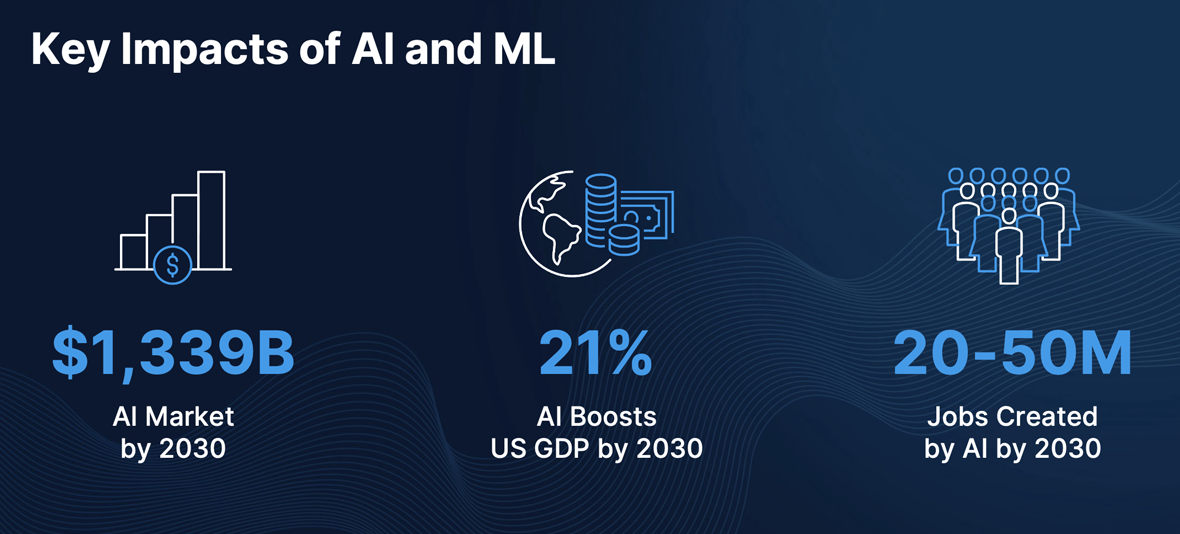
AI and ML are more than just buzzwords; they are driving substantial economic growth, creating new job opportunities, and shaping the future. The AI market is projected to reach a staggering $1,339 billion by 2030. This exponential growth underscores the widespread adoption and integration of AI across various industries. Furthermore, AI is on track to boost the US GDP by 21% by 2030. This highlights the profound economic impact AI will have. By automating routine tasks, optimizing operations, and providing deep insights through data analysis, AI enables businesses to increase productivity while reducing costs. And contrary to common fears that AI will eliminate jobs, it is expected to create 20-50 million positions by 2030. These roles will span various sectors, including data science, AI ethics, machine learning engineering, and AI-related research and development.

Real-Time Data — The Missing Link

What is Real-Time Data?

In the realm of data processing, real-time data refers to information that is delivered and processed almost instantaneously as it is generated. Unlike batch processing, which involves collecting and processing data in bulk at scheduled intervals, real-time data ensures immediate availability and actionability. This immediacy allows for decisions and responses to be made in the moment, offering a dynamic edge over traditional methods.

The Death of Traditional Batch Processing

The shift from batch processing to real-time data marks a crucial technological evolution driven by the need for speed and efficiency. Batch processing resulted in significant delays between data generation and actionable insights. As the demand for faster decision-making grew, the limitations of traditional batch processing became glaringly apparent. Traditional methods introduced latency, making it impossible to act on data immediately, a critical issue in environments requiring timely decisions.

Furthermore, batch processing systems were rigid and inflexible, struggling to scale as data volumes grew and needing substantial reengineering to adapt to new data types or sources. The advent of real-time data processing revolutionized this paradigm, providing the means to analyze and act on data as it flows, thereby minimizing latency to sub-second and offering unparalleled scalability and adaptability to modern data streams. This transformation is responsible for enabling real-time decision-making and fostering innovation across industries, cementing real-time data as the cornerstone of AI algorithms and advancements.

Dispelling Misconceptions and Demonstrating Value

In the world of AI and ML, there are a few common objections to the adoption of real-time data processing. Let’s dive into these misconceptions and demonstrate the true value of real-time capabilities.

Misconception: Batch Processing Suffices

Objection: Many AI/ML tasks can be handled with batch processing. Models trained on historical data can make predictions without needing real-time updates. The necessity of real-time data is highly specific to certain use cases, and not all industries or applications benefit equally.

Reality Check: While batch processing works for some tasks, it falls short in dynamic environments requiring high responsiveness and timely decision-making. Real-time data integration allows models to process the most recent data points, reducing lag between data generation and actionable insights. This is crucial in fields like finance, where market conditions shift rapidly, or e-commerce, where user behavior and inventory status constantly change. For example, fraud detection models relying on batch data might miss real-time anomalies, whereas real-time data can detect and respond to fraud within milliseconds. In healthcare, real-time patient monitoring can provide immediate insights for timely interventions, improving patient outcomes. The notion that real-time data is only useful in specific cases is outdated as countless industries increasingly leverage real-time capabilities to stay competitive and responsive.

Misconception: Complexity and Cost

Objection: Implementing real-time data systems is complex and costly. The infrastructure required for real-time data ingestion, processing, and analysis can be significantly more expensive than batch processing systems.

Reality Check: While real-time systems require an investment, the ROI is substantial. Modern cloud-based architectures and scalable platforms like Striim and Apache Kafka have reduced the complexity and cost of real-time data processing. Real-time systems drive higher revenues and better customer experiences by enabling immediate responses to emerging trends and anomalies. For instance, real-time inventory management in retail can prevent stockouts and overstock, directly impacting sales and customer satisfaction. The initial investment in real-time capabilities is outweighed by the long-term gains in efficiency, responsiveness, and competitive advantage.

Misconception: Data Quality and Stability

Objection: Real-time data can be noisy and unstable, leading to potential inaccuracies in model predictions. Batch processing allows for more thorough data cleaning and preprocessing.

Reality Check: Real-time data does not mean compromising on quality. Advanced real-time analytics platforms incorporate robust data cleaning and anomaly detection, ensuring models receive high-quality, stable inputs. Tools like Apache Beam and Spark Streaming provide mechanisms for real-time data validation and cleansing. Real-time data pipelines can also integrate seamlessly with existing ETL processes to maintain data integrity. By leveraging these technologies, organizations can ensure that their real-time data is as reliable and accurate as batch-processed data, while gaining the added advantage of immediacy.

Misconception: Model Retraining Frequency

Objection: Many models do not need to be retrained frequently. The insights gained from real-time data might not justify the cost and effort of constant retraining.

Reality Check: The pace of change in today’s world demands models that can adapt quickly. Real-time data enables continuous learning and incremental updates, ensuring models remain relevant and accurate. Techniques like online learning and incremental model updates allow models to evolve without the need for complete retraining. For example, recommendation systems can benefit from real-time user behavior data, continuously refining their suggestions to enhance user engagement. By integrating real-time data, organizations can maintain high model performance and accuracy, adapting swiftly to new patterns and trends.

Industry Disruption through Real-Time AI

Real-time AI is redefining how businesses operate by providing up-to-the-second information that enhances predictive accuracy, supports continuous learning, and automates complex decision-making processes. This integration allows AI to adapt instantly to new data, which is essential for applications where split-second decision-making is critical, including fraud detection, autonomous vehicles, and financial trading. It also powers real-time anomaly detection in cybersecurity and manufacturing, identifying threats and malfunctions as they occur. Additionally, real-time data empowers personalized customer experiences by analyzing interactions on the fly, delivering tailored recommendations and services. The scalability and adaptability of real-time data platforms ensure AI systems are always equipped with the most current information, driving innovation and efficiency across industries.

Real-Time AI & ML in the Real World

Predictive Maintenance in Manufacturing

ML algorithms, often powered by sensors and IoT devices, continuously monitor equipment health. Anticipating failures, predictive maintenance minimizes downtime and optimizes productivity by analyzing historical data and real-time sensor readings, enabling proactive scheduling and preventing disruptions in production.

Customer Churn Prediction in Telecom

ML models may consider factors such as customer demographics, usage patterns, customer service interactions, and billing history. By identifying customers at risk of churn, telecom companies can implement targeted retention strategies, such as personalized offers or improved customer support.

Fraud Detection in Finance

ML algorithms learn from historical data to identify patterns associated with fraudulent transactions. Real-time monitoring allows financial institutions to detect anomalies and trigger immediate alerts or interventions. This proactive approach helps prevent financial losses due to fraudulent activities.

Personalized Marketing in E-commerce

ML algorithms analyze not only purchase history but also browsing behavior and preferences. This enables e-commerce platforms to deliver personalized product recommendations through targeted advertisements, email campaigns, and website interfaces, enhancing the overall shopping experience.

Healthcare Diagnostics and Predictions

ML models, particularly in medical imaging, can assist healthcare providers by identifying subtle patterns indicative of diseases. Predictive analytics also help healthcare providers anticipate patient health deterioration, enabling early interventions and personalized treatment plans.

Dynamic Pricing in Retail

ML algorithms consider a multitude of factors, including competitor pricing, inventory levels, historical sales data, and customer behavior. By dynamically adjusting prices in real time, retailers can optimize revenue, respond to market changes, and maximize profitability.

Supply Chain Optimization

ML-driven demand forecasting considers historical data, seasonality, and external factors like economic trends and geopolitical events. This enables accurate inventory management, reduces excess stock, and ensures timely deliveries, ultimately improving the overall efficiency of the supply chain.

Human Resources and Talent Management

ML tools assist in resume screening by identifying relevant skills and qualifications. Predictive analytics can assess employee satisfaction, helping organizations identify areas for improvement and implement strategies to enhance employee retention and engagement.

UPS Success Story: Where Real-Time Data Supercharged Real-Time AI


Safeguarding shipments with AI and real-time data

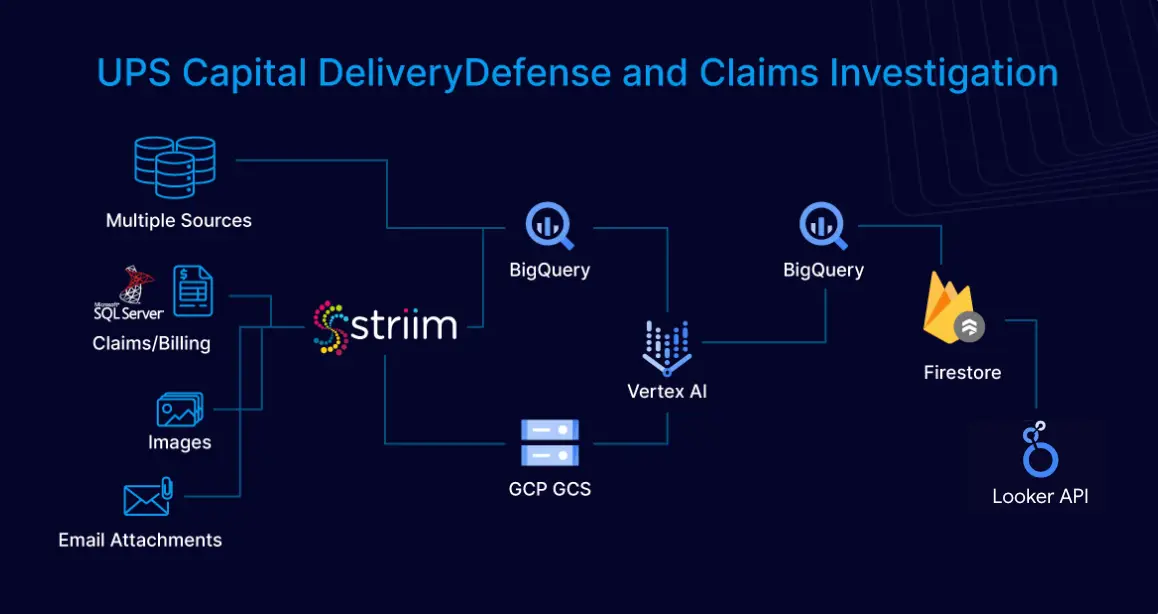
UPS Capital® is leveraging Google’s Data Cloud and AI technologies to safeguard packages from porch piracy. With more than 300 million American consumers turning to online shopping, UPS Capital has witnessed the significant challenges customers face in securing their package delivery ecosystem. Now, the company is leveraging its digital capabilities and access to data to help customers rethink traditional approaches to combat shipping loss and deliver better customer experiences.

https://youtu.be/shreurvc28U?si=2rVZTIO0YWnMR2W-

DeliveryDefense™ Address Confidence utilizes real-time data and machine learning algorithms to safeguard packages. By assigning a confidence score to potential delivery locations, it enhances the assessment of successful delivery probabilities while mitigating loss or theft risks. Every address is allocated a confidence score on a scale from 100 to 1000, with 1000 indicating the highest probability of delivery success. These scores are based on customer reports of package theft. Shippers can integrate this score into their shipping workflow through an API to take proactive, preventative actions on low-confidence addresses. For instance, if a package is destined for an address with a low confidence score, the merchant can proactively reroute the shipment to a secure UPS Access Point location. These locations typically have a confidence score of around 950 due to their high chain of custody security precautions.

Striim’s real-time data integration platform works in tandem with Google Cloud’s modern architecture by dynamically embedding vectors into streaming information, enhancing data representation, processing efficiency, and analytical accuracy. Striim also integrates structured and unstructured data pulled from diverse sources and applies a variety of AI models from OpenAI and Vertex AI to generate embeddings that establish similarity scores between data points to reveal possible relationships.

UPS Capital brings significant operational rewards, evidenced by over 280,000 claims paid annually. With $236 billion in declared value and 690k shippers protected, its solutions offer robust protection for shippers, ensuring peace of mind and financial security in every shipment.

The Future of AI is Now — And It’s Real-Time

Real-time data and AI are significantly improving existing processes and impacting the bottom line across industries. From retail and finance to healthcare and beyond, the integration of real-time data is driving greater efficiency, more personalized customer experiences, and continuous innovation. This shift is creating new opportunities and setting higher standards.

Businesses are encouraged to embrace real-time data and AI to stay competitive in the future. By adopting these technologies, companies can fully leverage AI, stay ahead of the competition, and navigate the evolving technological landscape. The future of AI is real-time, and the time to act is now.

An In-Depth Guide to Real-Time Analytics

It’s increasingly necessary for businesses to make immediate decisions. More importantly, it’s crucial these decisions are backed up with data. That’s where real-time analytics can help. Whether you’re a SaaS company looking to release a new feature quickly, or own a retail shop trying to better manage inventory, these insights can empower businesses to assess and act on data quickly to make better decisions. As a result, you’ll enjoy empowered decision-making, know how to respond to the latest trends, and boost operational efficiency.

We’re here to walk you through everything you need to know about real-time analytics. Whether you want to learn more about the benefits of real-time analytics or dive deeper into the most significant characteristics of a real-time analytics system, we’ll ensure you have a robust understanding of how real-time analytics move your business forward. 

What is real-time analytics?

So, what is real time analytics? And more importantly, how does real-time analytics work? 

Real-time analytics refers to pulling data from different sources in real-time. Then, the data is analyzed and transformed into a format that’s digestible for target users, enabling them to draw conclusions or immediately garner insights once the data is entered into a company’s system. Users can access this data on a dashboard, report, or another medium.

Moreover, there are two forms of real-time analytics. These include: 

On-demand real-time analytics

With on-demand real-time analytics, users send a request, such as with an SQL query, to deliver the analytics outcome. It relies on fresh data, but queries are run on an as-needed basis. 

The requesting user varies, and can be a data analyst or another team member within the organization who wants to gain insight into business activity. For instance, a marketing manager can leverage on-demand real-time analytics to identify how users on social media react to an online advertisement in real time. 

Continuous real-time analytics

On the contrary, continuous real-time analytics takes a more proactive approach. It delivers analytics continuously in real time without requiring a user to make a request. You can view your data on a dashboard via charts or other visuals, so users can gain insight into what’s occurring down to the second.

One potential use case for continuous real-time analytics is within the cybersecurity industry. For instance, continuous real-time analytics can be leveraged to analyze streams of network security data flowing into an organization’s network. This makes threat detection a possibility. 

In addition to the main types of real-time analytics, streaming analytics also plays a crucial role in processing data as it flows in real-time. Let’s dive deeper into streaming analytics now. 

What’s the difference between real-time analytics and streaming analytics? 

Streaming analytics focuses on analyzing data in motion, unlike traditional analytics, which deals with data stored in databases or data warehouses. Streams of data are continuously queried with Streaming SQL, enabling correlation, anomaly detection, complex event processing, artificial intelligence/machine learning, and live visualization. Because of this, streaming analytics is especially impactful for fraud detection, log analysis, and sensor data processing use cases.

How does real-time analytics work?

To fully understand the impact of real-time analytics processing, it’s necessary to understand how it works. 

1. Collect data in real time

Every organization can leverage valuable real-time data. What exactly that looks like varies depending on your industry, but some examples include:

  • Enterprise resource management (ERP) data: Analytical or transactional data
  • Website application data: Top source for traffic, bounce rate, or number of daily visitors
  • Customer relationship management (CRM) data: General interest, number of purchases, or customer’s personal details
  • Support system data: Customer’s ticket type or satisfaction level

Consider your business operations to decide the type of data that’s most impactful for your business. You’ll also need to have an efficient way of collecting it. For instance, say you work in a manufacturing plant and are looking to use real-time analytics to find faults in your machinery. You can use machine sensors to collect data and analyze it in real time to deduct if there are any signs of failure.

For collection of data, it’s imperative you have a real-time ingestion tool that can reliably collect data from your sources. 

2. Combine data from various sources

Typically, you’ll need data from multiple sources to gain a complete analysis. If you’re looking to analyze customer data, for instance, you’ll need to get it from operational systems of sales, marketing, and customer support. Only with all of those facets can you leverage the information you have to determine how to improve customer experience. 

To achieve this, combine data from the sum of your sources. For this purpose, you can use ETL (extract, transform, and load) tools or build a custom data pipeline of your own and send the aggregated data to a target system, such as a data warehouse. 

3. Extract insights by analyzing data

Finally, your team will extract actionable insights. To do this, use statistical methods and data visualizations to analyze data by identifying underlying patterns or correlations in the data. For example, you can use clustering to divide the data points into different groups based on their features and common properties. You can also use a model to make predictions based on the available data, making it easier for users to understand these insights.

Now that you have an answer to the question, “how does real time analytics work?” Let’s discuss the difference between batch and real-time processing. 

Batch processing vs. real-time processing: What’s the difference? 

Real-time analytics is made possible by the way the data is processed. To understand this, it’s important to know the difference between batch and real-time processing.

Batch Processing

In data analytics, batch processing involves first storing large amounts of data for a period and then analyzing it as needed. This method is ideal when analyzing large aggregates or when waiting for results over hours or days is acceptable. For example, a payroll system processes salary data at the end of the month using batch processing.

“Sometimes there’s so much data that old batch processing (late at night once a day or once a week) just doesn’t have time to move all data and hence the only way to do it is trickle feed data via CDC,” says Dmitriy Rudakov, Director of Solution Architecture at Striim

Real-time Processing

With real-time processing, data is analyzed immediately as it enters the system. Real-time analytics is crucial for scenarios where quick insights are needed. Examples include flight control systems and ATM machines, where events must be generated, processed, and analyzed swiftly.

“Real-time analytics gives businesses an immediate understanding of their operations, customer behavior, and market conditions, allowing them to avoid the delays that come with traditional reporting,” says Simson Chow, Sr. Cloud Solutions Architect at Striim. “This access to information is necessary because it enables businesses to react effectively and quickly, which improves their ability to take advantage of opportunities and address problems as they arise.” 

Real-Time Analytics Architecture

When implementing real-time analytics, you’ll need a different architecture and approach than you would with traditional batch-based data analytics. The streaming and processing of large volumes of data will also require a unique set of technologies.

With real-time analytics, raw source data rarely is what you want to be delivered to your target systems. More often than not, you need a data pipeline that begins with data integration and then enables you to do several things to the data in-flight before delivery to the target. This approach ensures that the data is cleaned, enriched, and formatted according to your needs, enhancing its quality and usability for more accurate and actionable insights.

Data integration

The data integration layer is the backbone of any analytics architecture, as downstream reporting and analytics systems rely on consistent and accessible data. Because of this, it provides capabilities for continuously ingesting data of varying formats and velocity from either external sources or existing cloud storage.

It’s crucial that the integration channel can handle large volumes of data from a variety of sources with minimal impact on source systems and sub-second latency. This layer leverages data integration platforms like Striim to connect to various data sources, ingest streaming data, and deliver it to various targets.

For instance, consider how Striim enables the constant, continuous movement of unstructured, semi-structured, and structured data – extracting it from a wide variety of sources such as databases, log files, sensors, and message queues, and delivering it in real-time to targets such as Big Data, Cloud, Transactional Databases, Files, and Messaging Systems for immediate processing and usage.

Event/stream processing

The event processing layer provides the components necessary for handling data as it is ingested. Data coming into the system in real-time are often referred to as streams or events because each data point describes something that has occurred in a given period. These events typically require cleaning, enrichment, processing, and transformation in flight before they can be stored or leveraged to provide data. 

Therefore, another essential component for real-time data analytics is the infrastructure to handle real-time event processing.

Event/stream processing with Striim

Some data integration platforms, like Striim, perform in-flight data processing. This includes filtering, transformations, aggregations, masking, and enrichment of streaming data. These platforms deliver processed data with sub-second latency to various environments, whether in the cloud or on-premises.

Additionally, Striim can deliver data to advanced stream processing platforms such as Apache Spark and Apache Flink. These platforms can handle and process large volumes of data while applying sophisticated business logic.

Data storage

A crucial element of real-time analytics infrastructure is a scalable, durable, and highly available storage service to handle the large volumes of data needed for various analytics use cases. The most common storage architectures for big data include data warehouses and lakes. Organizations seeking a mature, structured data solution that focuses on business intelligence and data analytics use cases may consider a data warehouse. Data lakes, on the contrary, are suitable for enterprises that want a flexible, low-cost big data solution to power machine learning and data science workloads on unstructured data.

It’s rare for all the data required for real-time analytics to be contained within the incoming stream. Applications deployed to devices or sensors are generally built to be very lightweight and intentionally designed to produce minimal network traffic. Therefore, the data store should be able to support data aggregations and joins for different data sources — and must be able to cater to a variety of data formats.

Presentation/consumption

At the core of a real-time analytics solution is a presentation layer to showcase the processed data in the data pipeline. When designing a real-time architecture, keep this step at the forefront as it’s ultimately the end goal of the real-time analytics pipeline. 

This layer provides analytics across the business for all users through purpose-built analytics tools that support analysis methodologies such as SQL, batch analytics, reporting dashboards, and machine learning. This layer is essentially responsible for:

  • Providing visualization of large volumes of data in real time
  • Directly querying data from big stores, like data lakes and warehouses 
  • Turning data into actionable insights using machine learning models that help businesses deliver quality brand experiences 

What are Key Characteristics of a Real-Time Analytics System? 

To verify that a system supports real-time analytics, it must have specific characteristics. Those characteristics include: 

Low latency

In a real-time analytics system, latency refers to the time between when an event arrives in the system and when it is processed. This includes both computer processing latency and network latency. To ensure rapid data analysis, the system must operate with low latency. “Businesses can access the most accurate data since the system responds quickly and has minimal latency,” says Chow. 

High availability

Availability refers to a real-time analytics system’s ability to perform its function when needed. High availability is crucial because without it:

  • The system cannot instantly process data
  • The system will find it hard to store data or use a buffer for later processing, particularly with high-velocity streams 

Chow adds, “High availability guarantees uninterrupted operation.” 

Horizontal scalability 

Finally, a key characteristic of a successful real-time analytics system is horizontal scalability. This means the system can increase capacity or enhance performance by adding more servers to the existing pool. In cases where you cannot control the rate of data ingress, horizontal scalability becomes crucial, as it allows you to adjust the system’s size to handle incoming data effectively. “When the business adds more servers, the horizontal scalability feature of the system increases its flexibility even more by enabling it to handle more data and users,” shares Chow. “When combined, these characteristics ensure the system’s scalability, speed, and reliability as the business grows.” 

According to Rudakov, these three capabilities are crucial for several reasons. “[Low latency is important] because in order to move data for reasons above the operator needs data to get triggered ASAP with lowest latency possible,” he says. “Secondly, the system needs to be redundant with recovery support so that if it fails it comes back quickly and has no data loss. Finally, if the data is not moving fast enough, the operator needs to be able to easily scale the data moving system, i.e. add parallel components into the pipeline and add nodes into the cluster.” 

Rudakov adds that’s exactly why Striim is the right choice for a real-time analytics platform. “Striim provides all real time platform necessary elements described above: low latency pipeline controls such as CDC readers to read data in real time from database logs, recovery, batch policies, ability to run pipelines in parallel and finally multi-node cluster to support HA and scalability,” he says. “Additionally, it supports an easy drag and drop interface to create pipelines in a simple SQL based language (TQL).” 

Benefits of Real-Time Analytics

There are countless benefits of real-time analytics. Some include: 

To Optimize the Customer Experience 

According to an IBM/NRF report, post-pandemic customer expectations regarding online shopping have evolved considerably. Now, consumers seek hybrid services that can help them move seamlessly from one channel to another, such as buy online, pickup in-store (BOPIS), or order online and get it delivered to their doorstep. According to the IBM/NRF report, one in four consumers wants to shop the hybrid way. 

In order to enable this, however, retailers must access real-time analytics to move data from their supply chain to the relevant departments. Organizations today need to monitor their rapidly changing contexts 24/7. They need to process and analyze cross-channel data immediately. Just consider how Macy’s leveraged Striim to improve operational efficiency and create a seamless customer experience. “In many scenarios, businesses need to act in real time and if they don’t their revenue and customers get impacted,” says Rudakov. 

Real-time analytics also enhances personalization. It enables brands to deliver tailored content to consumers based on their actions on channels like websites, mobile apps, SMS, or email—instantly.

“Having access to real-time data allows a retail store to quickly respond to changes in demand for a certain item by adjusting inventory levels, launching focused marketing campaigns, or adjusting pricing techniques,” says Chow. “Similarly, companies may move quickly to address potential problems—like a drop in website performance or a decrease in consumer satisfaction—and mitigate negative consequences before they escalate.” 

To Stay Proactive and Act Quickly 

Another way businesses can leverage real-time analytics is to stay proactive and act quickly in case of an anomaly, such as with fraud detection. Unfortunately, fraud is a reality for innumerable businesses, regardless of size. However, real-time analytics can help organizations identify theft, fraud, and other types of malicious activities. Because of this, leveraging real-time analytics is a powerful way to ensure your business is staying proactive and able to move quickly if something goes wrong. 

This is especially important as these malicious online activities have seen a surge over the past few years. Consumers lost more than $10 billion to fraud in 2023, according to the Federal Trade Commission

“At some point a major credit card company used our platform to read network access logs and call an ML model to detect hacker attempts on their network,” shares Rudakov. 

For example, companies can use real-time analytics by combining it with machine learning and Markov modeling. Markov modeling is used to identify unusual patterns and make predictions on the likelihood of a transaction being fraudulent. If a transaction shows signs of unusual behavior, it then gets flagged. 

To Improve Decision-Making

Using up-to-date information allows organizations to know what they are doing well and improve. Conversely, it allows them to identify pitfalls and determine how to improve. 

For instance, if a piece of machinery isn’t working optimally in a manufacturing plant, real-time analytics can collect this data from sensors and generate data-driven insights that can help technicians resolve it. 

Real-time Use Cases in Different Industries

The benefits of real-time analytics vary just as the use cases do. Let’s walk through several use cases of real-time analytics platforms. 

Supply chain

Real-time analytics in supply chain management can enable better decision-making. Managers can view real-time dashboard data to oversee the supply chain and strategize demand and supply. “Management of the supply chain is another example [of a real-time analytics use case]. By monitoring shipments and inventory data, real-time analytics allow companies to quickly fix delays or shortages,” says Chow. 

Some of the other ways real-time analytics can help organizations include:

  • Feed live data to route planning algorithms in the logistics industry. These algorithms can analyze real-time data to optimize routes and save time by going through traffic patterns on roadways, weather conditions, and fuel consumption. 
  • Use aggregation of real-time data from fuel-level sensors to resolve fuel issues faced by drivers. These sensors can provide data on fuel level volumes, consumption, and dates of refills. 
  • Collect real-time data from electronic logging devices (ELD) to study driver behavior and improve it. This data provides valuable insights into driving patterns, enabling fleet managers to implement targeted training and safety measures 

Finance

In certain industries, such as commodities trading, market fluctuations require organizations to be agile. Real-time analytics can help in these scenarios by intercepting changes and empowering organizations to adapt to rapid market fluctuations. Financial firms can use real-time analytics to analyze different types of financial data, such as trading data, market prices, and transactional data. 

Consider the case of Inspyrus (now MineralTree), a fintech company seeking to improve accounts payable operations for businesses. The company wanted to ensure its users could get a real-time view of their transactional data from invoicing reports. However, their existing stack was unable to support real-time analytics, which meant that it took a whole hour for data updates, whereas some operations could even take weeks. There were also technical issues with moving data from an online transaction processing (OLTP) database to Snowflake in real time. 

By utilizing Striim, Inspyrus ingested real-time data from an OLTP database, loaded it into Snowflake, and transformed it there. It then used an intelligence tool to visualize this data and create rich reports for users. As a result, Inspyrus users are able to view reports in real time and utilize insights immediately to fuel better decisions. 

Use Striim to power your real-time analytics infrastructure

Your real-time analytics infrastructure can be only as good as the tool you use to support it. Striim is a unified real-time data integration and streaming platform that enables real-time analytics that can offer a range of benefits in this regard. It can help you:

  • Collect data non-intrusively, securely, and reliably, from operational sources (databases, data warehouses, IoT, log files, applications, and message queues) in real time
  • Stream data to your cloud analytics platform of choice, including Google BigQuery, Microsoft Azure Synapse, Databricks Delta Lake, and Snowflake
  • Offer data freshness SLAs to build trust among business users
  • Perform in-flight data processing such as filtering, transformations, aggregations, masking, enrichment, and correlations of data streams with an in-memory streaming SQL engine
  • Create custom alerts to respond to key business events in real time

When seeking a real-time analytics platform, look no further than Striim. Striim, a unified real-time data integration and streaming platform, connects clouds, data, and applications. You can leverage it to connect hundreds of enterprise sources, all while supporting data enrichment, the creation of complex in-flight data transformations with Striim, and more. “Striim uses log-based Change Data Capture (CDC) technology to capture real-time changes from the source database and continuously replicate the data in-memory to multiple target systems, all without disrupting the source database’s operation,” says Chow. 

Ready to discover how Striim can help evolve how you process data? Sign up for a demo today.

Back to top