Driving Retail Transformation: How Striim Powers Seamless Cloud Migration and Data Modernization

In today’s fast-paced retail environment, digital transformation is essential to stay competitive. One powerful way to achieve this transformation is by modernizing data architecture and migrating to the cloud. There are countless ways to leverage Striim but this is one of the most exciting, as the platform offers large retailers the tools they need to seamlessly transition from legacy systems to a more agile, cloud-based infrastructure.

Retailers often face the challenge of managing tremendous amounts of data, typically stored in cumbersome on-premises systems. Striim helps retailers liberate their data by tackling to significant areas: 

  • Enabling a data mesh for enhanced self-service analytics
  • Migrating from legacy systems, like Oracle Exadata, to Google Cloud

Let’s explore why these initiatives are imperative for retailers and how Striim plays a pivotal role in driving this transformation. 

Why Are These Initiatives Important?

For retailers, modernizing data architecture is not just about upgrading technology—it’s about empowering teams with better, faster access to data while future-proofing their infrastructure. Striim facilitates this transformation by enabling the implementation of a data mesh and supporting the migration to Google Cloud.

The data mesh approach decentralizes data management, making it easier for various teams across an organization to perform self-service analytics and derive actionable insights. This shift promotes a more collaborative and agile data culture, ultimately boosting business agility and responsiveness.

Migrating to Google Cloud, on the other hand, provides retailers with a scalable, flexible infrastructure that can handle increasing volumes of data. Striim’s real-time data integration ensures a smooth and seamless transition, minimizing disruptions and maintaining data integrity throughout the process.

Why Retailers Choose Striim

Many retailers are transitioning to Google Cloud, and managing real-time data migration presents a significant challenge across the industry. To address this, organizations require a robust, enterprise-grade solution for change data capture (CDC) to fill the gaps in their existing tools. After evaluating various options, many choose to move forward with proof of concept projects using Striim, confident in its ability to meet their needs and drive successful data transformation.

Striim is equipped to handle the complexities of modern retail environments, making it the leading choice for enterprises looking to enhance their data infrastructure. Whether it’s enabling a data mesh, supporting cloud migrations, or modernizing legacy systems, Striim provides the real-time data movement capabilities needed to drive successful digital transformation.

By leveraging Striim, retailers can ensure that their data transformation projects are not only effective but also aligned with their broader business goals.

Architecture and Striim’s Role 

Retailers transitioning to Google Cloud often require real-time data movement from their existing systems, such as Oracle databases, to cloud-based platforms like Google BigQuery. The typical architecture involves:

  • CDC Adapter: This component captures changes from source databases, ensuring that all data modifications are efficiently tracked and recorded. For instance, Striim’s Oracle CDC Adapter captures changes from source Oracle databases including the Retail Management System, Warehouse Management System, and Warehouse Execution System.
  • Cloud Integration Writer: This component pushes captured data in real-time to cloud targets, making it available for analysis as soon as it is generated. An example of this is BigQuery Writer, which pushes the captured data to BigQuery targets in real time.

This architecture supports key objectives for retailers:

  • Data Mesh Integration: By incorporating real-time data from operational systems into a data mesh, retailers ensure that stakeholders have access to up-to-date information, enhancing decision-making and analytics capabilities.
  • Cloud Migration Support: Continuous data movement from on-premises systems to cloud environments facilitates the transition to a scalable, flexible infrastructure capable of handling increasing volumes of data.

Striim’s advanced data integration capabilities streamline the migration process and improve data management efficiency, making it a valuable asset for retailers aiming to modernize their data architecture and migrate to the cloud.

Applicability to Other Use Cases

Striim’s capabilities highlight its value for various enterprise data transformation efforts, including:

  • Enabling Data Mesh Architectures: Striim provides the real-time data integration layer needed to populate domain-specific data products within a data mesh, ensuring that data is readily accessible across the organization.
  • Cloud Migrations: For organizations moving from on-premises databases to cloud data warehouses, Striim offers low-latency, continuous data replication to maintain synchronization between source and target systems.
  • Legacy System Modernization: Striim supports the transition from legacy systems by replicating data to modern cloud platforms in real time, facilitating a gradual and efficient modernization process.
  • Real-Time Analytics: By continuously streaming operational data to analytics platforms, Striim enables fresher insights and more timely decision-making.
  • Transformation Capabilities: By leveraging Striim, your team gains access to real-time transformation, allowing you to process and adapt data dynamically. Striim’s powerful transformation engine supports complex operations such as enrichment, filtering, and aggregation, ensuring your data is instantly optimized and ready for immediate use. 
  • Ease of Scalability: Striim was designed with scalability in mind, so regardless of how your team’s data volume increases, you can count on Striim for reliable performance. 

Striim’s real-time data integration is a crucial element for successful data transformation initiatives. Whether your organization is implementing a data mesh, migrating to the cloud, or modernizing its data stack, Striim provides the data movement capabilities essential for achieving effective digital transformation. Ready to discover how Striim can help drive your retail transformation? Request a demo to learn more. 

What are Smart Data Pipelines? 9 Key Smart Data Pipelines Capabilities

When implemented effectively, smart data pipelines seamlessly integrate data from diverse sources, enabling swift analysis and actionable insights. They empower data analysts and business users alike by providing critical information while protecting sensitive production systems. Unlike traditional pipelines, which can be hampered by various challenges, smart data pipelines are designed to address these issues head-on.

Today, we’ll dive into what makes smart data pipelines distinct from their traditional counterparts. We’ll explore their unique advantages, discuss the common challenges you face with traditional data pipelines, and highlight nine key capabilities that set smart data pipelines apart.

What is a Smart Data Pipeline? 

A smart data pipeline is a sophisticated, intelligent data processing system designed to address the dynamic challenges and opportunities of today’s fast-paced world. In contrast to traditional data pipelines, which are primarily designed to move data from one point to another, a smart data pipeline integrates advanced capabilities that enable it to monitor, analyze, and act on data as it flows through the system.

This real-time responsiveness allows organizations to stay ahead of the competition by seizing opportunities and addressing potential issues with agility. For instance, your smart data pipeline can rapidly identify and capitalize on an emerging social media trend, allowing your business to adapt its marketing strategies and engage with audiences effectively before the trend peaks. This gets you ahead of your competition. Alternatively, it can also help mitigate the impact of critical issues, such as an unexpected schema change in a database, by automatically adjusting data workflows or alerting your IT team to resolve the problem right away. 

In addition to real-time monitoring and adaptation, smart data pipelines leverage features such as machine learning for predictive analytics. This enables businesses to anticipate future trends or potential problems based on historical data patterns, facilitating proactive decision-making. Moreover, a decentralized architecture enhances data accessibility and resilience, ensuring that data remains available and actionable even in the face of system disruptions or increased demand.

To fully comprehend why traditional data pipelines are insufficient, let’s walk through some of their hurdles. 

What are the Challenges of Building Data Pipelines? 

Traditional data pipelines face several persistent issues that reveal the need for smarter solutions. Luckily, smart data pipelines can mitigate these problems.  

According to Dmitriy Rudakov, Director of Solution Architecture at Striim, there are two primary features that smart data pipelines have that traditional ones don’t. “[The] two main aspects [are] the ability to act in real time, and integration with SQL / UDF layer that allows any type of transformations,” he shares.

Furthermore, with traditional data pipelines, data quality remains a significant challenge, as manual cleansing and integration of separate sources can cause trouble. As a result, errors and inconsistencies can be introduced into your data. Integration complexity adds to the difficulty, with custom coding required to connect various data sources, leading to extended development times and maintenance hassles. Then, there’s the question of scalability and data volume. This is problematic for traditional pipelines as they often struggle with the increasing scale and velocity of data, resulting in performance bottlenecks. Plus, high infrastructure costs are another hurdle. 

With traditional data pipelines, the data processing and transformation stages can be rigid and labor-intensive, too. This makes it near impossible to adapt to new data requirements rapidly. Finally, traditional pipelines raise questions about pipeline reliability and security, as they are prone to failures and security vulnerabilities.

By moving to a smart data pipeline, you can rest assured that your data is efficiently managed, consistently available, and adaptable to evolving business needs. Let’s dive deeper into key aspects of smart data pipelines that allow them to address all of these concerns. 

9 Key Features of Smart Data Pipelines

Here are nine key capabilities of Smart Data Pipelines that your forward-thinking enterprise cannot afford to overlook.

Real-time Data Integration

Smart data pipelines are adept at handling real-time data integration, which is crucial for maintaining up-to-date insights in today’s dynamic business environment. These pipelines feature advanced connectors that interface seamlessly with a variety of data sources, such as databases, data warehouses, IoT devices, messaging systems, and applications. The best part? This all happens in real time. 

Rudakov believes this is the most crucial aspect of smart data pipelines. “I would zoom into [the] first [capability as the most important] — real time, as it gives one an ability to act as soon as an event is seen and not miss the critical time to help save money for the business. For example, in the IoT project we did for a car breaks manufacturer, if the quality alert went out too late the company would lose critical time to fix the device.” 

By supporting real-time data flow, smart pipelines ensure that data is continuously updated and synchronized across multiple systems. This enables businesses to access and utilize current information instantly, which facilitates faster decision-making and enhances overall operational efficiency. While traditional data pipelines face delays and limited connectivity, smart data pipelines are agile, and therefore able to keep pace with the demands of real-time data processing.

Location-agnostic

Another feature of the smart data pipeline is that it offers flexible deployment, making it truly location-agnostic. Your team can launch and operate smart data pipelines across various environments, whether the data resides on-premises or in the cloud.

This capability allows organizations to seamlessly integrate and manage data across various locations without being constrained by the physical or infrastructural limitations of traditional pipelines.

Additionally, smart data pipelines are able to operate fluidly across both on-premises and cloud environments. This cross-environment functionality gives businesses an opportunity to develop a hybrid data architecture tailored to their specific requirements. 

Whether your organization is transitioning to the cloud, maintaining a multi-cloud strategy, or managing a complex mix of on-premises and cloud resources, smart data pipelines adapt to all of the above situations — and seamlessly. This adaptability ensures that data integration and processing remain consistent and efficient, regardless of where the data is stored or how your infrastructure evolves.

Applications on streaming data

Another reason smart data pipelines emerge as better than traditional is thanks to their myriad of uses. The utilization of smart data pipelines extend beyond simply delivering data from one place to another. Instead, smart data pipelines enable users to easily build applications on streaming data, ideally with a SQL-based engine that’s familiar to developers and data analysts alike. It should allow for filtering, transforming, and data enrichment, for use cases such as PII masking, data denormalization, and more.

Smart data pipelines also incorporate machine learning on streaming data to make predictions and detect anomalies (Think: fraud detection by financial institutions). They also enable automated responses to critical operational events via alerts, live monitoring dashboards, and triggered actions. 

Scalability

Scalability is another key capability. The reason smart data pipelines excel in scalability is because they leverage a distributed architecture that allocates compute resources across independent clusters. This setup allows them to handle multiple workloads in parallel efficiently, unlike traditional pipelines which often struggle under similar conditions.

Organizations can easily scale their data processing needs by adding more smart data pipelines, easily integrating additional capacity without disrupting existing operations. This elastic scalability ensures that data infrastructure can grow with business demands, maintaining performance and flexibility.

Reliability

Next up is reliability. If your organization has ever experienced the frustration of a traditional data pipeline crashing during peak processing times—leading to data loss and operational downtime—then you understand why reliability is of paramount importance. 

For critical data flows, smart data pipelines offer robust reliability by ensuring exactly-once or at-least-once processing guarantees. This means that each piece of data is processed either once and only once, or at least once, to prevent data loss or duplication. They are also designed with failover capabilities, allowing applications to seamlessly switch to backup nodes in the event of a failure. This failover mechanism ensures zero downtime, maintaining uninterrupted data processing and system availability even in the face of unexpected issues.

Schema evolution for database sources

Furthermore, these pipelines can handle schema changes in source tables—such as the addition of new columns—without disrupting data processing. Equipped with schema evolution capabilities, these pipelines allow users to manage Data Definition Language (DDL) changes flexibly. 

Users can configure how to respond to schema updates, whether by halting the application until changes are addressed, ignoring the modifications, or receiving alerts for manual intervention. This is invaluable for pipeline operability and resilience.

Pipeline monitoring

The integrated dashboards and monitoring tools native to smart data pipelines offer real-time visibility into the state of data flows. These built-in features help users quickly identify and address bottlenecks, ensuring smooth and efficient data processing. 

Additionally, smart data pipelines validate data delivery and provide comprehensive visibility into end-to-end lag, which is crucial for maintaining data freshness. This capability supports mission-critical systems by adhering to strict service-level agreements (SLAs) and ensuring that data remains current and actionable.

Decentralized and decoupled

In response to the limitations of traditional, monolithic data infrastructures, many organizations are embracing a data mesh architecture to democratize access to data. Smart data pipelines play a crucial role in this transition by supporting decentralized and decoupled architectures. 

This approach allows an unlimited number of business units to access and utilize analytical data products tailored to their specific needs, without being constrained by a central data repository. By leveraging persisted event streams, Smart Data Pipelines enable data consumers to operate independently of one another, fostering greater agility and reducing dependencies. This decentralized model not only enhances data accessibility but also improves resilience, ensuring that each business group can derive value from data in a way that aligns with its unique requirements.

Able to do transformations and call functions

A key advantage of smart data pipelines is their ability to perform transformations and call functions seamlessly. Unlike traditional data pipelines that require separate processes for data transformation, smart data pipelines integrate this capability directly. 

This allows for real-time data enrichment, cleansing, and modification as the data flows through the system. For instance, a smart data pipeline can automatically aggregate sales data, filter out anomalies, or convert data formats to ensure consistency across various sources.

Build Your First Smart Data Pipeline Today

Data pipelines form the basis of digital systems. By transporting, transforming, and storing data, they allow organizations to make use of vital insights. However, data pipelines need to be kept up to date to tackle the increasing complexity and size of datasets. Smart data pipelines streamline and accelerate the modernization process by connecting on-premise and cloud environments, ultimately giving teams the ability to make better, faster decisions and gain a competitive advantage.

With the help of Striim, a unified, real-time data streaming and integration platform, it’s easier than ever to build Smart Data Pipelines connecting clouds, data, and applications. Striim’s Smart Data Pipelines offer real-time data integration to over 100 sources and targets, a SQL-based engine for streaming data applications, high availability and scalability, schema evolution, monitoring, and more. To learn how to build smart data pipelines with Striim today, request a demo or try Striim for free.

Real-Time Anomaly Detection with Snowflake and Striim: How to Implement It

By combining the transformative abilities of Striim and Snowflake, organizations will enjoy unprecedentedly powerful real-time anomaly detection. Striim’s seamless data integration and streaming capabilities, paired with Snowflake’s scalable cloud data platform, allow businesses to monitor and analyze their data in real time.

This integration enhances the detection of irregular patterns and potential threats, ensuring rapid response and mitigation. Leveraging both platforms’ strengths, companies can achieve higher operational intelligence and security, making real-time anomaly detection more effective and accessible than before.

We’re here to walk you through the steps necessary to implement real-time anomaly detection. We’ll also dive deeper into the goals of leveraging Snowflake and Stream for real-time anomaly detection.

What are the Goals of Leveraging Striim and Snowflake for Real-Time Anomaly Detection?

The central goal of leveraging Striim and Snowflake is to make anomaly detection possible down to the second.

Let’s dial in on some of the specific goals your organization can accomplish thanks to leveraging Striim and Snowflake.

Transform Raw Data into AI-generated Actions and Insights in Seconds

In today’s fast-paced business environment, the ability to quickly transform raw data into actionable insights is crucial. Leveraging Striim and Snowflake allows organizations to achieve this in seconds, providing a significant competitive advantage.

Striim’s real-time data integration capabilities ensure that data is continuously captured and processed, while Snowflake’s powerful analytics platform rapidly analyzes this data. The integration enables AI algorithms to immediately generate insights and trigger actions based on detected anomalies. This rapid processing not only enhances the speed and accuracy of decision-making but also allows businesses to proactively address potential issues before they escalate, resulting in improved operational efficiency and reduced risk.

Ingest Near Real-Time Point of Sales (POS) Training and Live Data into Snowflake Using Striim CDC Application

For retail and service industries, timely and accurate POS data is crucial. Using Striim’s Change Data Capture (CDC) application, businesses can ingest near real-time POS data into Snowflake, ensuring that training and live data are always up-to-date.

Striim’s CDC technology captures changes from various sources and delivers them to Snowflake in real time, enabling rapid analysis and reporting. This allows businesses to quickly identify sales trends, monitor inventory levels, and detect anomalies, leading to more informed decisions, optimized inventory management, and improved customer experience.

Predicting Anomalies in POS Data with Snowflake Cortex and Striim

Leveraging Snowflake Cortex and Striim, businesses can build and deploy machine learning models to detect anomalies in Point of Sale (POS) data efficiently. Snowflake Cortex offers an integrated platform for developing and training models directly within Snowflake, utilizing its data warehousing and computing power.

Striim enhances this process by providing real-time data integration and streaming capabilities. Striim can seamlessly ingest and prepare POS data for analysis, ensuring it is clean and up-to-date. Once prepared, Snowflake Cortex trains the model to identify patterns and anomalies in historical data.

After training, the model is deployed to monitor live POS data in real time, with Striim enabling continuous data streaming. This setup flags any unusual transactions or patterns promptly, allowing businesses to address potential issues like fraud or inefficiencies proactively.

By combining Snowflake Cortex and Striim, organizations gain powerful, real-time insights to enhance anomaly detection and safeguard their operations.

Detect Abnormalities in Recent POS Data with Snowflake’s Anomaly Detection Model

Your organization can also use Snowflake’s anomaly detection model in conjunction with Striim to identify irregularities in your recent POS data. Striim’s real-time data integration capabilities continuously stream and update POS data, ensuring that Snowflake’s model analyzes the most current information.

This combination allows for swift detection of unusual transactions or patterns, providing timely insights into potential issues such as fraud or operational inefficiencies. By integrating Striim’s data handling with Snowflake’s advanced analytics, you can effectively monitor and address abnormalities as they occur.

Use Striim to Continuously Monitor Anomalies and Send Slack Alerts for Unusual Transactions

When an unusual transaction is detected, Striim automatically sends instant alerts to your Slack channel, allowing for prompt investigation and response. This seamless integration provides timely notifications and helps you address potential issues quickly, ensuring more efficient management of your transactional data.

Now that you know the goals of leveraging Striim and Snowflake, let’s dive deeper into implementation.

Implementation Details

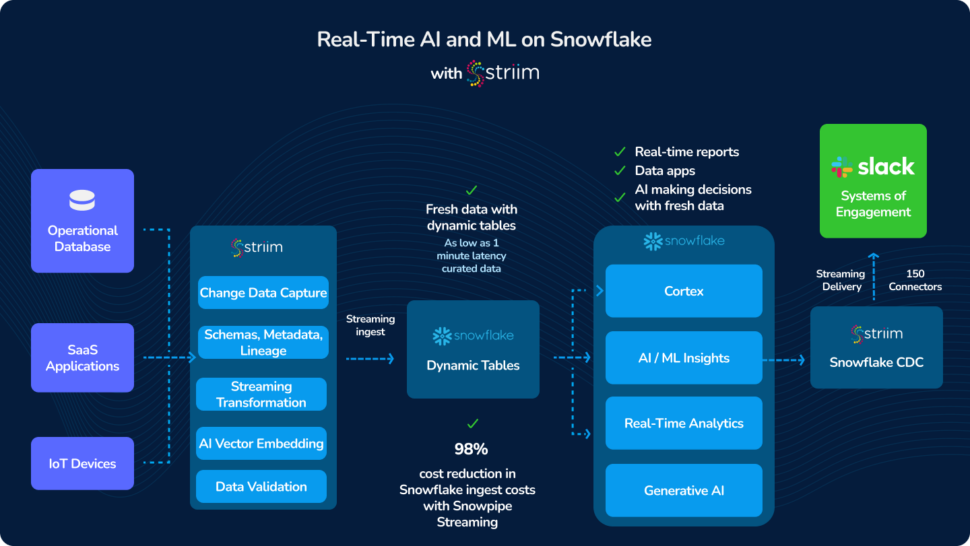
Here is the high level architecture and data flow of the solution:
Generate POS Data

The POS (Point of Sales) Training dataset was synthetically created using a Python script and then loaded into MySQL. Here is the snippet of Python script that generates the data:


					# Function to create training dataset of credit card transactions
def create_training_data(num_transactions):
    data = {
        'TRANSACTION_ID': range(1, num_transactions + 1),
        'AMOUNT': np.random.normal(loc=50, scale=10, size=num_transactions),  # Normal transactions
        'CATEGORY': np.random.choice(['Groceries', 'Utilities', 'Entertainment', 'Travel'], size=num_transactions),
        'TXN_TIMESTAMP': pd.date_range(start='2024-02-01', periods=num_transactions, freq='T')  # Incrementing timestamps
    }
    df = pd.DataFrame(data)
    return df
# Function to create  live dataset with 1% of anomalous data 
def create_live_data(num_transactions):
    data = {
        'TRANSACTION_ID': range(1, num_transactions + 1),
        # generate 1% of anomalous data by changing the mean value
        'AMOUNT': np.append(np.random.normal(loc=50, scale=10, size=int(0.99*num_transactions)),
                            np.random.normal(loc=5000, scale=3, size=num_transactions-int(0.99*num_transactions))), 
        'CATEGORY': np.random.choice(['Groceries', 'Utilities', 'Entertainment', 'Travel'], size=num_transactions),
        'TXN_TIMESTAMP': pd.date_range(start='2024-05-01', periods=num_transactions, freq='T')  # Incrementing timestamps
    }
    df = pd.DataFrame(data)
    return df
# Function to load the dataframe to table using sqlalchemy
def load_records(conn_obj, df, target_table, params):
    database = params['database']
    start_time = time.time()
    print(f"load_records start time: {start_time}")
    print(conn_obj['engine'])
    if conn_obj['type'] == 'sqlalchemy':
        df.to_sql(target_table, con=conn_obj['engine'], if_exists=params['if_exists'], index=params['use_index'])
    print(f"load_records end time: {time.time()}")


Striim – Streaming Data Ingest

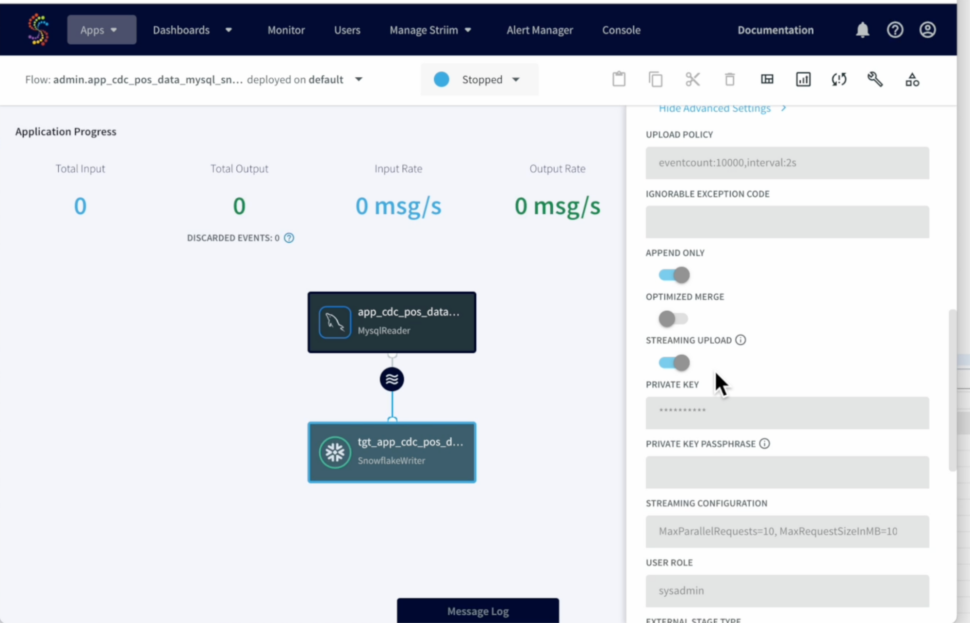
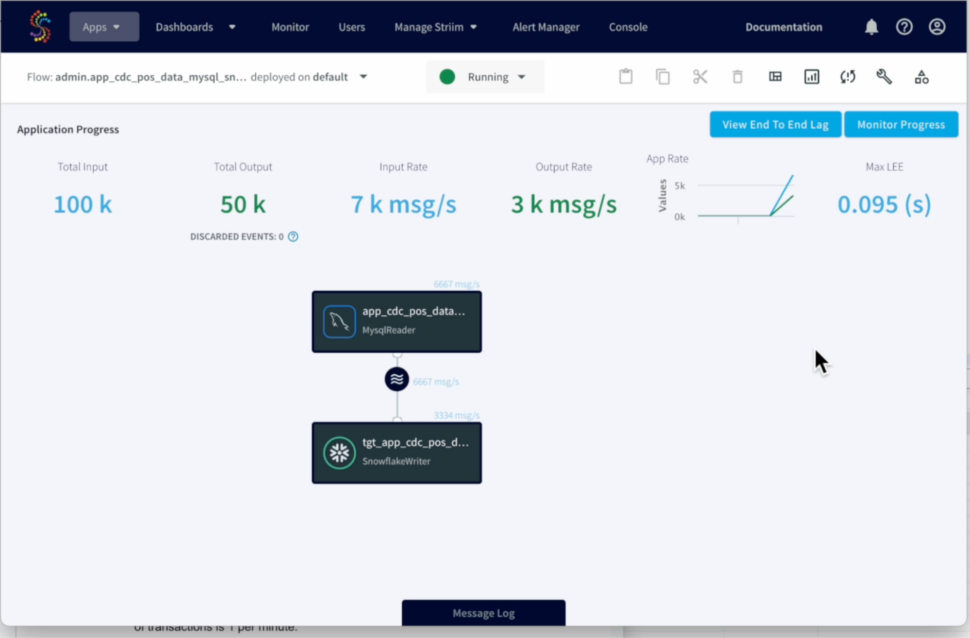
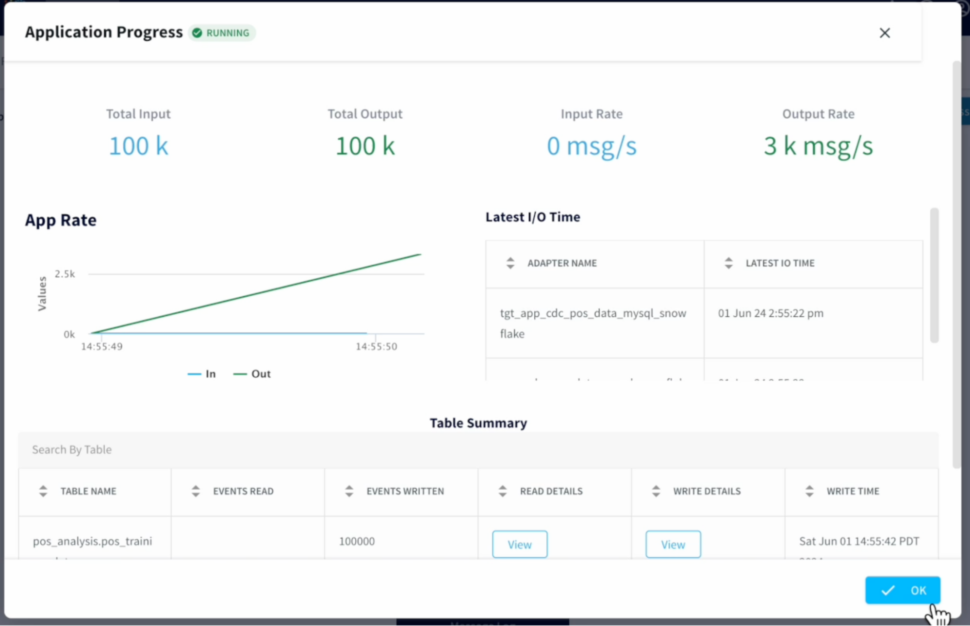
Striim CDC Application loads data continuously from MySQL to Snowflake tables using Snowpipe Streaming API. POS transactions training data span 79 days starting from (2024-02-01 to 2024-04-20).
Build Anomaly Detection Model in Snowflake

Step 1: Create the table POS_TRAINING_DATA_RAW to store the training data.


					CREATE OR REPLACE TABLE pos_training_data_raw (
  Transaction_ID bigint DEFAULT NULL,
  Amount double DEFAULT NULL,
  Category text,
  txn_timestamp timestamp_tz(9) DEFAULT NULL,
  operation_name varchar(80),
  src_event_timestamp timestamp_tz(9) 
);


Step 2: Create the dynamic table dyn_pos_training_data to keep only the latest version of transactions that have not been deleted.


					CREATE OR REPLACE DYNAMIC TABLE dyn_pos_training_data 
LAG = '1 minute'
WAREHOUSE = 'DEMO_WH'
AS
SELECT * EXCLUDE (score,operation_name ) from (  
  SELECT
    TRANSACTION_ID, 
    AMOUNT, 
    CATEGORY, 
    TO_TIMESTAMP_NTZ(TXN_TIMESTAMP) as TXN_TIMESTAMP_NTZ, 
    OPERATION_NAME, 
    ROW_NUMBER() OVER (
        partition by TRANSACTION_ID order by SRC_EVENT_TIMESTAMP desc) as score
  FROM POS_TRAINING_DATA_RAW 
  WHERE CATEGORY IS NOT NULL 
) 
WHERE score = 1 and operation_name != 'DELETE';


Step 3: Create the view vw_pos_category_training_data_raw so that it can be used as input to train the time-series anomaly detection model.


					create or replace view VW_POS_CATEGORY_TRAINING_DATA(
	TRANSACTION_ID,
	AMOUNT,
	CATEGORY,
	TXN_TIMESTAMP_NTZ
) as 
SELECT 
    MAX(TRANSACTION_ID) AS TRANSACTION_ID, 
    AVG(AMOUNT) AS AMOUNT, 
    CATEGORY AS CATEGORY,
    DATE_TRUNC('HOUR', TXN_TIMESTAMP_NTZ) as TXN_TIMESTAMP_NTZ 
FROM DYN_POS_TRAINING_DATA
GROUP BY ALL 
;


Step 4: Time-series anomaly detection model

In this implementation, Snowflake Cortex’s in-built anomaly detection function is used. Here is the brief description of the algorithm from Snowflake documentation:

“The anomaly detection algorithm is powered by a gradient boosting machine (GBM). Like an ARIMA model, it uses a differencing transformation to model data with a non-stationary trend and uses auto-regressive lags of the historical target data as model variables.

Additionally, the algorithm uses rolling averages of historical target data to help predict trends, and automatically produces cyclic calendar variables (such as day of week and week of year) from timestamp data”.

Currently, Snowflake Cortex’s Anomaly detection model expects time-series data to have no gaps in intervals, i.e. the timestamps in the data must represent fixed time intervals. To fix this problem, data is aggregated to the nearest hour using the date_trunc function on the timestamp column (for example: DATE_TRUNC(‘HOUR’, TXN_TIMESTAMP_NTZ)). Please look at the definition of the view vw_pos_training_data_raw above.


					CREATE OR REPLACE SNOWFLAKE.ML.ANOMALY_DETECTION POS_MODEL_BY_CATEGORY(
  INPUT_DATA => SYSTEM$REFERENCE('VIEW', 'VW_POS_CATEGORY_TRAINING_DATA'),
  SERIES_COLNAME => 'CATEGORY',
  TIMESTAMP_COLNAME => 'TXN_TIMESTAMP_NTZ', 
  TARGET_COLNAME => 'AMOUNT',
  LABEL_COLNAME =>''
);


Detect Anomalies – Actual Data

Step 5: Create the table POS_LIVE_DATA_RAW to store the actual transactions.


					CREATE OR REPLACE TABLE pos_live_data_raw (
  Transaction_ID bigint DEFAULT NULL,
  Amount double DEFAULT NULL,
  Category text,
  txn_timestamp timestamp_tz(9) DEFAULT NULL,
  operation_name varchar(80),
  src_event_timestamp timestamp_tz(9) 
);


Step 6: Create a stream on pos_live_data_raw to capture the incremental changes

Dynamic tables currently have a minimum latency of 1 minute. To workaround this and minimize latencies, create a stream on pos_live_data_raw table.


					create or replace stream st_pos_live_data_raw on table pos_live_data_raw;
				

Step 7: Create the view vw_pos_category_live_data_new to be used as input to anomaly detection function

View gets the incremental changes on pos_live_data_raw from the stream, de-dupes the data , removes deleted records and aggregates the transactions by the hour of transaction time.


					create or replace view VW_POS_CATEGORY_LIVE_DATA_NEW(
	TRANSACTION_ID,
	AMOUNT,
	CATEGORY,
	TXN_TIMESTAMP_NTZ
) as 
with raw_data as (
  SELECT
    TRANSACTION_ID, 
    AMOUNT, 
    CATEGORY, 
    TO_TIMESTAMP_NTZ(TXN_TIMESTAMP) as TXN_TIMESTAMP_NTZ, 
    METADATA$ACTION OPERATION_NAME, 
    ROW_NUMBER() OVER (
        partition by TRANSACTION_ID order by SRC_EVENT_TIMESTAMP desc) as score
  FROM ST_POS_LIVE_DATA_RAW 
  WHERE CATEGORY IS NOT NULL 
), 
deduped_raw_data as (
    SELECT * EXCLUDE (score,operation_name )
    FROM raw_data
    WHERE score = 1 and operation_name != 'DELETE'
)
SELECT 
    max(TRANSACTION_ID) as transaction_id, 
    avg(AMOUNT) as amount, 
    CATEGORY as category  ,
    date_trunc('hour', TXN_TIMESTAMP_NTZ) as txn_timestamp_ntz 
FROM deduped_raw_data
GROUP BY ALL
;


Step 8: Create the dynamic table dyn_pos_live_data to keep only the latest version of live transactions that have not been deleted.


					-- dyn_pos_live_data 
CREATE OR REPLACE DYNAMIC TABLE dyn_pos_live_data 
LAG = '1 minute'
WAREHOUSE = 'DEMO_WH'
AS
SELECT * EXCLUDE (score,operation_name ) from (  
  SELECT
    TRANSACTION_ID, 
    AMOUNT, 
    CATEGORY, 
    TO_TIMESTAMP_NTZ(TXN_TIMESTAMP) as TXN_TIMESTAMP_NTZ, 
    OPERATION_NAME, 
    ROW_NUMBER() OVER (
        partition by TRANSACTION_ID order by SRC_EVENT_TIMESTAMP desc) as score
  FROM POS_LIVE_DATA_RAW 
  WHERE CATEGORY IS NOT NULL 
) 
WHERE score = 1 and operation_name != 'DELETE';


Step 9: Call DETECT_ANOMALIES to identify records that are anomalies.

In the following code block, incremental changes are read from vw_pos_category_live_data_new and the detect_anomalies function is called, results of the detect_anomalies function are stored in pos_anomaly_results_table and alert messages are generated and stored in pos_anomaly_alert_messages.

With Snowflake notebooks, the anomaly detection and generation of alert messages below can be scheduled to run every two minutes.


					 truncate table pos_anomaly_results_table;
    create or replace transient table stg_pos_category_live_data 
    as 
    select * 
    from vw_pos_category_live_data_new;
    -- alter table pos_anomaly_alert_messages set change_tracking=true;
    -- vw_dyn_pos_category_live_data is the old view 
    CALL POS_MODEL_BY_CATEGORY!DETECT_ANOMALIES(
      INPUT_DATA => SYSTEM$REFERENCE('TABLE', 'STG_POS_CATEGORY_LIVE_DATA'),
      SERIES_COLNAME => 'CATEGORY', 
      TIMESTAMP_COLNAME =>'TXN_TIMESTAMP_NTZ',
      TARGET_COLNAME => 'AMOUNT'
    );
    set detect_anomalies_query_id = last_query_id();
    insert into pos_anomaly_results_table 
    with get_req_seq as (
        select s_pos_anomaly_results_req_id.nextval as request_id 
    )
    select 
        t.*, 
        grs.request_id, 
        current_timestamp(9)::timestamp_ltz as dw_created_ts 
    from table(result_scan($detect_anomalies_query_id)) t
        , get_req_seq as grs 
    ;
    set curr_ts = (select current_timestamp);
    insert into pos_anomaly_alert_messages 
    with anomaly_details as (
        select 
            series, ts, y, forecast, lower_bound, upper_bound
        from pos_anomaly_results_table
        where is_anomaly = True
        --and series = 'Groceries'
    ),
    ld as (
        SELECT 
            *,
            date_trunc('hour', TXN_TIMESTAMP_NTZ) as ts 
        FROM DYN_POS_LIVE_DATA
    )
    select 
        ld.category as name,  
        max(ld.transaction_id) as keyval,
        max(ld.ts) as txn_timestamp, 
        'warning' as severity,
        'raise' as flag,
        listagg(
        'Transaction ID: ' || to_char(ld.transaction_id) || ' with amount: ' || to_char(round(amount,2)) || ' in ' || ld.category || ' category seems suspicious', ' n') as message 
    from ld 
    inner join anomaly_details ad 
        on ld.category = ad.series
        and ld.ts = ad.ts
    where ld.amount  1.5*ad.upper_bound
    group by all 
    ;


Step 10: Create Slack Alerts Application in Striim

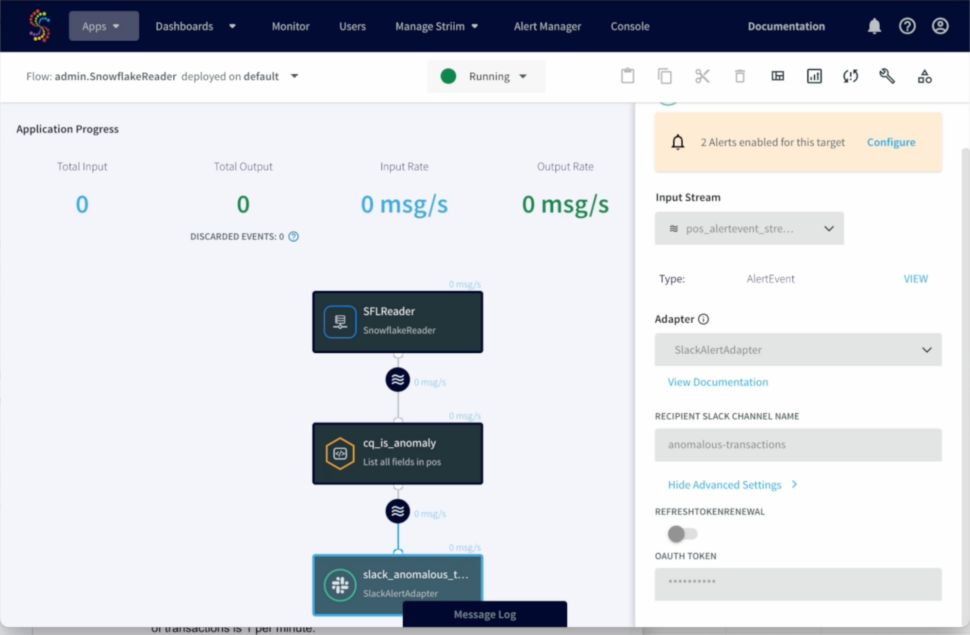
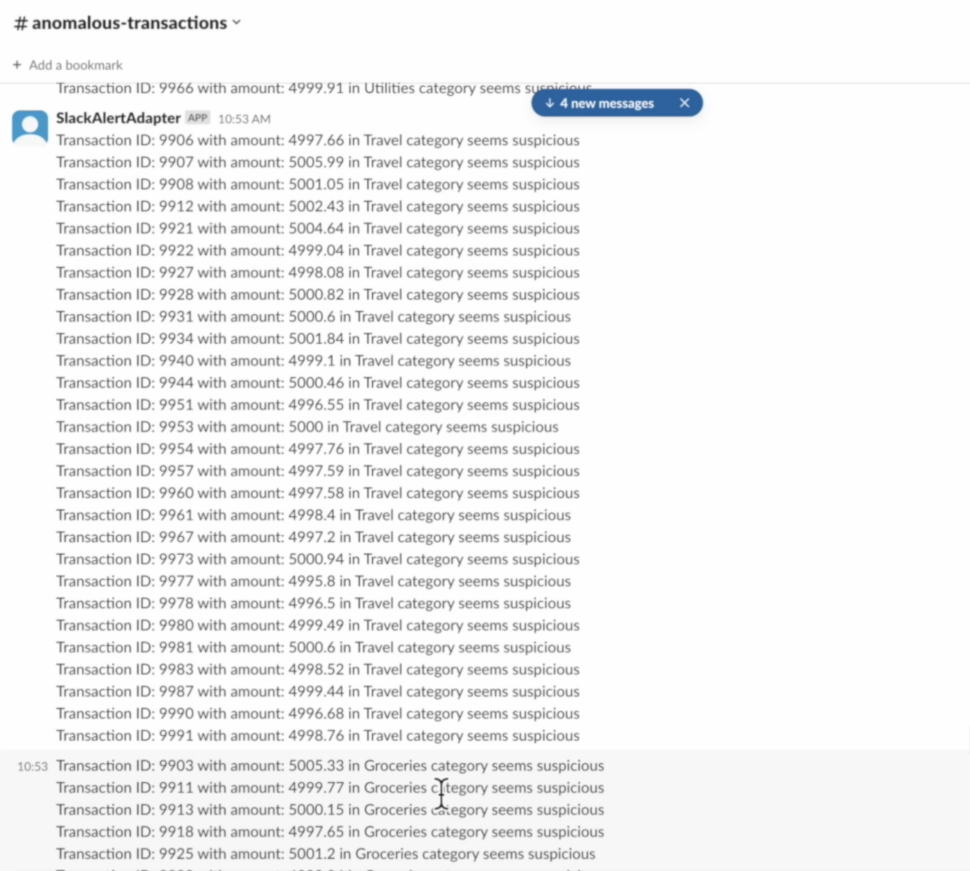
Create a CDC Application in Striim to continuously monitor anomaly alert results and messages and send Slack alerts for unusual or anomalous transactions.
Here is a sample output of Slack alert messages of anomalous transactions:
Real-Time Patient Monitoring: Leveraging Inference Models for Immediate Care

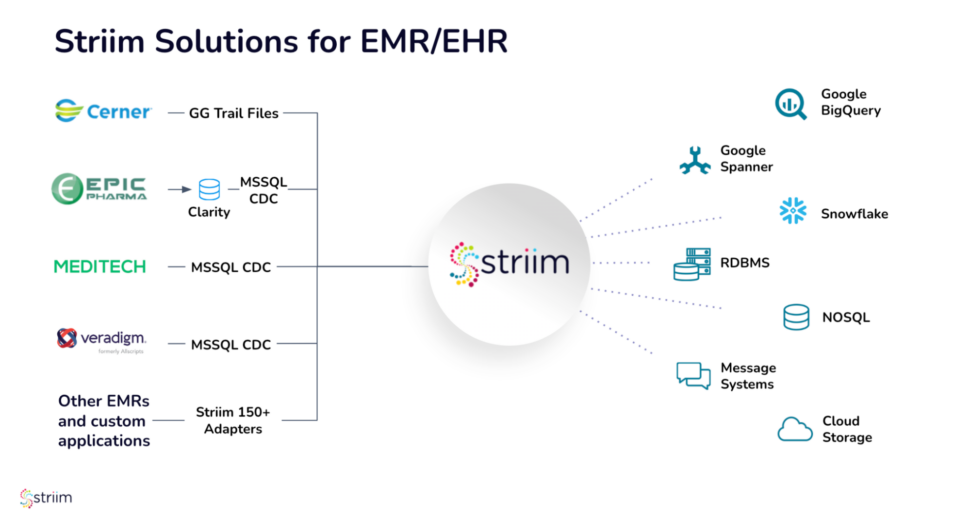
Striim Solutions for EMR/EHR

In healthcare, there’s no such thing as being too attentive to a patient’s needs — and real-time patient monitoring is here to prove it. Emerging technology and the utilization of real-time data enable medical professionals to monitor a patient’s prognosis quickly and with minimal interruption. The best part is that it enables prompt intervention, allowing medical professionals to take a proactive rather than reactive approach to healthcare. This can make a significant difference in a patient’s outcome.

Today, we’ll walk you through everything you need to know regarding real-time patient monitoring, how inference models play a part, and how immediate care solutions are enabled by both of these.

Understanding Real-Time Patient Monitoring

Real-time patient monitoring involves the utilization of advanced medical devices that enable continuous observation and analysis of a patient’s health data. It differs from patient monitoring of the past by providing immediate care solutions the moment an anomaly is detected.

With real-time patient monitoring, doctors gain access to continuous, instantaneous data. Traditionally, healthcare professionals needed to rely on intermittent readings taken during periodic check-ups, which delayed the detection of critical changes in a patient’s condition.

In contrast, real-time monitoring utilizes advanced technologies like wearable sensors and telemetry systems to provide immediate insights, enabling healthcare providers to respond swiftly to any abnormalities detected.

Another benefit of leveraging real-time patient monitoring is that it reduces hospital readmissions and improves overall patient management. By leveraging real-time data, healthcare providers can make informed decisions more rapidly than ever before.

The Role of Inference Models in Healthcare

To fully comprehend the role inference models play in healthcare, it’s critical to first understand what they are.

An inference model is a form of machine learning model that leverages algorithms to analyze data. From there, it can make predictions or decisions based on that information. In the healthcare industry specifically, these models process real-time patient data to detect patterns, predict potential health issues, and suggest immediate care solutions to healthcare providers.

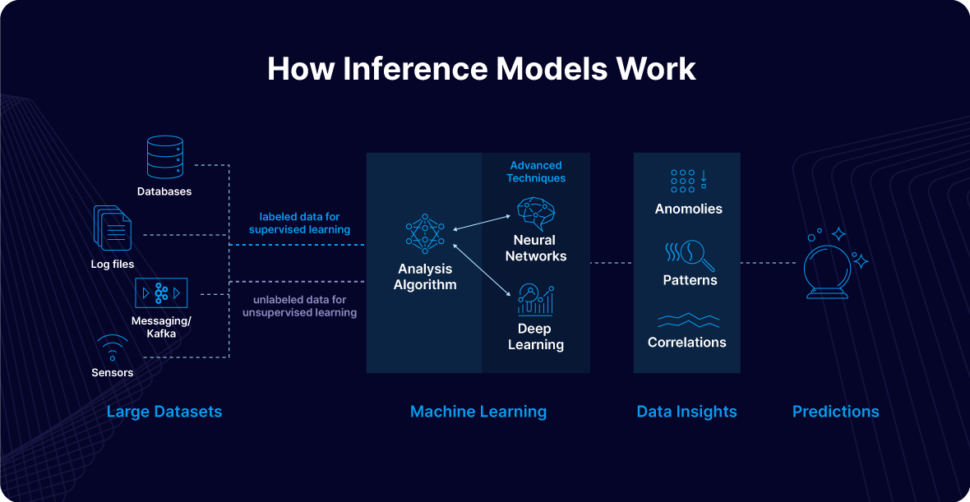
How Inference Models Work 

Inference models work by applying algorithms to analyze large datasets, deriving meaningful insights that inform decision-making. Typically built using machine learning techniques, these models are trained on historical data to recognize new patterns and correlations. Once trained, they can effectively apply this knowledge to analyze new and incoming data. 

Inference models, crucial for real-time patient monitoring, utilize advanced techniques such as neural networks and deep learning. For more context, check out our AI and machine learning solutions page

For real-time patient monitoring, inference models utilize both supervised and unsupervised learning approaches. Supervised learning involves training the model with labeled data, where known outcomes help establish relationships between input data (for instance, a patient’s heart rate, blood pressure) and expected outputs (the likelihood of a heart attack, for example). On the other hand, unsupervised learning enables models to identify patterns and anomalies in unlabeled data, which is critical for detecting unexpected health issues.

Advanced inference models incorporate techniques such as neural networks and deep learning to enhance predictive capabilities significantly. Beyond initial training, these models continuously update their algorithms through online learning as new data arrives. This process guarantees that models stay adaptive and maintain their efficiency. 

How Inference Models Work

What’s an Example of Inference Models in Healthcare?

Imagine you’re a healthcare professional treating a patient with a heart condition. Naturally, you want to mitigate any problems before they arise — so you leverage devices that continuously monitor your patient’s heart rhythm and rate.

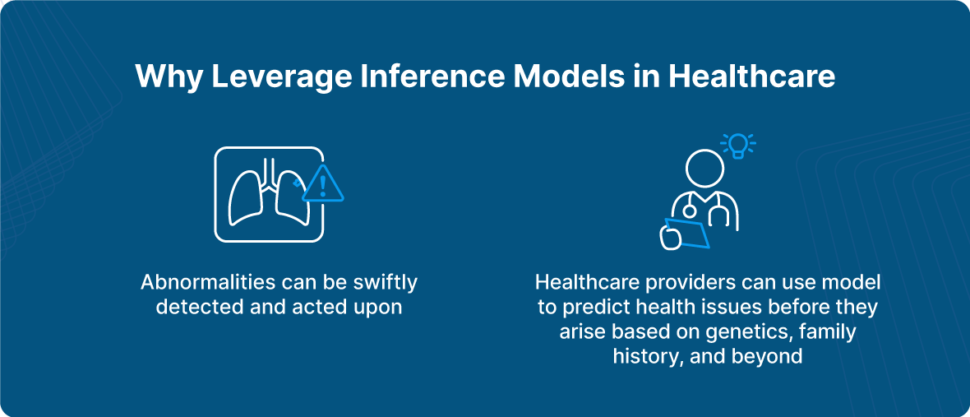
These systems typically integrate inference models. These models can analyze the data and predict issues before they arise. Moreover, you can integrate inference models that analyze real-time data alongside historical health information, including genetic predispositions to heart conditions. For instance, if a patient has a family history of heart disease, the monitoring system can adjust its algorithms to be more vigilant, detecting subtle patterns and anomalies that might indicate early signs of potential issues.

The primary purpose of using inference models in healthcare is to predict problems before they arise, making healthcare more efficient.

Why Leverage Inference Models in Healthcare

How Does Real-Time Data Enable the Successful Utilization of Inference Models?

Without real-time data, inference models wouldn’t be as effective. This is because real-time data offers a continuous stream of up-to-date information, which is crucial for making timely, accurate predictions. Without fresh data, inference models cannot detect patterns and anomalies that indicate a patient may experience a health episode soon.

Thanks to real-time data, inference models can process information the moment it is generated, allowing for timely analysis and immediate care solutions. Continuous data flow ensures that inference models are working with the most up-to-date, comprehensive data, increasing the reliability and accuracy of their predictions.

There’s also the aspect of adaptability. With new data continuously fed to your inference model, it can learn and adjust its algorithms in real-time. This ongoing process means that models stay accurate even as patient conditions shift or new health trends emerge.

Real-Time Patient Monitoring Fuels Immediate Care Solutions

In a world without inference models, healthcare systems would not be able to proactively address concerns and take action to mitigate potential problems before they manifest. By leveraging real-time data, healthcare systems can ensure that their inference models remain effective tools for predicting and managing patient health, ultimately leading to better and more personalized care.

Ready to take the next step to get your data where it needs to be? Book a demo today to learn how Striim can help you make data integration and streaming as seamless as possible.

Secrets Management Simplified: Insights from Doppler’s Brian Vallelunga

Imagine losing your most important digital keys and leaving your entire kingdom vulnerable to attacks. In this episode, we promise to equip you with the knowledge to prevent such disasters. Join us as we sit down with Brian Vallelunga, the CEO and founder of Doppler, to unravel the critical importance of secrets management in software development. Brian shares his deep expertise on what secrets are—those crucial digital keys that unlock access to sensitive data—and illustrates through a personal story the severe consequences of failing to protect them. Discover how data breaches can wreak havoc, leading to brand reputation damage, customer churn, legal battles, and even personal distress.

But it’s not all doom and gloom. Brian introduces us to Doppler, a game-changing tool that simplifies the tedious process of secrets management, making it an integral part of the modern development workflow. Learn how Doppler empowers developers to secure sensitive data efficiently, eliminating common headaches like managing environment files and manual secret updates. We also delve into practical implementation timelines, showing that effective secrets management is achievable for companies of all sizes with the right tools. Brian provides actionable advice for engineering teams on securing secrets within applications and highlights valuable resources for further learning. Tune in to safeguard your company’s digital assets and fortify your secrets management strategy.

Follow Brian on:
doppler.com
– X (Twitter) – @vallelungabrian

What’s New In Data is a data thought leadership series hosted by John Kutay who leads data and products at Striim. What’s New In Data hosts industry practitioners to discuss latest trends, common patterns for real world data patterns, and analytics success stories.

Declarative, Fully Managed Data Streaming Pipelines

Data pipelines can be tricky business —failed jobs, re-syncs, out-of-memory errors, complex jar dependencies, making them not only messy but often disastrously unreliable. Data teams want to innovate and do awesome things for their company, but they get pulled back into firefighting and negotiating technical debt.

The Power of Declarative Streaming Pipelines

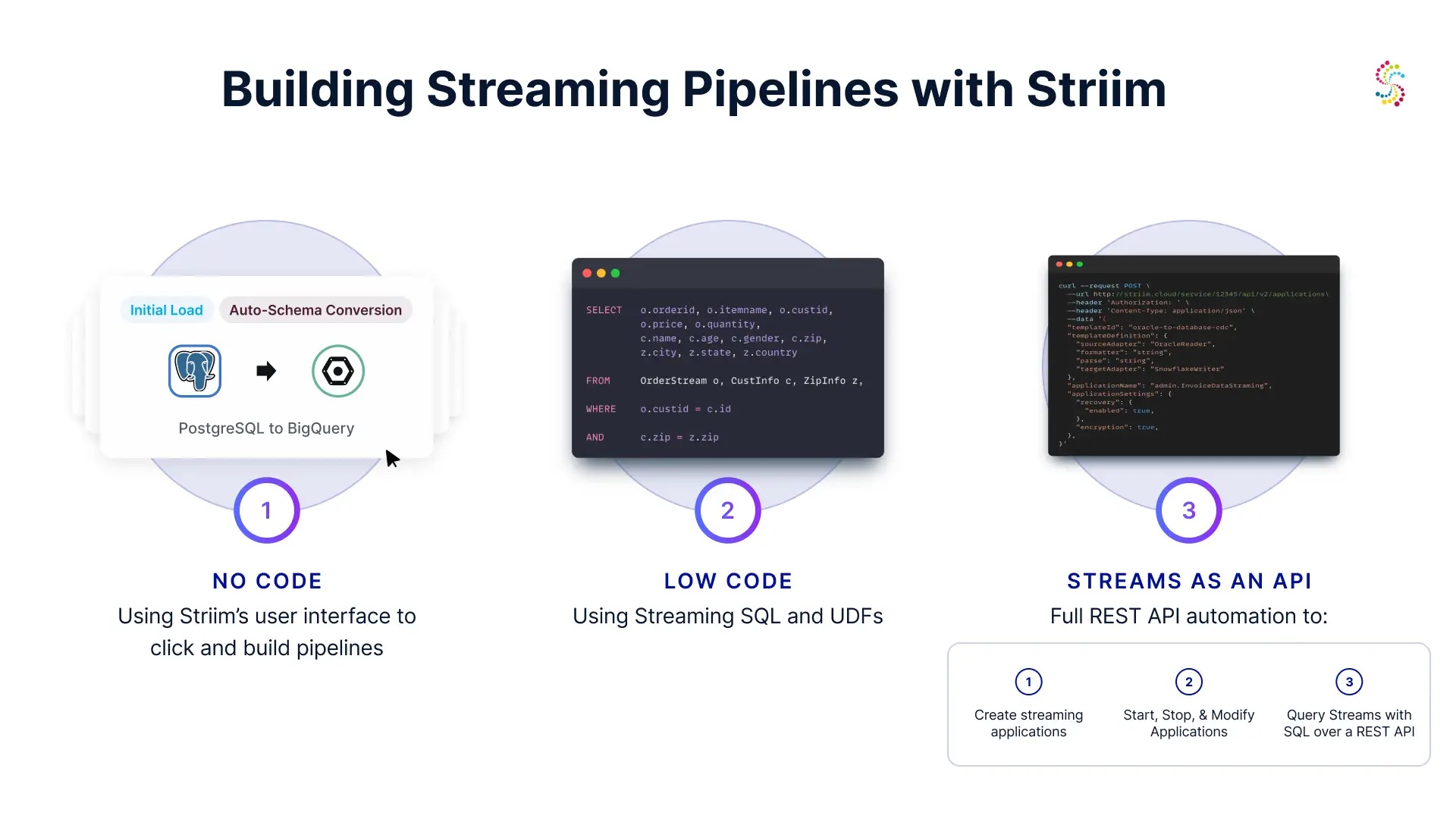
Declarative pipelines allow developers to specify what they want to achieve in concise, expressive code. This approach simplifies the creation, management, and maintenance of data pipelines. With Striim, users can leverage SQL-based configurations to define source connectors, target endpoints, and processing logic, making the entire process intuitive and accessible, all while delivering highly consistent, real-time data applied as merges and append-only change-records.

How Striim pipelines work

Striim pipelines streamline the process of data integration and real-time analytics. A pipeline starts with defining a source, which could be a database, log, or other data stream. Striim supports advanced recovery semantics such as A1P (At Least Once Processing) or E1P (Exactly Once Processing) to ensure data reliability.

You can see the full list of connectors stream supports here. →

The data flows into an output stream, which can be configured to reside in-memory for low-latency operations or be Kafka-based for distributed processing. Continuous queries on these materialized streams allow real-time insights and actions. Windowing functions enable efficient data aggregation over specific timeframes. As the data is processed, it is materialized into downstream targets such as databases or data lakes. Striim ensures data accuracy by performing merges with updates and deletes, maintaining a true and consistent view of the data across all targets.

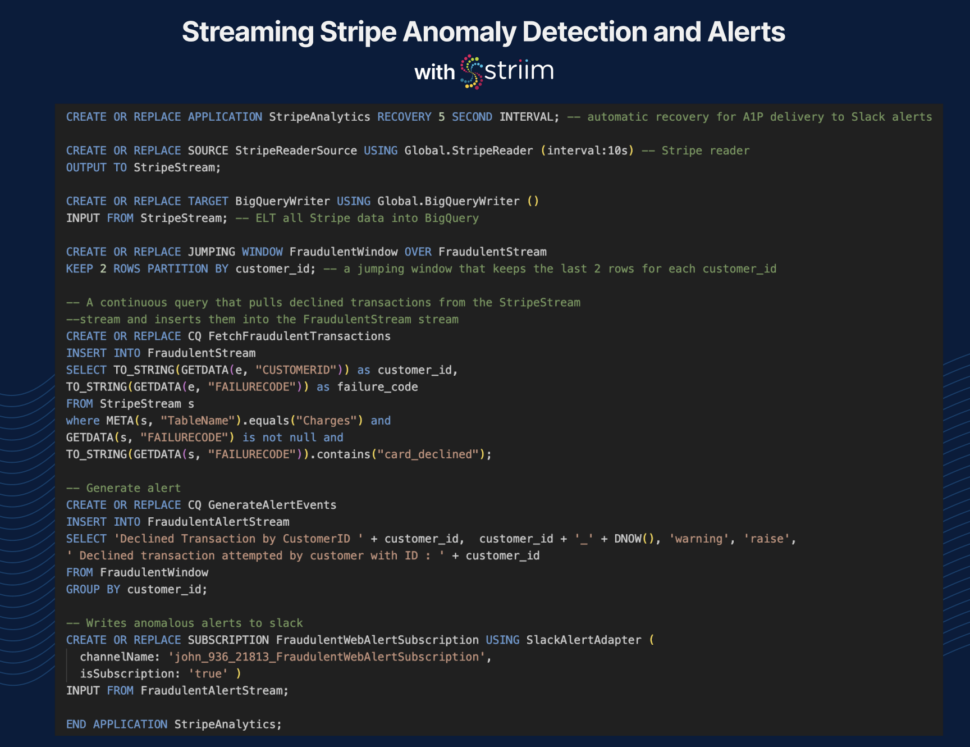
Here we’ll look at an application that reads data from Stripe, replicates data to BigQuery in real-time, then while the data is in flight, detect declined transactions and send slack alerts in real-time.

Striim’s Stripe Analytics Pipeline

Let’s dive into a practical example showcasing the power and simplicity of Striim’s streaming pipelines. The following is a Stripe analytics application that reads data from Stripe, processes it for fraudulent transactions, and generates alerts.

Application Setup

The first step is to create an application that manages the data streaming process. The `StripeAnalytics` application is designed to handle Stripe data, process fraudulent transactions, and generate alerts.

This statement initializes the `StripeAnalytics` application with an automatic recovery interval of 5 seconds, ensuring resilience and reliability. You can see we define ‘Recovery 5 second interval’. This handles the checkpointing for at least once or exactly once deliver from source to target with transactional support.

Reading from Stripe

Next, we define the source to read data from Stripe. The `StripeReaderSource` reads data at 10-second intervals and outputs it to a stream called `StripeStream`. The ‘automated’ mode denotes that schemas will be propagated to downstream targets (data warehouses, databases), an initial load of historical data will load, before starting the live CDC.


Striim streams are in-memory by default, but can be backed up to our managed Kafka or to your external Confluent Kafka cluster.

Writing to BigQuery

The processed data is then written to BigQuery for storage and analysis. The `BigQueryWriter` takes data from the `StripeStream` and loads it into BigQuery, automatically creating the necessary schemas.


Fraud Detection

To detect fraudulent transactions, we use a jumping window to keep the last two rows for each `customer_id`. This window is defined over a stream called `FraudulentStream`.


A continuous query (`FetchFraudulentTransactions`) is then created to pull declined transactions from the `StripeStream` and insert them into the `FraudulentStream`.


Generating Alerts

To notify the relevant parties about fraudulent transactions, we generate alert events. The `GenerateAlertEvents` query groups the declined transactions by `customer_id` and inserts them into the `FraudulentAlertStream`.


Sending Alerts to Slack

Finally, we create a subscription to send these alerts to a Slack channel. The `FraudulentWebAlertSubscription` uses the `SlackAlertAdapter` to deliver alerts to the specified channel.


Completing the Application

We conclude the application definition with the `END APPLICATION` statement.


Striim’s declarative approach offers several benefits:

  1. Simplicity: SQL-based streaming pipelines make it easy to define rich processing logic.
  2. Scalability: Striim handles large volumes of data efficiently by scaling up and horizontally as a fully managed service, ensuring real-time processing and delivery.
  3. Flexibility: The ability to integrate with various data sources and targets provides unparalleled flexibility.
  4. Reliability: Built-in recovery mechanisms ensure data integrity and continuous operation.
  5. Consistency: Striim delivers consistent data across all targets, maintaining accuracy through precise merges, updates, and deletes.
  6. Portability: Striim can be deployed in our fully managed service, or run in your own cloud a multi-node cluster containerized with kubernetes.

Monitoring and Reliability

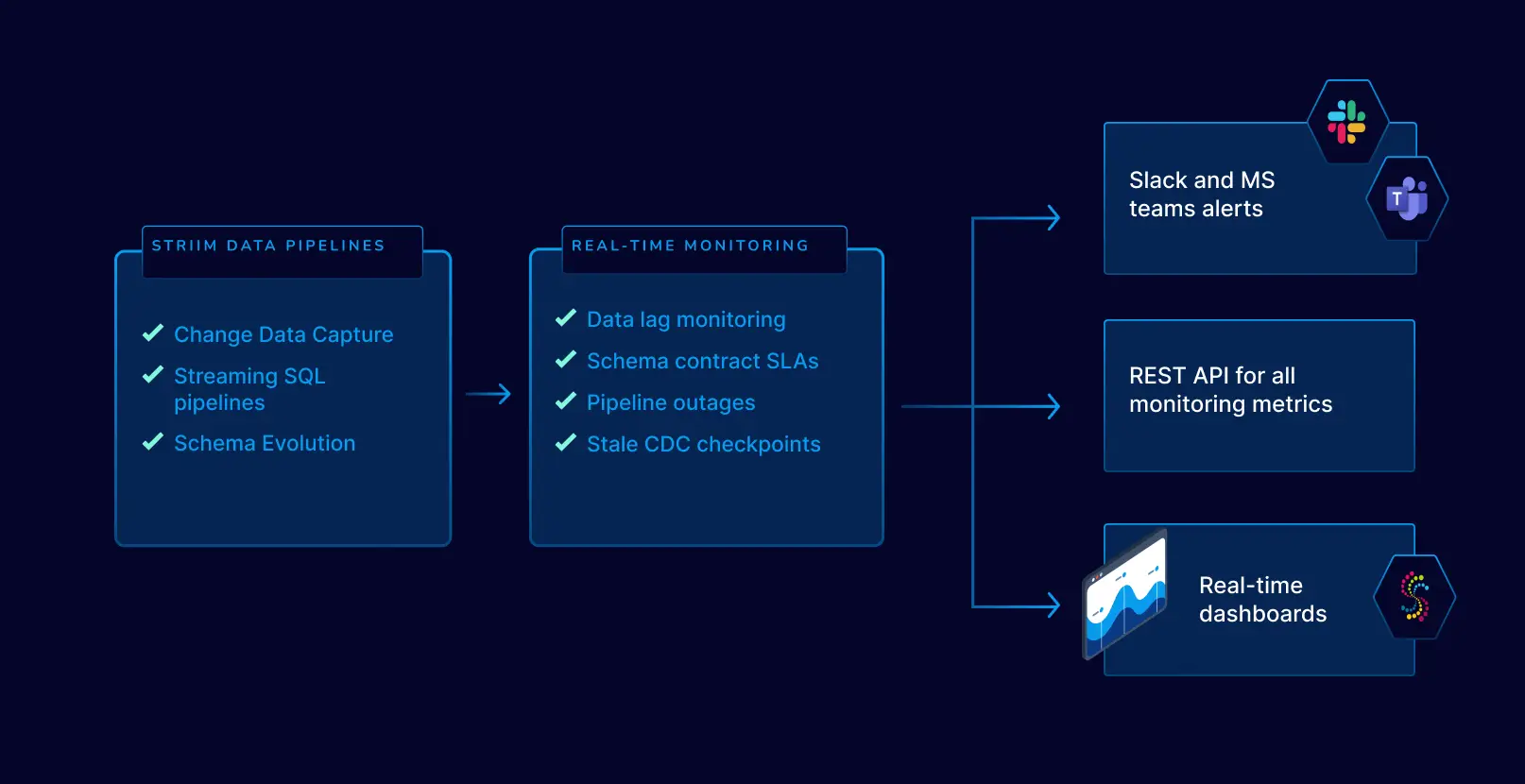
Are your reports stale? Is data missing or inconsistent? Striim allows you to drill down into these metrics and gives you out-of-the-box slack alerts so your pipelines are always running on autopilot.

Conclusion

Striim’s declarative, fully managed data streaming pipelines empower your data team to harness the power of real-time data. By simplifying the process of creating and managing data pipelines, Striim enables organizations to focus on deriving insights and driving value from their data. The Stripe analytics application is a prime example of how Striim can streamline data processing, replication and alerting on anomalies, making it an invaluable tool for modern data-driven enterprises. You can try Striim for free. No credit card, no sales call, just 14 days of fast data striiming.

Integrating Striim with Snowflake for Fraud Detection

Fraud is on the rise in the financial sector, with the Federal Trade Commission reporting a staggering $10 billion in losses for 2023 alone. This marks a 14% increase from 2022, underscoring the escalating threat of fraudulent activity within the industry. This increase can largely be attributed to the increased usage of instant transaction technologies and mobile payments. A growing reliance on instantly settled payments has upended how fraud impacts financial industries — but leveraging data more effectively can help detect and prevent fraudulent activities more effectively. Currently, many financial institutions are struggling with the diverse and widespread nature of data, sourced from numerous platforms and services. Effective fraud detection requires seamless integration and real-time analysis of this data. That’s where Striim and Snowflake step in.  In this post, we’ll explore how integrating Striim with Snowflake can enhance your fraud detection capabilities, providing financial institutions the tools necessary to combat fraud in real time.

How Can Striim and Snowflake Help?

To better understand how integrating Striim and Snowflake can help, it’s helpful to first learn about each platform’s disparate capabilities. Striim is a next-generation Cloud Data Integration platform that specializes in real-time data replication and Change Data Capture (CDC). It enables seamless data integration from hundreds of sources, including popular databases including Oracle, SQLServer, and PostgreSQL (to name a few). Striim’s capabilities extend beyond CDC, offering hundreds of automated adapters for file-based data (logs, XML, CSV), IoT data (OPCUA, MQTT), and applications like Salesforce and SAP. Its SQL-based stream processing engine allows for easy data enrichment and normalization before writing to destinations like Snowflake. Because of this, Striim is a powerful product for financial institutions to leverage to empower effective fraud detection. Snowflake is a scalable data warehousing platform designed to support real-time analytics. It allows organizations to store and analyze large volumes of data efficiently, making it an excellent solution for institutions looking to increase fraud detection capabilities. Snowflake’s architecture separates compute and storage, enabling independent scaling of each and optimizing costs.

What are Challenges Financial Institutions Face with Fraud Detection?

Financial institutions face several challenges with fraud detection. Here are some of the most pressing obstacles that Striim and Snowflake can collaboratively address.
Data Volume
Processing large volumes of transactions in real time is a significant challenge. Financial institutions process millions of transactions daily, each requiring analysis for potential fraud.
Siloed Data Sources
The data required for fraud detection originates from diverse sources, including transaction logs, customer profiles, and external threat intelligence. Integrating and analyzing these siloed data sources is necessary for effective fraud prevention and seamless response if detected.
Response Time
Real-time detection and response to fraud are crucial for minimizing losses and protecting customers. Delayed detection can lead to significant financial and reputational damage.
Sensitive Data
Incorporating data from disparate sources often involves handling sensitive personally identifiable information (PII). Striim facilitates the integration of necessary data while ensuring PII remains secure at its source. Through in-memory processing, Striim enables analysis of only essential information, maintaining the integrity and security of sensitive data.

How Integrating Striim with Snowflake Helps

As financial institutions strive to protect customer assets and uphold trust, the integration of advanced technologies like Striim and Snowflake emerges as a pivotal strategy. Here’s how.
Real-Time Data Ingestion
Striim seamlessly ingests data from various sources and streams it directly into Snowflake in real time. This continuous data flow guarantees that the most up-to-date, accurate information is always available for immediate analysis.
Data Transformation and Enrichment
Striim enhances data quality by transforming and enriching it before it reaches Snowflake, ensuring high-quality data for analysis. This includes managing diverse data formats, performing necessary transformations, and enriching the data with additional context.
Real-Time Analytics
Snowflake’s robust capabilities for real-time analysis on the streamed data empower proactive fraud detection. Financial institutions can leverage Snowflake’s powerful query engine to analyze large datasets rapidly, ensuring effective fraud detection.

Use Case: Fraud Detection in the Financial Banking Sector

Picture this: Your financial institution needs to integrate data from various sources, including:

  • Transaction logs stored in Oracle databases that are housed in 10 different data centers across the United States
  • Customer profiles stored in a centralized Oracle database
  • Third party real-time payment systems

However, these data sources are siloed, making it challenging to achieve comprehensive, real-time fraud detection and analysis.

This is where Striim and Snowflake can help. Striim facilitates real-time data integration from disparate data sources, while transforming and enriching data rapidly. Striim specializes in pulling data from large, fragmented datasets, which may be divided by department, location, or storage type.

While streaming data from these different sources, Striim can handle in-memory transformations using SQL or Java, allowing for custom logic to manage any necessary data transformations. Because these transformations occur in memory, there is minimal overhead in replicating your data into Snowflake. Striim can leverage both the Snowpipe Streaming API and the Snowpipe API, depending on the best use case for the source dataset.

Once the datasets are synchronized within Snowflake, you have two sources of truth: The original and target datasets. This setup enables the development of real-time fraud detection processes by leveraging continuously updated data in Snowflake. Snowflake offers extensive capabilities post-upload, including Snowpark ML and integrations with industry-leading data providers for customer transaction and risk data. As a result, your team enjoys enhanced fraud detection capabilities.

Integrating Striim with Snowflake for Fraud Detection

Integrate Striim and Snowflake for Enhanced Fraud Detection

Detecting fraud and understanding how it occurred is important — but unless fraud can be stopped in real time, it will continue to surge. Integrating Striim with Snowflake provides financial institutions with a comprehensive solution for real-time fraud detection, enabling seamless data ingestion, transformation, and immediate analysis.

By leveraging the capabilities of Striim and Snowflake, financial institutions can protect their assets and maintain customer trust through effective, real-time fraud detection. Explore how Striim and Snowflake integrate today with a demo.

Predictive Analytics in Logistics: Forecasting Demand and Managing Risks

The utilization of predictive analytics has revolutionized nearly every industry, but perhaps none have experienced its transformative impact quite as profoundly as logistics. In an era marked by rapid technological advancements and ever-increasing customer expectations, the ability to accurately predict demand and efficiently mitigate risks can make or break logistics operations. Predictive analytics offers a powerful solution.

By leveraging predictive analytics, logistics companies can optimize supply chain processes, enhance customer satisfaction, and achieve significant cost savings. From forecasting demand to managing operational risks, predictive analytics provides invaluable insights that empower organizations to make data-driven decisions in real-time.

What are Predictive Analytics in Logistics?

Predictive analytics in logistics involves utilizing statistical algorithms and machine learning techniques to analyze historical data. By identifying patterns within this data, it becomes possible to make accurate predictions about various aspects of the business, including future demand, supply chain disruptions, and operational efficiencies.

In the logistics industry, the power of predictive analytics lies in its ability to enable companies to adopt a proactive rather than reactive approach to strategizing. This allows for:

  • Optimized resource allocation
  • Improved overall efficiency
  • Enhanced customer satisfaction
  • Effective risk mitigation

How do Predictive Analytics Work?

The success of your predictive analytics tools hinges upon the quality and comprehensiveness of your data.

Because predictive analytics leverages historical data and applies advanced statistical modeling, data mining techniques, and machine learning (ML) algorithms to identify patterns and predict future outcomes, data quality should be your priority.

To ensure your team leverages the most current data, data streaming is essential. Batch processing, while capable of handling large data volumes at scheduled intervals, lacks the immediacy needed for real-time decision-making. In contrast, data streaming offers continuous, real-time integration and analysis, ensuring predictive models always use the latest information. This makes it the superior option for timely and impactful insights — making it ideal for predictive analytics.

Here’s the process.

  • Data Collection and Integration: Data is gathered from various sources, including sensor and IoT data, transportation management systems, transactional systems, and external data sources such as economic indicators or traffic data. Accurate predictions require seamless data integration, ensuring timeliness, completeness, and consistency.
  • Data Preprocessing: Data is cleaned and transformed into a suitable format for analysis. Cleaning involves removing duplicates, handling missing values, and correcting errors. Data transformation includes normalizing data, encoding categorical variables, and aggregating data at the appropriate granularity. Feature engineering involves creating new variables (features) that can improve the predictive power of the models.

How do Predictive Analytics Work? 

The next phase is model development. Predictive models are developed using various techniques, including regression analysis, time series analysis, and machine learning algorithms such as decision trees, neural networks, and clustering. From there, the models learn from historical data to identify patterns.

In the logistics industry, common predictive models might include demand forecasting models, which predict future product demand based on historical sales data and external factors like seasonal trends, and risk management models, which identify potential supply chain disruptions by analyzing historical incidents and external risk indicators.

From there, the models are validated using a subset of data to ensure they’re capable of accurately predicting outcomes on unseen data. After, models are deployed into production environments where they can process real-time data streams. Continuous monitoring and maintenance are essential to ensure the models remain accurate over time.

As new data becomes available, models may need to be retrained to adapt to changing patterns. This process, referred to as continuous or incremental learning, enables models to adapt to changing patterns, trends, and anomalies in real time.

Lastly, predictive models generate forecasts and risk assessments that business leaders use to inform decision-making processes. Demand predictions enable proactive inventory management, reducing stockouts and overstock situations. Risk predictions allow for preemptive actions to mitigate potential supply chain disruptions.

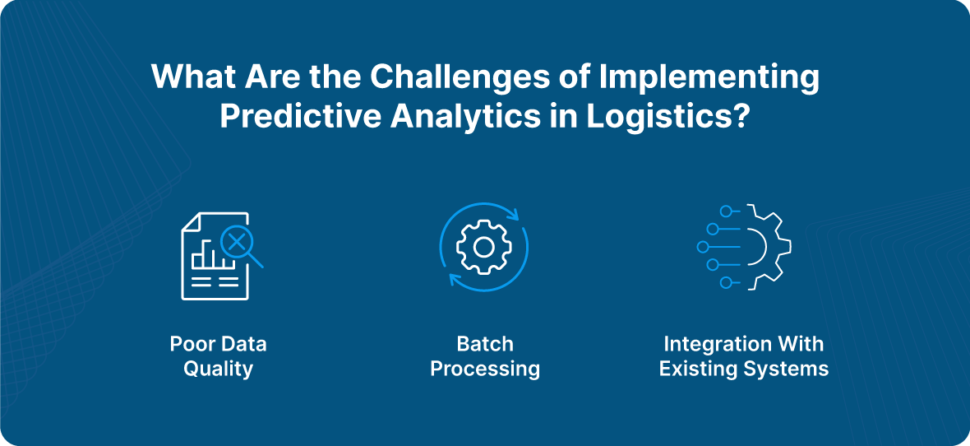
What are the Challenges of Implementing Predictive Analytics in Logistics?

While leveraging predictive analytics offers numerous benefits, it is not without its challenges. Here are some hurdles that logistics companies may encounter in their efforts to implement predictive analytics effectively:

What are the Challenges of Implementing Predictive Analytics in Logistics? 

Poor Data Quality

One significant obstacle logistics teams need to overcome in their journey to effectively implement predictive analytics is related to poor data quality. Specifically:

  • Incomplete Data: Missing or incomplete data can lead to inaccurate predictions and insights.
  • Inconsistent Data: Inconsistent data formats and standards can complicate data integration and analysis.
  • Dirty Data: Data with errors, duplicates, or irrelevant information can skew predictive models.
  • Lack of Historical Data: Insufficient historical data can limit the ability to identify patterns and make accurate predictions.

Batch Processing

Another common issue logistics companies encounter is related to outdated data. To address this challenge effectively, transitioning from batch processing to stream processing is crucial. Stream processing ensures better data quality, making it more suitable for predictive analytics utilization.

  • Latency: Batch processing involves processing data at scheduled intervals, which can delay decision-making and reduce the timeliness of insights.
  • Data Staleness: Information processed in batches can become outdated quickly, impacting the accuracy of predictive models.
  • Scalability Issues: Handling large volumes of data in batches can be resource-intensive and challenging to scale effectively.
  • Integration Complexity: Integrating batch-processed data with real-time systems can be complex and require significant effort.

Integration with Existing Systems

In the realm of logistics, the seamless integration of predictive analytics poses a significant challenge for companies already entrenched in existing systems. Balancing innovation with operational continuity is key to leveraging predictive insights effectively.

  • Compatibility: Ensuring compatibility between predictive analytics tools and existing IT infrastructure can be challenging.
  • Data Silos: Breaking down data silos to enable seamless data flow across different systems and departments is essential but often difficult.
  • Real-time Data Integration: Achieving real-time data integration from various sources, such as IoT devices and transportation management systems, requires advanced technology and processes.

How to Use Predictive Analytics in Logistics

How to Use Predictive Analytics in Logistics

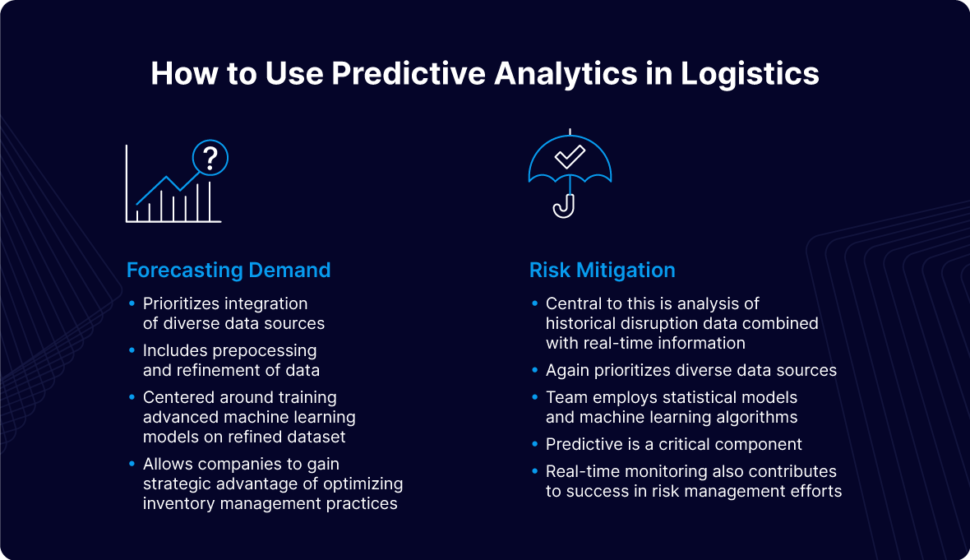
So, how do you use predictive analytics in the logistics industry? There are two main use cases that can uplevel your company’s success.

Forecasting Demand

Accurate demand forecasting is crucial for maintaining optimal inventory levels and ensuring timely deliveries. At its core, predictive analytics in logistics involves the comprehensive collection and integration of diverse data sources. These encompass historical sales data, current market trends, pertinent economic indicators, and even real-time weather forecasts.

Once this information is gathered, it undergoes meticulous preprocessing and refinement through sophisticated feature engineering techniques. This step is pivotal in ensuring data consistency and relevance, essential for the accuracy of subsequent predictive models.

The heart of the process lies in training advanced machine learning models on this refined dataset. These models are designed to extrapolate from historical patterns and current contextual factors, predicting future demand with increasing precision over time.

By generating precise demand forecasts, logistics companies gain the strategic advantage of optimizing their inventory management processes. This optimization not only reduces costs associated with overstocking or stockouts but also enhances overall operational efficiency. Additionally, improved inventory management translates directly into better customer service levels, as companies can meet demand more reliably and consistently.

By leveraging predictive analytics for demand forecasting, logistics enterprises are empowered to navigate market dynamics proactively. This capability not only supports agile decision-making but also fosters a competitive edge in an increasingly complex global marketplace.

Risk Mitigation

Risk mitigation through predictive analytics plays a pivotal role in ensuring your logistics company can make proactive decisions that safeguard your organizational resilience and operational continuity.

Central to this process is the comprehensive analysis of historical disruption data combined with real-time information sourced from GPS tracking, weather reports, and live news feeds. By integrating these diverse data sources, logistics companies can assess the likelihood and potential impact of various risks such as natural disasters, geopolitical events, supplier delays, or transportation bottlenecks.

To effectively prioritize these risks, your team will employ statistical models and machine learning algorithms. These tools analyze patterns within the data and proactively identify critical vulnerabilities within the supply chain. These insights empower decision-makers to allocate resources proactively, strengthening preparedness and response capabilities.

Predictive maintenance also represents a crucial component of risk mitigation strategies in logistics organizations. By leveraging IoT sensors and predictive models, companies can forecast equipment failures before they occur. This proactive approach enables scheduled maintenance interventions, thereby minimizing unplanned downtime and optimizing operational efficiency.

Real-time monitoring systems further enhance risk management efforts by continuously tracking potential disruptions. These systems are designed to detect anomalies and trigger alerts in response to emerging threats. Early warnings enable logistics teams to implement dynamic rerouting strategies, adjusting transportation routes or supplier networks swiftly to circumvent potential disruptions.

Ultimately, the proactive application of predictive analytics in risk mitigation ensures a resilient supply chain ecosystem. By preemptively addressing potential disruptions and maintaining service levels despite uncertainties, logistics companies can enhance customer satisfaction, reduce operational costs, and sustain competitive advantage in a volatile global market landscape.

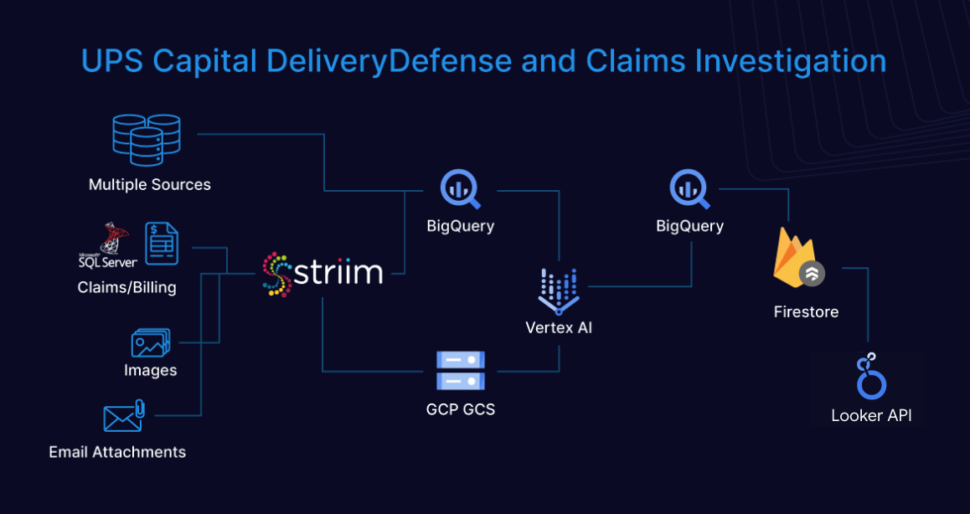
Take UPS, for instance. The surge in package theft due to more online shopping overwhelmed traditional security measures and data management systems, which showcased significant operational vulnerabilities. The lack of real-time data processing hindered UPS Capital’s risk management, affecting operational efficiency, consumer trust, and financial performance, underscoring the need for a sophisticated solution. That’s where Striim came into play.

UPS Capital integrated Striim’s real-time data streaming with Google BigQuery’s analytics to enhance delivery security through immediate data ingestion and real-time risk assessments. This integration allowed advanced analytics and machine learning to predict delivery risks and optimize logistics strategies. The DeliveryDefense™ Address Confidence system then used this data to assign confidence scores to delivery locations, improving predictive accuracy and managing delivery risks more efficiently than ever before.

UPS Capital integrated Striim’s real-time data streaming with Google BigQuery’s analytics to enhance delivery security through immediate data ingestion and real-time risk assessments

Leverage Striim to Garner Real-Time, High-Quality Data

If you’re ready to tap into the power of predictive analytics, it’s time to leverage Striim to garner real-time, high-quality data that will fuel informed decision-making and drive operational excellence in your logistics operations. Book a demo with us today to see for yourself the difference Striim can make for your team.

Real-Time Anomaly Detection in Trading Data Using Striim and One Class SVM

In today’s fast-paced financial markets, detecting anomalies in trading data is crucial for preventing fraudulent activities and ensuring compliance with regulatory standards. By leveraging advanced machine learning (ML) techniques, businesses can enhance their anomaly detection capabilities, leading to more robust and secure operations. In this blog, we’ll explore how to use Striim’s Change Data Capture, Stream Processing, and extensibility features to integrate an anomaly detection model built with a third-party machine learning library. We’ll use Striim’s data proximity to ensure tight integration with models, avoiding data latency and accuracy issues. For this demonstration, we’ll perform analytics using simulated day trading data, store the model in a standard Python serialization format, expose it via a REST API, and use it in Tungsten Query Language (TQL), Striim’s SQL-like language for developers to build applications.  

What is Anomaly Detection?

Anomalies are events that deviate significantly from the normal behavior in the data. Anomaly detection is an unsupervised technique used to identify these events. Anomalies can be broadly classified into three categories:

  • Outliers: Short-term patterns that appear in a non-systematic way.
  • Changes: Systematic or sudden changes from the previous normal behavior.
  • Drifts: Slow, unidirectional long-term changes in the data.

Case Study with Anti-Money Laundering App

A few years ago, Striim was hired by a financial institution to implement an app to track trader activity and detect fraud via Anti-Money Laundering (AML) rules. Recently, we extended this app by integrating an anomaly detection ML model.

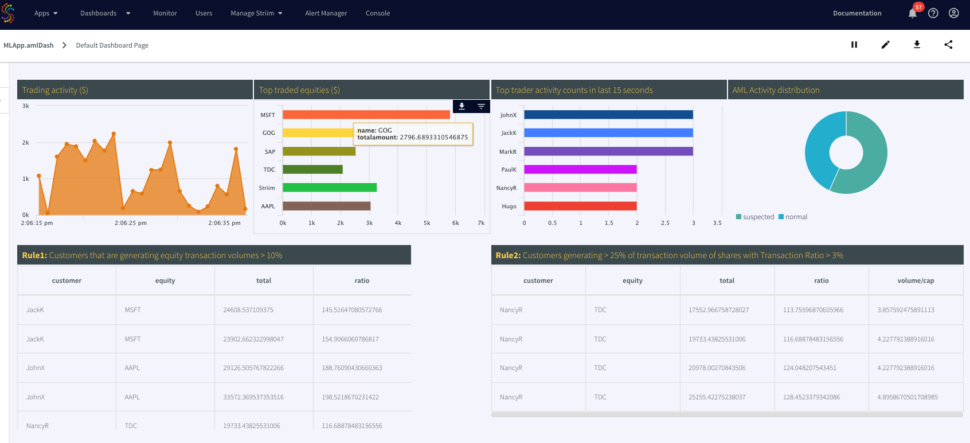
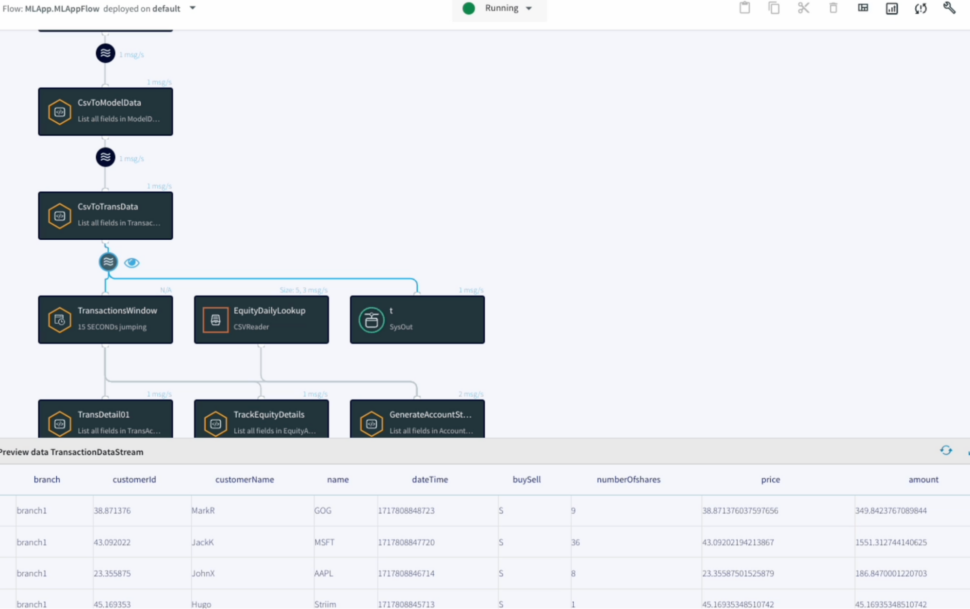
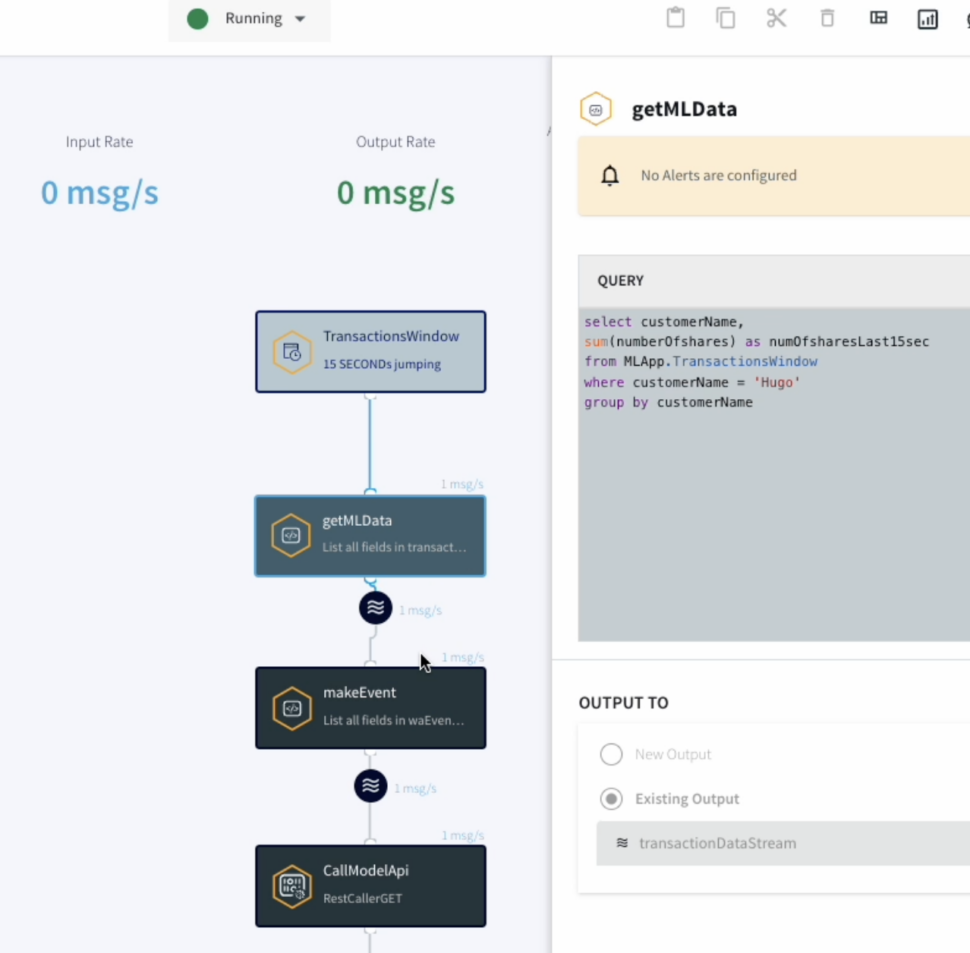
The app collects trading data from an operational database, uses caches to enrich incoming events, and applies Striim’s continuous queries (CQs) and in-memory time series windows to analyze the received information. The app implements several AML rules and, once the data is processed, it is stored in final EDW targets and presented in Striim’s real-time streaming dashboards.

Trading data passed to Transaction window

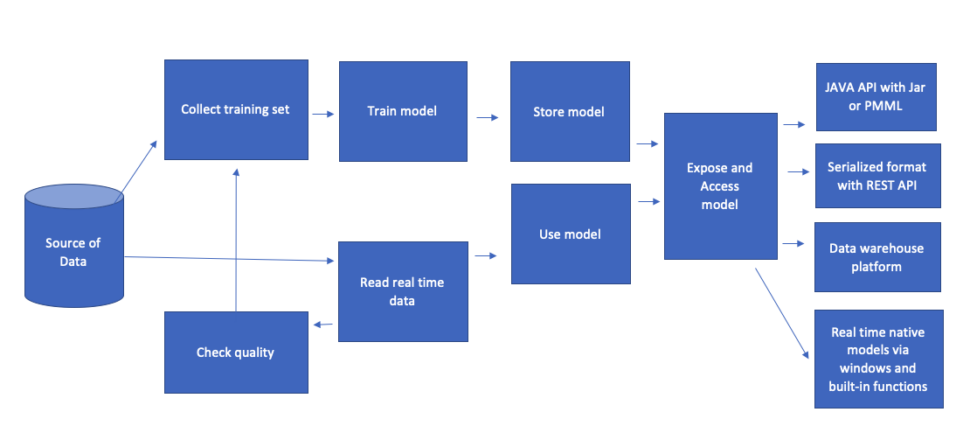
ML Integration and Usage Patterns with Striim Pipelines

Integrating machine learning models with Striim pipelines allows us to enhance our analytics capabilities. In this example, we’ll use the sklearn Python library to train a model with day trading activity data.

Solution

Train the model

  1. Use sklearn python library to train a model with a collected IL data based on day trading activity of a selected stock broker. The application collects and sums trading activities for a selected person for a period of time via a time window
  2. Pick One Class SVM. One Class Classification (OCC) aims to differentiate samples of one particular class by learning from single class samples during training. It is one of the most commonly used approaches to solve Anomaly Detection, a subfield of machine learning that deals with identifying anomalous cases which the model has never seen before.
  3. Train the model: OneClassSVM(gamma=’auto’).fit(X) where X is a set of training data

Use the model 

  1. Store data via JobLib dump format providing the most efficient way to save files to disk
  2. Build a function to call model in real time via predict(K) and expose it via REST API using Flask library as an example but service can be hosted on any WSGI web server app
  3. API output comes as simple JSON string:  
    • {“anomaly”:”-1″,”inputParam”:”80″} if an anomaly is detected.
    • {“anomaly”:”1″,”inputParam”:”44″} if the behavior is normal.
  4. Access the model API via Rest API Caller OP PS built module

By integrating external ML models with Striim, you can create powerful, real-time anomaly detection systems that enhance your business operations and security measures. This approach ensures that you can quickly identify and react to unusual patterns in your data, maintaining the integrity and reliability of your systems. Ready to see how Striim can transform your data analytics and anomaly detection processes? Sign up for a free trial today and experience the power of real-time data integration and machine learning firsthand.

Real-Time Regulatory Reporting: Streamlining Compliance in Financial Institutions

In today’s fast-paced regulatory landscape, financial institutions face unprecedented pressure to comply with evolving standards. Traditional reporting methods, burdened by data silos and manual processes, are proving inadequate. Real-time regulatory reporting, powered by stream processing, offers a solution by providing timely and accurate data for compliance.

We’ll explore this transformative approach, starting with an overview of the regulatory landscape. Then, we’ll highlight the shortcomings of traditional reporting methods before diving into the efficiency enhancements of real-time reporting.

A Peek into the Regulatory Landscape for Financial Institutions

The world of regulatory compliance in the financial sector is multifaceted and demanding. Financial institutions handle a tremendous quantity of sensitive data and are subject to regulations including the Dodd-Frank Act, Basel III, the European Market Infrastructure Regulation, and the Markets in Financial Instruments Directive (MiFID).

These regulations share common goals: stringent reporting standards designed to increase transparency, market integrity, and risk management. To comply, institutions must complete tasks such as transaction reporting and anti-money laundering checks.

Non-compliance carries hefty fines and risks significant reputational damage. Consequently, financial institutions must prioritize compliance by reducing data silos, streamlining reporting, and leveraging real-time solutions for effective management of complex financial data. The end goal is to guarantee timely compliance and mitigate risks.

By leveraging real-time data, financial institutions can navigate the regulatory landscape with greater confidence and efficiency.

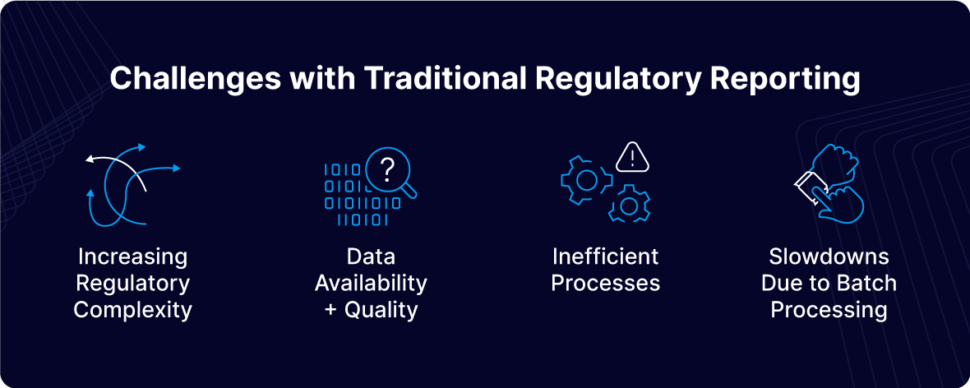
Challenges with Traditional Regulatory Reporting

Here are some challenges that traditional regulatory reporting is unprepared to address: 

  • Increasing Regulatory Complexity: Regulatory requirements are getting stricter. Consequently, institutions must double-down on compliance efforts. 
  • Data Availability and Quality: Many financial institutions have data silos. These silos result in disjointed, cumbersome processes that are inefficient at best and erroneous at worst. 
  • Inefficient Processes: Manually handling data exacerbates an already tedious process, resulting in reporting delays, which can have an impact on compliance timeliness. 
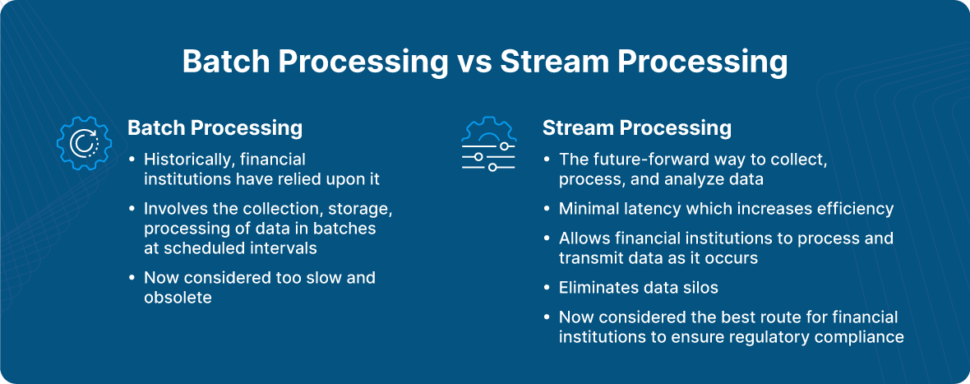
  • Slowdowns Due to Batch Processing: Traditionally, financial institutions have leaned on batch processing for data reporting. This method involves handling data in large, pre-scheduled batches. As a result, data becomes obsolete rapidly. It’s also time-consuming.

Real-Time Regulatory Reporting: Increasing Efficiency

Real-time regulatory reporting offers a solution to these challenges by enabling continuous monitoring and immediate submission of financial data to regulatory bodies. This approach reduces the time between data generation and regulatory oversight, promising instantaneous updates with sub-second latency. By leveraging stream processing, real-time regulatory reporting ensures that regulatory data is current and reflects the most recent market conditions and transactions.

Real-Time Anomaly Detection and Machine Learning (ML)

Additionally, real-time anomaly detection and machine learning (ML) play pivotal roles in modernizing regulatory reporting for financial institutions. 

Integrating these technologies into real-time regulatory frameworks enables institutions to enhance their ability to detect and respond to anomalies swiftly and accurately. Anomaly detection algorithms, powered by ML models such as neural networks, constantly analyze streaming financial data to identify deviations from typical patterns. This proactive approach improves fraud detection and risk management while ensuring compliance by promptly flagging suspicious activities. 

Furthermore, ML algorithms can improve over time, learning from new data to refine anomaly detection capabilities further. By leveraging these advanced analytical tools, financial institutions can maintain regulatory compliance with enhanced precision and agility in an increasingly complex regulatory landscape.

Technologies Facilitating Real-Time Regulatory Reporting

The key difference between real-time and traditional regulatory reporting lies in data processing methods. Historically, financial institutions have relied on batch processing, which collects, stores, and processes data in batches at scheduled intervals. However, batch processing is now considered obsolete due to the widespread adoption of stream processing.

Stream processing allows financial institutions to process and transmit data as it occurs, providing a more efficient and streamlined method. This approach guarantees timely compliance with regulatory requirements, minimizes latency, reduces manual processes, and eliminates data silos. It offers regulators a comprehensive, up-to-date view of a company’s financial activities in real-time.

Striim Facilitates Real-Time Regulatory Reporting to Ensure Compliance

Striim excels in facilitating real-time regulatory reporting, ensuring that financial institutions provide regulators with the timely, accurate information they require. By leveraging Striim, organizations can overcome the frustration of navigating data silos.

A defining feature of Striim is its use of Change Data Capture (CDC), which records only new events, resulting in more rapid data uploads. Striim also offers real-time analytics and continuous monitoring, enabling organizations to diagnose and respond to potential challenges as they arise, ensuring ongoing compliance.

Leverage Stream Processing to Supercharge Compliance Efforts

Real-time regulatory reporting represents a significant advancement in the financial industry’s ability to meet regulatory demands. By adopting stream processing technologies like Striim, financial institutions can enhance their compliance efforts, reduce risks, and operate with greater efficiency and confidence in a complex regulatory environment.

Book a demo with us when you’re ready to learn more about how real-time regulatory reporting can help ensure compliance.

Back to top