AI systems need fresh, high-quality context right now, not batches of data delivered hours later.
Delayed data is “a silent killer” for AI initiatives. In a recent Forbes article, CEO and Cofounder of Raven DB, Oren Eini described feeding AI models delayed data as “playing broken telephone with your most important business decisions.” The answer is to bring AI closer to real-time, operational data. Instead of leaving AI systems to deal with data scraps, it’s critical to fuel models with fresh data and apply its intelligence in real time.
The enterprises deploying successful AI initiatives are not deploying radically different AI models or agents. They’re building event-driven architectures, designed to stream context-rich, trustworthy, and compliant data into AI systems with sub-second latency. Real-time analytics is the technological pillar that makes this possible.
Delayed Reaction: The Challenges Calling for Real-Time Analytics
In order to reason, predict, and act effectively, intelligent systems need trusted, real-time data delivered in AI-ready formats.
Delayed Data: When insights arrive late, decisions are made on stale information, leading to missed opportunities, flawed predictions, or even harmful outcomes. In enterprise environments, delayed data means AI systems are always reacting to yesterday’s reality.
Ungoverned Data: If data feeding into AI systems fails to meet governance and compliance standards, organizations face exposure to fines, legal action, and reputational damage. Beyond penalties, ungoverned data erodes confidence in AI outputs, making stakeholders question the entire project.
Inconsistent Data Structures: Inconsistent data leaves AI systems to struggle to parse signals from noise, leading to inaccurate outputs, bias, or wasted computational effort. As a result, insights are less reliable, integration is slowed, and the potential value from AI initiatives is lost.
How Striim Protects, Enriches, and Transforms Data in Real Time
Striim’s platform transforms streaming pipelines into a real-time analytics and decisioning engine. This ensures that agentic AI has the context-rich, trustworthy, and compliant data it needs to reason, predict, and act effectively across critical business scenarios.
Armed with real-time Event-Driven Architectures powered by Striim, enterprises get:
Advanced streaming analytics that protect, enrich, and enhance data
Real-time activation & alerts when anomalies are detected
Full, end-to-end observability of streaming pipelines
In-stream transformation that processes data before it lands
Benefit From a Platform Purpose-Built for Real-Time
Enterprises should ditch outdated, batch-based systems that delay insights. With Striim, they can not only deliver sub-second insights but also feed MCP-ready, governed streams into AI systems.
Improve operational efficiency through faster actions By streaming and analyzing data in real time, Striim eliminates the lag of batch processing and manual intervention. Enterprises can automate workflows, detect issues instantly, and act on live signals instead of waiting for static reports.
What this means for you: Less time firefighting and more time driving high-value outcomes.
Gain a competitive edge via instant responses to market and customer shifts Markets and customer behaviors change by the second. Striim’s sub-second pipelines feed AI and analytics with live intelligence, enabling enterprises to adjust pricing, inventory, and engagement strategies as events unfold.
What this means for you: Spot market opportunities and act on them before your competitors.
Reduce risk with real-time anomaly detection and interventionStriim’s in-stream anomaly detection identifies irregular patterns—whether in transactions, operations, or data pipelines—before they become costly incidents. By embedding governance and AI-powered monitoring in motion, risks are flagged and mitigated immediately.
What this means for you:Gain peace of mind knowing threats are intercepted before they impact the business.
Enhance customer experiences with adaptive, AI-driven services With live, context-rich data streams, Striim enables adaptive experiences, whether it’s powering personalized recommendations, preventing service disruptions, or syncing inventory in real time.
What this means for you: Happier, more loyal customers with greater lifetime value.
Enable continuous innovation through live insights Static data slows innovation. Striim gives teams always-current insights to experiment, refine AI models, and launch new services with confidence, enabling you to accelerate the development cycle from idea to impact.
What this means for you: Teams can confidently test, learn, and deliver new AI-driven capabilities without delay..
Real-Time Analytics in Action: How Virgin Media O2 Support Proactive Network Intelligence with Real-Time Data
Virgin Media O2, a telecommunications leader serving over 45 million customers, needed to strengthen its network intelligence capabilities to deliver reliable, high-quality service at scale. With millions of concurrent users, the company required a way to instantly detect performance issues, analyze time-based patterns, and ensure its data was clean, governed, and AI-ready.
The Striim Solution
With Striim, Virgin Media O2 can stream, enrich, and govern high-velocity data in real time, powering proactive insights across its network.
Proactive network intelligence that detects performance issues instantly and analyzes customer and network behavior patterns
A real-time analytics platform that streams operational data into BigQuery with sub-second latency for immediate insights
In-flight governance that sends clean, enriched data to analytics tools and APIs to ensure intelligent systems can consume trusted, AI-ready datasets
The Results
Faster detection and resolution of network performance issues
Improved customer experience with proactive, context-aware service delivery
Increased operational efficiency by eliminating manual monitoring delays
Stronger compliance through governed, real-time data pipelines
A future-ready foundation for AI-driven network optimization
If you’re relying on data that’s hours or even minutes old, you’re already at a disadvantage.
That’s why real-time Change Data Capture (CDC) platforms are gaining popularity. CDC solutions capture and stream changes from your source databases in real time, sending them to targets such as data warehouses and data lakes. This log-based, low-latency data streaming method avoids the overhead and delays of full data extractions, giving you faster analytics and helping you make decisions you can trust.
Traditional batch-based ETL (Extract, Transform, Load) processes can’t keep up. Batch jobs run on fixed schedules—often taking hours or even days to deliver data to its destination—leaving both you and your intelligent systems and AI applications a step behind. With CDC, pipelines stream updates in near real time to relational databases (like SQL Server or Oracle), data warehouses, data lakes, or other targets, so your organization’s leaders can react in the moments that matter most.
For these reasons, CDC tools have grown from a niche market technology to an essential solution. They’re used across industries and company sizes, from high-growth startups needing real-time analytics to large enterprises modernizing legacy systems. The right CDC strategy empowers you to keep up with exponential data growth, achieve sub-second latency, and modernize aging ETL architecture.
Which CDC platform is right for your enterprise? This guide compares leading CDC solutions—Striim, Confuent, Fivetran, Oracle GoldenGate, and Qlik Replicate—so you can evaluate which features, connector coverage, latency capabilities, and pricing will work best for your needs.
The Business Case for CDC
Businesses leveraging real-time operations experienced over 62% greater revenue growth and 97% higher profit margins compared to those operating at a slower pace, according to MIT/CISR research.
Revenue impact: Stale data holds enterprises like yours back—especially when it comes to leveraging advanced use cases such as personalization, fraud detection, and AI—stifling innovation and harming profitability. CDC changes the game by ensuring data relevance, allowing you to act on real-time insights and boost revenue.
Cost efficiency: CDC reduces the need for large-scale batch ETL jobs, cutting network bandwidth costs, minimizing computer usage, and lowering operational overhead for your data engineering teams.
Risk mitigation: Real-time CDC ensures business continuity by maintaining up-to-date backups, synchronizing multi-region deployment, and enabling rapid recovery in the event of full system failures.
What Is Change Data Capture (CDC)?
Change data capture (CDC) is a method for identifying and capturing changes—such as inserts, updates, and deletes—in your databases and replicating them downstream. Instead of relying on full reloads, CDC continuously streams only the new or modified data,
CDC tools capture changes in several ways. Query-based and trigger-based approaches exist, but they can be intrusive and place additional load on your source systems. Log-based CDC is the most robust and scalable method because it reads directly from database transaction logs, creating low latency, data freshness, and non-intrusiveness.
Adopting log-based CDC lets you synchronize data in near real time without impacting production workloads. This makes it possible to act on data the moment it’s created, powering operational dashboards, advanced analytics, machine learning models, customer-facing applications, and event-driven use cases. Keep reading to learn common CDC use cases and discover the key features to look for in a CDC tool.
Data Integration Glossary
Change data capture (CDC) identifies and streams data changes—such as inserts, updates, and deletes—from source systems in near real time. CDC enables continuous data synchronization for analytics, AI, and operational applications without full data reloads.
Exactly-once delivery guarantees each data change is replicated and processed only once, preventing duplicates or data loss. This is a vital feature for accurate CDC pipelines.
Event-driven architecture (EDA) is an architectural paradigm that enables intelligent systems to react to data change events captured by CDC, enabling loosely coupled, real-time, and scalable applications and analytics workflows.
Extract, transform, load (ETL) is a batch data process that extracts data from sources, transforms it for consistency and quality, and loads it into data warehouses. Unlike CDC’s real-time streaming, ETL often works on scheduled batches for business intelligence (BI) workloads.
Fault tolerance in CDC solutions ensures uninterrupted data replication despite hardware or network failures, using features like data buffering, retries, and failover to prevent data loss.
Kafka is an open source distributed streaming platform. It’s often used as a CDC target or messaging layer, providing scalable, fault-tolerant, real-time data pipelines for event-driven architectures.
Latency in CDC platforms is the delay or slowdown between a data change in the source system and its reflection in the target system. Sub-second latency is essential for real-time analytics and rapid decision-making.
Log-based capture monitors database transaction logs to detect data changes with minimal source impact. It is the preferred CDC method for real-time, scalable streaming because it doesn’t query tables directly and can track complex database changes, such as multi-table transactions and bulk updates.
Multi-region sync replicates CDC data across geographic regions or data centers, enabling global availability, disaster recovery, and low-latency access for distributed users.
Online transaction processing (OLTP) systems handle high volumes of fast, transactional data changes. CDC tools capture these changes in real time to keep analytics and operational systems synchronized.
Operational dashboards visualize real-time data and key metrics fed by CDC streams. They help teams monitor live business processes, detect anomalies, and make immediate data-driven decisions.
Schema evolution allows CDC systems to adapt automatically to changes in source data structure, such as newly added columns, keeping data flowing and preventing pipeline breaks.
Service level agreements (SLA) set performance commitments for CDC tools, including replication latency, uptime, and error rates. SLAs ensure that data synchronization meets business needs for reliability and timeliness in analytics and operational workflows.
Stream processing continuously ingests and analyzes CDC data in real time, supporting immediate insights, alerts, and operational decisions without waiting for batch jobs.
Streaming enrichment enhances raw CDC data in real time by adding context—such as lookup values, aggregations, or business rules—before delivering it to target systems. This reduces downstream processing and enables faster, more actionable insights from live data streams.
Trigger-based capture uses database triggers to record data changes as they happen. While precise, this CDC method can increase source system load and may not scale well in high-volume or latency-sensitive environments.
Why You Should Use CDC Tools
Legacy data architectures and siloed information can slow down your enterprise’s ability to use real-time analytics and leverage AI. Change data capture (CDC) tools break down these barriers by continuously streaming changes from source systems to cloud data warehouses (Redshift, Snowflake, BigQuery), data lakes, streaming platforms, and data lakehouses (Databricks).
Pain Points Addressed by CDC Tools
With a modern data architecture backed by CDC, you can solve these longstanding challenges.
Legacy Architectures Can’t Support Modern Data Demands. Traditional batch-based ETL pipelines, siloed systems, and cobbled-together point solutions (such as Debezium + Kafka + Flink) introduce complexity, delay innovation, and hinder AI adoption. CDC tools modernize data pipelines by giving your enterprise continuous, trusted, and enriched data.
AI Initiatives Are Stalled by Stale or Inaccessible Data. Current enterprise data infrastructure fails to deliver the velocity or reliability required for advanced use cases. Real-time CDC pipelines remove data silos and deliver continuous, fresh data, giving your AI models, generative AI applications, and real-time decisioning models enriched and trusted data with sub-second latency.
Data Teams Are Overburdened by Tool Sprawl and Maintenance. Managing and maintaining separate CDC, transformation, and delivery tools strains your engineering resources and overwhelms your teams. Tool sprawl also slows project timelines and increases total cost of ownership (TCO). Best-in-class change data capture platforms consolidate CDC with streaming, delivery, and observability, delivering faster time to value and reducing TCO.
Inconsistent governance increases risk. When sensitive data flows through pipelines without real-time direction, masking, or lineage, it creates audit gaps and non-compliance with frameworks like HIPAA, GDPR, and SOC2. CDC platforms provide integrated masking, lineage tracking, and anomaly detection, enriching your enterprise’s data compliance and governance strategies.
Business stakeholders lack timely insights. Missed Service Level Agreements (SLAs), failed ETLs, and long recovery windows create blind spots across your finance, operations, and customer experience teams. Modern data streaming tools provide real-time dashboards, replacing once-a-day refreshes with fresh updates.
Digital transformation efforts carry operational risk. Unreliable, poorly integrated batch tools hinder cloud migrations and platform re-architecture initiatives. Reliable, observable CDC tools enable zero-downtime cloud migrations and multi-cloud synchronization without disrupting your daily operations.
Data accessibility and freshness are compromised. Change data capture platforms keep your enterprise’s data fresh, accurate, and available, building trust in analytics and helping you accomplish aspirational mission-critical initiatives like fraud detection, and hyper-personalization.
Reducing Risk, Maintaining Compliance
Managing your organization’s risk profile in today’s fraught cybersecurity environment and keeping up with regulations are two challenges that keep IT teams up at night.
Understand why real-time data is an essential element for both.
Key Benefits of CDC Tools
As the engine behind modern streaming data pipelines, CDC platforms fundamentally shift your organization’s ability to put data to good use. Rather than simply moving data, CDC unifies it across your organization, creating real-time intelligence that drives faster decisions and impacts every part of the business.
Greater success with AI and analytics initiatives: AI models rely on the freshest possible data. The longer the delay or lag, the less relevant the contributions of an AI system. With best-in-class CDC platforms, enterprises can power real-time analytics and sophisticated, AI-driven applications from the same data stream, deploying LLMs that actually work.
Reduced complexity and lower TCO: Maintaining separate tools for CDC, stream processing, enrichment, and delivery adds cost and complexity. By consolidating these capabilities into a single platform, you can reduce engineering overhead, cut licensing costs, and ease operational burdens, freeing up your teams to focus on meaningful projects.
Improved governance and compliance posture: Enterprise-ready CDC solutions will support your organization’s governance requirements. This includes implementing access controls, maintaining detailed audit trails, and encrypting data both in transit and at rest. Platforms like Striim include Sentinel AI and Sherlock AI to spot and secure sensitive information as it moves, protecting it from unauthorized use. These built-in governance features also make it easier for your enterprise to pass audits for standards such as HIPAA, GDPR, and SOC 2.
Stronger business agility and scalability: CDC tools enable your teams to launch new data products, build AI pipelines, and deliver live operational insights quickly, without rebuilding infrastructure or compromising resilience. CDC provides the agility to scale data operations and keep up with the growth of your business.
Trusted, always-on data for leadership and frontline teams: Trusted, always-on data changes the way everyone works across your enterprise. Key stakeholders can monitor KPIs, track consumer behavior, assess operational risks in the moment, and make critical decisions with confidence.
The Foundation for AI
Is your data architecture limiting your ability to effectively implement generative AI? Most enterprises (74%) struggle to implement AI effectively because they lack real-time, trusted data. CDC changes the equation by fundamentally transforming how data flows through your business, giving you the foundation for AI.
Common Use Cases
CDC tools can power a wide range of operational and analytical use cases, from real-time analytics to application-level intelligence. By delivering a continuous stream of fresh data, CDC solutions give you new ways to move faster and gain deeper insights.
Streaming transactional data from OLTP to cloud data warehouses: With CDC, you can stream real-time transactional updates directly from online transaction processing (OLTP) systems, such as relational operational databases, into your cloud data warehouses. Log-based CDC preserves ACID transaction integrity while avoiding the performance impact of repeated full-table queries. This ensures your downstream analytics platforms and BI tools always work with the freshest possible data.
For example, global payments company Clover consolidated its fragmented infrastructure by streaming data from 23 MySQL databases into Snowflake in real time, reducing operational complexity and empowering developers to take on higher-value tasks.
Real-time fraud detection and personalization using CDC and streaming: When you need to react instantly, whether to catch fraud, personalize customer experiences, or right-size inventory, CDC combined with in-flight stream processing gives you an edge. You can merge transactional, behavioral, and third-party data in real time, apply continuous queries, and trigger actions as soon as anomalies appear.
In banking, this might mean automating fraud prevention by flagging suspicious transfers before they complete. In retail, it could mean achieving personalization at scale by adjusting offers based on a customer’s live browsing behavior.
Zero-downtime cloud migration or multi-region sync: Downtime during a migration breaks customer experiences, increases compliance risks, and can even cost revenue. With CDC, you can replicate on-prem databases to cloud targets without interrupting live applications. After the initial load, CDC keeps both on-prem and cloud-based systems in sync until cutover, ensuring no data is lost and no service is disrupted. This same principle applies when you need multi-region or multi-cloud synchronization. CDC keeps geographically distributed systems in lockstep to support global scalability and disaster recovery strategies.
Triggering workflows and alerts based on specific change events: CDC lets you turn raw change data into action. By defining rules or conditions on change streams, you can automatically send alerts, update downstream systems, or kick off remediation steps when specific changes occur. This event-driven approach underpins fraud detection, IoT monitoring, operational dashboards, and more, essentially turning your data pipeline into a live control system for your business.
Rethinking Customer Experiences
Real-time analytics are remaking the customer experience. Companies can now use data to transform the way they understand user preferences and deliver on those priorities.
Learn how some businesses are increasing first-call resolutions, reducing repeat calls, and boosting customer ratings.
Top Change Data Capture Tools Compared
CDC tools vary widely in architecture, capabilities and, naturally, maturity. To choose the right one, you need to understand the key features that set today’s most effective CDC solutions apart.
Striim
Key features
Best-in-class real-time CDC capabilities with sub-second replication, preserving data integrity and supporting high-throughput workloads
Built-in SQL-based stream processing for transforming, filtering, enriching, and joining data in motion
An all-in-one platform that eliminates tool sprawl, lowers TCO, and accelerates time to value
Best fit
Large, data-intensive enterprises in financial services, retail/CPG, healthcare/pharma, hospital systems, travel/transport/logistics, aviation, manufacturing/energy, telecommunications, technology, and media
Free trials available for Striim Developer (perfect for learning and small-scale use cases) and Striim Cloud (fully managed, horizontally scalable streaming)
Contact sales for pricing on Striim Platform (self-hosted deployments on your infrastructure)
Case studies
Discovery Health Reduces Data Processing Latency From 24 Hours to Seconds with Striim. Read more.
American Airlines Powers Global TechOps with a Real-Time Data Hub. Read more.
UPS Leverages Striim and Google BigQuery for AI-Secured Package Delivery. Read more.
Confluent
Key features
Broad CDC connector ecosystem, including log-based and query-based connectors (Debezium, JDBC, and more)
Publishes database changes into Apache Kafka event streams for downstream processing
Stream governance and tooling for secure, compliant, event-driven CDC pipelines
Best fit
Organizations that want to be based on Kafka
Pros
Real-time data propagation for analytics and automated workflows
Enterprise-grade governance and pipeline management
Supports databases, mainframes, and cloud deployments with rich connector choices
Cons
Costly pricing structure with usage-based charges that can stack up quickly
Requires deep Kafka expertise and complex setup
Operational overhead and a fragmented ecosystem of unnecessary add-ons
Users reported throughput issues with certain CDC connectors such as Oracle
Change data capture (CDC) works by continuously monitoring your databases for changes, capturing them instantly, and supplying them as event streams to other systems or platforms. Whenever one of your users acts, the database logs it as an INSERT, UPDATE, or DELETE event. A CDC platform connects directly to your database to identify these changes in real time.
You can detect changes in different ways, including by polling tables for timestamp modifications, triggering database events when updates occur, or reading directly from transaction logs.
Each approach comes with trade-offs in performance, delay, and complexity. Evaluating these differences is essential to selecting the most suitable CDC tool for your organization.
Alternative CDC Methods
Log-based CDC is the most reliable and scalable approach, but other methods exist for capturing database changes. Know the pros and cons of these alternative so you can decide what’s best for your business.
Query-Based CDC
Also known as polling-based CDC, this method involves repeatedly querying a source table to detect new or modified rows. It is typically done by looking at a timestamp or version number column that indicates when a row was last updated.
While simple to set up, query-based CDC is highly inefficient. It puts a constant, repetitive load on your source database and can easily miss changes that happen between polls. More importantly, it can’t capture DELETE operations, as the deleted row is no longer there to be queried. For these reasons, query-based CDC is rarely used for production-grade, real-time pipelines.
Trigger-Based CDC
This method uses database triggers—specialized procedures that automatically execute in response to an event—to capture changes. For each table being tracked, INSERT, UPDATE, and DELETE triggers are created. When a change occurs, the trigger fires and writes the change event into a separate “history” or “changelog” table. The CDC process then reads from this changelog table.
The main drawback of trigger-based CDC is performance overhead. Triggers add computational load directly to the database with every transaction, which can slow down your source applications. Triggers can also be complex to manage, especially when dealing with schema changes, and can create tight coupling between the application and the data capture logic. This makes them difficult to scale and maintain in high-volume environments.
Both query-based and trigger-based CDC can work in limited or small-scale use cases. But most enterprises rely on log-based CDC for its many benefits.
Log-Based Change Capture
Log-based CDC is the gold standard for modern data integration. This technique reads changes directly from your database’s native transaction log (e.g., the redo log in Oracle or the transaction log in SQL Server). Because every database transaction is written to this log to ensure durability and recovery, it serves as a complete, ordered, and reliable record of all changes.
The key advantage of log-based CDC is its non-intrusive nature. It puts almost no load on the source database because it doesn’t execute any queries against the production tables. It works by “tailing” the log file, similar to how the database itself replicates data. Log-based CDC is highly efficient and scalable, capable of capturing high volumes of data with sub-second latency. Some log-based CDC tools come with the ability to analyze different tables to ensure replication consistency.
This reliability and low-impact approach is why modern, enterprise-grade streaming platforms like Striim are built around a scalable, streaming-native, log-based CDC architecture.
Real-Time Data Delivery
Your CDC tool should move data instantly to downstream systems, whether it’s your analytics platform, operational dashboard, or event-driven applications. By streaming changes as they occur, you can power analytics, migration workflows, synchronization, and other downstream processes without waiting for batch schedules.
Broad Source and Target Support
Choose a platform that connects to all the places you need, including relational databases, NoSQL stores, cloud data warehouses, data lakes, messaging systems, and more. A platform with broad support makes it easy for you to plug CDC into your current tech stack, connect to new systems as your needs grow, and stay flexible for whatever comes next.
Schema Evolution Handling
Your data isn’t static, and your pipelines shouldn’t be, either. Columns get added, types change, tables get renamed. You need a CDC solution that adapts without breaking your data flows. Modern platforms detect schema changes, propagate them downstream, and notify you when schemas drift, keeping your pipelines safe and your data reliable.
Built-In Stream Processing
Many CDC tools just capture changes. Advanced platforms take it a step further with SQL-based stream processing that lets your users filter, transform, enrich, and join data in motion—before it ever reaches a warehouse, dashboard, or operational system. Think of it as a real-time data refinery, delivering analytics-ready streams that accelerate time to insight.
Fault Tolerance and Exactly-Once Delivery
You need your data to be reliable every time you query it. A strong CDC platform ensures exactly-once delivery, using checkpoints and automatic error recovery to prevent duplicates or missing updates. This kind of reliability is critical for finance, compliance, and other sensitive workloads.
Monitoring and Observability
The best CDC tools give you dashboards, logs, metrics, and alerts so you can track throughput, latency, schema changes, and errors. With full visibility, you can monitor pipeline health so you can troubleshoot faster, prevent issues, and stay ahead of problems.
Deployment Flexibility (Cloud, On-Prem, Hybrid)
Your CDC platform should work where you work, whether it’s on-premises, in the cloud, or across a hybrid setup. Seek platforms that can adapt to your infrastructure so you can scale, re-architect, or migrate without having to replace your platform later.
Change Data Capture Tools in Action
Track database updates, inserts, and deletes in real-time with Change Data Capture to power data replication and migration. Learn more about CDC tools and use cases.
How to Choose the Right CDC Tool for Your Needs
With so many options available, navigating the CDC vendor landscape can be challenging. Narrow the field and create a focused shortlist of viable vendors by looking closely at these three areas.
Evaluate Total Cost of Ownership (TCO)
Determining the TCO goes beyond licensing fees. You should also consider the engineering resources you’ll need to build and maintain CDC pipelines, the need for third-party tools like Kafka or stream processors, and the platform’s ability to scale up or across clouds without costly re-architecting.
Look for Key Features of Modern Platforms
Seek solutions that embrace the features that matter most to your enterprise, including these must-haves:
Log-based change capture for efficient, low-impact extraction of database changes
Real-time data delivery to keep analytics and applications continuously updated
Broad source and target support, enabling flexible integration across diverse environments
Schema evolution handling to adapt automatically as data structures change
Built-in stream processing for filtering, transformation, and enriching data in motion
Fault tolerance and exactly-once delivery, ensuring data integrity without duplicates or loss
Monitoring and observability to track pipeline health and resolve issues quickly
Deployment flexibility across cloud, on-premises, and multi-cloud environments
These features will help you choose a robust, scalable CDC platform that will generate meaningful ROI.
Ask Strategic Questions
Once you identify the best CDC solutions, it’s time to evaluate vendors. Focus on these critical errors to ensure the solution can meet your technical requirements and business goals.
Data source and target compatibility: Does the tool support log-based CDC for your specific database version? What about future migration targets?
Latency and throughput underload: Can the solution handle high-volume changes in near real time without data loss or degradation?
Streaming enrichment: Do you need to transform or filter data in flight?
Error handling and recovery: What happens when a target is unreachable? Can the CDC platform retry, checkpoint, and resume?
Operational visibility: How easy is it to monitor, alert, and audit pipeline performance?
Security and compliance: Is the CDC platform compliant with your governance model (SOC2, HIPAA, etc.)? Can it ensure data movement at scale?
Asking these questions up front will help you find CDC platforms that meet your infrastructure needs, creating a smoother implementation.
Striim: One Platform for CDC, Streaming, and Beyond
Leading enterprises need a unified CDC platform that combines real-time data capture with in-stream processing and reliable, at-scale delivery. Striim is the only platform providing this end-to-end functionality in a single, enterprise-grade solution. With Striim, your organization gets:
An all-in-one platform: Striim consolidates CDC, streaming, delivery, and observability into a single platform. You get faster time to value and lower TCO, while your engineers are freed from the rigors of having to maintain multiple, cobbled-together systems.
Log-based CDC with sub-second latency: Striim’s log-based CDC extracts changes directly from database transaction logs without impacting production systems, supporting high-throughput workloads, and delivering real-time analytics and cloud sync at scale.
Built-in stream processing: Unlike other CDC tools that just capture change data, Striim you’re your users transform, filter, enrich, and join data in motion using SQL-based processing.
Don’t settle for stale data and fractured data workflows. See how the world’s leading enterprises use Striim to power their business with real-time insights.
For the modern enterprise, data is everywhere — scattered across disconnected systems, inconsistent formats, and siloed teams. This fragmentation creates duplication, delays, and blind spots that make it harder than ever to turn data into insight.
The answer is data integration. It’s not just an IT task – it’s a competitive and revenue enabler that delivers the right data to the right systems , especially AI tools that can act autonomously. Get it right and you enable accuracy, agility, informed decision-making, and AI readiness that define a modern enterprise. Get it wrong, and you risk missed opportunities, poor decisions, and falling behind the competition.
Forget the textbook definition of data integration. What matters is why integrated data fuels better decisions, faster innovation, and real business growth. This guide breaks down the tangible benefits of a modern data integration strategy — from everyday operational wins to the long-term initiatives that shape competitive advantage.
What is Data Integration?
At its core, data integration is about logical unification: connecting data across systems, formats, and locations so it works together seamlessly. Done right, it’s not just about access — it’s about creating a consistent, trustworthy foundation that powers analytics, operations, and AI at scale.
The way businesses achieve this unification has changed dramatically over time. Traditional ETL (Extract, Transform, Load) and ELT (Extract, Load, Transform) methods moved data in scheduled batches — often overnight. While effective for historical reporting, they left organizations making decisions on data that was already hours or days old. In today’s competitive environment, that lag is a liability.
The modern evolution is real-time data streaming, where information moves the instant it’s created. Instead of waiting for the next batch cycle, data flows continuously, enabling immediate action. This shift is powered by three key techniques:
Change Data Capture (CDC): Captures inserts, updates, and deletes the moment they occur using an event-driven approach. This avoids costly truncate-and-reload cycles or constant polling that strains source systems.
Streaming Pipelines: Treats data as a continuous flow, processing each event in milliseconds rather than minutes or hours. This enables low-latency insights and real-time responsiveness.
In-flight Transformation: Cleanses, enriches, and reshapes data as it moves — so it’s analytics- and AI-ready the instant it lands in the target system.
What Are the Benefits of Data Integration?
To power advanced analytics, enable AI applications, and deliver personalized customer experiences, enterprises must unify data across fragmented sources. A robust, real-time data integration strategy delivers tangible benefits that impact everything from operational efficiency to revenue growth.
Benefit
Description
Better Decisions
Empowers teams with fresh, unified data for more accurate and timely insights.
Enhanced Customer Experience
Enables real-time personalization and proactive customer service.
AI & Analytics Ready
Provides a continuous stream of clean, structured data for reliable models.
Operational Efficiency
Eliminates data silos and automates manual tasks to reduce overhead.
Stronger Governance
Creates consistent, auditable data flows for improved compliance and security.
Here are the high-level benefits in more detail:
Improve decision-making with fresh, unified data. When decision-makers have access to up-to-the-second data in the right formats from across the enterprise, they can move from reactive to proactive strategies, addressing issues and seizing opportunities in real time.
Enhance customer experiences through real-time personalization. With unified customer data from all your touchpoints—CRM, web, mobile, support—you can deliver hyper-personalized offers, recommendations, and support that drive loyalty and revenue.
Enable AI/ML and analytics with clean, structured, streaming-ready data. AI and machine learning models are only as good as the data quality of the inputs they’re fed. Real-time integration provides a continuous, reliable stream of clean and structured data, which is essential for accurate predictions and intelligent automation.
Increase operational efficiency by eliminating silos and manual tasks. By automating the flow of data between systems, you eliminate error-prone manual data entry and reconciliation, freeing up teams to focus on higher-value work.
Strengthen compliance and governance with consistent data flows. A unified data integration platform provides a single source of truth for managing and monitoring data, making it easier to enforce security policies, track data lineage, and demonstrate compliance with regulations like GDPR and CCPA.
Operational Benefits of Data Integration
Data integration isn’t just about pulling information into one place — it’s about making everyday operations more reliable, efficient, and scalable. Too many teams still depend on brittle, error-prone processes because their systems are disconnected or built on legacy batch pipelines. A modern, real-time approach eliminates these bottlenecks and strengthens the foundation of day-to-day business.
Eliminate Silos and Improve Data Consistency
When departments manage data in isolation, inconsistencies and duplication are inevitable. The sales team’s customer records rarely align with the support team’s, resulting in flawed reporting and poor customer experiences. Integrated pipelines ensure that updates in one system are instantly reflected across all others, creating a single, trustworthy source of truth.
Accelerate Time-to-Insight
The delay between when something happens and when it can be analyzed is where opportunities slip away. Batch processes often add hours of lag. Real-time integration closes this gap, reducing time-to-insight from hours to seconds. Business intelligence dashboards and analytics stay continuously up to date, giving decision-makers a live, comprehensive view of the business.
Improve Productivity and Reduce Manual Work
Highly skilled engineers and analysts shouldn’t be stuck exporting CSVs, patching one-off scripts, or babysitting fragile pipelines. Automated, integrated data flows remove these repetitive tasks, freeing teams to focus on innovation — whether that’s building new products, refining analytics models, or uncovering insights that drive growth.
Strategic Business Benefits of Data Integration
Beyond day-to-day operations, real-time data integration fuels enterprise-wide growth. This is the bigger picture: elevating integration from a back-end IT task to a strategic capability that underpins data-driven innovation and is a core component of your data and AI-driven enterprise strategy and customer value creation.Companies that master this shift consistently outpace competitors and unlock entirely new revenue opportunities.
Today’s customers expect predictive, hyper-relevant interactions. A real-time stream of data lets you act on customer behaviors the moment they happen—triggering a personalized offer after a cart is abandoned, providing proactive support based on usage patterns, or tailoring content instantly. This level of responsiveness is a powerful differentiator. It builds loyalty with happy customers and increases overall customer lifetime value.
Enable AI, Machine Learning, and Predictive Analytics
Generative AI and predictive models are profoundly changing the enterprise landscape— but they are only as effective as the data that powers them.. With AI adoption accelerating across the industry, as noted in recent McKinsey research, real-time data integration has become the foundational layer for a successful AI strategy. It provides the continuous, clean, and context-rich data streams needed to train accurate models, power intelligent agents, and embed predictive insights directly into your business processes.
Support Digital Transformation and Cloud Adoption
Digital transformation initiatives succeed or fail based on data agility. Whether you’re migrating legacy systems or building cloud-native applications. A modern data integration platform de-risks cloud adoption by enabling zero-downtime migrations and keeping on-premises and cloud environments in sync. It provides the glue—a flexible data fabric or middleware that underpins a hybrid, multi-cloud strategy, ensuring your architecture is agile enough to adapt to future needs.
Industry Use Cases to Prove the Value of Data Integration
Data integration isn’t just a technical exercise, it’s the engine behind some of the most impactful applications in business today. From fraud prevention to supply chain resilience, real-time integration delivers measurable results across industries.
Real-Time Fraud Detection
In financial services, detecting fraud is a race against time. Batch-based systems that analyze transactions hours after they occur are too slow to prevent losses. A real-time streaming platform, powered by Change Data Capture (CDC), enables financial institutions to intercept and analyze transaction data the moment it’s created, compare it against historical patterns, and block suspicious activity before it clears—saving millions in potential losses.
Inventory and Supply Chain Optimization
For retailers and logistics companies, knowing exactly what data you have and where it lives is critical. Real-time data integration provides a live, unified view of inventory levels, supplier data, and shipping statuses. This empowers businesses to prevent stockouts, optimize delivery routes on the fly, and provide customers with accurate tracking information, as logistics leaders like UPS have discovered.
Compliance, Risk, and Regulatory Reporting
For enterprises in highly regulated industries, providing accurate, timely data to auditors is non-negotiable. Real-time data integration ensures consistency and easy data access across all systems, as well as creating an auditable view of data with every change along the way. This simplifies compliance with regulations like GDPR, FTC, and others, and provides a real-time view of risk exposure, allowing businesses to move from a reactive to a proactive compliance posture.
What to Look for in a Data Integration Solution
Not all integration platforms are created equal. While your exact requirements will depend on your business, there are a few non-negotiables every enterprise should demand. As industry analysts emphasize, the future of data management revolves improving security, scalability, and governance. Look for a unified platform that delivers on these key criteria.
Real-Time Capabilities and In-Flight Transformation
Your platform must be architected for streaming data. This means low-impact Change Data Capture (CDC) to source data non-intrusively and the ability to process, filter, and enrich data as it moves. Storing data before you can transform it introduces unacceptable latency for real-time use cases.
Scalability, Flexibility, and Cloud Readiness
An enterprise-grade platform must scale to handle massive data volumes without performance degradation. It should be flexible enough to deploy anywhere—on-premises, in the cloud, or in a hybrid model—and be able to connect to a vast ecosystem of legacy and modern data sources and targets.
Ease of Use and Observability
A modern platform shouldn’t require an army of specialists to make it work. Look for an intuitive, SQL-based interface that empowers your existing data teams to build and manage pipelines. Comprehensive monitoring and observability are also critical, providing deep visibility into data flows, performance, and pipeline health to simplify troubleshooting.
Why Enterprises Choose Striim For Data Integration
Real-time data integration is more than a technical optimization—it’s a business multiplier. Striim’s unified platform is engineered from the ground up to deliver on this promise. We provide the real-time connectors, AI-readiness, and hybrid cloud flexibility that modern enterprises demand, all on a platform built for mission-critical scale.
Striim is how you move from stale, siloed data to an integration system built for intelligent, real-time operations.
Ready to see the benefits in action? Book a demo with our team or start your free trial today.
The race is on. Enterprises and companies of all sizes are running full speed towards the transformative benefits of AI.
According to McKinsey, AI received $124.3 billion in equity investment last year alone, and 92% of executives are planning to invest more over the next three years.
To get AI-ready, companies need a trusted, real-time data layer that’s accessible to AI systems. The first step is getting data where it needs to be for AI activation: out of legacy, on-premises systems and into scalable, secure, cloud storage.
Cloudy Skies: The Challenges Behind Migrating to AI-Ready Cloud Infrastructure
As we laid out in our overview of AI-readiness, cloud migrations are high-stakes operations with significant risks and challenges, especially for large enterprises migrating huge amounts of data.
Data Downtime: Missing or delayed data can mean critical failures, broken customer experiences, or incorrect decisions. Organizations need data to operate AI effectively and can’t afford going without data, even for a short while.
Keeping Data Consistent: Migration to the cloud is about data movement; but it’s also about delivering data in clean, consistent formats. During transition, it’s crucial that data is transferred in well-structured, interoperable formats that AI can read and act on.
Complex, Diverse Integrations: In the enterprise context, moving data is rarely a case of getting “from point A to point B”. Migrations often involve a mismash of sources and targets that must be navigated to ensure complete, secure integration. Any disruption in this process will delay AI adoption efforts.
How Striim Delivers Data Safely and Securely, With Zero Downtime
Combining best-in-class real-time CDC, schema evolution, and bi-directional sync, Striim ensures AI gets the data it needs, where it needs it, by replicating data instantly from legacy systems. Cloud Migrations with Striim results in:
Faster time-to-value for migration and modernization
A step closer to an AI-ready foundation with trusted cloud data.
Data integrity maintained, with continuous, consistent replication across hybrid and multi-cloud.
Zero downtime and data loss during cutovers.
Reduced silos by enabling unified access for AI and analytics.
Benefit From Stress-Free Migration
By partnering with Striim, enterprise teams can focus on what really matters. Rather than worrying about how to move their data, they can put their efforts towards using it: building AI capabilities and advanced analytics.
Lower migration and modernization riskStriim reduces the complexity and risk of cloud migration and platform modernization by providing real-time, governed data streams that ensure consistency, minimize downtime, and safeguard compliance throughout the process.
What this means for you: Less stress and complexity for engineering and IT teams.
Accelerated path towards innovation and AI adoptionBy delivering AI-ready pipelines with sub-second latency and built-in governance, Striim enables enterprises to rapidly operationalize AI initiatives, shortening the time from experimentation to production and accelerating innovation.
What this means for you: Innovate faster and free up your time from manual synchronization tasks.
New revenue streams via AI-driven productsStriim powers new business opportunities by feeding AI systems with trusted, real-time data, enabling enterprises to launch AI-driven products and services that create additional revenue streams and competitive differentiation.
What this means for you: Gain buy-in from business stakeholders and expand your operations with proven ROI.
Strengthened compliance with governed dataWith in-stream governance, continuous validation, and secure data zones, Striim ensures that enterprises maintain compliance with GDPR, HIPAA, and emerging AI regulations—protecting sensitive data while enabling confident AI adoption.
What this means for you: Gain confidence in your governed data as a trusted foundation for AI initiatives.
Improved competitive positioning with faster AI deployment cyclesStriim’s real-time intelligence platform allows organizations to deliver AI use cases into production faster, giving them an advantage in rapidly evolving markets where speed, accuracy, and compliance directly translate into stronger competitive positioning.
What this means for you: Build momentum towards agentic AI and operationalize your AI projects quickly.
Cloud Migration in Action: How Macy’s modernized its data infrastructure to deliver seamless, real-time inventory experiences
Like many retailers, Macy’s came up against legacy systems that failed to deliver data at the pace they needed to deliver for their customers. Their data was scattered across DB2 mainframes and Oracle databases, siloed and inconsistent. That meant higher costs, slower app development, and frustrating inventory mismatches between online and in-store shopping.
The Striim Solution
Macy’s leveraged Striim’s real-time data integration capabilities to bridge the gap between legacy systems and the cloud. By continuously replicating data from mainframe and Oracle into Google Cloud services like Cloud Spanner, Pub/Sub, and BigQuery, Macy’s gained:
A single, trusted view of data across all channels.
High availability with built-in resilience and disaster recovery.
Scalability on demand to handle holiday traffic spikes without missing a beat.
The Results
Lower costs by moving off expensive mainframes.
Faster operations with real-time inventory and order management.
Better customer experiences online and in stores.
Accelerated innovation with a unified cloud data foundation.
A stronger digital backbone for AI, analytics, and future transformation.
“Striim helped us modernize our platforms and achieve real-time visibility, syncing our inventory data to prevent out-of-stock or surplus situations during peak holidays like Black Friday and Cyber Monday.” — Neel Chinta, IT Manager at Macy’s
Your data wasn’t meant to languish in siloed, on-prem databases. If you’re exploring cloud migration, you’re likely feeling the friction of legacy systems, the frustration of fragmented data, and the operational drag of inefficient workflows. The pressure is mounting from all sides: your organization needs real-time data for instant decision-making, regulatory complexity is growing, and the demand for clean, reliable, AI-ready data pipelines has never been higher.
That’s where modern cloud data management comes in. It’s not just about getting data into the cloud (although this is a good idea for several reasons, from availability and scalability, to more flexible architecture). It’s about rethinking how you ingest, secure, and deliver that data where it can make an impact—powering instant decisions and artificial intelligence.
Time to get our head in the clouds. This article aims to provide practical guidance for navigating this critical shift. We’ll explore what cloud data management means today, why a real-time approach is essential, and how you can implement a strategy that delivers immediate value while future-proofing your business for the years to come.
Explore how Striim can support your Cloud Migration, without disrupting your business.
Cloud data management is the practice of ingesting, storing, organizing, securing, and analyzing data within cloud infrastructure. That said, the definition is evolving. The focus of cloud data management is shifting heavily toward enabling real-time data accessibility to power immediate intelligence and AI-driven operations. Having data in the cloud isn’t enough; it must be continuously available, reliable, and ready for action.
This marks a significant departure from traditional data management, which was often preoccupied with storage efficiency and periodic, batch-based reporting. The new way prioritizes the continuous, real-time processing of data and its transformation from raw information into actionable, AI-ready insights. As data practitioners, it’s our job not just to archive data, but to activate it.
Core Components of Cloud Data Management
When it comes to the various elements of cloud data management, there’s a lot to unpack. Let’s review the core components of cloud solutions, and outline how they work together to enable agile, secure, and intelligent cloud data management.
Data Storage and Organization
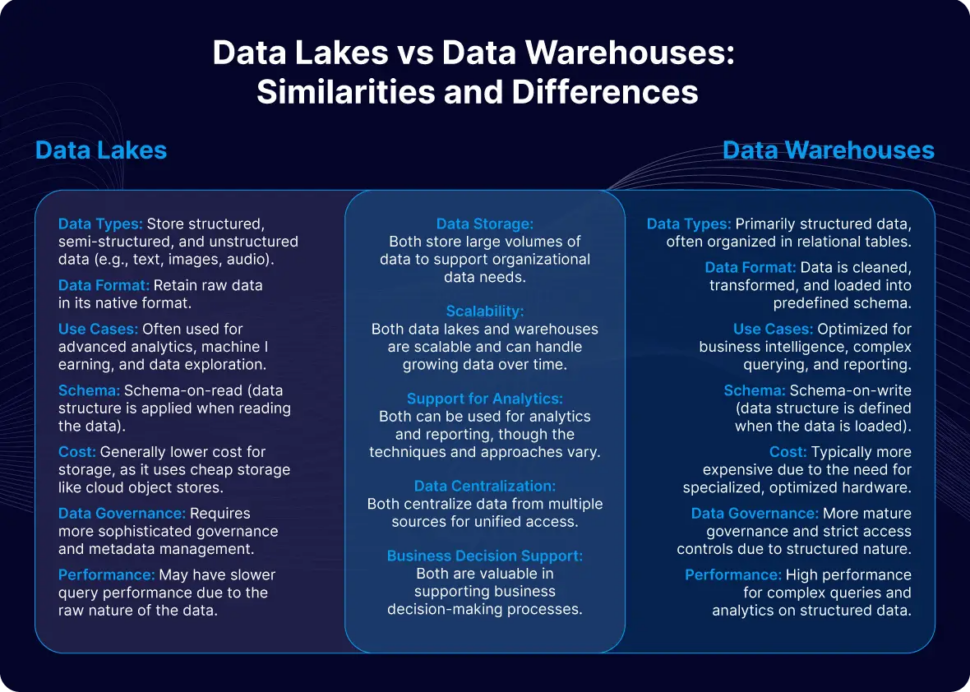
What it is: This involves selecting the right cloud storage solutions—like data lakes, data warehouses, or specialized databases—and structuring the data within them. This is an opportunity to organize logically for performance, cost-efficiency, and ease of access—not just dumping it in a repository.
Why it’s important: A solid storage strategy prevents the organization winding up with a “data swamp” where data is inaccessible and unusable. It ensures that analysts and data scientists can find and query data quickly, and that costs are managed effectively by matching the storage tier to the data’s usage patterns.
Security and Governance
What it is: Your security measures and governance strategy encompass all the policies, processes, and tech used to protect sensitive data and ensure it complies with regulations. It includes identity and access management, data encryption (both at rest and in motion), and detailed audit trails.
Why it’s important: In the cloud, the security perimeter is more fluid. Robust governance is non-negotiable for mitigating breach risks, ensuring regulatory compliance (like GDPR, HIPAA, and SOC 2), and building trust with customers. It ensures that only the right people can access the right data at the right time.
Cloud Adoption and Migration
What it is: This is the practice of moving data from various sources (on-premises databases, SaaS applications, IoT devices) into the cloud in a continuous, low-latency stream. It also includes synchronizing data between different cloud environments to support hybrid and multi-cloud strategies.
Why it’s important: The world doesn’t work in batches. Real-time integration ensures that decision-making is based on the freshest data possible. For migrations, it enables zero-downtime transitions, allowing legacy and cloud systems to operate in parallel without disrupting operations.
Intelligent Data Lifecycle Management
What it is: This is where automated workflows manage data from its creation to its archival or deletion. It involves creating policies and cloud applications that automatically classify data, move it between hot and cold storage tiers based on its value and access frequency, and securely purge it when it’s no longer needed.
Why it’s important: Not all data is created equal. Intelligent lifecycle management optimizes storage costs by ensuring you aren’t paying premium prices for aging or low-priority data. It also reduces compliance risk by automating data retention and deletion policies, so you don’t accidentally hold onto sensitive data.
The Benefits of Effective Cloud Data Management
Managing data in the cloud has a range of benefits which extend beyond better infrastructure. The strategy has tangible business impact, from operational savings to making advanced analytics and AI use cases possible.
Unprecedented Scalability and Operational Agility
Cloud platforms provide near-limitless scalability, allowing you to handle massive data volumes without the need for upfront hardware investment. This elasticity means you can scale resources on demand — up during peak processing times and down during lulls. It also gives teams the agility to experiment, innovate, and respond to market changes faster than ever before.
Reduced Operational Costs
By moving from a capital expenditure (CapEx) model of buying and maintaining hardware to an operational expenditure (OpEx) model, organizations can significantly lower their total cost of ownership (TCO). Cloud data management eliminates costs associated with hardware maintenance, data center real estate, and the associated staffing, freeing up capital and engineering resources for more strategic initiatives.
Business Continuity and Resilience
Leading cloud providers offer robust, built-in disaster recovery and high-availability features that are often too complex and expensive for most organizations to implement on-premises. By taking advantage of distributed data centers in multiple locations, as well as automated failover, cloud data management ensures that your data remains accessible and your operations can continue—even during localized outages or hardware failures.
Next-Gen Analytics, AI, and Machine Learning
Perhaps the most significant benefit is the ability to power the next generation of data applications. Cloud platforms provide access to powerful, managed services for AI and machine learning. Building a robust cloud data ecosystem ensures that these services are fed with a continuous stream of clean, reliable, and real-time data—the essential fuel for developing predictive models, generative AI applications, and sophisticated analytics.
Strategic Imperatives for Successful Cloud Data Management Implementation
Success in the cloud is predicated on aligning people, processes, and priorities to drive business outcomes. That’s why a strong cloud data management strategy requires careful planning and a clear focus on the following imperatives.
Align IT Operational Needs with C-Suite Strategic Objectives
Technical wins are satisfying, but they’re only meaningful if they translate into business value. The C-suite wants to know how a successful technical outcome speeds up time-to-market, grows revenue, or mitigates risk. The key is to create shared KPIs that bridge the gap between IT operations and business goals. For example, an IT goal of “99.99% data availability” becomes a business goal of “uninterrupted e-commerce operations during peak sales events.” Fostering this alignment through joint planning sessions and cross-functional governance committees ensures everyone is pulling in the same direction.
Plan for Real-Time Data Needs and Future Scalability
The days of relying solely on batched data are over. The world runs on immediate insights, and your infrastructure must be built to support continuous data ingestion and processing. This means moving beyond outdated systems that can’t keep pace. When auditing your data infrastructure, don’t just look for storage patterns and compliance gaps; actively identify opportunities to unlock value from real-time data streams. Future-proofing your architecture for real-time and AI will prepare you not just for the immediate future, but for five, ten years from now when AI-native systems will be the norm.
Select the Right Ecosystem
Your choice of Cloud Service Provider (CSP) and specialized data platforms is critical. When evaluating options, look beyond basic features and consider key criteria like scalability, latency, and regulatory alignment. Crucially, you should prioritize platforms that excel at seamless, real-time data integration across a wide array of sources and destinations—from legacy databases and SaaS apps to modern cloud data warehouses. The right ecosystem should handle the complexity of your enterprise data, support hybrid and multi-cloud strategies, and minimize the need for extensive custom coding and brittle, point-to-point connections.
Establish Robust Governance and Continuous Compliance
Governance in the cloud must be dynamic and continuous. Implement models like COBIT or ITIL that extend to real-time data flows, ensuring data quality, role-based access controls, and auditable trails for data in motion. Consider platforms that have built-in security controls and features that simplify adherence to strict industry regulations like HIPAA, SOC 2, and GDPR. This proactive approach to governance ensures that all your data—whether at rest or actively streaming—is secure and compliant by design.
Common Challenges in the Cloud Data Journey (and How to Overcome Them)
Even the best-laid (data) plans go awry. The path to mature cloud data management is paved with common pitfalls, but the right planning and strategic architectural choices will help you navigate them successfully. Let’s review the main challenges, and how to tackle them.
Data Silos
One big draw of the cloud is the promise of a unified data landscape, but it’s unfortunately all too easy to recreate silos by adopting disparate, point-to-point solutions for different needs. The fix is to adopt a unified data integration platform that acts as a central fabric. You can think of it as the central glue for your data sources—ensuring consistent, integrated data across the organization.
How Striim helps: Striim serves as the integration backbone that unifies your data across the enterprise. With hundreds of connectors to both legacy and modern systems, Striim eliminates data silos by enabling continuous, real-time data movement from any source to any target—all through a single, streamlined platform.
Data Security, Compliance & Governance
Secure, compliant, well-governed data isn’t flashy, but it’s paramount to a successful cloud data strategy. Maintaining control over data that is constantly moving across different environments requires a “data governance-by-design” approach. Prioritize platforms with built-in features for data masking, role-based access, and detailed, auditable logs to ensure compliance is continuous, not an afterthought.
How Striim helps:Striim takes a proactive and intelligent approach to data protection. Sherlock, Striim’s sensitive data detection engine, scans source systems to identify and report on data that may contain regulated information such as PHI (Protected Health Information) or PII (Personally Identifiable Information). It provides a comprehensive inventory of all sources potentially holding sensitive data, giving organizations the visibility needed to manage risk effectively. Once sensitive data is identified, Sentinel, Striim’s AI-powered data security agent, can automatically mask, encrypt, or tag that data to ensure compliance with internal policies and external regulations—helping organizations protect sensitive information without disrupting real-time integration flows.
Striim is designed with enterprise-grade security and meets the highest industry standards. It is SOC 2 Type II certified, GDPR certified, HIPAA compliant, PII compliant, and a PCI DSS 4.0 Service Provider Level 1 certified platform. For encryption, Striim supports TLS 1.3 to secure data in transit and AES-256 to protect data at rest. Additionally, Striim enables secure, private connectivity through Azure Private Link, Google Private Service Connect, and AWS PrivateLink .
With these integrated capabilities, Striim not only ensures seamless and real-time data integration across diverse systems—it also delivers robust security, governance, and regulatory compliance at every stage of the data lifecycle.
Real-Time Synchronization & Processing
Many legacy tools and even some cloud-native solutions are still batch-oriented at their core. They cannot meet the sub-second latency demands of modern analytics and operations. Overcoming this requires streaming-native architecture, using technologies like Change Data Capture (CDC) to process data the instant it’s created.
How Striim helps:Striim was purpose-built for real-time data movement. Striim’s customers benefit from a patented, in-memory integration and intelligence platform that leverages the most advanced log-based Change Data Capture (CDC) technologies in the industry. Designed to minimize impact on source systems, Striim can read from standbys or backups where possible, ensuring performance and availability are never compromised. With sub-second latency, your cloud data remains a continuously updated, up-to-the-millisecond reflection of your source systems—enabling truly real-time insights and decision-making.
Scalability and Cost Control
The cloud’s pay-as-you-go model is a double-edged sword. While it offers incredible scalability, costs can spiral out of control if you’re not careful. Address this with intelligent data lifecycle policies, efficient in-flight data processing to reduce storage loads, and continuous monitoring of resource consumption.
How Striim helps:By processing and transforming data in flight, Striim enables you to filter out noise and deliver only high-value, analysis-ready data to the cloud—significantly reducing data volumes and lowering both cloud storage and compute costs. Built for enterprise resilience, Striim supports a highly available, multi-node cluster architecture that ensures fault tolerance and supports active-active configurations for mission-critical workloads. Striim’s platform is designed to scale effortlessly—horizontally, by adding more nodes to the cluster to support growing data demands or additional use cases, and vertically, by increasing infrastructure resources to handle larger workloads or more complex transformations. This flexible, real-time architecture ensures consistent performance, reliability, and cost efficiency at scale.
Data Quality and Observability
“Garbage in, garbage out” is a cliché, but it’s amplified in the cloud. Poor data quality can corrupt analytics and erode trust across the organization. The solution is to build observability into your pipelines from day one, with tools for in-flight data validation, schema drift detection, and end-to-end lineage tracking.
How Striim helps:Striim delivers robust, continuous data validation and real-time monitoring to ensure data integrity and operational reliability. With its built-in Data Validation Dashboard, users can easily compare source and target datasets in real time, helping to quickly identify and resolve data discrepancies. Striim also offers comprehensive pipeline monitoring through its Web UI, providing end-to-end visibility into every aspect of your data flows. This includes detailed metrics for sources, targets, CPU, memory, and more—allowing teams to fine-tune applications and infrastructure to consistently meet data quality SLAs.
Schema Migration
Striim supports schema migration as part of its end-to-end pipeline capabilities. This feature allows for seamless movement of database schema objects—such as tables, fields, and data types—from source to target, enabling organizations to quickly replicate and modernize data environments in the cloud or across platforms without manual intervention.
Schema Evolution
In dynamic environments where data structures are frequently updated, Striim offers robust support for schema evolution and drift. The platform automatically detects changes in source schemas—such as added or removed fields—and intelligently propagates those changes downstream, ensuring pipelines stay in sync and continue to operate without interruption. This eliminates the need for manual reconfiguration and reduces the risk of pipeline breakages due to structural changes in source systems.
Vendor Lock-In in Hybrid/Multi-Cloud Environments
A valid fear many data leaders share is over-reliance on a single cloud provider’s proprietary services. You can mitigate this risk by choosing platforms that are cloud-agnostic and built on open standards. A strong multi-cloud integration strategy ensures you can move data to and from any environment, with the flexibility to choose the best service for the job without being locked in.
How Striim helps:Striim is fully cloud-agnostic, empowering seamless, real-time data movement to, from, and across all major cloud platforms—AWS, Azure, Google Cloud—as well as on-premises environments. This flexibility enables you to architect a best-of-breed, hybrid or multi-cloud strategy without the constraints of vendor lock-in, so you can choose the right tools and infrastructure for each workload while maintaining complete control over your data.
Additionally, Striim offers flexible deployment options to fit your infrastructure strategy. You can self-manage Striim in your own data center or on any major cloud hyperscaler, including Google Cloud, Microsoft Azure, and AWS. For teams looking to reduce operational overhead, Striim also provides a fully managed SaaS offering available across all leading cloud platforms.
To get started, you can explore Striim with our free Developer Edition
Emerging Trends Shaping the Future of Cloud Data Management
The world of cloud data is evolving. Even as you read this article, new technologies and tactics are likely emerging. You don’t have to stay on top of every hype-cycle, but it’s worth keeping an eye on the latest trends for how we manage, process, and govern data. Here are a few key developments data leaders should be monitoring.
Striim is at the forefront of AI-driven data infrastructure, aligning directly with the shift toward intelligent automation in data pipelines. Its built-in AI agents handle critical functions that reduce manual effort and enhance real-time decision-making. Sherlock AI and Sentinel AI classify and protect sensitive data in motion, strengthening data governance and security. Foreseer delivers real-time anomaly detection and forecasting to identify data quality issues before they impact downstream systems. Euclid enables semantic search and advanced data categorization using vector embeddings, enhancing analysis and discoverability. Complementing these capabilities, Striim CoPilot assists users in designing and troubleshooting data pipelines, improving efficiency and accelerating deployment. Together, these AI components enable autonomous optimization, proactive monitoring, and intelligent data management across the streaming data lifecycle.
Composable Architectures and Modular Data Services
Monolithic, one-size-fits-all data platforms are out. Flexible, composable architectures are in. That’s because flexible approaches let organizations assemble their data stack from best-of-breed, interoperable services, enabling greater agility and allowing teams to swap components in and out as business needs change. Striim supports this modern approach with a mission-critical, highly available architecture—offering active-active failover in both self-managed and fully managed environments. It also seamlessly scales both horizontally and vertically, ensuring performance and reliability as data volumes and workloads grow.
Privacy-Enhancing Technologies and Ethical Data Handling
As data privacy is increasingly front-of-mind, for regulators and consumers alike. As a result, tech and trends that protect data while it’s being used will become standard. Techniques like differential privacy, federated learning, and homomorphic encryption will allow for powerful analysis without exposing sensitive raw data, making ethical data handling a core principle of data architecture moving forward.
At Striim, we take security seriously and are committed to protecting data through robust, industry-leading practices. All data is encrypted both at rest and in transit using AES-256 encryption, and strict access controls ensure that only authorized personnel can access sensitive information. Striim undergoes regular third-party audits, including SOC 2 Type 2 evaluations, to validate our security and confidentiality practices. We are certified for SOC 2 Type 2, GDPR, HIPAA, PCI DSS 4.0 (Service Provider Level 1), and PII compliance.
Multi-Cloud Strategies and Unified Integration
Multi-cloud is already a reality for many, but the next phase is about seamless integration across clouds, not just coexistence. The trend is moving toward a unified control plane—a single platform that can manage and move data across different clouds (AWS, Azure, GCP) and on-premises systems without friction, providing a truly holistic view of the entire data landscape.
Striim is built for the multi-cloud future, enabling seamless data integration across diverse environments—not just coexistence. As organizations increasingly operate across AWS, Azure, GCP, and on-premises systems, Striim provides a unified control plane that simplifies real-time data movement and management across these platforms. By delivering continuous, low-latency streaming data pipelines, Striim empowers businesses with a holistic view of their entire data landscape, regardless of where their data resides. This frictionless integration ensures agility, consistency, and real-time insight across hybrid and multi-cloud architectures.
Real-Time Cloud Data Management Starts with Striim
As we’ve explored, effective cloud data management demands a multi-threaded approach—one that accounts for speed, intelligence, and reliability. It requires a real-time foundation to deliver on the promise of instant insights and AI-driven operations. This is where Striim provides a uniquely powerful cloud solution.
Built on a streaming-native architecture, Striim is designed from the ground up for low-latency, high-throughput data integration. With deep connectivity across legacy databases, enterprise applications, and modern cloud platforms like Google Cloud, AWS, and Azure, Striim bridges your entire data estate.
Our platform empowers you to process, enrich, and analyze data in-flight, ensuring that only clean, valuable, and AI-ready data lands in your cloud destinations. Combined with robust governance and end-to-end observability, Striim helps enterprises modernize faster, act on data sooner, and scale securely across the most complex hybrid cloud and multi-cloud environments.
Ready to activate your data? Explore the Striim platform or book a demo with one of our data experts today.
If your dashboards are broken, your analytics keep timing out, and your data engineers wind up spending more time fixing broken data pipelines than building new features, you’re not alone.
You’re likely dealing with more data, from more sources, and more real-time business demands than ever before. And in the face of overwhelming demand, getting pipeline architecture right has become more urgent than ever.
Optimal pipeline architecture can unlock a data team’s ability to detect anomalies, deliver excellent customer experiences, and optimize operations in the moment. It relies on a continuous, real-time flow of reliable data. On the flip side, slow, unreliable, or costly data pipelines are no longer just technical challenges for data engineers. They directly translate to missed business opportunities and increased risk.
This guide demystifies modern data pipeline architecture. We’ll break down the core components, explore common architectural patterns, and walk through the use cases that demand a new approach.
By the end, you’ll have a clear framework for designing and building the resilient, scalable, and cost-efficient data pipelines your business needs to thrive—and understand how modern tools like Striim are purpose-built to simplify and accelerate the entire process.
What is Data Pipeline Architecture?
At its core, data pipeline architecture refers to the design and structure of how data is collected, moved, transformed, and delivered from various sources to a final destination. Think of it as the digital circulatory system for your organization’s data.
But a modern pipeline is much more than a simple conveyor belt for data. It’s about moving data with speed, reliability, and intelligence. The critical distinction today is the evolution from slow, periodic batch processing (think nightly ETL jobs) to dynamic, streaming architectures that handle data in near real-time. This shift is fundamental. Where batch ETL answers the question, “What happened yesterday?”, streaming pipelines answer, “What is happening right now?” This enables businesses to be proactive rather than reactive—a key competitive advantage and a necessity in the age of AI.
This evolution sets the stage for a deeper conversation about the building blocks and patterns that define a robust, future-proof data pipeline architecture.
Core Components of a Data Pipeline Architecture
Every data pipeline—whether batch, stream processing, or hybrid—is constructed from the same set of fundamental building blocks. Understanding these components is the first step toward designing, troubleshooting, and scaling your infrastructure for effective data management.
Data Ingestion
This is the starting point where the pipeline collects raw data from its data sources. These sources can be incredibly diverse, ranging from structured databases (like Oracle or PostgreSQL), SaaS applications (like Salesforce), and event streams (like the open source solution, Apache Kafka) to IoT sensors and log files. The key challenge is to capture data reliably and efficiently, often in real time and without impacting the performance of the source systems.
Processing/Transformation
Once ingested, raw data is rarely in the perfect format for downstream analysis or applications. The processing workflow is where data is cleaned, normalized, enriched, aggregated, and transformed for its intended use. Data transformation could involve filtering out irrelevant fields, joining data from multiple sources, converting data types, or running complex business logic. In modern streaming pipelines, this transformation happens in-flight to ensure a continuous flow of data.
Data Storage/Destinations
After processing, the data is delivered to its destination. This could be a cloud data warehouse like Snowflake or BigQuery for analytics, a data lake like Databricks for AI or Machine Learning modeling, a relational database for operational use, or another messaging system for further downstream processing. The choice of destination depends entirely on the use case and the types of data involved.
Orchestration and Monitoring
A pipeline isn’t a “set it and forget it” system. Orchestration is the management layer that schedules, coordinates, and manages the data flows. It ensures that tasks run in the correct order and handles dependencies and error recovery. Monitoring provides visibility into the pipeline’s health, tracking metrics like data volume, latency, and error rates to ensure the system is performing as expected.
Data Governance & Security
This component encompasses the policies and procedures that ensure data is handled securely, accurately, and in compliance with regulations like GDPR or CCPA. It involves managing access controls, masking and encrypting data in transit and at rest, tracking data lineage, and ensuring strong data quality. In modern data architecture, these rules are embedded directly into the pipeline itself.
Common Data Pipeline Architecture Patterns
While the components are the building blocks, architectural patterns are the blueprints. Choosing the right pattern is critical and depends entirely on your specific requirements for latency, scalability, data volume, complexity, and cost. Here are some of the most common pipeline blueprints used today.
Lambda Architecture
A popular but complex pattern, Lambda architecture attempts to provide a balance between real-time speed and batch-processing reliability. It does this by running parallel data flows: a “hot path” (speed layer) for real-time streaming data and a “cold path” (batch layer) for comprehensive, historical batch processing. The results are then merged in a serving layer.
Best for: Use cases that need both low-latency, real-time views and highly accurate, comprehensive historical reporting.
Challenge: It introduces significant complexity, requiring teams to maintain two separate codebases and processing systems, which can be costly and difficult to manage.
Kappa Architecture
Kappa architecture emerged as a simpler alternative to Lambda. It eliminates the batch layer entirely and handles all processing—both real-time and historical—through a single streaming pipeline. Historical analysis is achieved by reprocessing the stream from the beginning.
Best for: Scenarios where most data processing can be handled in real time and the logic doesn’t require a separate batch system. It’s ideal for event-driven systems.
Challenge: Reprocessing large historical datasets can be computationally expensive and slow, making it less suitable for use cases requiring frequent, large-scale historical analysis.
Event-Driven Architectures
This pattern decouples data producers from data consumers using an event-based model. Systems communicate by producing and consuming events (e.g., “customer_created,” “order_placed”) via a central messaging platform like Kafka. Each microservice can process these events independently, creating a highly scalable and resilient system.
Best for: Complex, distributed systems where agility and scalability are paramount. It’s the foundation for many modern cloud-native applications.
Challenge: Can lead to complex data consistency and management challenges across dozens or even hundreds of independent services.
Hybrid and CDC-First Architectures
This pragmatic approach acknowledges that most enterprises live in a hybrid world, with data in both legacy on-premises systems and modern cloud platforms. A Change Data Capture (CDC)-first architecture focuses on efficiently capturing granular changes (inserts, updates, deletes) from source databases in real time. This data can then feed both streaming analytics applications and batch-based data warehouses simultaneously.
Best for: Organizations modernizing their infrastructure, migrating to the cloud, or needing to sync data between operational and analytical systems with minimal latency and no downtime.
Challenge: Requires specialized tools that can handle low-impact CDC from a wide variety of database sources.
Use Cases that Demand a Modern Data Pipeline Architecture
Architectural theory is important, but its true value is proven in real-world application. A modern data pipeline isn’t a technical nice-to-have; it’s a strategic enabler. Here are five use cases where a low-latency, streaming architecture proves essential.
Real-Time Fraud Detection
When it comes to detecting and preventing fraud, every second counts. Batch-based systems that analyze transactions hours after they occur are often too slow to prevent losses. A modern, streaming pipeline architecture with Change Data Capture (CDC) is ideal, allowing organizations to intercept and analyze transaction data the moment it’s created.
With Striim: Businesses can achieve sub-second latency, enabling continuous fraud monitoring models to block suspicious activity before it impacts customers or revenue.
Cloud Migration and Modernization
Migrating from legacy, on-premises databases to the cloud is a high-stakes project. A CDC-first pipeline architecture allows for zero-downtime migrations by keeping on-prem and cloud systems perfectly in sync during the transition. This phased approach de-risks the process and ensures business continuity.
With Striim: Companies can seamlessly replicate data from legacy systems to cloud targets, supporting phased migrations across complex hybrid environments without interrupting critical operations.
Personalized Customer Experiences
Today’s consumers expect experiences that not only respond to their behaviors, but predict them. Whether it’s an e-commerce site offering a relevant promotion or a media app suggesting the next video, personalization and predictive experiences demand fresh data. Real-time pipelines deliver a continuous stream of user interaction data to marketing and analytics platforms, powering in-the-moment decisions.
With Striim: Organizations can rapidly deliver enriched customer data to platforms like Snowflake, Databricks, or Kafka, enabling dynamic user segmentation and immediate, personalized engagement.
Edge-to-Cloud IoT Analytics
From factory floors to smart grids, IoT devices generate a relentless stream of data. A scalable, noise-tolerant pipeline is essential for ingesting this high-frequency data, filtering it at the source (the “edge”), and delivering only the most valuable information to cloud analytics platforms.
With Striim: Teams can deploy lightweight edge processing to filter and aggregate IoT data locally, reducing network traffic and ensuring that cloud destinations receive clean, relevant data for real-time monitoring and analysis.
Operational Dashboards and Alerts
Business leaders and operations teams can’t afford to make decisions based on stale data. When dashboards lag by hours or even just minutes, those insights are already history. Streaming pipelines reduce this data lag from hours to seconds, ensuring that operational dashboards, KPI reports, and automated alerts reflect the true, current state of the business.
With Striim: By delivering data with sub-second latency, Striim ensures that operational intelligence platforms are always up-to-date, closing the gap between event and insight.
AI-Powered Automation and Generative AI
Whether you’re building a predictive model to forecast inventory or an AI application to power a customer service chatbot, the quality and timeliness of your data is paramount. For LLMs, architectures like Retrieval-Augmented Generation (RAG) depend on feeding the model with real-time, contextual data from your enterprise systems. A streaming data pipeline is the only way to ensure the AI has access to the most current information, preventing it from giving stale or irrelevant answers.
With Striim: You can feed your AI models and vector databases with a continuous stream of fresh, transformed data from across your business in real time, ensuring your AI applications are always operating with the most accurate and up-to-date context.
Best Practices for Building a Future-Proof Data Pipeline Architecture
Building a robust data pipeline requires a futuristic mindset. In a sense, you’re not just building for today—you’re building for months or years from now, when your use cases, data volumes, and the decision making that relies on your data pipelines will have evolved. Adopting the following best practices will help you avoid getting stuck in endless rebuild projects, and design a smarter, more sustainable data architecture.
Align Architecture to Business SLAs and Latency Goals
Never build in a vacuum. The most important question to ask is: “What business outcome does this pipeline drive, and what are its latency requirements?” The answer will determine your architecture. A pipeline for real-time fraud detection has sub-second requirements, while one for weekly reporting does not. Aligning your technical design with stakeholders and business Service Level Agreements (SLAs) ensures you don’t over-engineer a solution or, worse, under-deliver on critical needs.
Embrace Schema Evolution and Change Data
Change is the only constant. Source systems will be updated, fields will be added, and data types will be altered. A future-proof architecture anticipates this. Use tools and patterns (like CDC) built not only to handle but to thrive on constant change and propagate changes downstream without breaking the pipeline. This builds resilience, enhances data integration, and dramatically reduces long-term maintenance overhead.
Reduce Tool Sprawl by Consolidating the Stack
Many organizations suffer from “tool sprawl”—a complex, brittle collection of disparate point solutions for ingestion, transformation, and delivery. This increases cost, complexity, and points of failure. Seek to consolidate your stack with a unified platform that can handle multiple functions within a single, coherent framework. This simplifies development, monitoring, and data governance.
Prioritize Observability, Data Governance, and Security
Observability, governance, and security are not afterthoughts; they should be core design principles. Build pipelines with observability in mind from day one, ensuring you have clear visibility into data lineage, performance metrics, and error logs. Embed security and governance rules directly into your data flows to ensure compliance and protect sensitive data without creating bottlenecks.
Avoid Overengineering and Focus on Use Case Fit
It can be tempting to build complex, all-encompassing data architecture from the start. A more effective approach is to start with the specific use case and choose the simplest architecture that meets its needs. A Kappa architecture might be perfect for one project, while a simple batch ETL process is sufficient for another. Focus on delivering value quickly and let the architecture evolve as business requirements grow.
Power Your Data Pipeline Architecture with Striim
Designing a modern data pipeline requires the right strategy, the right patterns, and the right platform. Striim is purpose-built to solve the challenges of real-time data, providing a unified, scalable platform that simplifies the entire data pipeline lifecycle. By consolidating the stack, Striim helps you reduce complexity, lower costs, and accelerate time to insight.
With Striim, you can:
Ingest data in real-time from dozens of sources, including databases via low-impact CDC, cloud applications, and streaming platforms.
Process and transform data in-flight using a familiar SQL-based language to clean, enrich, and reshape data as it moves.
Deliver data with sub-second latency to leading cloud data warehouses, data lakes, and messaging systems.
Build resilient, scalable pipelines on an enterprise-grade platform designed for mission-critical workloads.
Pressure to deliver with data is mounting from all sides. Regulatory demands are intensifying, data volumes are growing at an unprecedented scale, and enterprises need trusted, real-time insights to have any hope of powering effective AI use cases. In this environment, stale data isn’t just useless—it’s a liability.
You’re here because you already know data governance is critical. The challenge isn’t knowing you need governance; it’s to build a modern strategy that is both actionable and directly aligned with driving business priorities. Legacy governance models, built for the era of slow, periodic batch processing, are no longer sufficient for today’s modern demands. In this new normal, data governance can no longer be an afterthought; it must operate at the speed of your data, and act as an enabler rather than a hindrance to your business goals.
This guide is designed to be a practical, comprehensive resource. We will provide a clear blueprint for building or modernizing a data governance strategy that enables real-time execution, ensures continuous compliance, and delivers measurable outcomes for your enterprise.
What is a Data Governance Strategy?
Your data governance strategy is the high-level plan that defines how your organization manages its data assets. It’s a formal framework of policies, standards, and processes that ensures data is available, usable, consistent, and secure across the entire enterprise. As industry analysts at Gartner note, it’s a foundational discipline for enabling digital business. Think of it as the constitution for your data: it sets the laws and principles, while day-to-day governance activities are the enforcement of those laws.
But a robust strategy goes beyond just rules and compliance. In an era where real-time data fuels AI models and instant business decisions, governance is fundamentally about enabling trust and speed. It’s the critical function that ensures the data flowing into your analytics platforms and machine learning models is reliable, accurate, and delivered without delay. Without this strategic oversight, you’re risking more than compliance penalties. You’re risking the foundations on which your most valuable data applications are built.
A successful strategy must also be adaptable, designed to support the dynamic needs of the business. It should provide a clear framework for managing data in complex scenarios like cloud migrations, enabling self-service analytics for business users, and preparing trusted datasets for AI/ML development—all without creating bottlenecks.
How data governance differs from data management and compliance:
Data Governance
Oversight & Control
Goal:
Strategic oversight and setting the rules for data usage across the organization.
Example:
Defining policies for who can access customer PII and under what circumstances.
Data Management
Execution & Implementation
Goal:
The operational process of storing, protecting, and processing data according to established rules.
Example:
Implementing access control systems that enforce PII policies in practice.
Compliance
Adherence & Reporting
Goal:
Ensuring data handling meets external regulations and internal policies through monitoring.
Example:
Auditing access logs to prove PII policy compliance for GDPR requirements.
Why a Strong Data Governance Strategy Matters
As data grows in strategic importance, governing that data properly is paramount to achieving sustainable growth. Without a deliberate plan for how data is managed, protected, and used, you are actively undermining your ability to operate with speed and trust. A strong strategy is what separates organizations that are truly data-driven from those that are merely data-rich.
Untrusted Data Puts Business Outcomes at Risk
When data quality is inconsistent and its lineage is unknown, trust evaporates. Business leaders hesitate to make decisions, analysts waste cycles trying to validate data instead of finding insights, and—most critically—AI and machine learning models produce unreliable or biased results. Strong data foundations are the key to unlocking business growth, and the result of poor governance is a crisis of confidence in the data itself—a crisis that is incredibly difficult to reverse.
Compliance Requirements are Increasing in Scale and Complexity
Regulatory compliance is only getting more complex. With regulations like GDPR, CCPA, and industry-specific rules like HIPAA in healthcare setting a high bar for data privacy and protection, the financial and reputational risks of non-compliance are severe. A comprehensive governance strategy provides a systematic, defensible framework for meeting these obligations, ensuring that policies are not just written down but consistently enforced across all systems, even as data moves and transforms.
Real-Time Access Demands Real-Time Governance
The shift to real-time analytics and operational AI means that decisions are being made in milliseconds. In this environment, traditional, after-the-fact governance is obsolete. If your business operates in real time, your governance must too. This requires embedding policy enforcement, quality checks, and security controls directly into your data pipelines, ensuring that data is governed in-motion. Without it, you are forced to choose between speed and safety—a compromise enterprises cannot afford to make as they move beyond legacy detection methods.
Core Components of a Modern Data Governance Strategy
While every organization’s data governance program will vary based on its unique needs and maturity, all successful governance frameworks are built on a set of foundational components. These pillars come together to form a cohesive system for managing data as a strategic asset, turning abstract policies into tangible controls.
Policies, Standards, and Rule Enforcement
This is the legislative branch of your governance strategy. Policies are high-level principles that define what you want to achieve (e.g., “All sensitive customer data must be protected”). Standards provide the specific, measurable criteria for how to meet those policies (e.g., “All PII must be encrypted with AES-256”). Rule enforcement is the technical implementation that ensures these standards are met, ideally automated directly within your data pipelines.
Roles and Responsibilities
Governance is a team sport. A successful strategy clearly defines who is accountable for what. This includes roles like Data Owners (business leaders accountable for a specific data domain), Data Stewards (subject matter experts responsible for day-to-day data quality and definitions), and a Data Governance Council (a cross-functional group that provides oversight and resolves issues). Clearly defined roles prevent confusion and ensure accountability.
Metadata and Lineage Tracking
You can’t govern what you don’t understand. Metadata is “data about your data”—it describes the origin, format, and business context of your data assets. Lineage provides a complete audit trail, showing where data came from, how it has been transformed, and where it is going. Together, they are essential for impact analysis (e.g., “If we change this field, what reports will break?”), root cause analysis, and building trust in your data.
Access Control and Data Security
This component ensures that only authorized individuals can access specific data, and only for legitimate purposes. It involves implementing robust security measures like role-based access control (RBAC), data masking for sensitive fields, and encryption for data both in-motion and at-rest. In a robust strategy, these controls must be dynamic and capable of being enforced in real-time as data streams across the enterprise.
Data Quality Monitoring and Remediation
This is the component that ensures data is fit for its intended purpose. It involves establishing metrics to measure data quality dimensions (like data accuracy, completeness, and timeliness), continuously monitoring data streams against these metrics, and having clear processes for fixing issues when they are found. Proactive data monitoring prevents bad data from becoming an issue downstream, where they end up corrupting analytics and undermining the efficacy of AI models.
How to Build a Data Governance Strategy
Knowing you need a data governance strategy is one thing; building one is another. If you’re facing scattered governance efforts and aren’t sure where to start, this section provides a step-by-step guide to move from tactical fixes and resolve data governance challenges with a strategic, scalable program that has stakeholder alignment and delivers measurable results.
1. Define Business Objectives and Compliance Requirements
Your governance strategy should not exist in a vacuum. Start by tying it directly to business outcomes. Interview key stakeholders to understand their goals. What critical business processes depend on data? What are the top priorities for the next 12-18 months (e.g., launching a new AI-powered product, improving customer experience, entering a new market)? At the same time, work with legal and compliance teams to document all regulatory requirements your organization must adhere to. This ensures your strategy is not just technically sound, but business-relevant from day one.
2. Assess Current Data Environment and Maturity
Before you can chart a path forward with your data, you need to know its current state. Conduct an honest assessment of your data, including an inventory of critical data assets, where they live, and an evaluation of existing governance practices. Here’s a simple model to help you benchmark your organization.
Maturity Level
Description
Level 1: Unaware
No formal governance exists. Data management is chaotic and ad-hoc.
Level 2: Reactive
Basic governance practices are in place, but they are localized and primarily reactive to problems as they arise.
Level 3: Proactive
An enterprise-wide governance program is established with defined policies, roles, and standards.
Level 4: Managed
Governance is automated and continuously monitored. KPIs are used to measure effectiveness and drive improvement.
3. Choose a Governance Model
A one-size-fits-all approach doesn’t exist. Based on your organization’s culture and needs, select an evolving data governance operating model that defines how decisions will be made. A centralized model places authority in a single corporate body, which can be effective for consistency but may be slow. A decentralized model gives autonomy to individual business units, which fosters agility but can lead to silos. Many large enterprises opt for a hybrid or federated model—which combines a central governing body with decentralized data stewards—often as part of a data mesh architecture.
4. Create a Phased Roadmap With Clear Milestones
Trying to govern everything at once is a recipe for failure. Start with a pilot project focused on a single, high-impact data domain (e.g., customer data). Use this pilot to prove the value of your governance framework, refine your processes, and build momentum. Your roadmap should outline clear, achievable milestones for the first 6, 12, and 18 months, showing a clear path from your current state to your target maturity level.
5. Establish KPIs to Track Success
To maintain executive buy-in and demonstrate value, you must measure what matters. Establish key performance indicators (KPIs) that are directly linked to your initial business objectives. These shouldn’t be purely technical metrics. Instead, focus on KPIs that resonate with the business, such as:
Reduction in time spent by data scientists on data preparation.
Decrease in the number of compliance-related data incidents.
Improvement in a “data trust score” surveyed from business users.
Faster time-to-insight for key analytics.
Tools & Tech to Support Data Governance
A strategy without the right technology is just a document. To make governance operational, you need a stack of tools that can automate enforcement, provide visibility, and enable collaboration across your data ecosystem. Effective governance requires a combination of solutions that work together to manage metadata, quality, access, and the data pipelines themselves.
Metadata Catalogs and Lineage Tools
These are the central nervous system of your governance program. A data catalog serves as an intelligent inventory of all your data assets, making data discoverable and providing rich context about its meaning and quality. Data lineage tools are crucial for visualizing the flow of data from source to destination, which is essential for impact analysis, regulatory reporting, and debugging new data quality issues.
Data Quality and Observability Platforms
These platforms are your first line of defense against bad data. They automate the process of monitoring data for anomalies, validating it against predefined rules, and alerting teams to issues in real time. Modern data observability extends this by providing deeper insights into the health of your data pipelines, helping you proactively detect and resolve problems like schema drift or freshness delays before they impact downstream consumers.
Integration and Streaming Solutions
Your data integration layer is a critical control point for governance. Modern streaming data integration platforms allow you to embed governance directly into your data pipelines. This means you can enforce quality rules, mask sensitive information, and enrich data in-flight, ensuring that data is compliant and analysis-ready before it lands in a data lake or warehouse. This is a fundamental shift from older, batch-based approaches where governance was often an afterthought.
Access Control and Identity Management Systems
These systems are the gatekeepers for your data. Identity and Access Management (IAM) platforms control who can access which systems, while more granular access control tools manage permissions at the data level (e.g., which users or roles can see specific tables, columns, or rows). These tools are critical for enforcing the principle of least privilege, preventing data breaches, and ensuring that sensitive data is only accessed by those with a legitimate need.
Where Striim Fits In Your Governance Strategy
A modern data governance strategy requires real-time execution, and that means embedding governance directly into the data pipelines that power your enterprise. Governance can no longer be a reactive, after-the-fact process; it must be an intrinsic part of how data moves, is processed, and delivered. This is precisely where Striim’s unified data integration and streaming platform provides a critical advantage, with data streaming capabilities that help tackle these challenges.
Striim is built from the ground up to support real-time, governed data movement at enterprise scale. By making the data pipeline the central point of enforcement, Striim enables you to:
Enforce Policies in Real Time: Transform, mask, and enrich data in-flight, before it ever reaches its destination. This ensures that quality and security policies are applied consistently as data is created, not days or weeks later.
Guarantee Data Quality at the Source: Validate and cleanse data the moment it’s captured from your source systems. By embedding quality checks directly into the stream, you prevent bad data from ever propagating across your organization, protecting the integrity of your analytics and AI models.
Provide Auditable Lineage for Streaming Data: Maintain a clear, continuous line of sight into your data’s journey. Striim provides detailed, real-time lineage, so you always know the origin, transformations, and destination of your data, which is essential for compliance and building trust.
Securely Move Data to AI and Analytics Platforms: Deliver governed, trusted, and AI-ready data to any cloud or on-premises destination. Striim’s ability to handle sensitive data securely ensures that your most advanced analytics initiatives are built on a foundation of compliant, high-integrity data.
Governance isn’t a bolt-on feature—it’s a fundamental requirement for any data-driven enterprise. With Striim, you embed that governance into the very fabric of your data infrastructure, turning your data pipelines into active agents of trust, security, and compliance, including the use of AI agents for data governance.
Ready to build a governance strategy that operates at the speed of your business? Try Striim for free or book a demo with one of our data experts today.
Not all data pipelines are created equal. Brittle, rigid, and too slow for the pace of modern business—too many legacy data pipelines are holding organizations back from delivering true business impact.
Yet, data pipelines are the backbone of the modern enterprise. It’s time to move beyond ad-hoc batch processes and consider the best ways to design and build data pipelines optimized for low-latency, mission-critical reliability, and scalable operations.
This article provides a clear, practical guide to modern data pipelines. We’ll explore what they are, why they matter, and how they function in the real world—from powering real-time analytics and enabling seamless cloud migrations to feeding continuous, decision-ready data to enterprise AI applications.
Most importantly, you’ll leave with a clear build sequence, the key design decisions you need to make, and an understanding of what “good” looks like at each stage of the journey. Next, we’ll walk through a repeatable build process, including source identification, ingestion method selection (CDC vs APIs vs batch), your transformation approach (streaming ETL vs ELT), and continuous monitoring.
What are Data Pipelines?
Data pipelines are essentially automated processes that extract data from various sources, transform it into a usable format, and load it into a destination like a cloud data warehouse or data lake. You can think of them as the circulatory system for your enterprise data.
However, it’s critical to distinguish between simple data movement and robust data pipeline design. Simple data movement might involve a custom script copying a table from a database to a CSV file every night. It moves the data, but it lacks the robustness required for enterprise operations.
Modern data pipeline design encompasses much more than just moving bits and bytes. It involves ensuring reliability (handling network failures or schema changes automatically), observability (alerting when a pipeline breaks and exactly why), transformations (cleaning, joining, and enriching data in-flight), and governance (ensuring data security and compliance).
For example, a modern, real-time pipeline might keep a target like Snowflake or Google BigQuery continuously updated from a legacy transactional system like Oracle or SQL Server using Change Data Capture (CDC). This ensures that your analytics and downstream apps always see fresh operational changes the instant they happen.
Real-World Use Cases for Data Pipelines
The architectural benefits of robust data pipelines are clear, but how do they translate into tangible business value? Different outcomes require different pipeline architectures: namely, batch processing, stream processing, or CDC-based replication. Let’s look at a few concrete examples:
Cloud Migration and Replication: Enterprises moving off legacy infrastructure use pipelines to continuously sync on-premises databases to cloud targets with minimal disruption. By using log-based CDC, you can achieve zero-downtime migrations and keep hybrid environments perfectly in sync. (Requires: CDC-based replication)
Customer 360 and Personalization: A retailer can ingest data from their e-commerce platform, point-of-sale systems, and CRM. By transforming and joining this data in-flight, they create a unified customer profile, enabling hyper-personalized marketing delivered the moment a customer interacts with the brand. (Requires: Streaming pipelines)
Fraud and Security Monitoring: Financial institutions rely on sub-second data pipelines to analyze transaction streams in real time. By continuously monitoring for anomalous patterns, they can flag and block fraudulent transactions before they settle. (Requires: Streaming pipelines)
Operational Alerting and Real-Time Analytics: Manufacturing companies collect sensor telemetry from the factory floor. By analyzing this data as it flows, they can detect equipment anomalies and trigger predictive maintenance alerts, minimizing costly downtime. (Requires: Streaming pipelines)
To support these outcomes, enterprise pipelines typically fall into one of three categories:
Batch pipelines: Best for high-volume, historical analysis where latency is not a primary concern (e.g., end-of-month financial reporting).
Streaming pipelines: Essential when data must be processed, enriched, and acted upon immediately (e.g., real-time fraud detection or personalization).
CDC-based replication: The ideal approach for operational replication, keeping analytical systems seamlessly synchronized with transactional databases so dashboards always reflect the current state of the business.
How to Build a Data Pipeline
Building a data pipeline shouldn’t be a purely theoretical exercise. Whether you are building a simple batch export or a complex, real-time streaming architecture, taking a strategic, methodical approach is the best way to ensure reliability and scale for the long term.
Here’s a step-by-step guide to designing and constructing an enterprise-grade data pipeline.
1. Define Goals & Success Metrics
Before writing any code or selecting tools, define the business outcome and the required Service Level Agreement (SLA). “What good looks like” depends entirely on the use case.
Best Practice: Force the pipeline design decision early based on latency requirements. For example, if the goal is real-time fraud detection, the pipeline requires sub-second latency and continuous ingestion—pointing you immediately toward a streaming architecture. Conversely, if the goal is end-of-day financial reporting, the pipeline can tolerate batch processing, allowing you to optimize for throughput and compute costs rather than speed.
2. Identify Sources and Destinations
Map out exactly where the data lives and where it needs to go. Modern enterprises rarely have just one source. You might be pulling from relational databases (Oracle, PostgreSQL), NoSQL stores (MongoDB), SaaS applications (Salesforce), or flat files.
Best Practice: “Good” source identification includes auditing the source system’s limitations. Can the legacy database handle the load of frequent API polling? If not, you must consider low-impact methods like log-based CDC. Define your destination (e.g., Snowflake, BigQuery, Kafka) based on how downstream consumers (analysts or AI applications) need to access the data.
3. Choose a Replication Method and Handle Schema Changes
Arguably the most critical technical decision in your pipeline build: decide how data will move. It could be via API polling, batch extracts, or Change Data Capture (CDC).
Best Practice: For operational databases, log-based CDC is the gold standard. Instead of querying the database and degrading performance, CDC reads the transaction logs, capturing inserts, updates, and deletes with sub-second latency and minimal overhead. Crucially, consider how the pipeline handles schema changes (e.g., a column is added to the source database). A brittle pipeline will break; a robust pipeline uses automated schema evolution to detect the change and seamlessly propagate it to the target without downtime.
4. Determine Your Transformation Strategy (ETL vs. ELT)
Raw data is rarely ready for analytics or AI. It needs to be filtered, masked, joined, and aggregated. You must decide where this happens. In traditional ETL (Extract, Transform, Load), transformation happens in a middle tier before reaching the destination. In modern ELT (Extract, Load, Transform), raw data is loaded into the cloud data warehouse, and transformations are handled there using cloud compute.
Best Practice: For real-time use cases, streaming ETL is often the superior approach. By transforming data in-flight (e.g., masking PII or filtering out irrelevant events before it hits the warehouse), you reduce cloud storage and compute costs while ensuring the data landing in your destination is immediately decision-ready.
5. Monitor, Govern, and Iterate
In an enterprise context, data infrastructure is usually a mid to long term project. Day-two operations are what separate successful data teams from those drowning in technical debt.
Best Practice: Implement continuous monitoring for latency, throughput, and error rates. “Good” governance looks like this:
Continuously: Monitor data flow and set up automated alerts for pipeline failures or latency spikes.
Weekly: Review alert logs to identify transient errors or performance bottlenecks.
Monthly: Run a reliability review. Assess how the pipeline handled any schema changes, evaluate mean time to recovery (MTTR) for any failures, and review cloud compute costs.
Iteratively: Revisit the pipeline design whenever source systems upgrade, SLAs tighten, or downstream consumers change their requirements.
Common Challenges in Data Pipelines
Even the best-designed pipelines can encounter difficulties. Understanding the common pitfalls can help you build more resilient systems and choose the right tools to overcome them.
Latency and Data Freshness
Modern businesses demand real-time insights, but batch pipelines deliver stale data. This is one of the most common challenges, where the delay between an event happening and the data being available for analysis is too long. Striim solves this with log-based CDC, enabling continuous, sub-second data synchronization that keeps downstream analytics and applications perfectly current.
Poor Data Quality and Schema Drift
Poor data quality can corrupt analytics, break applications, and erode trust. A related challenge is schema drift, where changes in the source data structure (like a new column) cause downstream processes to fail. Striim addresses this head-on with in-pipeline data validation and schema evolution capabilities, which automatically detect and propagate source schema changes to the target, ensuring pipeline resilience.
Pipeline Complexity and Tool Sprawl
Many data teams are forced to stitch together a complex web of single-purpose tools for ingestion, transformation, and monitoring. This “tool sprawl” increases complexity, raises costs, and makes pipelines brittle and hard to manage. Striim unifies the entire pipeline into a single, integrated platform, reducing operational burden and simplifying the data stack.
Monitoring, Observability, and Alerting
When a pipeline fails, how quickly will you know? Without real-time visibility, troubleshooting becomes a painful, reactive exercise. Modern pipelines require built-in observability. Striim provides comprehensive health dashboards, detailed logs, and proactive alerting, giving teams the tools they need to monitor performance and recover from errors quickly.
Governance and Compliance
Meeting regulations like GDPR and HIPAA requires strict control over who can access data and how it’s handled. This is challenging in complex pipelines where data moves across multiple systems. Striim helps enforce governance with features to mask sensitive data in-flight, create detailed audit trails, and manage access controls, ensuring compliance is built into your data operations.
Data Lakes vs. Data Warehouses for Data Pipelines
Choosing where you store data is just as important as deciding how it gets there. The storage destination—typically a data lake or a data warehouse—will shape your pipeline’s design, cost, and capabilities. Understanding the differences is key to building an effective data architecture. Caption: Data lakes and data warehouses serve different purposes; lakes store raw data for exploration, while warehouses store structured data for analysis.
Data lakes and data warehouses serve different purposes; lakes store raw data for exploration, while warehouses store structured data for analysis.
Differences in Storage Format and Schema
The fundamental difference lies in how they handle data structure. A data warehouse stores data in a highly structured, predefined format (schema-on-write). Data is cleaned and modeled before being loaded, making it optimized for fast, reliable business intelligence and reporting.
A data lake, by contrast, is a vast repository that stores raw data in its native format, structured or unstructured (schema-on-read). The structure is applied when the data is pulled for analysis, offering immense flexibility for data science, machine learning, and exploratory analytics where the questions aren’t yet known.
Choosing the Right Architecture for Your Pipeline
It’s not necessarily a binary choice between one or the other; many modern architectures use both.
Use a data warehouse when your pipeline’s primary goal is to power standardized BI dashboards and reports with consistent, high-quality data.
Use a data lake when you need to store massive volumes of diverse data for future, undefined use cases, or to train machine learning models that require access to raw, unprocessed information.
A unified platform like Striim supports this hybrid reality. You can build a single data pipeline that delivers raw, real-time data to a data lake for archival and exploration, while simultaneously delivering structured, transformed data to a data warehouse to power critical business analytics.
Choosing Tools and Tech to Power Your Data Pipelines
The data ecosystem is crowded. Every tool claims to be “real-time” or “modern,” but few offer true end-to-end data management capabilities. Navigating this landscape requires understanding the different categories of tools and where they fit.
Popular Open-Source and Cloud-Native Tools
The modern data stack is filled with powerful, specialized tools. Apache Kafka is the de facto standard for streaming data pipelines, but it requires significant expertise to manage. Airflow is a popular choice for orchestrating complex batch workflows. Fivetran excels at simple, batch-based data ingestion (ELT), and dbt has become the go-to for performing transformations inside the data warehouse. While each is strong in its niche, they often need to be stitched together, creating the tool sprawl and complexity discussed earlier.
Real-Time CDC and Stream Processing
This is where Striim occupies a unique position. It is not just another workflow tool or a simple data mover; it is a unified, real-time integration platform. By combining enterprise-grade, log-based Change Data Capture (CDC) for ingestion, a powerful SQL-based stream processing engine for in-flight transformation, and seamless delivery to dozens of targets, Striim replaces the need for multiple disparate tools. It provides a single, cohesive solution for building, managing, and monitoring real-time data pipelines from end to end.
Why Choose Striim for Your Data Pipelines?
Striim delivers real-time data through Change Data Capture (CDC), ensuring sub-second latency from source to target. But it’s about more than just speed. It’s a complete, unified platform designed to solve the most complex data integration challenges without requiring you to stitch together a fragmented web of point solutions.
From a tactical perspective, Striim maps perfectly to the modern pipeline build sequence. It handles non-intrusive ingestion via log-based CDC, executes in-flight transformations using a robust SQL-based streaming ETL engine, and provides continuous monitoring and automated schema evolution before delivering data to major cloud targets. Instead of juggling separate tools for extraction, processing, and loading, Striim unifies the entire lifecycle. Global enterprises trust Striim to power their mission-critical data pipelines because of its:
Built-in, SQL-based Stream Processing: Filter, transform, and enrich data in-flight using a familiar SQL-based language.
Low-Code/No-Code Flow Designer: Accelerate development with a drag-and-drop UI and automated data pipelines, while still offering extensibility for complex scenarios.
Multi-Cloud Delivery: Seamlessly move data between on-premises systems and any major cloud platform.
Enterprise-Grade Reliability: Ensure data integrity with built-in failover, recovery, and exactly-once processing guarantees.
Ready to stop wrestling with brittle pipelines and start building real-time data solutions? Book a demo with one of our experts or start your free trial today to discover Striim for yourself.
FAQs
Why are data pipelines important for cloud migration?
Cloud migrations often stall or fail due to extensive downtime and data inconsistencies between legacy and new systems. Real-time data pipelines solve this by continuously replicating data from on-premises systems to the cloud without interrupting operational workloads. By using log-based Change Data Capture (CDC), a pipeline can sync a legacy database to a modern target like Snowflake, achieving a zero-downtime migration while keeping hybrid environments in perfect sync.
When should you use change data capture (CDC) instead of API polling or scheduled extracts?
You should use CDC whenever you need sub-second latency and cannot afford to impact the performance of your source databases. API polling and batch extracts place a heavy query load on operational systems and only capture data at scheduled intervals. CDC, conversely, reads database transaction logs invisibly, capturing inserts, updates, and deletes exactly as they happen, making it the only reliable choice for real-time analytics and operational alerting.
How do you handle schema changes without breaking downstream dashboards or apps?
Brittle pipelines break whenever a source database adds or drops a column, leading to missing data, failed loads, and corrupted downstream dashboards. To handle this gracefully, modern pipelines must employ automated schema evolution. This capability detects DDL (Data Definition Language) changes at the source in real-time and automatically propagates those changes to the target data warehouse, eliminating hours of manual pipeline repairs.
What are the main 3 stages in a data pipeline?
The three foundational stages of a data pipeline are ingestion (Extract), processing (Transform), and delivery (Load). Ingestion securely captures data from source systems, ideally through real-time methods like CDC. Processing cleanses, filters, joins, and enriches the data—often in-flight via streaming ETL—so it is formatted for business use. Finally, delivery routes the decision-ready data into a target destination, such as a cloud data warehouse, a data lake, or directly into an AI application.
What should you validate in-flight to prevent bad data from reaching your warehouse?
Validating data in-flight is critical to maintaining a single source of truth and preventing costly downstream errors. You should check for schema conformity, null values in primary keys, and formatting anomalies (like an incorrectly formatted email address). Additionally, AI-native pipelines should govern sensitive data on the fly, instantly masking Personally Identifiable Information (PII) before it lands in the warehouse to ensure analytics and AI models are built on safe, trusted data.
What are some key barriers to building a data pipeline?
The most common barriers are legacy system constraints, deeply ingrained data silos, and a lack of specialized engineering talent. Legacy databases often lack modern APIs and crash under the weight of heavy batch extraction queries. Furthermore, orchestrating different point tools for ingestion, transformation, and monitoring creates a fragmented architecture that is difficult to scale—requiring unified platforms to simplify the process and guarantee reliable data delivery.
Confluent has established itself as a prominent name in the world of real-time data. Built by the original creators of Apache Kafka, Confluent provides a data streaming platform designed to help businesses harness the continuous flow of information from their applications, websites, and systems.
The primary appeal of Confluent lies in its promise to tame the complexity of Apache Kafka. Raw Kafka is a powerful, open-source technology, but it demands deep technical expertise to deploy effectively.
While Confluent provides a path to adopting data streaming, it is not a one-size-fits-all solution. Many organizations find that the operational overhead, opaque pricing models, and a fragmented ecosystem of necessary add-ons create significant challenges down the line. As the need for real-time data becomes more critical, businesses are increasingly looking for more user-friendly and cost-effective alternatives for their enterprise.
Where Confluent Falls Short as a Data Streaming Solution
Despite its market position, Confluent’s platform presents several challenges that can hinder an organization’s ability to implement a truly seamless and cost-effective data streaming strategy. These shortcomings often lead businesses to seek out more integrated and transparent alternatives.
Requires deep Kafka expertise and complex setup: Operating and scaling Confluent, particularly in on-premise or non-cloud-native environments, demands significant technical know-how of Kafka’s intricate architecture.
Lacks native CDC and advanced transformation capabilities: Users must integrate separate tools like Debezium for Change Data Capture (CDC) and Apache Flink for complex transformations, which increases latency, cost, and operational overhead.
Opaque, usage-based pricing can drive up costs: The resource-based pricing model often leads to unexpectedly high costs, especially for high-throughput workloads or use cases requiring long-term data retention.
Limited out-of-the-box observability: Confluent’s built-in monitoring features are minimal. Achieving real-time, end-to-end visibility across data pipelines requires custom development or dedicated, third-party observability tools.
Connector access may be restricted or costly: Many essential connectors for popular enterprise systems are gated behind premium tiers, making full integration more difficult and expensive to achieve.
Alternative Solutions to Confluent for Data Streaming
Striim
Striim is a unified, real-time data integration and streaming platform that offers an all-in-one alternative to the fragmented Confluent ecosystem. Recognized on platforms likeGartner Peer Insights, businesses choose Striim to simplify the creation of smart data pipelines. It enables them to stream, process, and deliver data from enterprise databases, cloud applications, and log files to virtually any target in real time. This allows for rapid development of real-time analytics, AI and ML applications, and cloud integration initiatives without the steep learning curve of raw Kafka.
All-in-One Platform: Combines data integration, streaming, and processing in a single solution.
Native, Low-Impact CDC: Built-in Change Data Capture from enterprise databases without requiring third-party tools.
Powerful In-Flight Processing: Enables complex transformations and enrichments on data in motion—before it lands in its destination.
Performance and Scale: Engineered for high-throughput, low-latency workloads.
Broad Connectivity: Offers hundreds of pre-built connectors for a wide range of data sources and targets.
Enterprise-Ready: Includes built-in high availability, security, and governance features.
Hybrid/Multi-Cloud Native: Deploys consistently across on-premises, cloud, and edge environments.
Cons:
Advanced Feature Learning Curve: While the platform is overwhelmingly user-friendly, mastering its most advanced transformation and deployment capabilities requires some learning. To help, Striim offers an expansive academy where users can get to grips with the platform and its core capabilities, with videos, quizzes, and interactive learning modules.
Not a pure message broker: While Striims powers real-time streaming to and from Kafka, its primary focus is on end-to-end integration and processing data, not just queuing like raw Kafka.
Top Features of Striim
Built-in Change Data Capture (CDC): Enables real-time data replication from enterprise databases without third-party tools—unlike Confluent’s reliance on Debezium.
Prebuilt connectors for enterprise and cloud systems: Simplifies integration with databases, warehouses, cloud storage, and messaging platforms—reducing setup time and complexity.
Hybrid and multi-cloud support: Deploys easily across on-prem, cloud, or edge environments, making it ideal for organizations with complex infrastructure.
Intuitive UI and visual pipeline designer: Lowers the barrier to entry for data teams by eliminating the need to manage Kafka internals directly.
Sub-second latency with built-in monitoring: Ensures fast, reliable data delivery with end-to-end visibility—no need to stitch together external monitoring tools.
Striim: A Unified Platform for Real-Time Data Integration
Confluent relies on third-party tools like Debezium for CDC, adding setup time and operational overhead. Striim includes native CDC connectors as part of an all-in-one platform, making it faster and easier to stream data from enterprise databases.
Kafka-based pipelines often require custom code or external systems for transformation and filtering. Striim handles in-flight transformations natively, enabling real-time processing without added complexity.
Achieving reliable, lossless delivery in Confluent often demands deep tuning and custom monitoring. Striim offers built-in delivery guarantees, observability, and alerting, giving teams end-to-end visibility and control from a single interface.
How Striim Simplifies Deployment Across Multi-Cloud Environments
Deploying and managing Confluent outside of Confluent Cloud can be resource-intensive and complex. Striim is designed for multi-cloud environments, offering a consistent, low-overhead experience everywhere.
Confluent often demands deep Kafka expertise to manage topics, brokers, and schema registries. Striim offers a visual UI, integrated monitoring, and fewer moving parts, so data teams can move faster without needing deep knowledge of Kafka.
Many key Confluent connectors are gated behind premium tiers or require manual setup. Striim includes a wide range of prebuilt, production-ready connectors, accelerating integration with critical systems.
Apache Kafka is the open-source distributed event streaming platform that Confluent is built upon. It is a mature, highly scalable, and durable publish-subscribe messaging system. Businesses choose raw Apache Kafka when they have deep engineering expertise and require maximum control over their infrastructure. You can find community and professional reviews on sites likeG2.
Pros and Cons
Pros: Highly scalable and fault-tolerant, massive open-source community, unparalleled performance for high-throughput scenarios, and complete vendor neutrality.
Cons: Extremely complex to set up, manage, and scale without a dedicated team; lacks built-in tools for management, monitoring, and security; requires integrating other systems for schema management and connectors.
Top Features
High-throughput, low-latency message delivery.
Durable and replicated storage of event streams.
A rich ecosystem of client libraries for various programming languages.
Scalable, distributed architecture that can handle trillions of events per day.
The Kafka Connect framework for building and running reusable connectors.
Redpanda
Redpanda is a modern streaming data platform that is API-compatible with Kafka. It positions itself as a simpler, more performant, and more cost-effective alternative by being written in C++ and engineered to be self-sufficient without requiring Zookeeper. Small and medium-sized businesses opt for Redpanda to get Kafka-like capabilities with lower operational overhead, reduced latency, and a smaller resource footprint. This makes it suitable for both performance-critical applications and resource-constrained environments. See user reviews onTrustRadius.
Pros and Cons
Pros: Kafka API compatibility, no Zookeeper dependency simplifies architecture, lower tail latencies, and improved resource efficiency.
Cons: Redpanda’s ecosystem is young compared to Kafka, some advanced Kafka features may not be fully mature, and being a commercial open-source product, some features are enterprise-only.
Top Features
A single-binary deployment model for simplicity.
Built-in schema registry and HTTP proxy.
Data-oriented architecture optimized for modern hardware (NVMe, multi-core CPUs).
Tiered storage for cost-effective, long-term data retention.
High performance with a thread-per-core model.
Amazon MSK (Managed Streaming for Apache Kafka)
Amazon MSK is a fully managed AWS service that makes it easy to build and run applications that use Apache Kafka to process streaming data. It manages the provisioning, configuration, and maintenance of Kafka clusters, including handling tasks like patching and failure recovery. Businesses choose MSK to offload the operational burden of managing Kafka to AWS, allowing them to focus on application development while leveraging deep integration with other AWS services.
Pros and Cons
Pros: Fully managed by AWS, simplified cluster provisioning and scaling, seamless integration with the AWS ecosystem (S3, Lambda, Kinesis), and enterprise-grade security features.
Cons: Can lead to cloud vendor lock-in with AWS, pricing can be complex to predict and potentially high, and offers less control over the underlying Kafka configuration compared to a self-managed setup.
Top Features
Automated provisioning and management of Apache Kafka clusters.
Multi-AZ replication for high availability.
Integration with AWS Identity and Access Management (IAM) for security.
Built-in monitoring via Amazon CloudWatch.
Serverless tier (MSK Serverless) that automatically provisions and scales resources.
Google Cloud Pub/Sub
Google Cloud Pub/Sub is a serverless, global messaging service. It allows for simple and reliable communication between independent applications. Pub/Sub is known for asynchronous workflows and event-driven architectures within the Google Cloud ecosystem. It excels at decoupling services and ingesting event data at scale.
Pros and Cons
Pros: Fully serverless architecture, scales automatically, provides global message delivery, and integrates deeply with Google Cloud services.
Cons: It is not Kafka-compatible, which can be a hurdle for teams with existing Kafka tools. It also locks into Google Cloud’s ecosystem.
Top Features
Push and pull message delivery.
At-least-once delivery guarantee.
Filtering messages based on attributes.
Global availability with low latency.
Integration with IAM and other Google Cloud security services.
Azure Event Hubs
Azure Event Hubs is a big data streaming platform and event ingestion service. Managed by Microsoft Azure, it can stream millions of events per second. Companies invested in the Azure ecosystem leverage Event Hubs to build real-time analytics pipelines, especially for application telemetry and device data from IoT.
Pros and Cons
Pros: Massively scalable, integrates with the Azure stack, and offers a Kafka-compatible API endpoint.
Cons: Primarily designed for ingestion; complex processing often requires other Azure services. It also results in Azure vendor lock-in.
Top Features
A premium tier offering a Kafka-compatible endpoint.
Dynamic scaling with Auto-inflate.
Capture events directly to Azure Blob Storage or Data Lake Storage.
Geo-disaster recovery.
Secure access through Azure Active Directory and Managed Service Identity.
Other Popular Confluent Alternatives
Aiven
Aiven provides managed services for popular open-source data technologies, including a robust Apache Kafka offering. Businesses use Aiven to deploy production-grade fully-managed Kafka clusters on their preferred cloud provider (AWS, GCP, Azure) without handling the operational overhead. It’s ideal for teams who want a reliable, hosted Kafka solution with strong support.
Pros and Cons
Pros: Multi-cloud portability, fully managed service, and bundles other tools like PostgreSQL and OpenSearch.
Cons: Can be more costly than self-management and offers less granular control over Kafka configurations.
Tibco Messaging
TIBCO Messaging offers a suite of high-performance messaging products for enterprise-level data distribution. It’s chosen by large organizations, often with existing TIBCO investments, for its mission-critical reliability and performance in complex systems. It is not a pure Kafka solution but can integrate with it.
Pros and Cons
Pros: Enterprise-grade security and reliability, part of a broad integration ecosystem, and includes strong commercial support.
Cons: Complex, can be expensive, and represents a more traditional approach to messaging compared to cloud-native platforms.
Strimzi
Strimzi is an open-source project that simplifies running Apache Kafka on Kubernetes. It uses Kubernetes Operators to automate the deployment, management, and configuration of a Kafka cluster. Strimzi is for organizations committed to a cloud-native, Kubernetes-first strategy that want to manage Kafka declaratively.
Pros and Cons
Pros: Kubernetes-native automation, strong community support, and simplifies Kafka operations on K8s.
Cons: Requires significant Kubernetes expertise and is a self-managed solution, meaning you are responsible for the underlying infrastructure.
Choosing the Right Streaming Platform
The data streaming landscape is diverse with a host of powerful alternatives to Confluent. The right choice will depend on your organization’s goals, existing infrastructure, and technical expertise. Cloud-native platforms like Pub/Sub and Event Hubs offer simplicity at the cost of vendor lock-in. While managed Kafka providers like Aiven and Amazon MSK reduce operational burden, but can limit control. Modern challengers like Redpanda and WarpStream promise a more efficient Kafka experience.
For organizations seeking to move beyond simply managing a message broker, a unified platform is often the most direct path to value. Instead of stitching together separate tools for ingestion, transformation, and monitoring, an all-in-one solution like Striim accelerates the delivery of real-time, actionable insights, so you can act on your data the instant it’s born.
In this episode of What’s New in Data, we’re joined by Clare from AWS to dig into the evolving role of retrieval in modern AI systems. Clare unpacks why retrieval shouldn’t just be thought of as a technique to get documents — it’s a strategic tool that can unlock smarter, more adaptive agents. We also explore how AWS is thinking about orchestration, what actually counts as “reasoning,” and why the real power lies in combining structured memory with real-time context. If you’re building with agents, this one’s packed with insight.